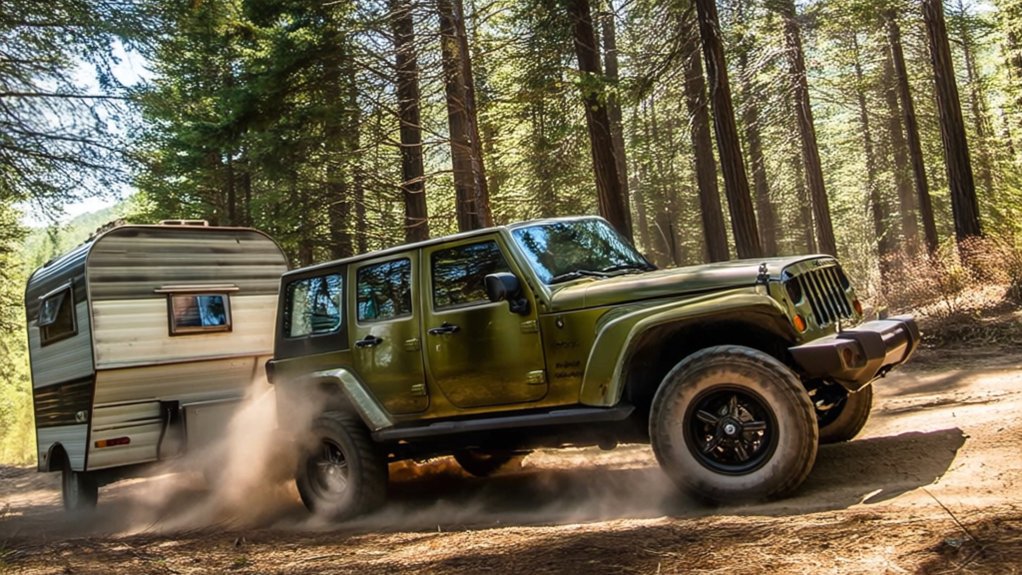
Can a Jeep Wrangler Pull a Camper?
Yes, your Jeep Wrangler can pull a camper, but you need to know its towing limits to stay safe. Depending on the model and engine, it can tow between 2,000 and 3,500 pounds. Choosing the right camper type and using proper towing gear like a weight distribution hitch and sway control makes a big difference. Also, make sure weight is balanced and follow safe driving practices. Keep going to find out how to optimize your setup and protect your Wrangler.
Key Takeaways
- Jeep Wrangler towing capacity ranges from 2,000 to 3,500 pounds based on engine, model, and configuration.
- Best towing models include Unlimited Rubicon and Sahara, supporting campers up to 3,500 pounds safely.
- Lightweight campers like pop-up or teardrop trailers are ideal for Jeep Wrangler towing limits.
- Proper hitch, weight distribution, and safety chains are essential for stable and secure camper towing.
- Safe towing requires reduced speeds, longer braking distances, and regular vehicle maintenance after trips.
Jeep Wrangler Maximum Towing Capacity
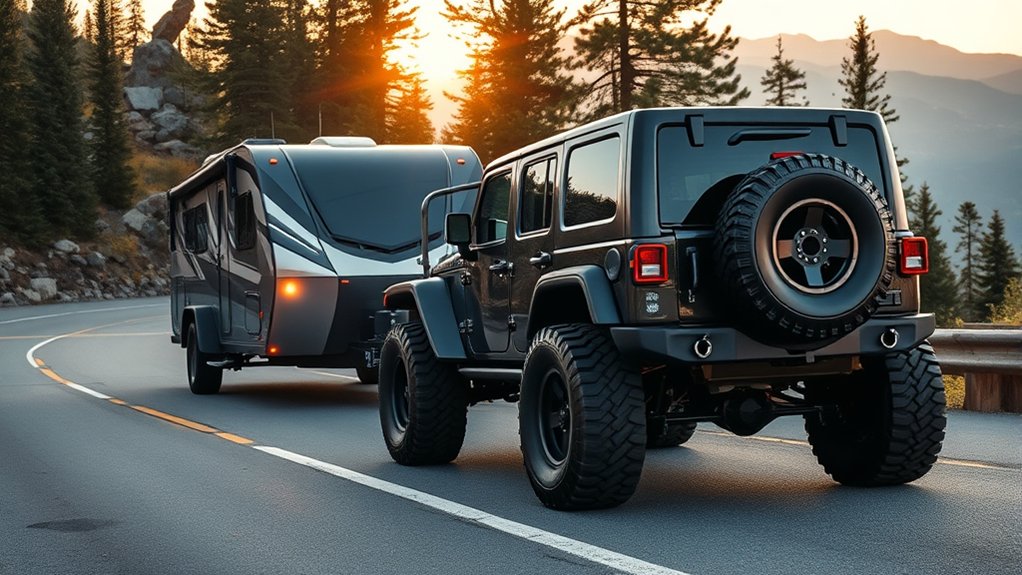
Although Jeep Wranglers are known for their off-road prowess, they also offer impressive towing capabilities. Depending on the model and configuration, you can tow anywhere from 2,000 to 3,500 pounds. The maximum towing capacity varies mainly based on the engine type, transmission, and axle ratio. For example, Wranglers equipped with the 3.6-liter V6 engine and the available towing package can handle up to 3,500 pounds. However, if you choose the turbocharged 2.0-liter four-cylinder engine, your towing limit typically drops to around 2,000 pounds. It’s essential to check your specific Wrangler’s towing specifications before hooking up a camper. Staying within the recommended limits guarantees safety, protects your vehicle, and provides a smoother towing experience.
Best Jeep Wrangler Models for Towing Campers
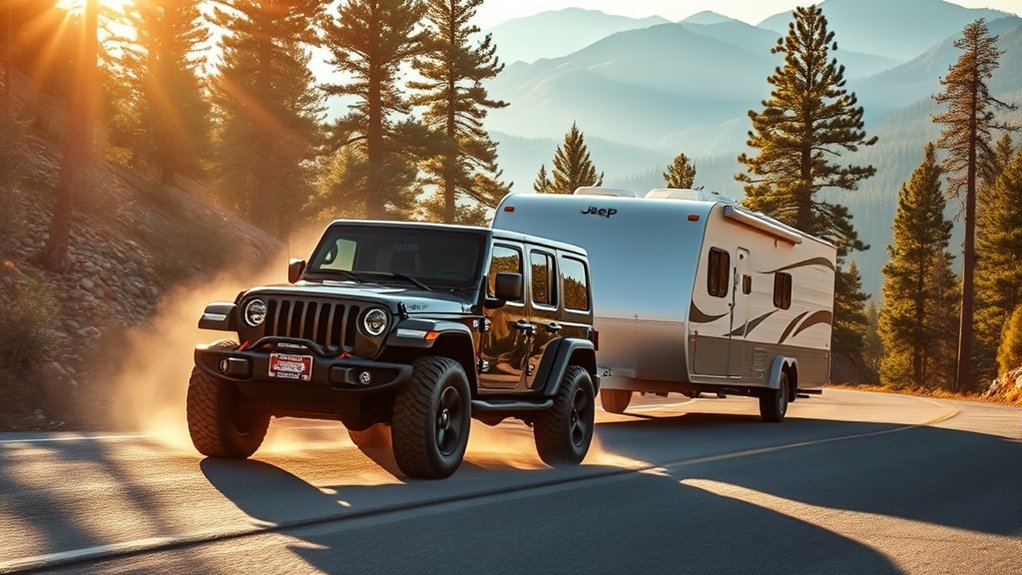
Knowing the maximum towing capacity of your Jeep Wrangler helps you choose the right model for camper towing. Some Wranglers stand out when it comes to hauling campers efficiently and safely. Here are the best options:
- Jeep Wrangler Unlimited Rubicon – Offers a towing capacity of up to 3,500 pounds, ideal for small to medium campers. Its robust engine and upgraded suspension make it reliable on rugged terrains.
- Jeep Wrangler Sahara – Balances comfort and towing power, with a maximum capacity near 3,500 pounds. It’s perfect if you want a smoother ride without sacrificing towing strength.
- Jeep Wrangler Sport S – A budget-friendly pick with a 2,000-pound towing limit. It suits lightweight campers and occasional towing needs.
Choose the model that fits your camper’s weight and your adventure style.
How to Check Your Jeep Wrangler’s Towing Setup
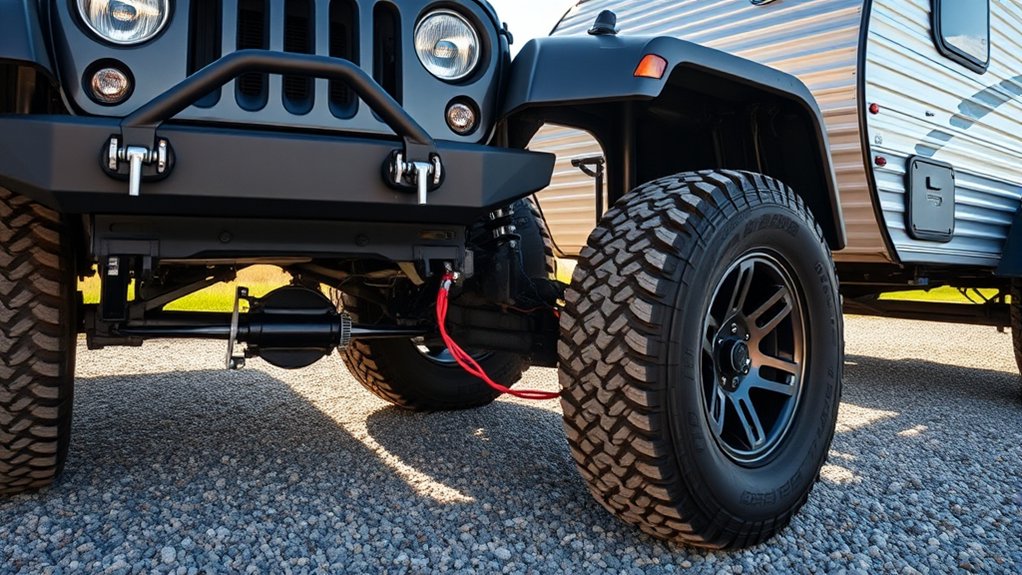
Before you hit the road, make sure you know your Jeep Wrangler’s towing capacity limits to avoid overloading. Check your hitch for any signs of wear or damage, and inspect the wiring to confirm all connections are secure and functioning. These quick steps help keep your towing setup safe and reliable.
Towing Capacity Limits
When you’re preparing to tow with your Jeep Wrangler, you need to understand its towing capacity limits to avoid damage and guarantee safety. Every Wrangler model has a maximum towing capacity, usually ranging between 2,000 to 3,500 pounds, depending on the engine and configuration. Exceeding these limits can strain your vehicle’s engine, transmission, and brakes.
To check your Wrangler’s towing capacity:
- Consult the owner’s manual for exact towing specifications.
- Verify the Gross Vehicle Weight Rating (GVWR) and Gross Combined Weight Rating (GCWR).
- Factor in the camper’s weight, including cargo and passengers.
Staying within these limits ensures your Jeep performs efficiently and keeps you safe on the road.
Hitch and Wiring Inspection
Towing within your Jeep Wrangler’s capacity is only part of the equation; making sure your hitch and wiring are in good condition plays a big role in safe towing. Start by inspecting the hitch for any signs of rust, cracks, or loose bolts. Tighten all connections securely and make sure the hitch class matches your camper’s weight. Next, check the wiring harness for frayed wires, corrosion, or loose plugs. Test all trailer lights—brake, turn signals, and running lights—to confirm they work properly. Use a multimeter if necessary to verify electrical continuity. Don’t forget the ground connection; a poor ground can cause malfunctioning lights. Regularly maintaining your hitch and wiring ensures your Jeep Wrangler tows safely and prevents roadside issues every trip.
Which Campers Can a Jeep Wrangler Tow Safely?
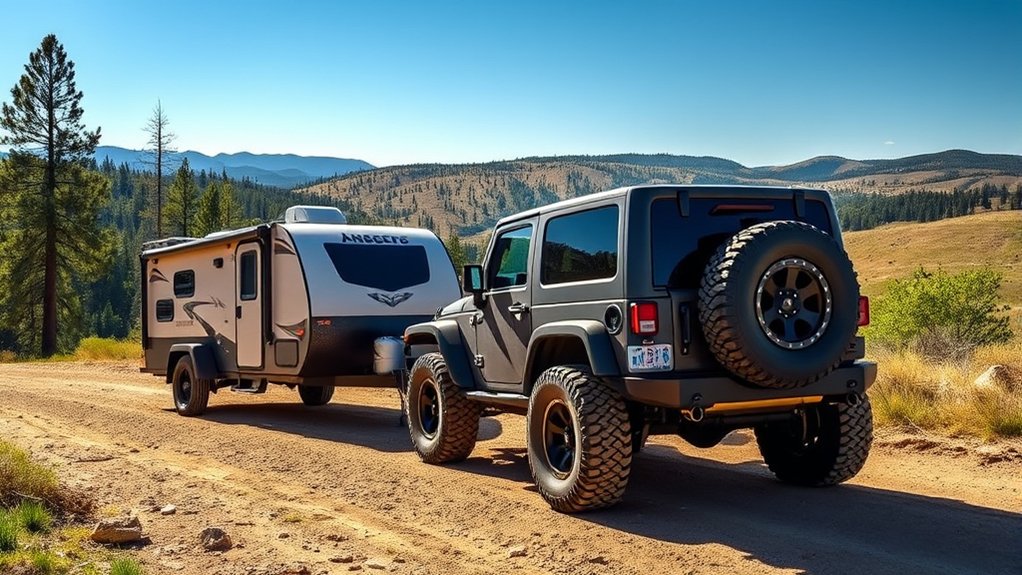
You’ll want to know your Jeep Wrangler’s towing capacity before picking a camper to tow. Keeping the camper’s weight within that limit is essential for safety and performance. Let’s explore which types of campers fit well within those guidelines.
Jeep Wrangler Towing Capacity
Although the Jeep Wrangler is known for its off-road capabilities, understanding its towing capacity is essential before hitching a camper. You need to know what your Wrangler can handle to guarantee safe and efficient towing.
Here’s what you should consider:
- Model Variations: Different Wrangler trims have varying towing limits, typically ranging from 2,000 to 3,500 pounds.
- Engine Type: The engine size affects towing power; the 3.6L V6 usually offers higher capacity compared to the 2.0L turbocharged option.
- Equipment Packages: Tow packages with upgraded cooling systems, hitch receivers, and wiring harnesses increase towing reliability.
Camper Weight Considerations
When choosing a camper to tow with your Jeep Wrangler, it’s crucial to match the camper’s weight with your vehicle’s towing capacity. Exceeding this limit can strain your engine, brakes, and suspension, risking damage or accidents. Check your Wrangler’s specific towing capacity in the manual or manufacturer’s website—usually between 2,000 to 3,500 pounds, depending on the model and year. Don’t forget to account for the camper’s dry weight plus any cargo, water, and gear you’ll carry. Also, consider the tongue weight, which should be about 10-15% of the trailer’s total weight, ensuring proper balance and control. Staying within these limits keeps your Jeep safe, improves fuel efficiency, and gives you peace of mind on the road.
Suitable Camper Types
Several camper types work well with a Jeep Wrangler, provided you respect its towing limits. To tow safely and enjoy your adventure, choose campers that align with your Wrangler’s capacity, typically around 2,000 to 3,500 pounds.
Here are three suitable camper options:
- Pop-Up Campers – Lightweight and compact, they rarely exceed the Wrangler’s towing capacity, making them ideal for off-road trips.
- Teardrop Trailers – Small and aerodynamic, these trailers offer basic amenities without adding much weight.
- Small Travel Trailers – Some models under 3,500 pounds fit well within the Wrangler’s limits, balancing comfort and towability.
How to Choose the Right Camper for Your Wrangler
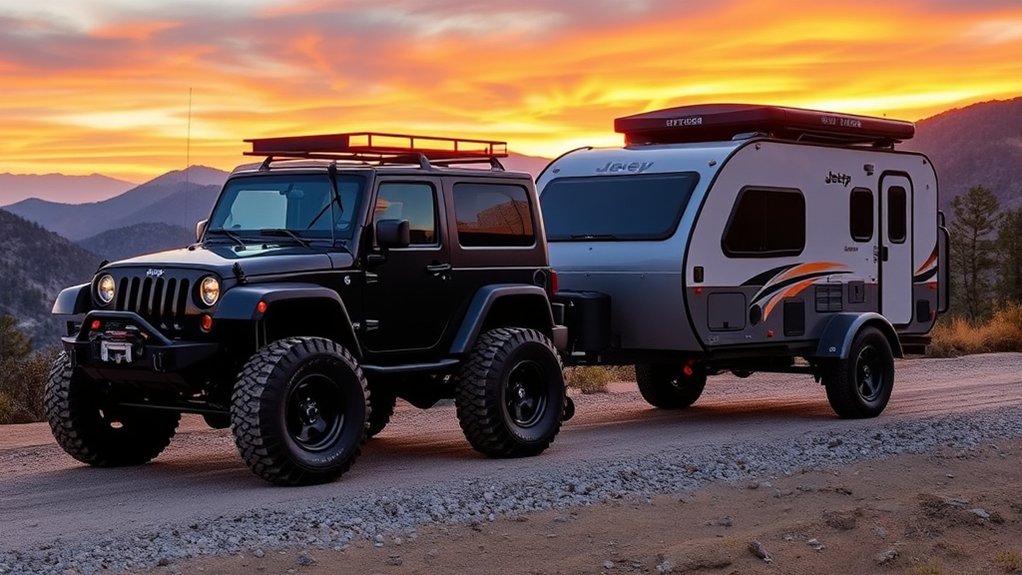
Before selecting a camper for your Jeep Wrangler, you’ll need to take into account its towing capacity and the type of terrain you plan to explore. Choose a camper that’s light enough to tow safely yet sturdy enough for off-road adventures. Consider size, weight, and features that fit your lifestyle.
| Camper Type | Avg Weight (lbs) | Terrain Suitability |
|---|---|---|
| Teardrop | 800 – 1,500 | Gravel, light off-road |
| Pop-Up | 1,200 – 2,500 | Paved roads, mild off-road |
| Travel Trailer | 2,500 – 5,000 | Mostly paved roads |
| Off-Road Camper | 1,500 – 3,000 | Rough, rugged trails |
Matching your Wrangler’s capabilities with the camper’s specs guarantees a safe, enjoyable towing experience.
Essential Gear for Towing a Camper With Your Jeep
To tow a camper safely with your Jeep Wrangler, you’ll need the right gear that guarantees control, stability, and security on the road. Without these essentials, your towing experience could become unsafe or stressful.
- Weight Distribution Hitch – This helps balance the camper’s weight across your Jeep’s axles, improving stability and reducing sway.
- Sway Control Device – It minimizes side-to-side movement, especially during windy conditions or sudden lane changes, keeping your camper steady.
- Brake Controller – This device synchronizes your Jeep’s brakes with the camper’s electric brakes, ensuring smooth and effective stopping power.
Equipping your Jeep with these items enhances safety and confidence when towing, so you can focus on enjoying your adventure.
How to Hitch a Camper Properly to Your Jeep Wrangler
To hitch your camper properly to your Jeep Wrangler, start by choosing the right hitch that matches your camper’s weight and your vehicle’s capacity. Make sure you secure the safety chains correctly to prevent any accidents on the road. Finally, adjust the weight distribution to keep your setup balanced and stable while driving.
Selecting The Right Hitch
Although your Jeep Wrangler is built for rugged terrain, choosing the right hitch guarantees your camper stays secure and balanced during every trip. You need a hitch that matches your Wrangler’s towing capacity and the camper’s weight. Here’s what to take into account:
- Class III Hitch: Ideal for most Jeep Wranglers, it supports up to 6,000 pounds, providing a solid balance of strength and compatibility.
- Weight Distribution Hitch: Use this if your camper is heavier; it helps distribute the load evenly, improving stability and handling.
- Receiver Size: Make certain your hitch receiver matches your camper’s coupler size—usually 2 inches for campers—to attach securely without wobbling.
Picking the right hitch prevents sway and wear on your Jeep’s suspension, keeping your camper steady on every adventure.
Securing Safety Chains
When hitching your camper to your Jeep Wrangler, guaranteeing safety chains correctly ensures you maintain control if the hitch fails. Start by crossing the safety chains underneath the trailer tongue before attaching them to the designated hooks or loops on your Jeep’s hitch. This crisscross pattern creates a cradle that supports the tongue, preventing it from dropping to the ground if disconnected. Make sure the chains have enough slack for turning but aren’t so loose they drag on the road. Avoid hooking chains to the bumper or any weak points; always use the proper hitch frame points. Double-check each connection for wear or damage before every trip. Properly secured safety chains add an essential layer of security, giving you peace of mind during your journey.
Adjusting Weight Distribution
Since proper weight distribution directly impacts your Jeep Wrangler’s handling and braking, you’ll want to make sure your camper’s load is balanced before hitting the road. Improper distribution can cause sway, reduce control, and increase wear on your vehicle. To adjust weight distribution effectively, follow these steps:
- Position the heaviest items low and centered in the camper, ideally over or slightly in front of the axle, to maintain stability.
- Use a weight distribution hitch if your camper’s tongue weight exceeds your Jeep’s recommendations, helping to evenly spread the load across all axles.
- Check and adjust the camper’s tongue weight to be about 10-15% of the total camper weight, ensuring your Jeep’s suspension handles the load properly.
Why Tongue Weight Matters When Towing a Camper
Understanding tongue weight is essential because it directly affects your Jeep Wrangler’s stability and control while towing a camper. Tongue weight is the downward force your camper’s hitch exerts on your vehicle’s hitch receiver. If it’s too light, your trailer may sway dangerously, making steering difficult. Too heavy, and it can overload your Wrangler’s rear suspension, reducing braking efficiency and causing poor handling. Ideally, tongue weight should be about 10-15% of the camper’s total loaded weight. You can adjust this by redistributing cargo or using weight distribution hitches. Monitoring tongue weight guarantees safer towing, better fuel efficiency, and less wear on your vehicle’s components. Paying attention to it helps you maintain a smooth, controlled drive with your Jeep Wrangler and camper combo.
Safe Driving Tips When Towing a Camper With a Jeep Wrangler
When towing a camper with your Jeep Wrangler, you’ll want to focus on proper weight distribution to keep everything balanced and stable. Adjusting your driving techniques, like slowing down and allowing extra stopping distance, also helps maintain control. Let’s look at how these steps can make your towing experience safer.
Proper Weight Distribution
Although towing a camper with your Jeep Wrangler can be thrilling, you need to guarantee proper weight distribution to maintain control and safety on the road. Uneven weight can cause sway, reduce braking efficiency, and strain your vehicle.
To guarantee proper weight distribution:
- Position heavy items low and centered over the axle to keep the center of gravity stable.
- Load about 60% of the camper’s weight toward the front to maintain tongue weight, which helps prevent swaying.
- Use a weight distribution hitch if your camper exceeds recommended tongue weight to evenly spread load across axles.
Adjusting Driving Techniques
Proper weight distribution sets the foundation for safe towing, but how you handle your Jeep Wrangler on the road makes all the difference. You need to adjust your driving techniques to maintain control and safety. Slow down, allow extra space for braking, and take wider turns to accommodate the camper’s length. Avoid sudden maneuvers, as jerky movements can destabilize the trailer. Stay alert for changes in road conditions and wind, which can affect towing dynamics.
| Driving Tip | Reason |
|---|---|
| Reduce Speed | Prevents sway and loss of control |
| Increase Following Distance | Allows more braking time |
| Use Lower Gears | Helps control speed downhill |
| Signal Early | Alerts others of your intentions |
| Avoid Sudden Turns | Maintains trailer stability |
Adjust your driving, and your Jeep will tow safely and confidently.
Managing Jeep Wrangler Fuel Efficiency While Towing
Towing a camper with your Jeep Wrangler can substantially impact its fuel efficiency, so you’ll want to adopt strategies that minimize fuel consumption. Managing fuel efficiency starts with how you prepare and drive your vehicle.
- Maintain steady speeds: Avoid rapid acceleration and hard braking. Use cruise control on highways to keep a consistent pace, which conserves fuel.
- Check tire pressure regularly: Underinflated tires increase rolling resistance, causing your engine to work harder and burn more fuel.
- Reduce excess weight and drag: Remove unnecessary items from your vehicle and camper, and consider aerodynamic modifications to lessen wind resistance.
Off-Road Towing: Can Your Jeep Wrangler Handle It?
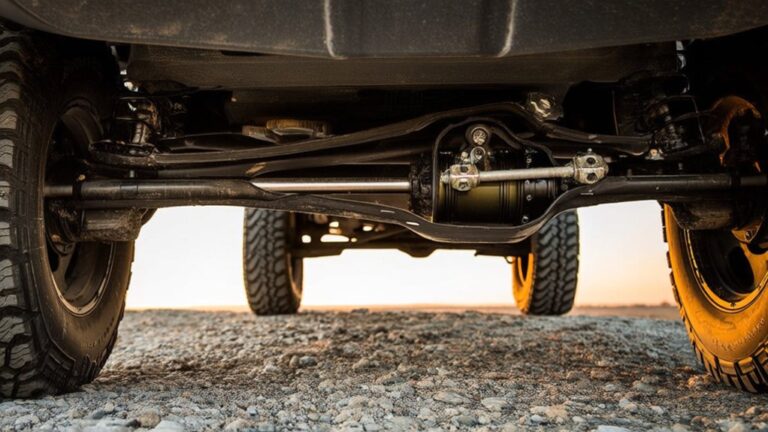
When you venture off-road with your Jeep Wrangler and a camper in tow, the challenge increases considerably. Off-road conditions demand more from your Jeep’s engine, suspension, and drivetrain, especially when pulling extra weight. Your Wrangler’s four-wheel drive and solid axles provide excellent traction and durability, but the added camper weight can affect maneuverability on uneven terrain. Steep inclines, mud, rocks, and narrow trails require you to drive cautiously and adjust your speed accordingly. You’ll want to guarantee your camper’s weight stays within your Jeep’s towing capacity, as exceeding it can strain components and reduce off-road capability. With proper preparation and realistic expectations, your Wrangler can handle moderate off-road towing, but extreme trails may push your setup beyond its limits.
Safety Precautions for Towing Campers With a Jeep Wrangler
Although your Jeep Wrangler is built for rugged adventures, you need to take specific safety precautions before hooking up a camper. Towing adds stress to your vehicle, so you must verify both your Jeep and camper are ready for the road.
- Check Weight Limits: Confirm your camper’s weight doesn’t exceed your Wrangler’s towing capacity. Overloading compromises handling and braking.
- Use Proper Hitching Equipment: Always use a hitch rated for your camper’s weight. Secure safety chains and electrical connections for brake lights and turn signals.
- Adjust Driving Habits: Drive slower, allow longer stopping distances, and avoid sharp turns to maintain control and prevent sway.
Following these steps keeps you safe and ensures an enjoyable towing experience every time.
Maintaining Your Jeep Wrangler After Towing Heavy Loads
After taking the right safety steps to tow your camper, you need to focus on how towing affects your Jeep Wrangler’s condition. Regular maintenance helps prevent wear and tear caused by heavy loads. Check your transmission fluid and engine oil more frequently since towing strains these systems. Inspect the brakes and tires for wear, as they handle extra stress. Don’t forget to examine suspension components and cooling systems to avoid overheating.
| Maintenance Area | What to Check | Recommended Frequency |
|---|---|---|
| Fluids | Transmission, Engine Oil | Every 3,000 miles |
| Brakes & Tires | Pad wear, Tire pressure | Before & After Towing |
| Suspension | Shocks, Springs | Every 6,000 miles |
Consistent care keeps your Jeep reliable and ready for your next adventure.
Common Towing Mistakes Jeep Wrangler Owners Make
Towing your camper with a Jeep Wrangler demands careful attention, but many owners overlook key details that can lead to problems. Avoid these common towing mistakes to keep your Jeep and camper safe on the road:
- Ignoring Weight Limits: Don’t exceed your Wrangler’s towing capacity. Overloading strains the engine and brakes, risking damage and accidents.
- Skipping Proper Hitch Setup: Using the wrong hitch or failing to secure it correctly can cause instability and sway, making towing dangerous.
- Neglecting Tire and Brake Checks: Always inspect tire pressure and brake condition before towing. Underinflated tires and worn brakes reduce control and increase stopping distance.
When to Upgrade or Choose a Different Tow Vehicle
Missing key steps like checking weight limits or using the right hitch can put your Jeep Wrangler and camper at risk. If you find your Wrangler struggling to maintain speed, overheating, or if braking distances increase dramatically, it’s time to reconsider your setup. When your camper’s weight approaches or exceeds the Wrangler’s towing capacity, upgrading or choosing a different tow vehicle becomes necessary for safety. Also, if you frequently tow steep inclines or rough terrain, a more powerful vehicle with better torque and stability may serve you better. Don’t ignore signs of strain on your Jeep; pushing beyond limits can damage your vehicle and compromise control. Evaluate your towing needs honestly, and when in doubt, opt for a vehicle designed to handle heavier loads safely.
Frequently Asked Questions
Can a Jeep Wrangler Tow a Boat in Addition to a Camper?
Yes, your Jeep Wrangler can tow both a boat and a camper, but you’ll need to stay within its towing capacity. Make sure to check the combined weight, so you don’t overload and drive safely.
How Does Towing Affect Jeep Wrangler Insurance Rates?
Towing’s like adding weight to your journey, and insurance sees that extra load as risk. You’ll likely pay more because you’re handling bigger challenges, so make sure your coverage matches your Jeep’s new responsibilities.
Are There Special Driving Licenses Required for Towing With a Jeep?
You usually don’t need a special license to tow with a Jeep, as long as your trailer stays within the weight limits set by your state. Always check local regulations to be sure you’re compliant.
What Are the Best Tire Options for Towing With a Jeep Wrangler?
You’ll want all-terrain or highway-terrain tires with strong load ratings for towing. Brands like BF Goodrich and Goodyear offer durable options that provide stability and grip, ensuring safe, smooth towing with your Jeep Wrangler.
Can a Jeep Wrangler Tow a Camper in Snowy or Icy Conditions?
You can tow a camper in snowy or icy conditions with your Jeep Wrangler, but you’ll need good winter tires, reduced speed, and extra caution. Its 4WD helps, but icy roads always demand careful driving.
Conclusion
Just like Frodo needed the right gear to carry the Ring, you need to match your Jeep Wrangler with the right camper to tow safely. Knowing your Wrangler’s towing limits and choosing compatible campers guarantees your adventure stays epic, not exhausting. Stay vigilant with maintenance and safety, avoid common mistakes, and recognize when it’s time to upgrade. With the right preparation, your Jeep can be the trusty steed that carries you to new horizons without a hitch.