5 Easy Steps to Replace the Auxiliary Battery on Your Jeep Wrangler
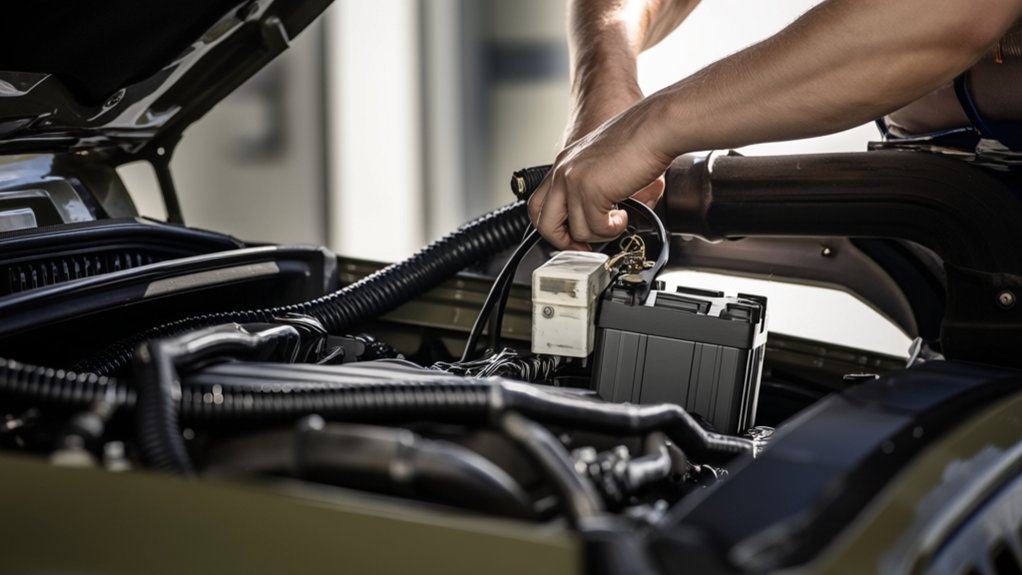
To replace your Jeep Wrangler’s auxiliary battery, first locate it near the main battery or inside a panel. Gather tools like a socket wrench, gloves, and safety goggles. Disconnect the negative terminal, then the positive, and remove the battery carefully. Install the new one by securing it and connecting positive and negative cables tightly. Finally, test with a multimeter to verify about 12.6 volts. Follow these steps, and you’ll have a fully charged auxiliary battery in no time—explore more for detailed tips.
Understand and Locate Your Jeep’s Auxiliary Battery
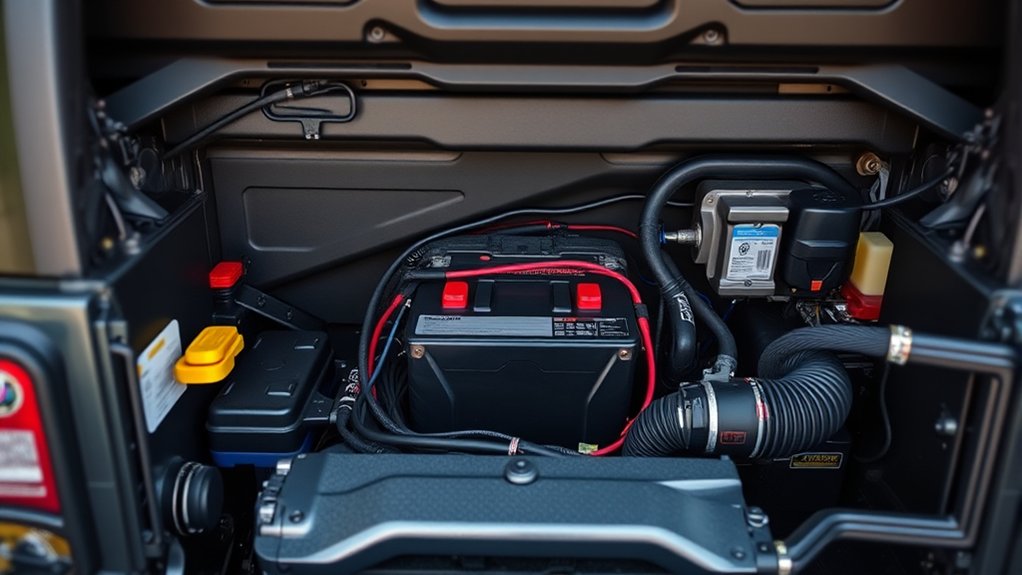
Before you begin replacing the auxiliary battery on your Jeep Wrangler, it’s important to understand what it does and where to find it. The auxiliary battery supports your vehicle’s electrical system, powering accessories like the stereo, lights, and onboard computer when the engine is off. It prevents draining the main battery, ensuring your Jeep starts reliably.
You’ll typically find the auxiliary battery under the hood, near the main battery but housed separately. In some models, it might be tucked inside the cabin or behind panels. Knowing its exact location helps you plan the replacement efficiently.
Once you locate the auxiliary battery, you’ll notice it looks smaller than the main battery but still has clearly marked positive and negative terminals for easy identification during removal and installation.
Gather Tools and Safety Gear for Your Jeep’s Auxiliary Battery
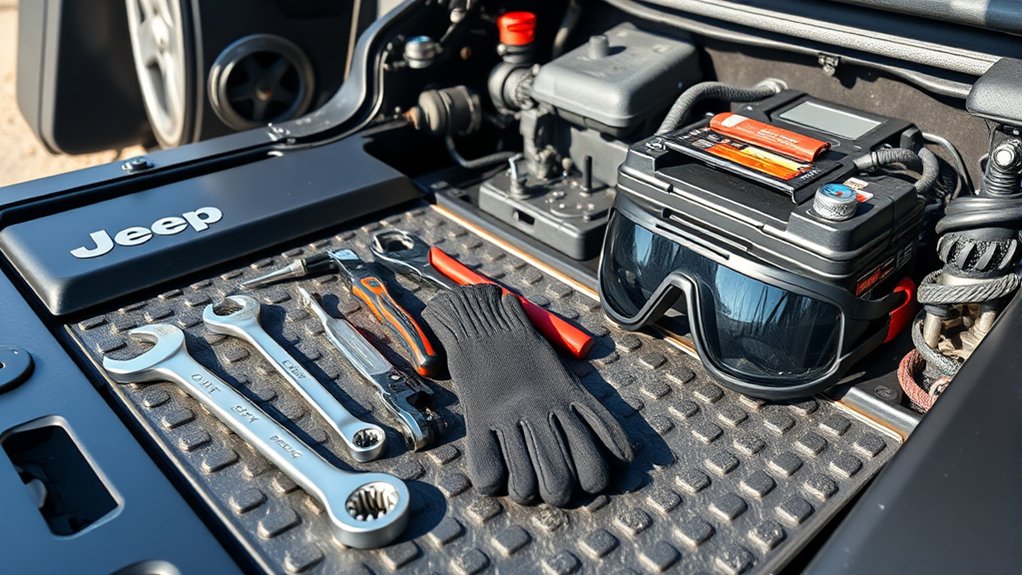
Now that you know where your Jeep’s auxiliary battery is and what it does, you’ll need the right tools and safety gear to replace it properly.
Start by gathering a socket wrench set, typically 10mm and 13mm sockets, to remove battery terminals and hold-down brackets. Have a pair of insulated gloves ready to protect your hands from potential electrical shock and sharp edges. Safety goggles are essential to shield your eyes from battery acid or debris.
A battery terminal puller can help if the terminals are stuck. Additionally, keep a clean rag or cloth handy to wipe off any corrosion.
Having these tools and safety items prepared guarantees a smooth, safe battery replacement without unexpected delays or hazards.
How to Safely Remove Your Old Auxiliary Battery
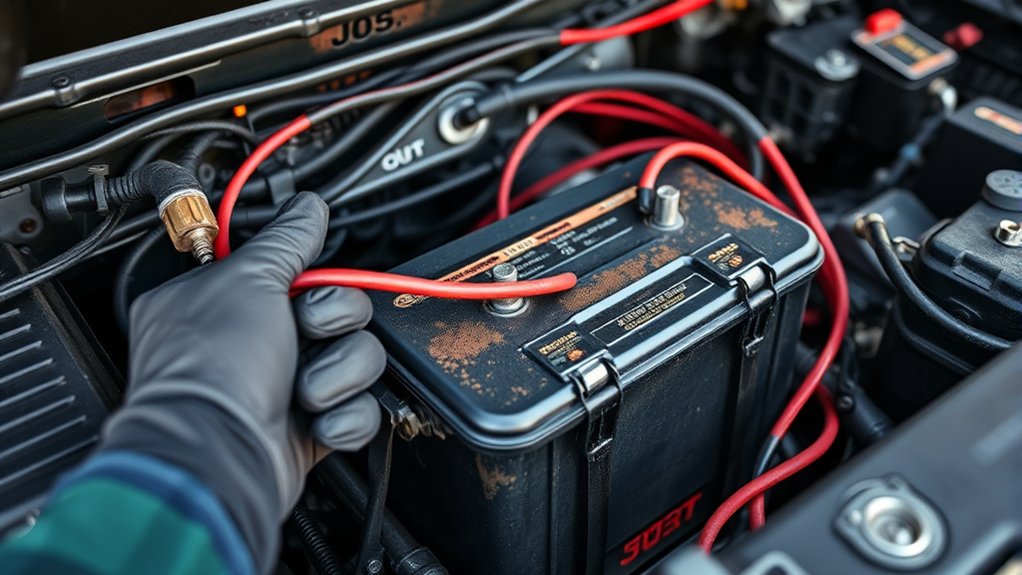
Once you’ve gathered your tools and safety gear, start by disconnecting the negative terminal of the old auxiliary battery to prevent any electrical shorts.
Next, remove the positive terminal carefully. Make sure you keep the terminals from touching any metal parts to avoid sparks.
After disconnecting the terminals, loosen and remove any brackets or straps holding the battery in place.
Handle the battery with care—it can be heavy and contains acid.
Keep these tips in mind when removing your old auxiliary battery:
- Wear gloves and safety glasses to protect against acid and sparks
- Avoid tilting the battery to prevent acid spills
- Place the old battery on a sturdy surface away from children and pets
Following these steps assures a safe removal process.
Install and Connect Your New Auxiliary Battery Correctly
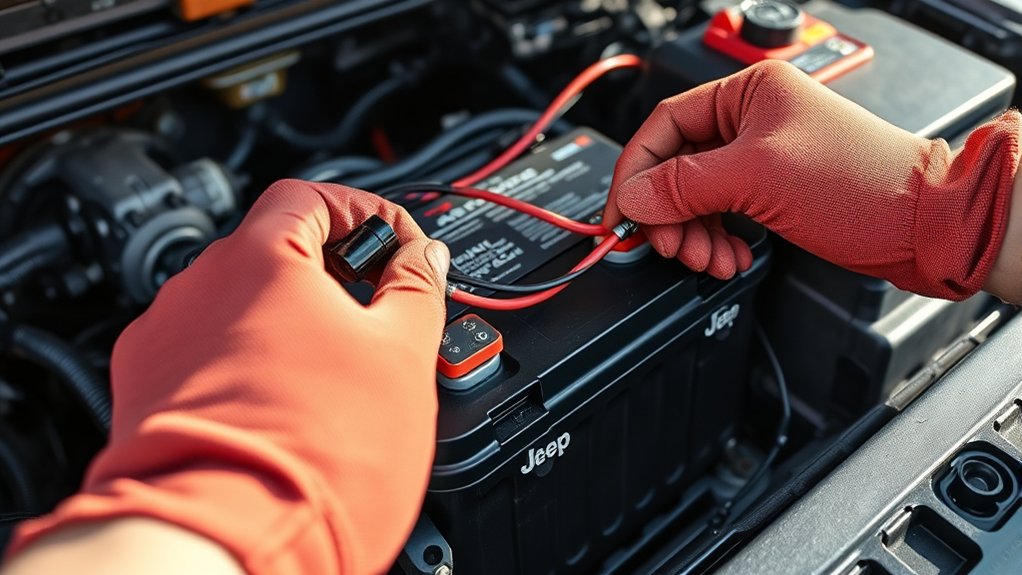
Although installing a new auxiliary battery might seem straightforward, connecting it correctly is essential to guarantee your Jeep Wrangler’s electrical system functions properly.
First, place the new battery securely in the tray, ensuring it’s stable.
Next, attach the positive (red) cable to the battery’s positive terminal, tightening the clamp firmly but without over-tightening.
Then, connect the negative (black) cable to the negative terminal, ensuring a solid connection.
Double-check that the cables are free from corrosion and damage before connecting.
Avoid letting the cables touch each other or any metal parts to prevent short circuits.
After securing all connections, neatly route and fasten the cables to prevent movement or wear.
Proper installation ensures reliable power delivery and avoids electrical issues down the road.
Test the New Auxiliary Battery Using a Multimeter
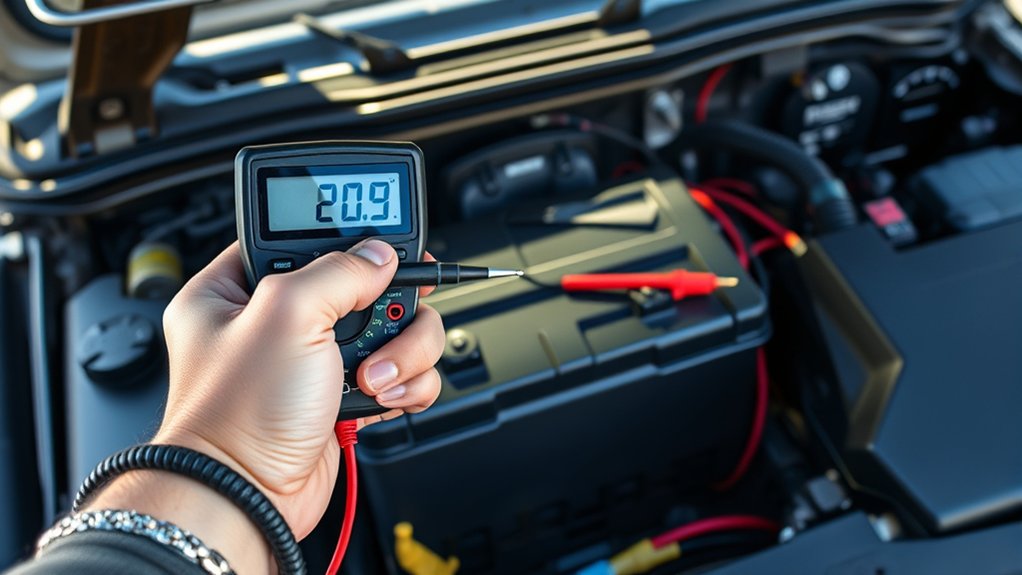
Before you fully rely on your new auxiliary battery, you’ll want to test it with a multimeter to verify it’s functioning properly. This simple step guarantees your battery is delivering the right voltage and is ready to power your Jeep Wrangler’s accessories without issues.
Here’s how to do it:
- Set your multimeter to measure DC voltage, typically denoted by “V” with a straight line.
- Connect the multimeter’s red probe to the battery’s positive terminal and the black probe to the negative terminal.
- Check the reading; a healthy auxiliary battery should show around 12.6 volts when fully charged.
If the voltage is considerably lower, your battery may need charging or replacement before installation.
Frequently Asked Questions
How Long Does the Auxiliary Battery Typically Last in a Jeep Wrangler?
You can typically expect your Jeep Wrangler’s auxiliary battery to last around 3 to 5 years. How long it lasts depends on usage, climate, and maintenance, so keep an eye on its performance to avoid surprises.
Can I Upgrade to a Higher Capacity Auxiliary Battery?
Yes, you can upgrade to a higher capacity auxiliary battery, but make sure it fits your Jeep Wrangler’s battery compartment and electrical system. Check compatibility to avoid overloading, and consider professional advice for a smooth upgrade process.
What Are the Signs of a Failing Auxiliary Battery?
You’ll notice slow engine cranking, dimmer lights, or electronics malfunctioning. If your Jeep’s auxiliary battery frequently drains or won’t hold a charge, it’s a clear sign it’s failing and needs replacement soon.
Does the Auxiliary Battery Affect the Main Battery’s Lifespan?
Think of your auxiliary battery as a sidekick; if it’s weak, it makes your main battery carry extra weight, shortening its lifespan. So yes, a failing auxiliary battery can definitely wear out your main battery faster.
Are There Specific Brands Recommended for Jeep Wrangler Auxiliary Batteries?
You’ll find Optima, Odyssey, and DieHard are popular for Jeep Wrangler auxiliary batteries due to durability and performance. Choose a brand that fits your budget and offers reliable cold-cranking amps for your off-road adventures.
Conclusion
Replacing your Jeep Wrangler’s auxiliary battery is like giving your vehicle a fresh burst of energy, much like swapping out a worn-out flashlight battery before a night hike. Just as a reliable light keeps you safe in the dark, a well-installed auxiliary battery guarantees your Jeep runs smoothly when you need it most. By following these simple steps, you’re not just maintaining your Jeep—you’re empowering it to tackle every adventure ahead with confidence.