How Can You Add AC to a Jeep Wrangler?
You can add AC to your Jeep Wrangler by first confirming if it already has factory AC through dashboard controls or under-hood inspection. Next, choose a compatible system—factory replacement, aftermarket kit, or portable unit—based on your needs. Gather essential tools like wrenches and a vacuum pump, then install core components including the compressor, condenser, and evaporator, ensuring proper wiring and refrigerant handling. A correctly installed system keeps you cool off-road and on the road. There’s more to explore on making your Wrangler chill-ready and reliable.
Key Takeaways
- Confirm if your Jeep Wrangler has a factory AC by checking dashboard controls, under-hood compressor, or using the VIN lookup.
- Choose a compatible AC system: factory replacement, aftermarket kit, or portable unit based on budget and installation ease.
- Install core components like compressor, condenser, and evaporator securely, ensuring proper alignment and sealed ductwork for efficient airflow.
- Wire the AC system correctly by connecting power, ground, and control wiring to the compressor clutch, fan, and sensors for safe operation.
- Charge the system with the correct refrigerant type and amount, then test for cold air output, leaks, and proper system pressures.
Why Add AC to Your Jeep Wrangler

Why should you consider adding AC to your Jeep Wrangler? If you love off-roading or just cruising on hot summer days, having AC greatly improves your comfort. You won’t have to deal with sweltering heat or sticky sweat, making your drives more enjoyable.
AC also helps keep the interior cooler, which protects your dashboard and seats from sun damage and fading. Plus, it reduces windshield fogging by controlling humidity, improving your visibility and safety.
Adding AC can even increase your Jeep’s resale value since many buyers look for this feature. Overall, installing air conditioning transforms your Wrangler into a more versatile vehicle, perfect for both everyday use and adventurous trips without sacrificing comfort or convenience.
Checking If Your Jeep Wrangler Has Factory AC
Before adding AC to your Jeep Wrangler, you’ll want to first check if it already has factory-installed air conditioning. This saves time, money, and effort. Here’s how to verify:
- Look for AC Controls: Check the dashboard for buttons or dials labeled with AC or a snowflake symbol.
- Inspect Under the Hood: Search for an AC compressor attached to the engine; it looks like a small pump with hoses.
- Check the VIN Details: Use your vehicle’s VIN online or through a dealer to see if AC was included in the original build.
- Feel the Vents: Turn on the fan and see if cold air blows through the vents when AC is activated.
Confirming factory AC helps you decide the best next steps for adding or upgrading your system.
Choosing the Best AC System for Your Jeep Wrangler
When selecting an AC system for your Jeep Wrangler, you’ll want to take into account factors like compatibility, installation complexity, and cooling efficiency. Some systems offer plug-and-play options, while others require custom installation. Efficiency matters if you want quick cooling without draining your battery. Consider your budget and whether you prefer a fully integrated system or a portable option.
| AC System Type | Pros |
|---|---|
| Factory Replacement | Seamless fit, reliable |
| Aftermarket Kit | Affordable, customizable |
| Portable AC Unit | Easy install, flexible |
| DIY Conversion | Cost-effective, hands-on |
Weigh these options to find the system that fits your Jeep and lifestyle best.
Tools and Parts Needed for Jeep Wrangler AC Installation
To add AC to your Jeep Wrangler, you’ll need a few essential tools like wrenches, screwdrivers, and a vacuum pump.
You’ll also gather key components such as the compressor, condenser, and hoses.
Plus, optional accessories like mounting brackets can make installation smoother.
Essential Tools Overview
Although installing AC in your Jeep Wrangler can seem intimidating, having the right tools and parts will make the process much smoother. Before you start, gather essential tools to save time and avoid frustration. Proper equipment guarantees you can handle each step safely and efficiently.
Here are four must-have tools for your AC installation:
- Vacuum Pump – Removes air and moisture from the AC system.
- Manifold Gauge Set – Measures refrigerant pressure for accurate charging.
- Wrench Set – Helps you tighten fittings and bolts securely.
- Refrigerant Leak Detector – Identifies any leaks before finalizing the installation.
With these tools ready, you’ll be better prepared to add a reliable AC system to your Jeep Wrangler.
Required AC Components
Since adding AC to your Jeep Wrangler requires more than just tools, you’ll need specific components designed for your vehicle’s system. Start with a compatible AC compressor that fits your engine and connects seamlessly to the serpentine belt. You’ll also need a condenser to dissipate heat, an evaporator core for cooling the cabin air, and a receiver-drier or accumulator to remove moisture and contaminants.
Don’t forget the expansion valve or orifice tube, which regulates refrigerant flow. Proper refrigerant lines and hoses are essential to link these parts, so choose ones rated for your Wrangler’s model year.
Finally, grab the correct refrigerant type (usually R134a or R1234yf) and a compatible AC control panel to manage your new system. Having these components ready guarantees a smooth installation.
Optional Installation Accessories
Having gathered the main components for your Jeep Wrangler’s AC system, you’ll find that certain tools and accessories make the installation process much easier and more efficient. These optional items help ensure a smooth setup and save you time and frustration.
Here are four accessories you’ll want to consider:
- Vacuum Pump – Essential for removing air and moisture from the AC lines before charging the system.
- Manifold Gauge Set – Allows you to monitor pressure levels during installation and troubleshoot afterward.
- Tube Bender – Helps you shape the AC lines precisely without kinking or damaging them.
- Refrigerant Leak Detector – Ensures no leaks exist after installation, protecting your system’s performance.
With these tools, you’ll tackle your AC setup with confidence and accuracy.
Installing the AC Compressor and Condenser in Your Jeep Wrangler
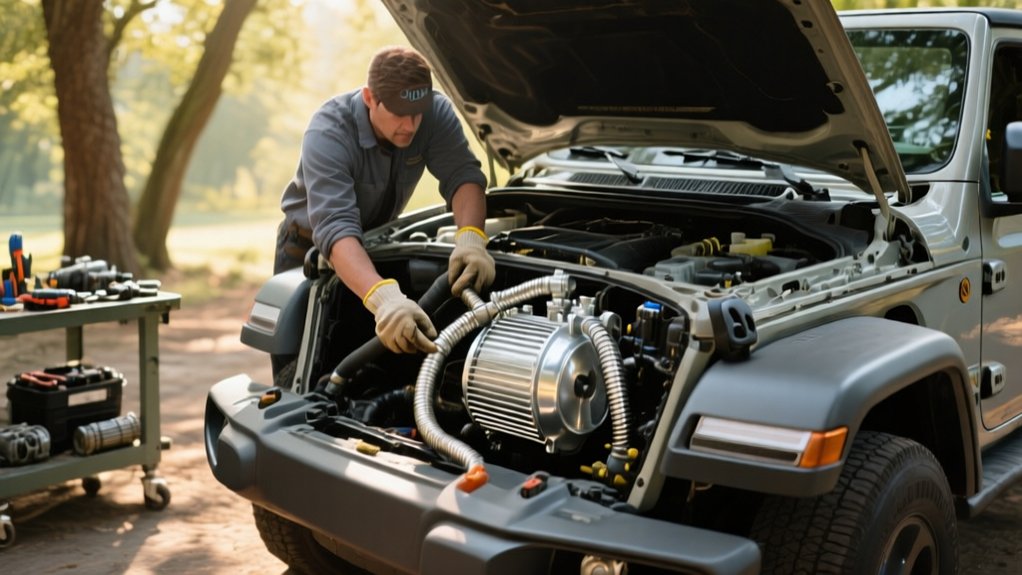
Now that you have your tools and parts ready, it’s time to focus on mounting the AC compressor securely to your Jeep’s engine. You’ll also need to position the condenser where it gets ideal airflow without interfering with other components.
Let’s cover some key tips to make sure both parts fit and function properly.
Compressor Mounting Tips
Before you bolt the AC compressor and condenser into place, make sure you’ve reviewed the mounting points carefully to guarantee proper alignment and clearance. Proper compressor mounting ensures smooth operation and prevents premature wear.
Here are some tips to keep in mind:
- Use the correct brackets designed specifically for your Jeep Wrangler model to avoid fitment issues.
- Tighten all bolts to the manufacturer’s torque specifications to prevent vibrations and loosening.
- Check that the compressor pulley aligns perfectly with the engine belt to avoid belt slippage or damage.
- Confirm enough space around the compressor for airflow and easy access during maintenance.
Following these steps will help you install a secure, efficient AC compressor setup without complications.
Condenser Placement Guide
Where should you place the condenser for ideal cooling and airflow in your Jeep Wrangler? You want it in front of the radiator, where it can get maximum airflow while driving. This location helps the condenser dissipate heat efficiently, keeping your AC system running smoothly.
Make certain there’s enough clearance from the radiator to avoid blocking airflow or overheating. Secure the condenser firmly using brackets or mounting points designed for your model.
Avoid placing it where road debris or mud can easily hit it, as that can reduce performance and cause damage. Also, verify the condenser lines have enough slack to prevent stress or leaks.
Proper placement and secure mounting are key to keeping your AC system reliable and effective in your Jeep Wrangler.
Mounting the AC Evaporator and Connecting Ductwork in Your Jeep Wrangler
Since proper placement guarantees efficient cooling, you’ll want to securely mount the AC evaporator in your Jeep Wrangler’s cabin before connecting the ductwork. Start by choosing a spot with good airflow and easy access for maintenance.
Then, follow these steps:
- Attach the evaporator firmly to the firewall or under the dash using brackets designed for your model.
- Make certain all connections are tight to prevent leaks and maximize air pressure.
- Route the ductwork from the evaporator outlets to the vents, avoiding sharp bends that restrict airflow.
- Secure the ductwork with clamps or zip ties to keep everything in place and prevent rattling.
Taking these steps guarantees your evaporator works efficiently, delivering cool air evenly throughout the cabin.
Wiring and Electrical Basics for Your Jeep Wrangler AC
Now that the evaporator and ductwork are in place, it’s time to focus on your Jeep Wrangler’s wiring and electrical setup.
You’ll need to understand the basic wiring layout and key AC components like the compressor clutch and blower motor.
Getting these details correct ensures your new AC system runs smoothly and safely.
Understanding Jeep Wrangler Wiring
How do you navigate the wiring system in your Jeep Wrangler to add an AC unit effectively? Understanding the basics of your Wrangler’s wiring is key to a smooth installation. You need to identify the main power sources and grounding points, plus the wiring harness that connects to the dashboard controls.
Here’s what to focus on:
- Locate the battery and fuse box to ensure proper power supply.
- Identify the ignition switch wire for controlling the AC system’s power.
- Find the ground wires to avoid electrical faults.
- Trace the wiring harness behind the dashboard to connect controls and sensors.
Mastering these steps helps you avoid common wiring mistakes and ensures your new AC works safely and reliably.
AC Electrical Component Basics
With a solid grasp of your Wrangler’s wiring layout, you can start focusing on the key electrical components that make up the AC system. Your AC relies on a compressor clutch, condenser fan, pressure switches, and relays.
The compressor clutch engages the compressor when you turn on the AC, powered through a relay that prevents overload. The condenser fan cools the refrigerant and kicks in automatically when temperatures rise.
Pressure switches monitor refrigerant levels and protect the system by cutting power if pressures get too high or low.
All these parts connect through your vehicle’s wiring harness, which routes power safely and efficiently.
Understanding how these components work together helps you troubleshoot and ensures your AC operates smoothly once installed.
Upgrading the Existing AC System in Your Jeep Wrangler
Although your Jeep Wrangler’s factory AC may keep you cool, upgrading the existing system can substantially improve its performance and reliability. You don’t have to settle for lukewarm air or noisy operation.
By enhancing key components, you’ll enjoy more consistent cooling and better energy efficiency.
Consider these upgrades:
- Replace the condenser with a high-efficiency model to improve heat dissipation.
- Install a more powerful compressor for stronger airflow and faster cooling.
- Upgrade the blower motor to increase air circulation inside the cabin.
- Use modern, high-quality hoses and fittings to prevent leaks and boost system durability.
These improvements help your AC run smoother and last longer, making your Jeep more comfortable during hot rides.
Choosing Refrigerant and Charging Your Jeep Wrangler’s AC System
Before you recharge your Jeep Wrangler’s AC system, you’ll need to choose the right refrigerant to assure peak cooling performance and system longevity. Most modern Jeep Wranglers require R-134a refrigerant, but some newer models may use R-1234yf, which is more eco-friendly. Using the correct refrigerant guarantees safety and efficiency. When charging the system, always follow the manufacturer’s recommended amount to avoid overcharging or undercharging, which can damage components.
| Refrigerant Type | Environmental Impact | Compatibility |
|---|---|---|
| R-134a | Moderate | Most Wrangler models |
| R-1234yf | Low | Newer Wrangler models |
| R-12 (obsolete) | High (phased out) | Not recommended |
Use a certified gauge set and follow the service manual to charge your AC correctly.
Avoid Common Jeep Wrangler AC Installation Mistakes
Installing an AC system in your Jeep Wrangler can be straightforward if you steer clear of common mistakes that often lead to poor performance or costly repairs. To guarantee a smooth installation, keep these tips in mind:
- Don’t skip proper measurements – Make sure all components fit your Jeep’s specific model to avoid space issues or improper mounting.
- Avoid incorrect refrigerant charging – Overcharging or undercharging can damage the system or reduce cooling efficiency.
- Never ignore electrical connections – Secure and correctly wire all electrical parts to prevent shorts or system failure.
- Don’t overlook sealing and insulation – Properly seal ducts and insulate lines to maintain cooling and prevent leaks.
Following these pointers will help you install your AC system confidently and efficiently.
Testing and Troubleshooting Your Jeep Wrangler’s New AC
Once you’ve completed the installation, you’ll want to thoroughly test your Jeep Wrangler’s new AC system to guarantee it runs smoothly and cools effectively.
Start the engine and turn the AC to its highest setting. Check for cold air from all vents and listen for unusual noises from the compressor or blower.
Monitor the AC pressure with gauges to ensure it’s within the manufacturer’s recommended range.
If the air isn’t cold or airflow feels weak, inspect for leaks, loose connections, or a faulty compressor clutch.
Also, verify the refrigerant level and electrical wiring.
Address any issues immediately to avoid damage.
Maintaining Your Jeep Wrangler’s AC System for Longevity
After ensuring your Jeep Wrangler’s AC system runs smoothly, keeping it in top shape will help it last longer and perform better. You’ll want to make maintenance a regular part of your routine.
Maintaining your Jeep Wrangler’s AC regularly ensures it stays efficient and reliable for years to come.
Here are four key steps to maintain your AC system:
- Check Refrigerant Levels – Low refrigerant can strain the compressor, so top it up as needed.
- Inspect and Replace Filters – Clean filters improve airflow and prevent debris from damaging components.
- Examine Belts and Hoses – Look for cracks or wear and replace any compromised parts promptly.
- Run the AC Regularly – Even in cooler months, running the system prevents seals from drying out and keeps things lubricated.
Following these steps will extend your AC’s life and keep your Jeep comfortable for years.
Tips to Keep Your Jeep Wrangler Cool All Summer
When temperatures rise, keeping your Jeep Wrangler cool becomes essential for a comfortable ride. First, park in shaded areas whenever possible to reduce heat buildup inside your vehicle. Using a windshield sunshade helps block direct sunlight, keeping the cabin cooler.
Crack your windows slightly to promote airflow without compromising security. Installing window tint can also cut down on heat and glare. If your Wrangler has a soft top, consider replacing it with a cooler, more reflective material.
Regularly check and maintain your AC system to guarantee it runs efficiently. Ultimately, avoid using dark seat covers that absorb heat; opt for lighter colors instead. These simple actions help you enjoy your Jeep comfortably all summer long.
Frequently Asked Questions
Can Adding AC Affect My Jeep Wrangler’s Fuel Efficiency?
Yes, adding AC can slightly reduce your Jeep Wrangler’s fuel efficiency because the compressor uses engine power. However, modern systems are more efficient, so you won’t notice a huge drop unless you use the AC constantly.
Will Adding AC Reduce My Jeep Wrangler’s Off-Road Capabilities?
You won’t lose off-road capabilities by adding AC—it’s not like your Jeep turns into a sluggish turtle overnight! Sure, the added weight and engine load might slightly impact performance, but it’s barely noticeable when you’re conquering trails.
How Much Does It Typically Cost to Add AC to a Jeep Wrangler?
You’ll typically spend between $1,500 and $3,500 to add AC to your Jeep Wrangler, depending on parts, labor, and model year. Costs vary, so getting multiple quotes helps you find the best deal.
Can I Install AC in Older Jeep Wrangler Models?
You can install AC in older Jeep Wranglers, and ironically, some vintage models actually make the process easier due to simpler engine bays. Just be prepared for custom fittings and possibly upgrading certain components for smooth operation.
Does Adding AC Require Professional Installation or Can I DIY?
You can DIY adding AC if you have mechanical skills and proper tools, but it’s complex and requires refrigerant handling. Most people opt for professional installation to guarantee safety, proper function, and avoid costly mistakes.
Conclusion
Now that you’ve added AC to your Jeep Wrangler, you’re ready to turn your ride into a cool oasis amid the desert heat. Like a revitalizing breeze on a blazing day, your new system will keep sweat at bay and adventures comfortable. With a little care and attention, your Wrangler’s AC will hum smoothly, letting you conquer every trail without breaking a sweat. Stay cool, stay wild, and enjoy the ride!