Does a Jeep Wrangler Sport Have Locking Differentials?
The Jeep Wrangler Sport does not come with locking differentials from the factory; it has standard open differentials that limit off-road traction in tough conditions. You’ll need to upgrade to aftermarket locking differentials if you want improved grip on slippery or uneven terrain. Higher trims like the Rubicon include factory-installed lockers for better off-road capability. If you want to understand how locking differentials work and whether upgrading is right for you, keep exploring the details ahead.
What Are Locking Differentials and Why They Matter
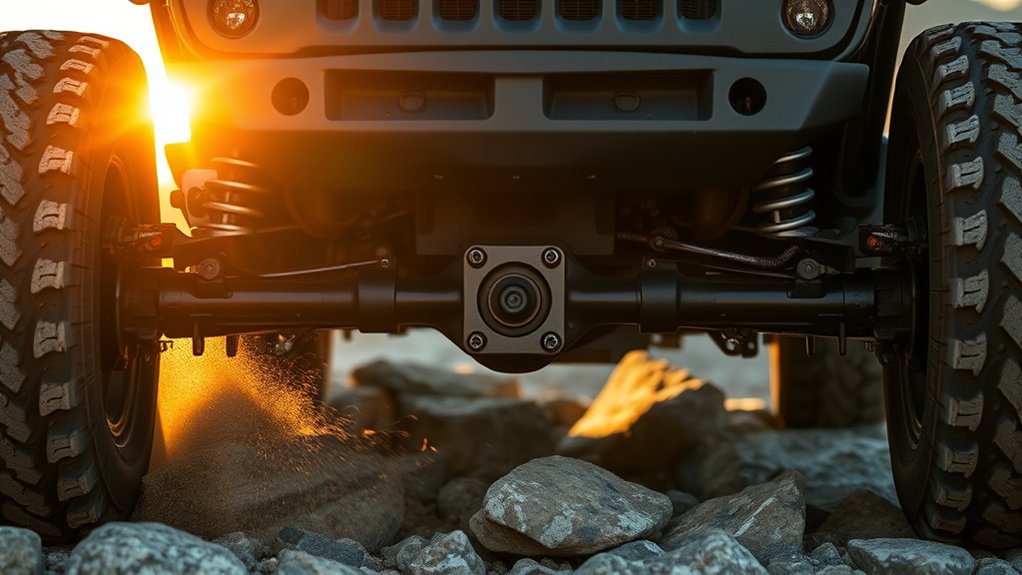
What exactly are locking differentials, and why should you care? Locking differentials are mechanisms that guarantee both wheels on an axle turn at the same speed, even if one loses traction. This feature is vital when you’re off-roading or driving on slippery surfaces.
Without locking differentials, power would go to the wheel with the least grip, leaving you stuck. When engaged, these differentials “lock” the wheels together, maximizing traction and control.
You’ll find this especially helpful on uneven terrain, mud, snow, or rocky paths. In short, locking differentials improve your vehicle’s capability and safety by preventing wheel slippage.
Understanding how they work helps you appreciate their value and decide if your Jeep or any off-road vehicle needs them.
Does the Jeep Wrangler Sport Have Locking Differentials?
Locking differentials can make a big difference when you’re tackling tough terrain, so it’s natural to wonder if the Jeep Wrangler Sport comes equipped with them. The Jeep Wrangler Sport, as the base model, doesn’t come with factory-installed locking differentials. Instead, it features standard open differentials, which work fine for everyday driving but may limit your capability on challenging off-road trails.
However, you can add locking differentials as an aftermarket upgrade or choose higher Wrangler trims that offer them. Understanding this helps you make informed decisions about your off-road needs and whether additional modifications might be necessary to enhance your Jeep Wrangler Sport’s performance in demanding conditions.
Are Locking Differentials Standard or Optional on the Jeep Wrangler Sport?
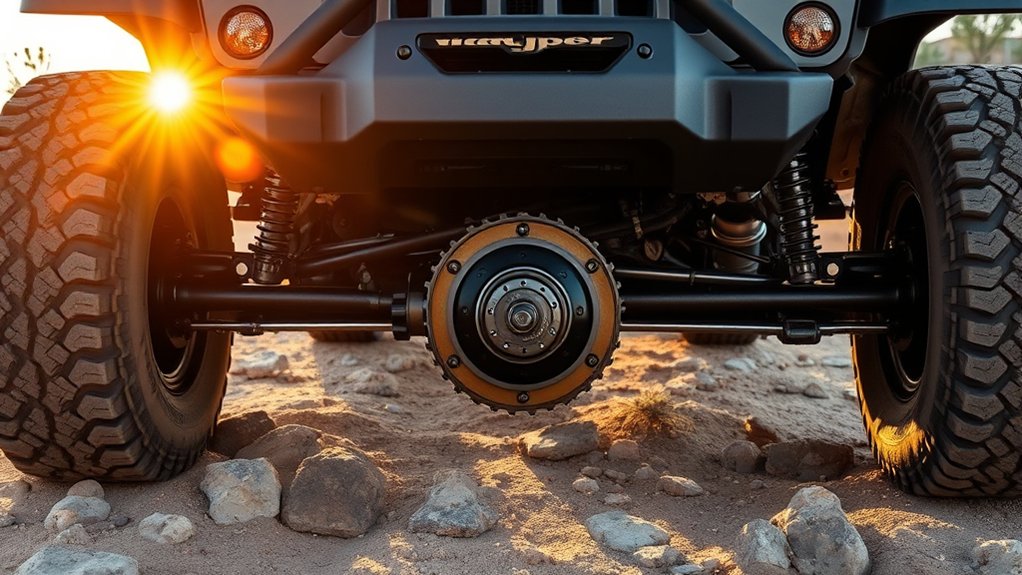
When evaluating the Jeep Wrangler Sport’s off-road capabilities, you might wonder if it comes with locking differentials as standard or if they’re an optional feature. The truth is, the Sport model doesn’t include locking differentials as a standard feature.
Instead, these are optional upgrades you can add depending on your off-road needs. Typically, locking differentials are available on higher trims or through specific off-road packages.
If you plan to tackle challenging terrain, you’ll want to weigh these options carefully. They provide enhanced traction but come at an additional cost.
How Locking Differentials Improve Traction Off-Road
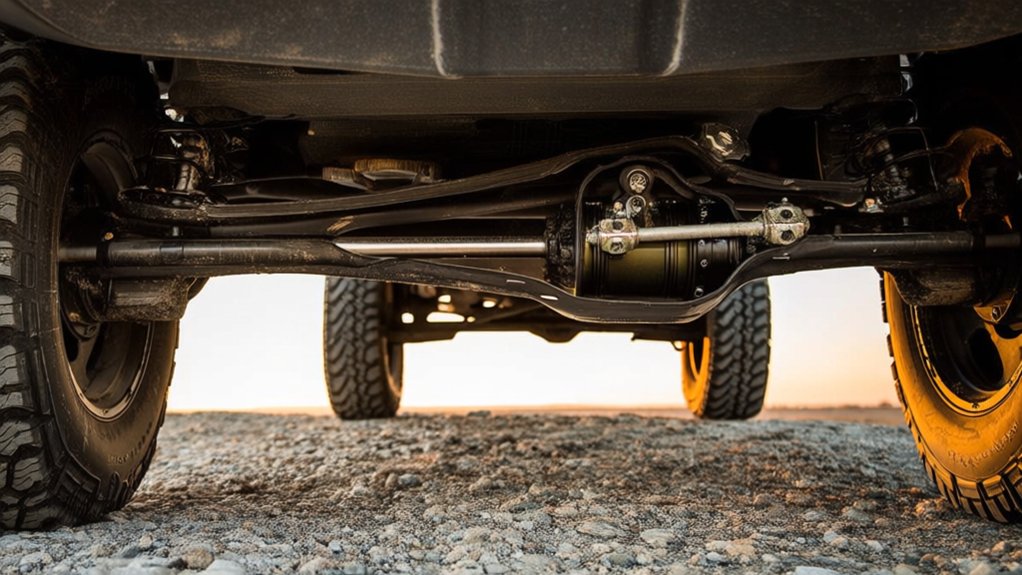
Because uneven terrain can cause wheels to lose grip, you need a way to maintain traction on every surface. Locking differentials do this by forcing both wheels on an axle to rotate at the same speed, even if one wheel is slipping. This keeps power flowing to the wheel with traction, preventing you from getting stuck.
Here’s how locking differentials help off-road:
| Terrain Type | Without Locking Diff | With Locking Diff |
|---|---|---|
| Mud | Wheel spins freely | Both wheels turn |
| Rocks | One wheel stalls | Equal power to both |
| Sand | Loss of traction | Steady movement |
| Snow | Slippage occurs | Improved grip |
| Steep inclines | Risk of slipping | Balanced traction |
Locking differentials give you confidence to tackle tough trails.
How Locking Differentials Impact Jeep Wrangler Sport Performance
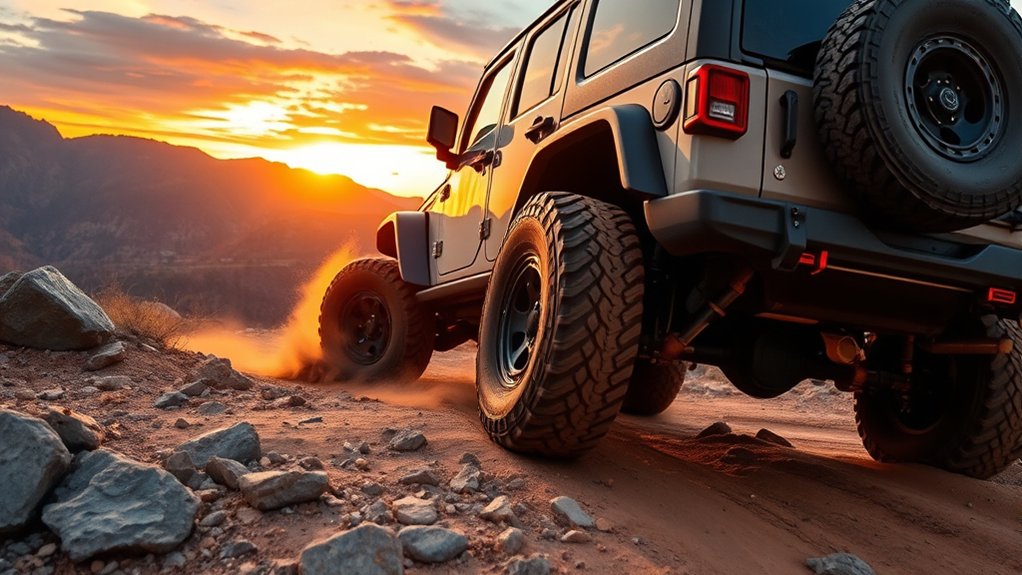
Although the Jeep Wrangler Sport already handles rough terrain well, adding locking differentials considerably boosts its off-road capabilities. When you engage the lockers, both wheels on an axle spin at the same speed, preventing one from losing traction. This means you’ll power through mud, rocks, or uneven surfaces more confidently, without worrying about getting stuck.
Locking differentials also improve stability by distributing torque evenly, giving you better control on tricky trails. You’ll notice enhanced climbing ability and more consistent performance when tackling challenging obstacles.
Even in slippery conditions, the Jeep Wrangler Sport with lockers maintains momentum, reducing wheel spin. Overall, locking differentials make your driving experience more reliable and enjoyable, especially when you push your Wrangler to explore demanding environments beyond paved roads.
Comparing Locking Differentials: Jeep Wrangler Sport vs. Other Trims
If you want to understand how the Jeep Wrangler Sport’s locking differentials stack up against other trims, it’s important to look at their features and performance differences.
The Wrangler Sport typically comes with open differentials, meaning it lacks factory-installed locking differentials. In contrast, higher trims like the Rubicon offer standard front and rear locking differentials, enhancing off-road capability considerably.
You’ll notice the Rubicon’s locking diffs provide better traction in tough terrains by evenly distributing power to both wheels on an axle. Meanwhile, the Sport requires aftermarket upgrades if you want similar performance.
Why Front and Rear Locking Differentials Matter on the Wrangler Sport
When you tackle challenging off-road trails in your Wrangler Sport, front and rear locking differentials can make all the difference in maintaining traction and control. These locking differentials guarantee power reaches both wheels on an axle equally, preventing wheel slip when one wheel loses grip on uneven terrain.
This means you’ll avoid getting stuck in mud, rocks, or sand. Locking differentials improve your vehicle’s stability and capability by distributing torque efficiently, allowing you to confidently navigate tough obstacles.
Without them, your Wrangler Sport might struggle in tricky conditions, as power could be wasted on a slipping wheel. So, having front and rear lockers boosts your off-road performance, giving you better control, improved traction, and a safer, more enjoyable driving experience on rugged trails.
How to Check If Your Jeep Wrangler Sport Has Locking Differentials
To check if your Jeep Wrangler Sport has locking differentials, start by locating the differential lock controls inside the vehicle.
Next, inspect the vehicle specifications label, usually found on the door jamb or under the hood.
If you’re still unsure, consult your owner’s manual for detailed information.
Locate Differential Lock Controls
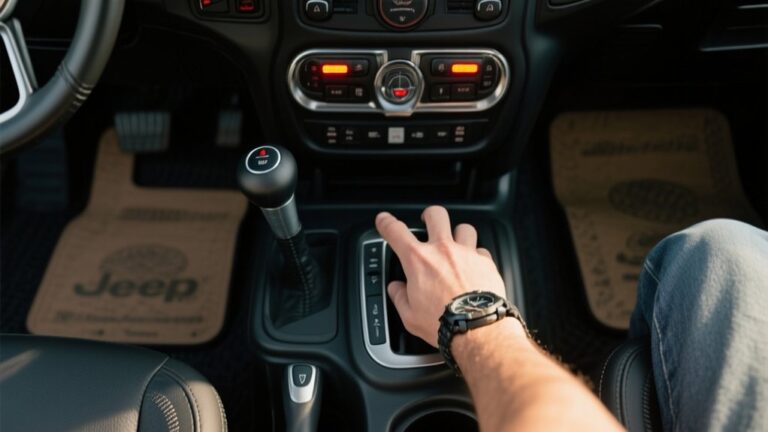
Wondering how to tell if your Jeep Wrangler Sport comes with locking differentials? The easiest way is to locate the differential lock controls inside your vehicle. These controls are usually buttons or switches that engage the locking mechanism for the front and rear differentials. You’ll find them near the center console, dashboard, or sometimes on the transfer case shifter. Here’s a quick guide to help you spot them:
| Location | What to Look For |
|---|---|
| Center Console | Buttons labeled “Lock” |
| Dashboard | Switches with differential icons |
| Transfer Case Shifter | Additional lever or knob |
| Near Gear Shifter | Small toggle or push button |
If you don’t see any of these, your Wrangler Sport likely doesn’t have locking differentials.
Inspect Vehicle Specifications Label
If you didn’t find any differential lock controls inside your Jeep Wrangler Sport, another reliable method is to check the vehicle specifications label. This label is usually located on the driver’s side door jamb or inside the glove compartment.
It contains detailed information about your vehicle’s features and equipment. Look for mentions of “locking differentials,” “limited-slip differential,” or “off-road package.” These terms indicate whether your Jeep is equipped with locking differentials.
The label might also include codes that correspond to specific options; you can cross-reference these codes online or with a dealer to confirm.
Inspecting the specifications label gives you a quick, straightforward way to verify your Jeep’s differential setup without relying on guesswork or physical controls.
Consult Owner’s Manual
Although checking your Jeep Wrangler Sport for locking differentials may seem tricky, your owner’s manual provides clear guidance on this. Start by locating the manual, usually found in the glove box or online as a PDF.
Look for sections labeled “Drivetrain,” “Differentials,” or “4WD System.” The manual will specify if your model includes locking differentials and explain how to identify them. It may also provide instructions on operating or engaging the locks if equipped.
Using the manual guarantees you get accurate information tailored to your specific model year and trim. If you don’t find relevant details, cross-reference with the specifications label or contact a dealer.
Consulting the owner’s manual is the quickest, most reliable way to confirm whether your Jeep Wrangler Sport has locking differentials.
Alternatives to Locking Differentials on the Jeep Wrangler Sport
If you’re looking for other ways to boost traction on your Jeep Wrangler Sport, traction control systems offer a smart, electronic option.
You can also explore aftermarket differential upgrades that provide enhanced performance without factory locking differentials.
Both choices give you flexibility depending on your off-road needs and budget.
Traction Control Systems
While locking differentials provide mechanical traction benefits, traction control systems offer a high-tech alternative that can improve your Jeep Wrangler Sport’s grip on slippery surfaces.
Instead of physically locking the wheels, traction control uses sensors to monitor wheel speed and automatically apply brakes to any wheel that’s slipping. This transfers power to the wheels with better traction, helping you maintain control without manual intervention.
You don’t have to worry about engaging or disengaging anything; the system works seamlessly in the background. It’s especially useful on wet roads, loose gravel, or mild off-road trails where full mechanical locks might be overkill.
Though it doesn’t replace the brute force of locking differentials, traction control enhances your Wrangler’s stability and safety in everyday driving conditions.
Aftermarket Differential Options
Traction control systems help manage wheel slip without driver input, but some Jeep Wrangler Sport owners want even more control over their vehicle’s capabilities. If you’re one of them, aftermarket differential options offer solid alternatives to factory locking differentials.
You can install limited-slip differentials, which help distribute power more evenly between wheels, improving traction on uneven terrain. Another popular choice is an electronic locker, which lets you manually engage the differential lock for better control in challenging conditions.
Air lockers are also an option, providing full locking capabilities controlled by a switch inside your Jeep. These upgrades enhance off-road performance and give you the confidence to tackle tougher trails.
Just make sure to choose a system compatible with your Jeep’s setup and driving style.
How to Upgrade Your Jeep Wrangler Sport With Locking Differentials
Upgrading your Jeep Wrangler Sport with locking differentials enhances its off-road capability by improving wheel grip on uneven terrain.
To start, choose the right locking differential type—manual or electronic—based on your driving needs and budget.
Next, gather necessary tools like a jack, wrenches, and a torque wrench.
You’ll need to remove the axle cover and drain the differential fluid before swapping out the stock differential for the locking one.
Make sure to follow the manufacturer’s installation instructions carefully to avoid damaging components.
After installation, refill the differential with proper gear oil and test the locks to confirm they engage smoothly.
If you’re not confident, consider professional installation to guarantee proper function and safety.
Key Drivetrain and Traction Features on the Jeep Wrangler Sport
You’ll want to understand the Jeep Wrangler Sport’s drivetrain setup to see how it handles tough terrain. Its traction control systems work together to keep you moving smoothly, even on slippery surfaces.
Let’s explore these features to help you get the most from your Wrangler.
Drivetrain Configuration Overview
While exploring rugged terrain, the Jeep Wrangler Sport’s drivetrain configuration guarantees you maintain control and power delivery exactly where you need it. It comes equipped with a part-time four-wheel-drive system, which lets you switch between 2WD for everyday driving and 4WD for off-road challenges.
The Wrangler Sport uses a Command-Trac system, featuring a two-speed transfer case that offers a low-range mode for enhanced torque on steep or slippery surfaces. This setup assures that power is efficiently distributed between the front and rear axles, giving you traction when conditions get tough.
Although it doesn’t include locking differentials as standard, the drivetrain is designed to work seamlessly with available traction aids, keeping you confident and capable on varied terrains.
Traction Control Systems
How does the Jeep Wrangler Sport keep you steady when the terrain gets tricky? It relies on its traction control system to prevent wheel slip and maintain grip.
When one wheel starts to spin, the system automatically applies brake pressure to that wheel and redirects power to the wheels with better traction. This helps you avoid getting stuck in mud, sand, or loose gravel.
While the Sport model doesn’t come with locking differentials, its traction control system enhances stability and control, especially during off-road driving. You can trust it to adjust power delivery dynamically, giving you confidence on uneven or slippery surfaces.
This feature works seamlessly with the Wrangler’s 4×4 drivetrain to keep you moving forward safely and efficiently.
Pros and Cons of Locking Differentials on the Jeep Wrangler Sport
Locking differentials offer Jeep Wrangler Sport owners enhanced traction by ensuring both wheels on an axle rotate together, which can be a game-changer in off-road conditions. However, they come with trade-offs you should consider before deciding if they’re right for you.
| Pros | Cons | Impact |
|---|---|---|
| Improved traction | Reduced fuel efficiency | Better off-road capability |
| Enhanced control on rough terrain | Increased tire wear | Higher maintenance costs |
| Better performance in mud/snow | Can cause drivetrain binding | Potential drivability issues |
| Increased towing ability | More expensive to install | Higher upfront cost |
| Boosts confidence in tough environments | Requires learning to use properly | Steeper learning curve |
Understanding these pros and cons helps you decide if locking differentials suit your driving needs.
Maintenance and Durability of Locking Differentials on the Wrangler Sport
To keep your Wrangler Sport’s locking differentials running smoothly, regular maintenance is key. You’ll want to watch for common wear signs and stay on top of fluid changes to extend their life.
Understanding typical repairs can help you avoid costly downtime and keep your Jeep ready for any trail.
Differential Maintenance Tips
When should you check the differentials on your Jeep Wrangler Sport to keep them running smoothly? It’s a good idea to inspect them every 12,000 miles or after any intense off-road trip.
Regularly check the differential fluid level and look for leaks around the housing. Fresh fluid ensures proper lubrication and prevents overheating. When changing the fluid, use the manufacturer’s recommended type and avoid mixing fluids.
Also, keep an eye on unusual noises or vibrations, as they can signal worn gears or bearings. Clean the breather vent to prevent pressure build-up and contamination.
Finally, if you notice difficulty in turning or uneven tire wear, get the differentials inspected immediately. Staying proactive helps you avoid costly repairs and keeps your Wrangler Sport ready for any adventure.
Longevity of Locking Differentials
Although locking differentials add extra durability to your Jeep Wrangler Sport, their longevity depends heavily on proper care and maintenance. You need to regularly check fluid levels, avoid harsh off-road impacts, and clean components to prevent premature wear. Proper use, like engaging the lockers only when necessary, also extends their life.
Here’s a quick overview of factors influencing longevity:
| Factor | Impact on Longevity | Maintenance Tip |
|---|---|---|
| Fluid Quality | High – prevents wear | Change differential fluid regularly |
| Usage Frequency | Moderate – overuse strains | Engage lockers only off-road |
| Environmental Exposure | Moderate – dirt/water damage | Clean and inspect often |
Common Wear and Repairs
Understanding how locking differentials wear over time helps you spot issues before they become costly repairs.
On the Jeep Wrangler Sport, common wear signs include clicking noises, difficulty engaging the locker, or uneven tire wear. These symptoms often stem from worn gears, damaged seals, or low differential fluid.
Regularly check and change the differential fluid to prevent premature wear caused by heat and contaminants. If you notice leaks or unusual noises, inspect the seals and gears promptly.
Repairs usually involve replacing worn gears, seals, or bearings. Addressing these issues early keeps your locking differentials reliable and extends their lifespan.
Staying proactive with maintenance ensures your Wrangler Sport’s off-road capability stays strong without unexpected breakdowns.
Trail-Rated Jeep Wranglers: Sport vs. Models With Locking Differentials
If you’re comparing Trail-Rated Jeep Wranglers, you’ll notice key differences between the Sport model and those equipped with locking differentials. The Sport generally lacks factory-installed locking differentials, impacting off-road capability, while models with lockers offer enhanced traction on challenging terrain. Trail-rated status ensures both meet certain standards, but lockers provide a clear edge in extreme conditions.
| Feature | Sport Model | Models with Locking Differentials |
|---|---|---|
| Locking Differentials | No | Yes |
| Off-Road Traction | Good | Superior |
| Price | Lower | Higher |
| Trail-Rated | Yes | Yes |
| Ideal For | Light to moderate trails | Rough, technical trails |
Choosing depends on how tough your trails get.
Should You Choose the Jeep Wrangler Sport If You Need Locking Differentials?
When you need locking differentials for serious off-road performance, the Jeep Wrangler Sport mightn’t be the best fit right out of the gate. The Sport trim doesn’t come with factory-installed locking differentials, which means you’d have to invest in aftermarket upgrades to get that level of traction and control.
If you’re tackling challenging trails or slippery terrain regularly, models like the Rubicon or the Mojave are better choices since they come equipped with front and rear locking differentials from the factory.
However, if you primarily drive on-road and only occasionally venture off-road, the Sport can work well with some additional modifications.
Ultimately, if locking differentials are a must-have for your adventures, opting for a Wrangler with factory-installed lockers saves you time and effort.
Frequently Asked Questions
What Is the Fuel Economy of the Jeep Wrangler Sport?
You can expect around 17 mpg in the city and 23 mpg on the highway with the Jeep Wrangler Sport. It’s not the most fuel-efficient, but it balances off-road capability with decent economy.
How Much Does the Jeep Wrangler Sport Cost?
You’ll find the Jeep Wrangler Sport starts around $33,000. But wait—options and trims can push that price higher. So, if you want extra features, be ready to invest a bit more.
What Engine Options Are Available for the Jeep Wrangler Sport?
You’ll find the Jeep Wrangler Sport offers a 2.0-liter turbocharged inline-4 engine or a 3.6-liter V6. Both deliver strong performance, letting you tackle off-road adventures with confidence and power.
Does the Jeep Wrangler Sport Have Advanced Safety Features?
You won’t find a spaceship’s safety system in your Jeep Wrangler Sport, but it does have essential features like airbags, stability control, and a rearview camera. So, you’re protected without feeling like you’re piloting a drone.
What Interior Features Come Standard in the Jeep Wrangler Sport?
You get cloth seats, a 5-inch touchscreen, Bluetooth, USB ports, and a leather-wrapped steering wheel standard in the Jeep Wrangler Sport. It’s rugged yet functional, designed to keep you comfortable on and off the road.
Conclusion
If you’re gearing up for off-road adventures, remember: the Jeep Wrangler Sport doesn’t come with locking differentials, so it’s not your off-road Excalibur. While it’s a capable steed on many trails, those locking differentials are the secret weapon for conquering tougher terrain. If you need that extra grip and control, consider models equipped with them—because sometimes, the right gear turns a good journey into a legendary one.