How to Release the Parking Brake on a Jeep Renegade in 7 Easy Steps
To release the parking brake on your Jeep Renegade, first locate the small electronic switch behind the gear shifter marked with a “P.” Make sure your vehicle is in Park (automatic) or first gear/reverse (manual). Fully press the brake pedal for stability, then gently press or pull the switch to disengage the brake. Confirm the dashboard light turns off and test by moving slowly. If you want to handle any issues smoothly, keep following for helpful tips.
Locate the Parking Brake Control in Your Jeep Renegade
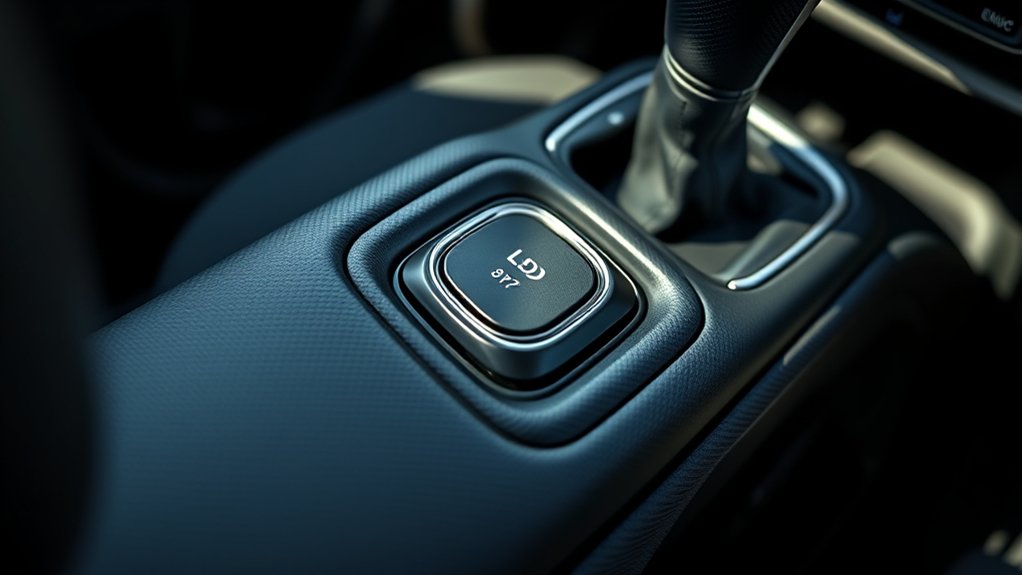
Where exactly is the parking brake control in your Jeep Renegade? You’ll find it conveniently positioned between the driver and front passenger seats, just behind the gear shifter.
Instead of a traditional lever, the Renegade uses an electronic parking brake switch. This small, rectangular button often has a “P” symbol enclosed in a circle, making it easy to spot.
When you engage the parking brake, you’ll hear a soft motorized sound as the system activates.
To release it, you simply pull up or press the switch, depending on your model.
Knowing the exact location and appearance of this control is essential for smooth operation, especially if you’re new to the Jeep Renegade or switching from a vehicle with a manual parking brake.
Make Sure Your Jeep Is in the Right Gear
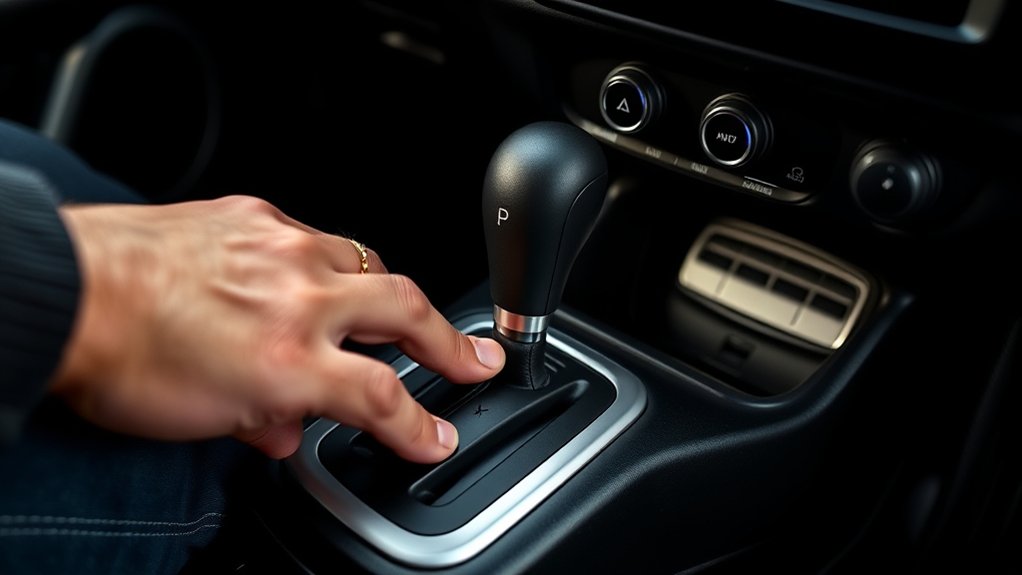
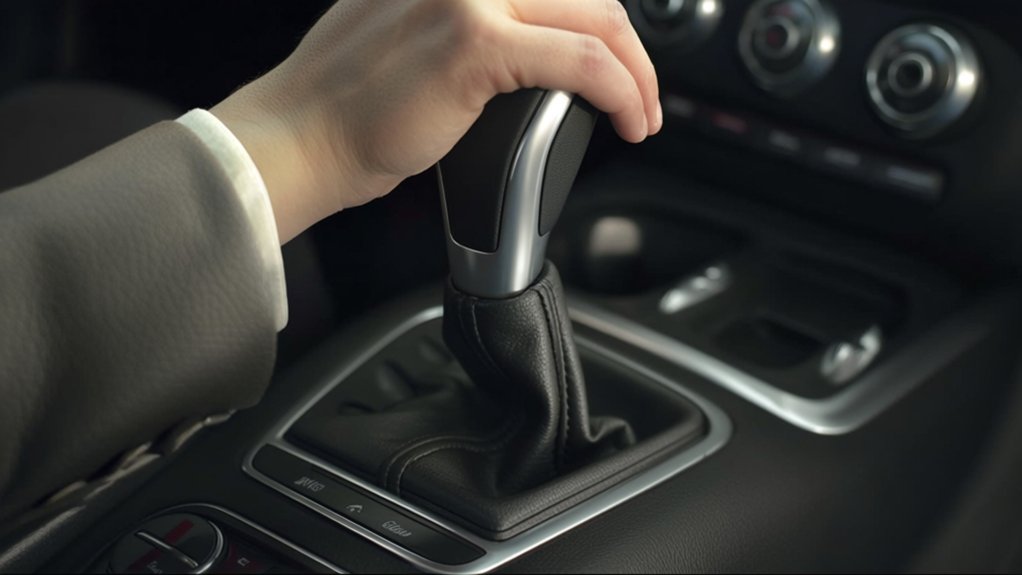
Before you release the parking brake, make sure your Jeep Renegade is in the correct gear to prevent any unintended movement. If you drive an automatic, shift the gear selector to “Park” (P) to lock the transmission. This guarantees your vehicle won’t roll once the parking brake is off.
For manual transmissions, place the gear stick in first gear or reverse, depending on your parking position, to hold the Jeep in place. Double-check that the gear is fully engaged by gently rocking the vehicle; it shouldn’t move.
This simple step keeps your Jeep secure and avoids accidents or damage. Taking the time to confirm the right gear helps you safely release the parking brake with confidence.
Press the Brake Pedal Fully Before Releasing the Parking Brake
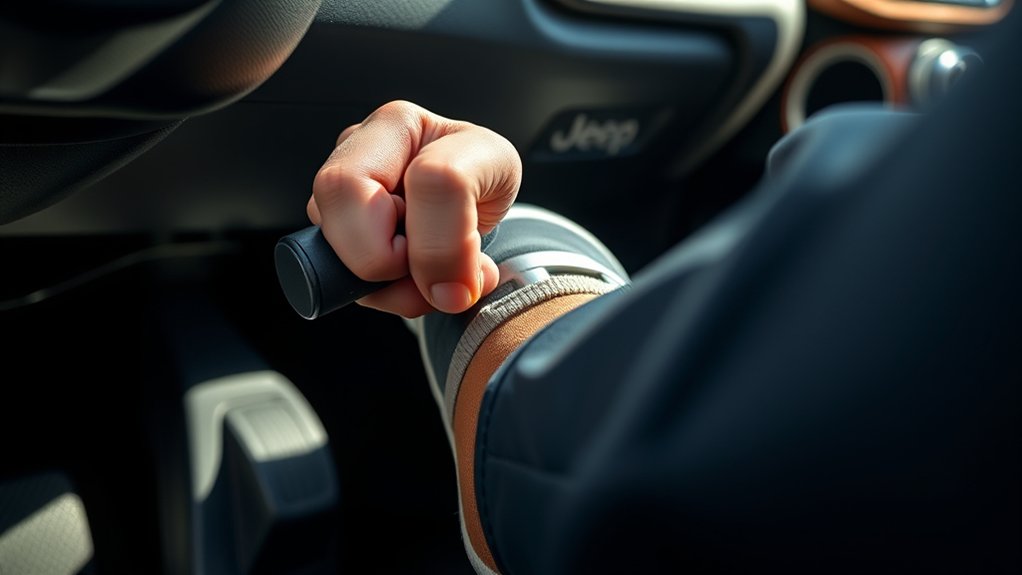
Once your Jeep Renegade is securely in the correct gear, you’ll want to press the brake pedal fully to keep the vehicle from moving as you release the parking brake.
This step guarantees safety and control, preventing any unexpected rolling.
Here’s why pressing the brake pedal firmly matters:
- It stabilizes the vehicle during the shift.
- It prevents sudden jerks or movements.
- It gives you better control in case the parking brake is released prematurely.
- It reduces wear on the brake system by avoiding abrupt strain.
Release the Parking Brake Lever or Button Gently
When you’re ready to release the parking brake, make sure to handle the lever or button gently.
Avoid sudden or forceful movements to prevent damage to the brake system.
Taking it slow helps keep everything working smoothly.
Handle Brake Controls Carefully
Although it might seem straightforward, you should handle the parking brake controls with care to avoid any sudden movements or damage. Treating the lever or button gently guarantees the system’s longevity and prevents unnecessary wear.
When releasing the parking brake on your Jeep Renegade, keep these points in mind:
- Apply steady, even pressure when lifting or pressing the lever/button.
- Avoid forcing the control if it feels stuck; check for mechanical issues instead.
- Keep your hand steady to maintain control and prevent slips.
- Listen for the disengagement click or indicator to confirm the brake is fully released.
Avoid Sudden Lever Movements
Taking your time with the parking brake controls helps prevent damage and guarantees smooth operation. When you release the parking brake lever or button, avoid sudden or forceful movements. Gentle, steady pressure ensures the mechanism disengages properly without straining components. Jerking the lever or pressing the button abruptly can cause wear or even failure over time.
Here’s a quick comparison to guide you:
| Action | Effect |
|---|---|
| Gentle, steady release | Smooth brake disengagement |
| Sudden, forceful pull | Increased wear and tear |
| Abrupt button press | Possible electronic faults |
Check That the Parking Brake Indicator Light Turns Off
Before you fully release the parking brake, make sure the indicator light on your Jeep Renegade’s dashboard turns off. This light confirms the brake is disengaged properly, ensuring safe driving.
Follow these steps to check the indicator light:
- Slowly lower the parking brake lever or press the release button, depending on your model.
- Watch the dashboard closely for the parking brake symbol, typically a red or amber “P” inside a circle.
- Confirm the light goes out completely; a lingering light means the brake is still engaged.
- If the light stays on, stop and reapply the brake, then try releasing it again to avoid driving with the brake partially engaged.
This quick check helps prevent damage and keeps you safe on the road.
Check That the Parking Brake Is Fully Released
Once the parking brake indicator light goes off, make sure the brake itself is fully released by gently trying to move your Jeep Renegade. If you feel resistance or the vehicle doesn’t roll freely, the parking brake might still be partially engaged.
Take a moment to double-check the parking brake lever or pedal—sometimes it doesn’t return completely to its resting position. If your Renegade has an electronic parking brake, ensure you’ve pressed the release button firmly.
Confirming the brake is fully disengaged is essential before driving to avoid unnecessary wear or damage. Once you feel the vehicle move smoothly without any hesitation, you can confidently proceed, knowing the parking brake has been properly released.
Troubleshoot Common Parking Brake Release Issues
If your Jeep Renegade’s parking brake won’t release smoothly, you might be dealing with common issues such as a stuck cable, low brake fluid, or an electrical fault in the electronic parking brake system. To troubleshoot:
- Inspect the cable – Check for rust or damage causing it to stick.
- Check brake fluid – Low levels can affect hydraulic parking brakes.
- Reset the electronic system – Turn the ignition off/on or disconnect the battery briefly.
- Look for warning lights – Dashboard alerts can indicate sensor or motor failures.
Addressing these steps helps you identify and fix release problems efficiently.
If the issue persists, consider professional diagnostics to avoid further damage or safety risks.
Frequently Asked Questions
How Often Should I Service the Parking Brake System?
You should service your parking brake system every 12,000 miles or once a year. Regular checks keep it working smoothly and prevent wear. Don’t wait for issues to arise; proactive maintenance saves you trouble later.
Can Weather Affect the Parking Brake Performance?
Yes, weather can affect your parking brake’s performance. Cold, wet, or icy conditions may cause it to freeze or stick. You should check it regularly and keep it clean to guarantee it works properly in all weather.
Is It Safe to Drive With the Parking Brake Partially Engaged?
Driving with the parking brake partially engaged isn’t safe—it’s like walking on thin ice. You’ll risk overheating brakes, reduced fuel efficiency, and potential damage. Always fully release it before driving to avoid costly repairs and danger.
What Are Signs My Parking Brake Needs Repair?
You’ll notice your parking brake feels loose, won’t hold the car on a slope, or makes grinding noises. If the warning light stays on or the brake lever won’t fully engage, it’s time to get it repaired.
Can I Release the Parking Brake Remotely?
You can’t pull the wool over the system’s eyes—Jeep Renegades don’t support remote parking brake release. You’ll need to manually disengage it inside the vehicle to guarantee safety and proper control before driving off.
Conclusion
Now that you know how to release the parking brake on your Jeep Renegade, you’re ready to hit the road without a hitch. Just remember to press the brake pedal fully and gently release the lever or button while making sure the indicator light turns off. If you run into any issues, don’t sweat it—every cloud has a silver lining, and troubleshooting can get you back on track in no time. Safe driving!