10 Steps to Change Spark Plugs on a 2017 Jeep Renegade
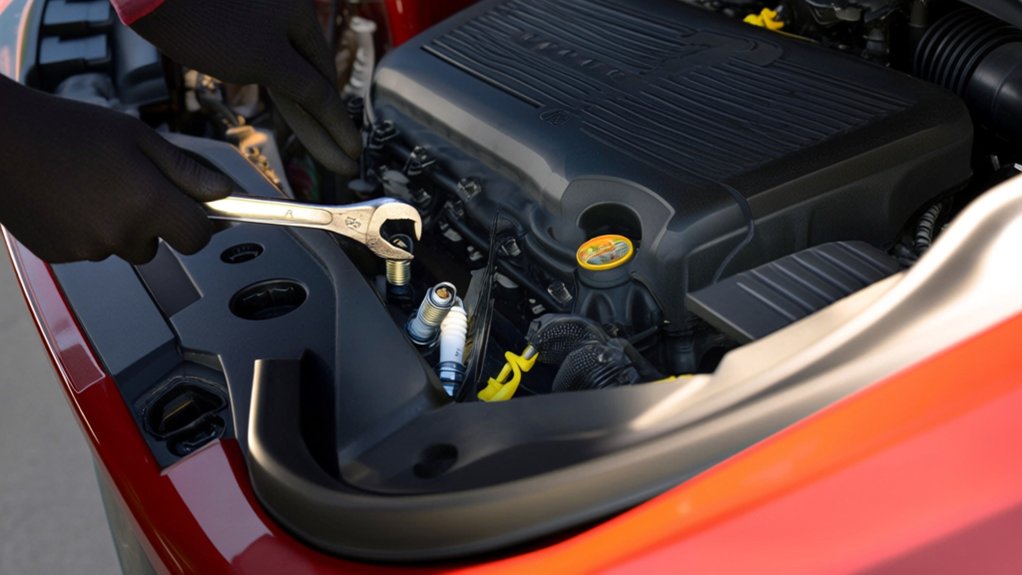
To change spark plugs on your 2017 Jeep Renegade, start by gathering the right tools and disconnecting the battery for safety. Remove the engine cover and ignition coils carefully, then use the correct spark plug socket to remove old plugs. Check and gap new plugs to 0.044 inches, install them hand-tight, and torque to specs to prevent damage. Reinstall ignition coils and the engine cover securely. Afterward, test your engine for smooth performance. Follow these steps closely to master the process and avoid common pitfalls.
Gather Essential Tools for Your 2017 Jeep Renegade Spark Plug Change
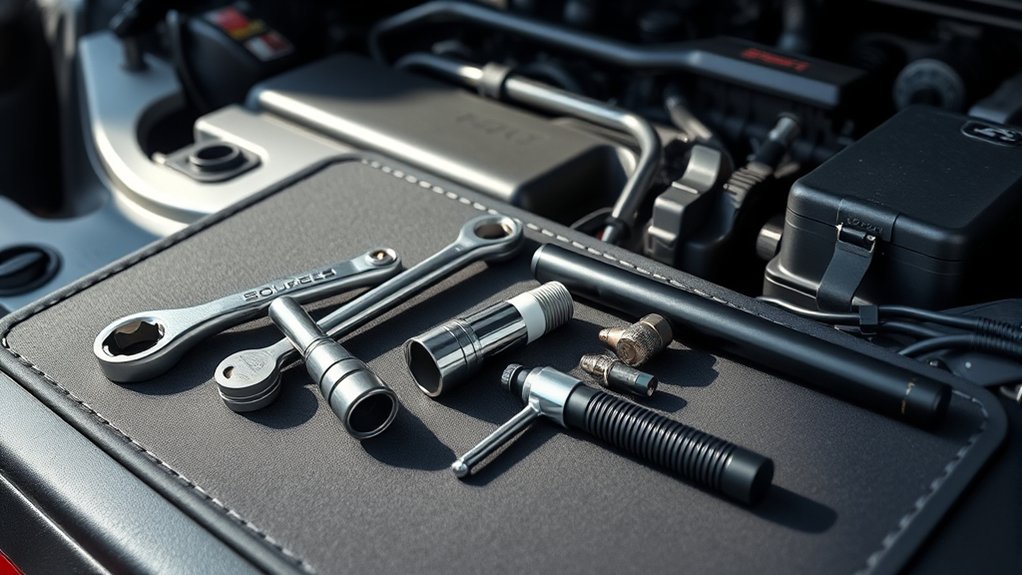
Before you begin changing the spark plugs on your 2017 Jeep Renegade, make sure you have all the necessary tools on hand. You’ll need a spark plug socket, typically 5/8-inch or 13/16-inch, a ratchet wrench, and an extension bar to reach deep spark plugs.
Gather a torque wrench to tighten plugs to the manufacturer’s specifications, guaranteeing you don’t overtighten or leave them too loose. You’ll also want a spark plug gap gauge to check and adjust the gap.
Keep a pair of gloves handy to protect your hands, and a clean rag to wipe the area around the plugs. Having a magnetic pickup tool is helpful for retrieving dropped plugs or bolts.
Being prepared ensures a smooth, efficient process.
Disconnect the Battery to Stay Safe
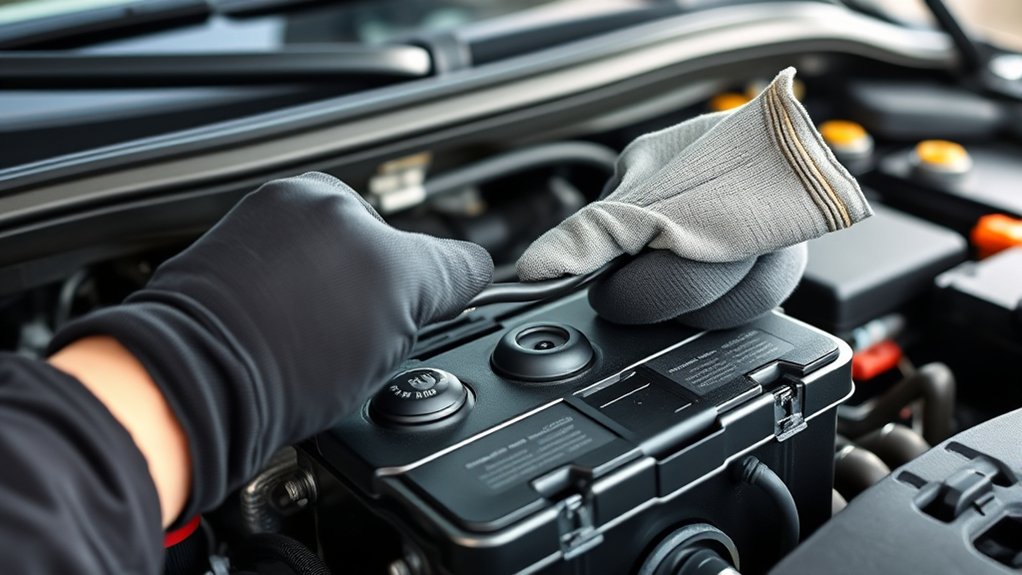
To keep yourself safe while working on your 2017 Jeep Renegade, disconnect the battery before you start. This prevents electrical shocks and accidental short circuits while changing the spark plugs. Locate the battery in the engine bay, usually on the driver’s side. Use a wrench to loosen the negative (-) terminal clamp first, then remove it completely. Always disconnect the negative terminal before the positive (+) to avoid sparks.
| Step | Tip |
|---|---|
| Locate battery | Found on driver’s side |
| Loosen negative (-) | Use a wrench, remove first |
| Remove positive (+) | After negative terminal |
Following these steps guarantees your safety and protects your vehicle’s electrical system during maintenance.
Find the Spark Plugs Beneath the Engine Cover
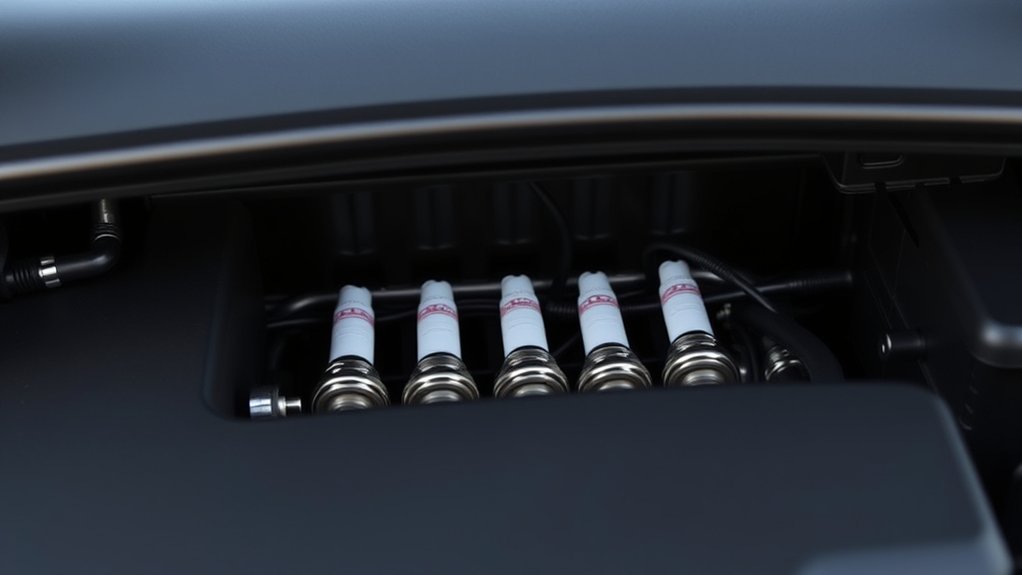
Once the battery is safely disconnected, you can remove the engine cover to access the spark plugs. The spark plugs are positioned directly beneath this cover, arranged along the engine block.
On your 2017 Jeep Renegade, you’ll find four spark plugs, one for each cylinder. They sit nestled between the ignition coils and the engine itself.
Before removing anything, take a moment to locate the spark plug wires or ignition coil packs—they lead directly to the spark plugs. Identifying their exact location now helps you avoid confusion later.
Make sure the engine is cool to prevent burns. With the cover off, you’ll have clear access to the spark plugs, setting you up perfectly for the next step in replacing them.
Remove the Engine Cover and Ignition Coils
How do you get to the spark plugs on your 2017 Jeep Renegade? First, you’ll need to remove the engine cover, which hides the ignition coils and spark plugs. Grab the cover firmly and pull upwards; it’s held in place by rubber grommets, so it should come off with moderate force.
Next, locate the ignition coils right on top of the spark plugs. Each coil is secured with a small bolt and an electrical connector. Start by disconnecting the electrical connector carefully—press the tab and pull the connector out.
Then, use a suitable tool to remove the bolt holding the coil. Gently twist and pull the ignition coil straight up to remove it without damaging the boot. Repeat for all coils to expose the spark plugs beneath.
Select and Use the Correct Spark Plug Socket to Remove Old Plugs
Before you remove the old spark plugs, you’ll need the right spark plug socket to prevent damaging them or the engine. For your 2017 Jeep Renegade, pick a socket designed specifically for spark plugs, usually 5/8 inch or 13/16 inch. This socket has a rubber insert or magnet to grip the plug securely.
Here’s what to keep in mind:
- Choose a deep socket to reach recessed plugs.
- Make certain the socket fits your ratchet or extension.
- Use a socket with a rubber insert to protect the ceramic insulator.
- Avoid standard sockets that may slip or break the plug.
- Consider a swivel joint for better access in tight spaces.
With the correct socket, you’ll safely loosen and remove the spark plugs without causing damage.
Inspect and Compare Old Spark Plugs to New Ones
Why should you inspect and compare your old spark plugs to the new ones before installation? Doing this helps you spot any issues with the old plugs, like excessive wear, carbon buildup, or damage, which could point to underlying engine problems.
Also, comparing them guarantees the new plugs match the old ones in size, thread type, and design, preventing installation errors.
Look closely at the electrode and insulator for signs of overheating or fouling on the old plugs. Confirm that the new plugs have clean threads and no defects.
Taking this step saves you from potential engine misfires or poor performance caused by incorrect or faulty spark plugs. It’s a simple check that sets you up for a smooth, effective replacement.
Gap New Spark Plugs to Jeep Renegade Specs
Before installing your new spark plugs, you’ll need to check their gap with a feeler gauge to match Jeep Renegade’s specifications.
The correct gap guarantees peak engine performance and fuel efficiency.
If the gap isn’t right, you can carefully adjust it to meet the exact measurement required.
Spark Plug Gap Measurement
Accurately measuring the spark plug gap guarantees your 2017 Jeep Renegade runs efficiently and prevents misfires. Before installation, you need to check the gap on each new spark plug to ensure it matches the necessary specifications.
Use a feeler gauge or a spark plug gap tool to measure the distance between the center and ground electrodes carefully. If the gap is too wide or too narrow, it can cause poor combustion and engine performance issues.
Here’s what to focus on when measuring the gap:
- Clean the electrodes to remove any debris
- Select the correct gauge for your Jeep’s specifications
- Gently slide the gauge between the electrodes
- Adjust the gap by bending the ground electrode slightly
- Re-measure to confirm accuracy before installation
Jeep Renegade Gap Specs
When setting the gap on your new spark plugs, you’ll need to match the specific measurements recommended for the 2017 Jeep Renegade to guarantee ideal engine performance.
For this model, the correct spark plug gap is typically 0.044 inches (1.1 millimeters). Ensuring this precise gap helps the plugs create a strong spark, which is essential for efficient combustion and smooth engine operation.
Using plugs with the wrong gap can lead to misfires, poor fuel economy, or rough idling. Before installing, check each plug’s gap with a feeler gauge to confirm it meets the 0.044-inch specification.
If the gap is off, you’ll need to adjust it carefully to these specs to keep your Jeep running at its best.
Adjusting Spark Plug Gap
Although new spark plugs often come pre-gapped, you should always double-check and adjust the gap to 0.044 inches to match your 2017 Jeep Renegade’s specifications.
Proper gap adjustment guarantees maximum engine performance, fuel efficiency, and smooth starts. To do this, use a spark plug gap tool or feeler gauge, and carefully bend the ground electrode if needed.
When adjusting the gap, keep these tips in mind:
- Handle spark plugs gently to avoid damaging the electrode.
- Measure the gap at multiple points for accuracy.
- Avoid over-bending, which can weaken the electrode.
- Clean the spark plug if it’s dirty before installation.
- Recheck the gap after adjustment to confirm it’s precise.
Following these steps guarantees your Renegade runs efficiently and reliably.
Install New Spark Plugs Without Over-Tightening
When installing new spark plugs, you need to follow the proper torque specifications to avoid damage.
Using a torque wrench helps you apply just the right amount of force without over-tightening.
Proper Torque Specifications
Because proper torque guarantees your new spark plugs seat correctly without damage, you need to tighten them to the manufacturer’s specifications. Over-tightening can strip threads or break the spark plug, while under-tightening risks poor engine performance or misfires.
For the 2017 Jeep Renegade, follow these guidelines:
- Tighten spark plugs to around 13 lb-ft (18 Nm) torque.
- Hand-start threading to avoid cross-threading.
- Use a clean, dry spark plug hole.
- Avoid using excessive force once snug.
- Verify torque specs in your owner’s manual or service guide.
Sticking to these specifications ensures a secure fit, ideal engine function, and prevents costly repairs down the road. Always double-check the recommended torque for your specific engine variant.
Using a Torque Wrench
To guarantee your new spark plugs fit perfectly without risking damage, you’ll want to use a torque wrench during installation. This tool lets you apply the exact torque specified for the 2017 Jeep Renegade spark plugs, preventing both under- and over-tightening. Begin by setting the torque wrench to the recommended value, usually around 13 lb-ft for these spark plugs. Then, carefully tighten each plug until you hear or feel the click indicating the correct torque.
| Step | Action |
|---|---|
| 1 | Set torque wrench to 13 lb-ft |
| 2 | Insert spark plug into hole |
| 3 | Turn spark plug by hand first |
| 4 | Use torque wrench until click |
Using a torque wrench ensures a secure, long-lasting fit every time.
Risks of Over-Tightening
Although it might seem like tightening spark plugs as much as possible guarantees a better fit, over-tightening can cause serious damage. When you crank down too hard, you risk stripping the threads in the cylinder head, which can lead to costly repairs.
Over-tightened plugs might also warp or crack, reducing their effectiveness and causing engine misfires. You could even damage the spark plug itself, shortening its lifespan.
To avoid these issues, always follow the recommended torque specifications and use a torque wrench for precision.
Here’s what you need to watch out for when over-tightening spark plugs:
- Stripped cylinder head threads
- Cracked or warped spark plugs
- Engine misfires and poor performance
- Damage to the spark plug electrode
- Increased repair costs and downtime
Reassemble Ignition Coils and Engine Cover Securely
Once you’ve replaced the spark plugs, carefully position each ignition coil back onto its spark plug, making certain it seats firmly. Press down gently but firmly until you feel it click or settle into place.
Reconnect the electrical connectors to each ignition coil, verifying they snap securely. Double-check that each coil is aligned properly and sits flush with the engine.
After all coils are in place, reposition the engine cover over the top, aligning its mounting points with the corresponding holes. Secure the cover using the original bolts or clips, tightening them snugly but not excessively.
This helps protect the ignition system and maintains engine aesthetics. Taking your time here ensures everything stays secure and prevents potential issues down the road.
Test Your Jeep Renegade’s Engine After Replacement
After replacing the spark plugs, start your Jeep Renegade and check how the engine performs.
Listen carefully for any unusual noises that could signal a problem.
Also, keep an eye on your fuel efficiency over the next few drives to guarantee everything’s running smoothly.
Engine Performance Check
Before you finish, you’ll want to start your Jeep Renegade and listen carefully to the engine’s sound. Once it’s running smoothly, it’s time to check overall engine performance to verify your spark plug replacement was successful.
Focus on how your vehicle accelerates and idles. Here’s what to look for:
- Smooth and steady idle without fluctuations
- Responsive acceleration when you press the gas pedal
- No hesitation or stalling during low-speed driving
- Consistent engine power under load, such as climbing hills
- Normal exhaust emissions without excessive smoke or smell
If these points check out, your spark plugs are doing their job. This quick performance check helps catch issues early before you hit the road.
Listen for Unusual Noises
Although your engine might seem fine at first, you shouldn’t overlook any unusual noises once you start your Jeep Renegade after replacing the spark plugs. Listen carefully for knocking, ticking, or misfiring sounds, as these could indicate improper installation or faulty spark plugs.
If you hear anything out of the ordinary, turn off the engine immediately and double-check your work. Pay attention to how smoothly the engine runs—any hesitation or rough idling might also signal a problem.
Catching these issues early prevents further damage and ensures your vehicle runs efficiently. Don’t rush this step; take your time to listen closely.
If everything sounds normal, you’ve likely installed the spark plugs correctly and can move on with confidence.
Monitor Fuel Efficiency
If your engine sounds smooth and runs without any unusual noises, it’s time to check how the spark plug replacement affects your Jeep Renegade’s fuel efficiency.
Monitoring fuel consumption helps confirm that you installed the plugs correctly and that your engine runs efficiently. Start by resetting your trip meter and tracking your mileage over several tanks of gas.
Pay attention to changes in acceleration and idle performance as well. Here’s what to focus on:
- Record miles per gallon (MPG) before and after replacement
- Note any changes in throttle response
- Observe if the engine idles more steadily
- Watch for a decrease in fuel consumption
- Keep an eye on the check engine light for any warnings
This test ensures your spark plugs improve performance and fuel economy as expected.
Frequently Asked Questions
How Often Should I Change Spark Plugs on a 2017 Jeep Renegade?
You should change your spark plugs every 30,000 to 50,000 miles, depending on the type. Check your owner’s manual for specifics, and don’t wait too long—worn plugs can reduce performance and fuel efficiency.
What Are the Symptoms of Worn-Out Spark Plugs in My Jeep Renegade?
You’ll notice rough idling, poor acceleration, and decreased fuel efficiency when your spark plugs wear out. Your Jeep might also struggle to start or experience engine misfires. Don’t ignore these signs—they affect performance and emissions.
Can I Use Aftermarket Spark Plugs on My Jeep Renegade?
Why settle for stock when aftermarket spark plugs can boost performance? Yes, you can use them, but make sure they match your Jeep Renegade’s specifications. Otherwise, you might risk engine issues or reduced efficiency.
How Long Does It Take to Change All Spark Plugs on This Vehicle?
It usually takes you about 45 minutes to an hour to change all spark plugs on your Jeep Renegade. With some experience and the right tools, you might finish even faster. Just take your time.
Should I Reset the Engine Computer After Changing Spark Plugs?
Sure, you don’t need to reset the engine computer after swapping spark plugs. Your Jeep’s system senses the switch and swiftly adjusts settings, so you can simply start and enjoy smooth, seamless driving without any extra steps.
Conclusion
Changing your 2017 Jeep Renegade’s spark plugs isn’t just a maintenance task—it’s like giving your engine a supercharged second wind! With just these 10 simple steps, you’re not only saving money but practically turning your ride into a roaring beast ready to conquer any road. Don’t underestimate the power of fresh plugs; skipping this could make your Jeep feel like a snail stuck in traffic. So, get those hands dirty and reveal your Renegade’s true potential!