How Do You Add a Tow Hitch to Your Jeep Wrangler?
To add a tow hitch to your Jeep Wrangler, first choose the right hitch type that fits your towing needs and Jeep model. Prepare your frame by inspecting and cleaning mounting areas, then use the proper tools to securely install the hitch, tightening bolts to spec. Don’t forget to connect and test wiring for trailer lights, and secure safety chains correctly. Following these steps guarantees safe towing—and there’s more to learn about optimizing and maintaining your setup.
Key Takeaways
- Choose a tow hitch type compatible with your Jeep Wrangler and towing needs, considering weight capacity and hitch class.
- Inspect and prepare the frame and bumper, ensuring they are clean, undamaged, and ready for secure hitch installation.
- Align the hitch to the frame, insert bolts, and tighten them to the manufacturer’s torque specifications for a safe, secure fit.
- Connect the trailer wiring harness properly, test all trailer lights, and secure wiring to prevent loose or damaged connections.
- Regularly maintain the hitch by inspecting bolts, lubricating parts, and checking safety chains for secure, safe towing.
Types of Tow Hitches for Jeep Wranglers
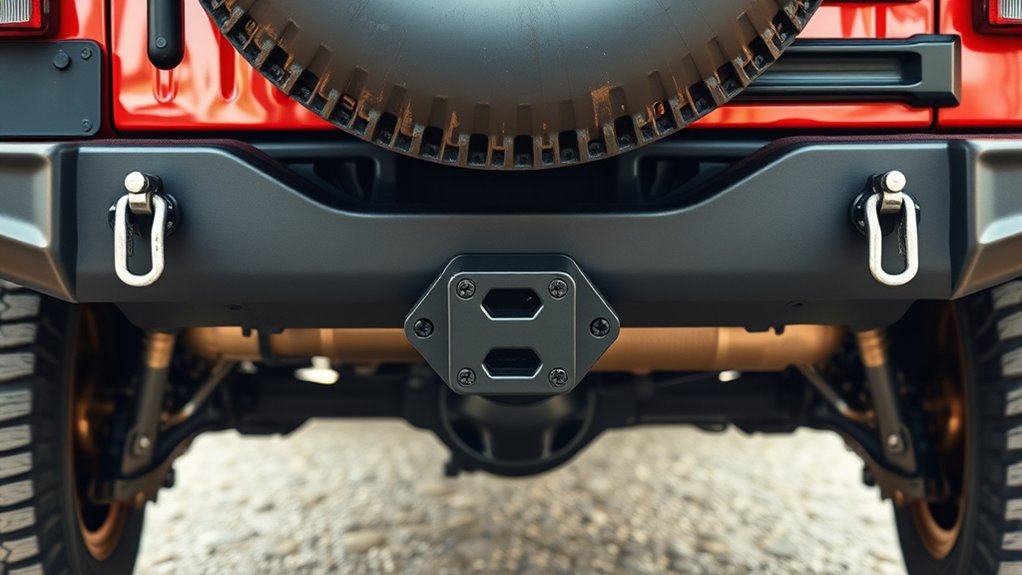
When choosing a tow hitch for your Jeep Wrangler, you’ll find several types designed to fit different towing needs. The most common is the receiver hitch, which mounts directly to your frame and offers versatility with various ball mounts.
You might also consider a gooseneck hitch if you plan to tow heavier loads, though it’s less common on Wranglers. Another option is the pintle hitch, favored for rugged towing tasks and off-road trailers.
If you want something simpler, a bumper-mounted hitch can work but usually supports lighter loads. Each type varies in weight capacity and installation complexity, so understanding these differences helps you match the hitch to your Jeep’s towing purpose without overspending or underperforming.
Choosing the Right Tow Hitch for Your Jeep
When choosing the right tow hitch for your Jeep, you’ll want to take into account the different types available and how they match your towing needs.
Pay close attention to the weight capacity to guarantee it can handle your trailer safely.
Picking the right hitch keeps your Jeep performing well and your load secure.
Types Of Tow Hitches
How do you choose the right tow hitch for your Jeep Wrangler? First, understand the main types: receiver hitches, bumper hitches, and gooseneck hitches.
Receiver hitches are the most common and versatile, fitting into a square receiver tube on the back of your Jeep. They come in different classes based on size and compatibility.
Bumper hitches attach directly to your Jeep’s bumper and are generally for lighter towing.
Gooseneck hitches are less common on Jeeps but offer heavy-duty towing by mounting in the bed, ideal for trailers with greater weight.
Choose based on your Jeep model, towing needs, and trailer type. Each type has its own installation method and compatibility, so pick one that matches your Jeep’s design and your towing plans.
Weight Capacity Considerations
Although choosing the right tow hitch type is important, you also need to take into account the weight capacity to guarantee safe towing with your Jeep Wrangler. Each hitch class supports different maximum trailer weights and tongue weights. Overloading your hitch can cause accidents or damage your vehicle. Always check your Jeep’s towing limits and match them with the hitch’s ratings.
| Hitch Class | Max Trailer Weight (lbs) |
|---|---|
| Class I | Up to 2,000 |
| Class II | Up to 3,500 |
| Class III | Up to 6,000 |
| Class IV | Up to 10,000 |
| Class V | Over 10,000 |
Pick a hitch class that fits your towing needs without exceeding your Jeep’s limits.
Essential Tools for Tow Hitch Installation
Before you start attaching the tow hitch to your Jeep Wrangler, you’ll need to gather a few essential tools to make the process smooth and efficient.
First, grab a socket wrench set to remove and tighten bolts securely. You’ll also need a torque wrench to ensure the hitch bolts meet the manufacturer’s specified tightness.
A screwdriver set comes in handy for removing any panels or brackets. Don’t forget a drill with metal bits if your hitch requires new mounting holes.
Safety glasses and gloves will protect you during installation. Finally, a measuring tape helps align the hitch properly.
Having these tools ready before you begin will save you time and prevent frustration during your tow hitch installation.
Preparing Your Jeep Wrangler for Tow Hitch Installation
Before you start installing the tow hitch, inspect your Jeep Wrangler’s frame and bumper for any damage or rust that could affect the process.
Make sure you have all the necessary tools ready to go, so you won’t have to stop midway.
Taking these steps will help guarantee a smooth and safe installation.
Inspect Frame And Bumper
Since the tow hitch will attach directly to your Jeep Wrangler’s frame and bumper, you need to carefully inspect both for any damage or rust. Start by cleaning the areas thoroughly to get a clear view.
Look for cracks, dents, or bends in the frame that could weaken the hitch’s support. Check the bumper’s mounting points and verify they’re solid and free from corrosion.
Rust can compromise metal strength, so address any spots by sanding them down and applying rust inhibitor before moving forward.
If you find significant damage or rust, consider repairing or replacing the affected parts to guarantee safety.
A strong, intact frame and bumper are essential for a secure and reliable tow hitch installation.
Gather Necessary Tools
After ensuring your Jeep Wrangler’s frame and bumper are in good condition, the next step is to gather all the tools you’ll need for the tow hitch installation.
You’ll want a socket wrench set with various sizes, especially 13mm, 15mm, and 18mm sockets, as these are commonly required for hitch bolts. Have a torque wrench ready to tighten bolts to the manufacturer’s specifications. A breaker bar might help loosen any stubborn bolts.
Don’t forget a screwdriver, preferably flathead and Phillips, for any clips or panels you need to remove. Safety gloves and eye protection will keep you safe throughout the process.
Finally, keep the hitch kit handy, including mounting bolts and instructions, so everything is within reach. Being prepared with the right tools makes the installation smoother and faster.
Step-by-Step Tow Hitch Installation on Your Jeep
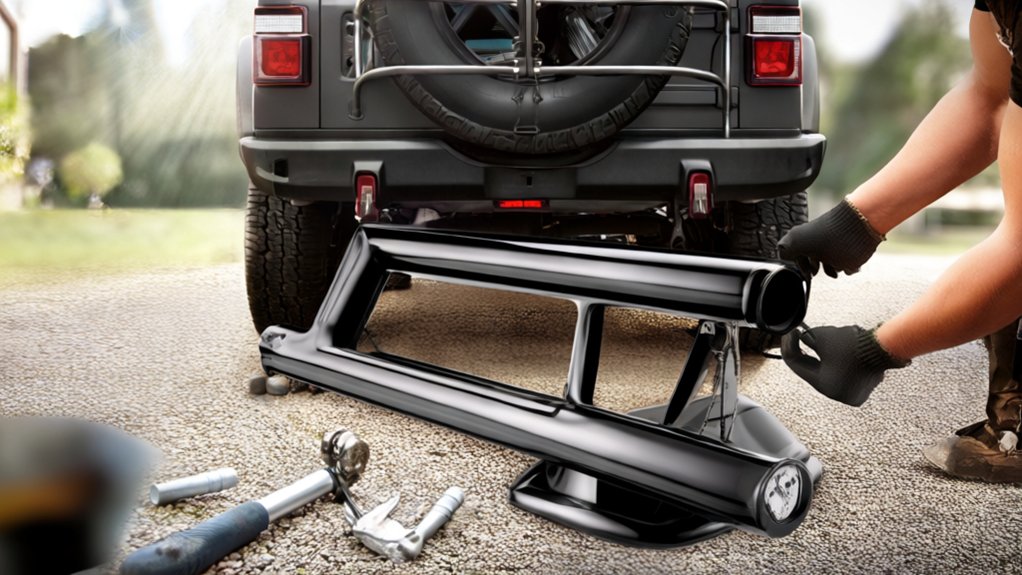
When you’re ready to install the tow hitch on your Jeep Wrangler, gather all necessary tools and parts to guarantee a smooth process. First, position the hitch under the rear frame, aligning the mounting holes with the factory-drilled holes on your Jeep.
Next, insert the bolts through these holes, making sure they pass cleanly through both the hitch and frame. Hand-tighten the nuts to hold the hitch in place without fully securing them yet.
Check that the hitch sits flush and is properly centered. If your Jeep has a spare tire carrier, ensure clearance and adjust the hitch position if needed.
Once everything lines up, you’re set for the next step—securing and tightening the tow hitch to ensure safe towing.
Securing and Tightening Your Tow Hitch
Now that your tow hitch is in place, make certain you tighten all bolts to the proper torque specifications to keep it secure.
Don’t forget to attach the safety chains correctly—they’re essential for safe towing.
Following these steps ensures your Jeep is ready for the road.
Proper Torque Specifications
Although securing your tow hitch might seem straightforward, applying the proper torque specifications is essential to guarantee safety and durability. When tightening bolts, you can’t just guess or rely on how tight they feel. Each Jeep Wrangler tow hitch has specific torque values outlined in the manufacturer’s instructions.
Use a calibrated torque wrench to tighten bolts to these exact settings. Over-tightening can strip threads or damage components, while under-tightening risks the hitch coming loose during use.
Always follow the recommended torque pattern, usually tightening bolts in a crisscross sequence to ensure even pressure. After installation, recheck torque specs periodically, especially after your first few uses, to maintain a secure connection.
Proper torque guarantees your tow hitch performs safely on every adventure.
Safety Chain Attachment
Since your tow hitch relies on more than just bolts for safety, attaching the safety chains correctly is vital to prevent accidents if the hitch fails.
Start by crossing the chains under the hitch’s tongue to create a cradle that can catch the trailer’s front if it detaches.
Hook each chain securely to the designated frame points on your Jeep Wrangler—not the bumper—to guarantee strong attachment.
Avoid letting the chains drag on the ground; adjust their length so they’ve enough slack to turn but won’t hit the road.
Double-check the hooks are locked and the chains are tight but not overly strained.
Properly attached safety chains provide a critical backup, keeping you and others safe during towing.
Tow Hitch Wiring for Trailer Lights on Your Jeep
Before you can safely tow a trailer with your Jeep Wrangler, you need to properly wire the tow hitch for trailer lights. This wiring connects your Jeep’s electrical system to the trailer’s brake lights, turn signals, and running lights, ensuring visibility and safety on the road.
Start by locating your Jeep’s factory wiring harness, usually behind the rear bumper or tail light assembly. Use a compatible trailer wiring harness kit designed for your Wrangler model to simplify installation.
Connect the harness to your Jeep’s wiring using the provided plug-and-play connectors or splice wires carefully if needed. Secure all connections with electrical tape or heat shrink tubing to prevent moisture damage.
Finally, route the wires along the frame to the hitch receiver, fastening them with zip ties to avoid loose, hanging wires.
Testing Your Tow Hitch and Trailer Connections
Once you’ve installed the tow hitch and connected the wiring, you’ll want to test everything to make sure your trailer’s lights and signals work correctly. Proper testing guarantees safety and prevents unexpected issues on the road. Follow these steps:
- Check the connections: Ensure the trailer plug is securely attached to your Jeep’s tow hitch wiring socket.
- Test the brake lights: Press the brake pedal and have someone verify the trailer’s brake lights illuminate.
- Verify turn signals: Activate both left and right turn signals, confirming they blink on the trailer exactly as they do on your Jeep.
- Inspect running lights: Turn on your Jeep’s headlights and walk around the trailer to confirm all running lights are functioning.
Doing this avoids surprises and keeps your towing experience safe and smooth.
Avoiding Common Tow Hitch Installation Mistakes
Testing your tow hitch and trailer connections guarantees everything works as it should, but even the best setup can run into problems if common installation mistakes slip through. To avoid issues, make sure you tighten all bolts to the specified torque, use the right hitch class for your Jeep, and properly connect the wiring harness. Skipping these steps can lead to unsafe towing conditions or damage.
| Mistake | Consequence | How to Avoid |
|---|---|---|
| Loose Bolts | Hitch detachment | Use a torque wrench |
| Wrong Hitch Class | Overloading | Check Jeep’s towing capacity |
| Faulty Wiring | Signal malfunction | Follow wiring diagram carefully |
Stay attentive during installation to keep your Jeep safe and ready for towing.
Maintaining Your Jeep’s Tow Hitch Over Time
Even the best-installed tow hitch needs regular maintenance to stay safe and functional. You’ll want to check it regularly to avoid unexpected failures or damage during towing. Keep your Jeep’s tow hitch in top shape with these simple steps:
- Inspect for rust or corrosion and clean it off promptly.
- Tighten all bolts and hardware to ensure nothing’s loose.
- Lubricate moving parts, like the hitch ball, to prevent wear.
- Cover your hitch when not in use to protect it from dirt and moisture.
How a Tow Hitch Expands Your Jeep’s Capabilities
Although your Jeep Wrangler is already a versatile vehicle, adding a tow hitch opens new possibilities for hauling gear, trailers, or even small boats. With a tow hitch, you can easily transport camping equipment, bikes, or utility trailers, making your adventures more convenient.
It also lets you tow trailers for work or recreation, expanding your Jeep’s usefulness beyond just off-roading. Whether you’re moving heavy loads or carrying extra cargo, a tow hitch increases your Jeep’s functionality without compromising its rugged nature.
Plus, it enhances your ability to assist friends by towing their vehicles or gear. In short, installing a tow hitch transforms your Jeep into a more capable and adaptable vehicle, ready for a wider range of tasks and adventures.
Frequently Asked Questions
Can I Tow Heavy Trailers With a Stock Jeep Wrangler?
You can tow heavy trailers with a stock Jeep Wrangler, but you’ll need to check its maximum towing capacity first. Exceeding limits risks damage, so stay within those ratings and consider upgrades for heavier loads.
What Is the Maximum Towing Capacity of a Jeep Wrangler?
Your Jeep Wrangler’s maximum towing capacity is typically between 2,000 and 3,500 pounds, depending on the model and year. Always check your specific model’s manual to make certain you don’t exceed its towing limits.
Are There Any Legal Requirements for Towing With a Jeep Wrangler?
Towing’s not just a walk in the park—you must follow laws like weight limits, proper lighting, and brake requirements. Check your state’s rules carefully to avoid fines and keep safe while hauling with your Jeep Wrangler.
How Does Adding a Tow Hitch Affect Jeep Wrangler’s Fuel Efficiency?
Adding a tow hitch slightly decreases your Jeep Wrangler’s fuel efficiency because it adds weight and aerodynamic drag. You’ll notice a small drop, especially when towing heavy loads or driving at higher speeds.
Can I Install a Tow Hitch on a Jeep Wrangler Myself Safely?
You can install a tow hitch yourself, but don’t rush it. With the right tools, clear instructions, and careful attention, you’ll do it safely. Missing a step, though, could lead to trouble on the road.
Conclusion
Adding a tow hitch to your Jeep Wrangler opens up a whole new world of adventure—like turning your Jeep into a beast ready to conquer any trail with a trailer in tow. With the right hitch, tools, and careful installation, you’ll be hauling gear effortlessly. Just follow the steps, avoid common mistakes, and keep your hitch maintained. Soon, you’ll wonder how you ever hit the road without one!