How Much Does a Jeep Compass Weigh?
A Jeep Compass typically weighs between 3,400 and 3,800 pounds, depending on your chosen trim, drivetrain, and added features. Base models like the Sport are lighter, while trims like the Trailhawk pack extra off-road gear, increasing weight. AWD versions add roughly 100-150 pounds compared to FWD. This weight affects your vehicle’s fuel efficiency, handling, and even insurance costs. Keep exploring to understand how these factors influence your driving experience and expenses.
What Is the Curb Weight of a Jeep Compass?
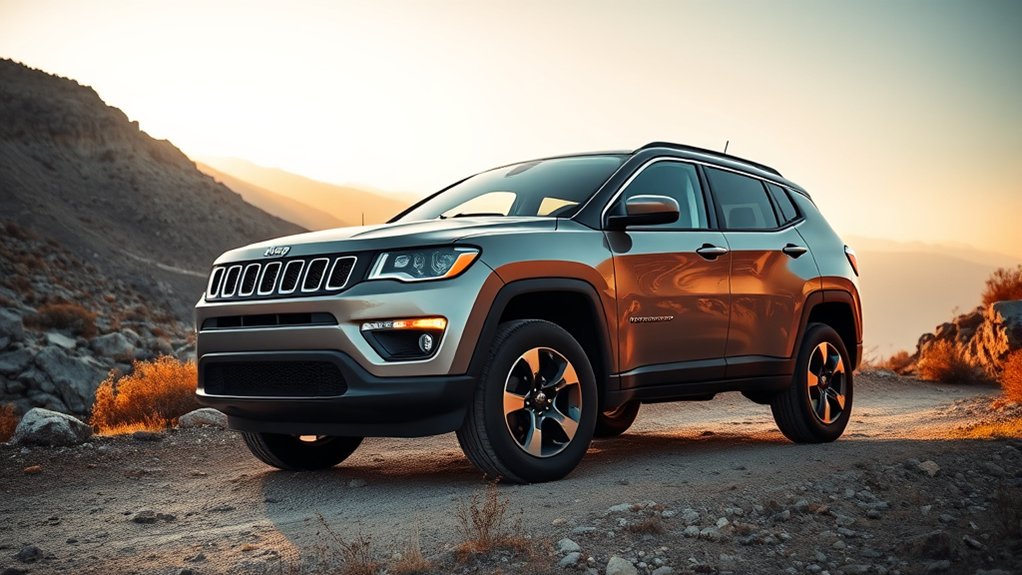
Although the Jeep Compass offers various trims and features, its curb weight generally falls between 3,400 and 3,800 pounds.
When you check the curb weight, you’re looking at the vehicle’s weight with all standard equipment, necessary fluids, and a full tank of fuel, but no passengers or cargo. This is important because it gives you a clear idea of the base weight you’re dealing with, which affects fuel efficiency, handling, and performance.
Knowing the curb weight helps you understand how the Compass might feel on the road and how it compares to other vehicles in its class. So, when you consider the Jeep Compass, keep this weight range in mind as a baseline for your driving experience.
How Does the Jeep Compass Weight Vary by Trim Level?
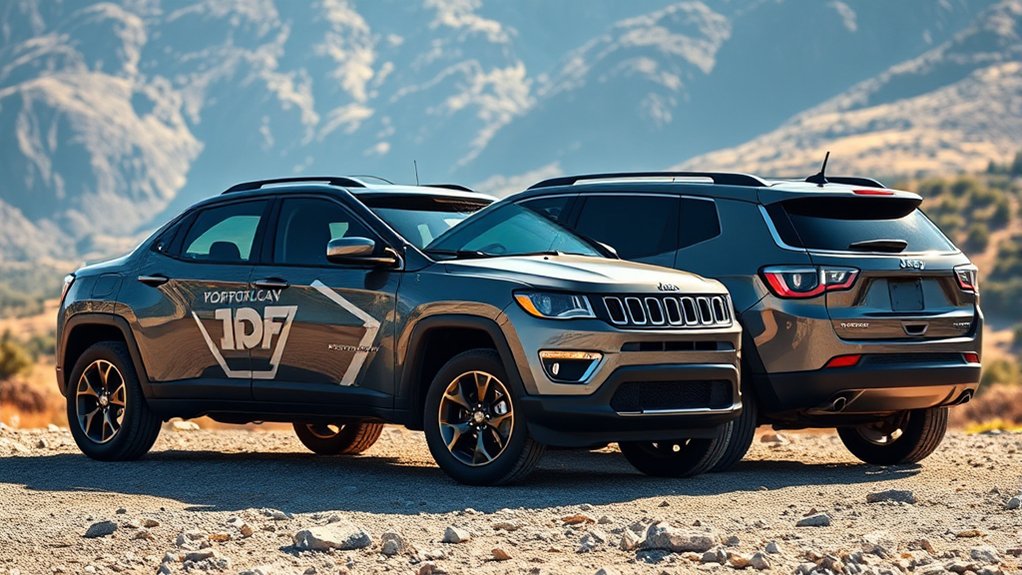
Since each trim level of the Jeep Compass comes with different features and equipment, the vehicle’s weight varies accordingly. When you choose a base trim like the Sport, you’ll notice it’s lighter because it has fewer added amenities and simpler materials.
Moving up to trims like the Latitude or Limited, you’ll find the weight increases due to extra comfort features, upgraded wheels, and enhanced safety technology.
If you opt for the Trailhawk, expect it to weigh the most—this trim packs off-road gear, heavier skid plates, and reinforced components.
How Does Jeep Compass Weight Differ Across Model Years?
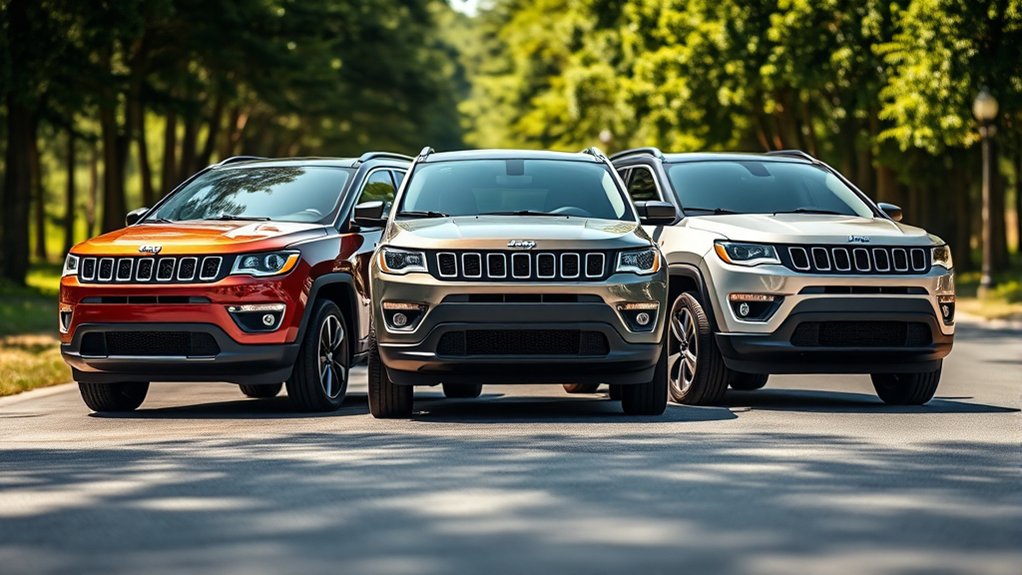
You’ll notice the Jeep Compass’s weight has shifted across model years as designers made updates. These changes often reflect new materials and added features that affect overall mass.
Understanding this helps you see how the vehicle’s performance and efficiency have evolved over time.
Weight Changes Over Time
As Jeep has updated the Compass over the years, its weight has shifted to balance performance, safety, and efficiency. Early models from the late 2000s weighed around 3,500 pounds, reflecting simpler designs and fewer safety features.
As you look at newer versions, especially from 2017 onward, you’ll notice the weight creeping up to nearly 3,800 pounds. This increase often comes from added safety technology and reinforced structures, which you’ll appreciate for their protection.
However, Jeep also focuses on using lighter materials in some components to offset weight gains and improve fuel economy. So, while the Compass gets heavier over time, it’s a measured change aimed at enhancing your driving experience without sacrificing efficiency or safety.
Impact of Design Updates
When Jeep updates the Compass’s design, it directly affects the vehicle’s weight across different model years. You’ll notice that newer models sometimes weigh more due to added safety features, technology, and enhanced materials.
For example, recent redesigns focus on sturdier frames and improved crash protection, which add pounds but boost durability. On the other hand, Jeep often uses lighter materials like aluminum in certain parts to offset weight gains, aiming to maintain fuel efficiency.
If you compare early models with the latest ones, you’ll find subtle shifts in curb weight reflecting these design choices. Understanding these changes helps you grasp why the Compass’s weight isn’t static but evolves as Jeep balances performance, safety, and efficiency in every update.
Jeep Compass Weight: FWD vs AWD Differences
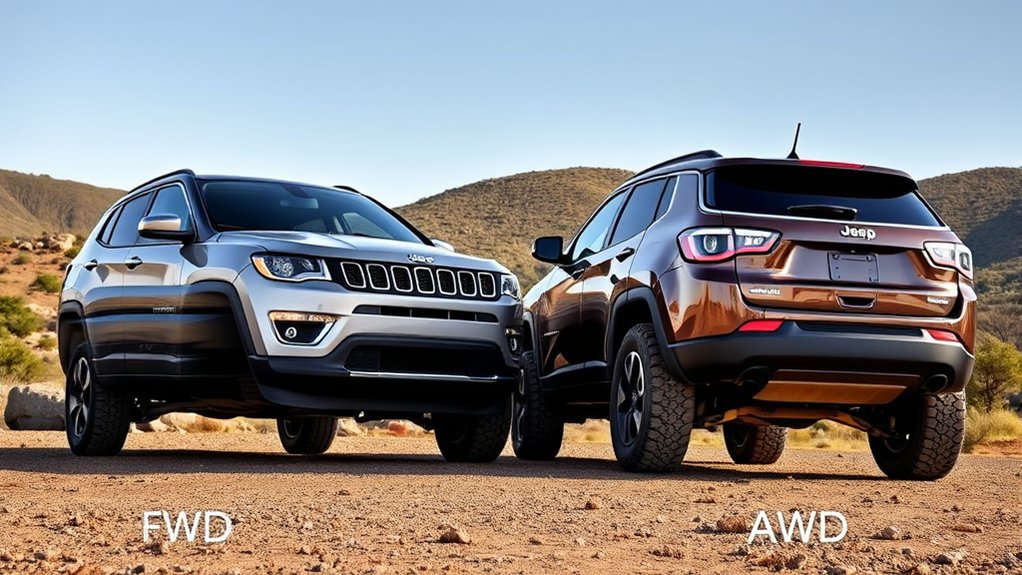
You’ll notice the Jeep Compass weighs differently depending on whether it’s FWD or AWD. The AWD system adds extra components, which increases the vehicle’s weight.
This difference can affect your fuel efficiency, so it’s important to take into account which drivetrain suits your needs best.
Weight Variations By Drivetrain
Although the Jeep Compass offers both front-wheel drive (FWD) and all-wheel drive (AWD) options, the weight difference between these drivetrains can affect your vehicle’s performance and fuel efficiency. The AWD system adds extra components like a transfer case and additional driveshafts, increasing the vehicle’s overall weight.
This added weight can influence handling and acceleration.
Here’s what you should know about the weight variations:
- FWD models typically weigh around 3,600 pounds, making them lighter and potentially more agile.
- AWD models add roughly 100 to 150 pounds due to extra drivetrain parts.
- The increased weight in AWD versions can improve traction and stability, especially in rough conditions.
Understanding these differences helps you choose the right Compass for your driving needs.
Impact On Fuel Efficiency
Since the AWD system adds extra weight to the Jeep Compass, it directly impacts your fuel efficiency. You’ll notice that the AWD models generally consume more fuel than their FWD counterparts because the system requires extra power to operate.
This added weight and mechanical complexity mean your engine works harder, especially during city driving or off-road conditions. On the other hand, the lighter FWD version offers better fuel economy, making it a smart choice if you prioritize efficiency over enhanced traction.
However, if you frequently drive in rough terrain or slippery conditions, AWD’s benefits might outweigh the slight drop in miles per gallon. Ultimately, understanding how weight affects fuel efficiency helps you make an informed decision based on your driving needs.
How Added Features Affect Jeep Compass Weight
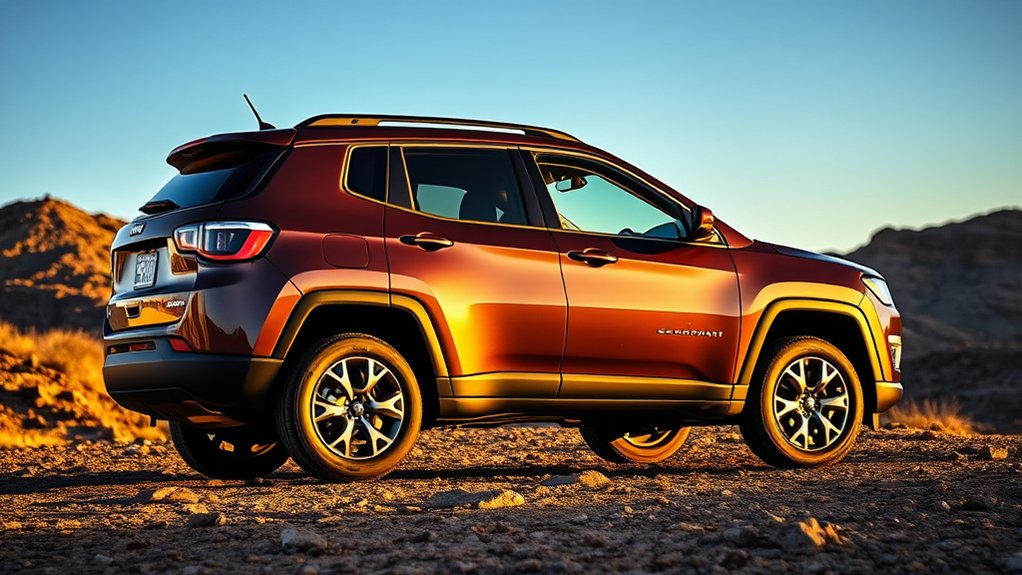
When you add features like a sunroof, advanced safety systems, or a larger infotainment screen, the Jeep Compass’s weight increases noticeably. These enhancements bring extra components, wiring, and structural reinforcements that add pounds to your vehicle.
While the base model keeps weight minimal, upgraded trims can tip the scales.
Here are some common additions that affect weight:
- Panoramic sunroof: Adds glass panels and support frames, increasing overall mass.
- Safety packages: Include sensors and cameras, plus reinforced bumpers.
- Premium audio systems: Require bigger speakers and amplifiers, adding extra bulk.
Knowing how these features impact weight helps you understand changes in handling and fuel economy. When choosing options, consider how much weight you’re comfortable adding to your Jeep Compass.
How Passengers and Cargo Impact Jeep Compass Weight
Carrying passengers and cargo substantially affects your Jeep Compass’s overall weight, directly influencing its performance and fuel efficiency. When you load your vehicle, every extra pound changes how it handles and brakes. Knowing the weight of passengers and cargo helps you avoid overloading, ensuring safety and ideal driving.
| Load Type | Approximate Weight (lbs) |
|---|---|
| Average Adult | 150 |
| Child Passenger | 75 |
| Standard Cargo | 50 per bag |
| Max Cargo Space | Up to 1000 |
Keep in mind, your Jeep Compass’s max payload capacity includes passengers and cargo combined. Balancing your load prevents strain on suspension and tires, keeping your ride smooth and secure.
How Does Jeep Compass Weight Affect Fuel Efficiency?
When you add weight to your Jeep Compass, it forces the engine to work harder, which can lower your fuel efficiency.
Heavier loads increase engine strain, especially in stop-and-go traffic or hilly terrain.
Understanding how weight impacts mileage helps you make smarter choices about what you carry and how you drive.
Weight Impact On Mileage
Because the Jeep Compass carries more weight, its engine works harder, which can lower your fuel efficiency. When your vehicle is heavier, it requires more energy to accelerate and maintain speed, especially in stop-and-go traffic or on hilly terrain. This can directly impact how many miles you get per gallon of gas.
Here’s how the weight impacts your mileage:
- Increased rolling resistance means your tires need more power to keep moving.
- Extra weight reduces acceleration efficiency, so you use more fuel getting up to speed.
- Heavier loads cause the engine to consume more fuel during climbs or sudden stops.
Engine Load And Efficiency
The extra weight of your Jeep Compass puts more load on the engine, making it work harder to deliver power efficiently. When the engine faces a heavier load, it consumes more fuel to maintain acceleration and speed. This increased demand can reduce overall fuel efficiency, especially during stop-and-go driving or uphill climbs. However, the Compass’s engine is designed to balance power and efficiency, but the weight will always affect how hard it works.
| Weight Factor | Impact on Engine Load |
|---|---|
| Heavier Vehicle Weight | Higher engine load, more fuel consumption |
| Lighter Vehicle Weight | Lower engine load, better fuel efficiency |
| Constant Weight | Stable engine load, consistent efficiency |
Understanding this helps you anticipate fuel usage based on how much your Jeep weighs.
Driving Conditions And Weight
Although the Jeep Compass’s weight plays a crucial role in fuel efficiency, how you drive and the conditions you face can amplify or lessen its impact.
When you navigate hilly terrain, the added weight demands more power, increasing fuel consumption.
In stop-and-go traffic, frequent acceleration with a heavier vehicle can also drain fuel faster.
Conversely, steady highway driving lets you maintain momentum, offsetting some weight-related inefficiencies.
Consider these factors to optimize your Jeep Compass’s fuel economy:
- Terrain: Uphill climbs require more engine effort due to weight.
- Traffic: Stop-and-go conditions magnify fuel use with heavier loads.
- Speed: Consistent highway speeds help maintain fuel efficiency despite weight.
Understanding these can help you manage fuel costs better while enjoying your Jeep Compass.
How Does Jeep Compass Weight Affect Handling and Performance?
When you drive a Jeep Compass, its weight plays a crucial role in how it handles and performs on various terrains. The vehicle’s moderate weight provides a balanced feel, giving you stability without sacrificing agility.
You’ll notice that the Compass maintains good traction, especially during cornering, thanks to its weight distribution. However, heavier weight might slightly reduce acceleration compared to lighter SUVs, but it enhances overall control and ride comfort.
On rough or uneven surfaces, the Compass’s weight helps it stay grounded, reducing excessive bouncing. While you maneuver through city streets or off-road trails, this balance ensures responsive steering and dependable braking.
Ultimately, the Jeep Compass’s weight contributes to a driving experience that’s both confident and controlled, adapting well to diverse driving demands.
How Jeep Compass Weight Influences Towing Capacity
Because the Jeep Compass has a moderate curb weight, it directly impacts how much you can tow safely and effectively. When you tow, the vehicle’s weight affects stability, braking, and overall control. A heavier vehicle can handle a heavier trailer, but the Compass strikes a balance to keep things manageable. You need to weigh its towing limits carefully to avoid strain or damage.
Here’s how the Compass weight influences towing capacity:
- Stability: Adequate weight helps resist trailer sway and maintain control.
- Braking: Heavier vehicles generally provide better stopping power for towing.
- Engine Load: The vehicle’s weight affects how much additional load the engine can handle without overworking.
Understanding this helps you tow confidently without compromising safety or performance.
Why Jeep Compass Weight Matters for Off-Road Driving
Towing demands a lot from your Jeep Compass, but off-road driving challenges its weight in different ways. When you’re orienteering uneven terrain, your Jeep’s weight affects traction and stability.
A heavier vehicle like the Compass presses tires firmly into the ground, improving grip on loose surfaces like dirt or gravel. However, too much weight can make it harder to maneuver over rocks or steep inclines, potentially causing you to get stuck or lose control.
You’ll also notice that weight impacts how your suspension handles bumps and dips, influencing ride comfort and vehicle response. Understanding your Jeep Compass’s weight helps you anticipate how it’ll perform off-road, allowing you to adjust your driving style and tackle trails with greater confidence.
Comparing Jeep Compass Weight to Other Compact SUVs
You’ll want to know how the Jeep Compass stacks up against other compact SUVs regarding weight. Understanding this comparison helps you see how it might affect fuel efficiency, handling, and performance.
Let’s take a quick look at where the Compass fits in the lineup.
Jeep Compass Weight Overview
When comparing the Jeep Compass to other compact SUVs, you’ll notice it strikes a balance between weight and agility. The Compass typically weighs between 3,600 and 3,900 pounds, depending on the trim and drivetrain.
This weight supports a stable ride without sacrificing fuel efficiency or maneuverability. Knowing the weight helps you understand its performance, towing capacity, and handling characteristics.
Here’s a quick overview of what contributes to the Jeep Compass weight:
- Robust frame and safety features add to its sturdiness
- Advanced 4×4 systems increase the overall weight in certain models
- Lightweight materials in the body help keep it from getting too heavy
This balance makes the Compass a versatile choice for daily driving and light off-roading.
Compact SUV Weight Comparison
Understanding the Jeep Compass’s weight gives you a solid baseline to compare it with other compact SUVs on the market. The Compass typically weighs between 3,600 and 3,800 pounds, placing it in the mid-range for its class.
For instance, the Honda CR-V weighs around 3,500 pounds, making it slightly lighter, while the Toyota RAV4 tips the scales closer to 3,700 pounds, similar to the Compass.
On the heavier side, the Ford Escape can weigh up to 3,900 pounds, which might affect fuel efficiency and handling.
Knowing these differences helps you gauge how the Compass stacks up regarding performance, fuel economy, and driving dynamics. If you want a balanced option without being too heavy or too light, the Compass fits right in.
What Jeep Compass Weight Means for Tire and Brake Wear
Since the Jeep Compass carries a substantial weight, it directly affects how quickly your tires and brakes wear down. Heavier vehicles put more pressure on tires, causing faster tread wear and reducing their lifespan.
Similarly, the added mass demands more from your brakes, leading to quicker brake pad and rotor wear. To keep your Jeep Compass running smoothly, consider these points:
- Rotate your tires regularly to ensure even wear.
- Monitor brake pad thickness and replace them before they wear out completely.
- Avoid aggressive driving, which increases stress on both tires and brakes.
How to Find the Exact Weight of Your Jeep Compass
The weight of your Jeep Compass influences many aspects of its performance and maintenance, so knowing the exact figure can help you make better decisions. To find the precise weight, check your vehicle’s manual or the label inside the driver’s door jamb. You can also look up the VIN online for detailed specs. For the most accurate reading, use a public vehicle scale.
| Method | Details |
|---|---|
| Owner’s Manual | Manufacturer’s official data |
| Door Jamb Label | GVWR and curb weight |
| VIN Lookup | Online databases provide specs |
| Public Vehicle Scale | Most accurate physical weight |
| Dealership Inquiry | Manufacturer’s detailed info |
Using these methods guarantees you get the exact weight tailored to your model and trim.
Tips for Managing Jeep Compass Weight for Better Efficiency
Although your Jeep Compass comes with a set weight, you can take simple steps to manage it effectively and boost your vehicle’s efficiency. Reducing unnecessary weight helps improve fuel economy and handling.
Start by regularly clearing out heavy items you don’t need. Keeping your cargo light makes a big difference. Also, pay attention to your tire pressure; properly inflated tires reduce rolling resistance and enhance performance.
Finally, avoid overloading your roof rack or carrier, as extra weight up high affects stability and fuel use.
- Remove unused gear and tools from the cabin and trunk
- Maintain correct tire pressure to optimize fuel efficiency
- Limit roof rack loads to reduce aerodynamic drag and weight
How Jeep Compass Weight Impacts Insurance and Registration Costs
When you’re considering the overall costs of owning a Jeep Compass, you’ll find that its weight plays a significant role in both insurance premiums and registration fees. Heavier vehicles like the Compass may cost more to insure because they can cause more damage in accidents. Similarly, some states calculate registration fees based on vehicle weight, meaning a heavier Jeep might lead to higher annual costs.
| Aspect | Impact of Weight | What It Means for You |
|---|---|---|
| Insurance Premiums | Higher for heavier cars | Expect slightly increased rates |
| Registration Fees | Weight-based in some states | Prepare for variable fees |
| Safety Considerations | Heavier = safer, typically | Possible insurance discounts |
Understanding these factors helps you budget better.
Frequently Asked Questions
What Safety Features Are Standard on the Jeep Compass?
You get standard safety features like blind-spot monitoring, rear cross-traffic alert, lane departure warning, and automatic emergency braking. These help keep you aware and protected while driving, giving you added peace of mind on the road.
How Does Jeep Compass Interior Space Compare to Similar SUVS?
Step inside the Jeep Compass, and you’ll find surprisingly roomy space compared to similar SUVs. You’ll appreciate the clever storage, comfortable seating, and ample legroom, making every ride feel more spacious and enjoyable than you might expect.
What Is the Jeep Compass’s Warranty Coverage?
You get a 5-year/60,000-mile powertrain warranty with the Jeep Compass, plus a 3-year/36,000-mile basic limited warranty. Jeep also offers roadside assistance during the warranty period to keep you covered on the road.
Are There Any Common Maintenance Issues for the Jeep Compass?
You’ll find the Jeep Compass sometimes acts like a puzzle, with common maintenance issues including transmission hiccups and electrical gremlins. Stay on top of fluid changes and software updates to keep it running smoothly and confidently.
How Does the Jeep Compass Perform in Crash Tests?
You’ll find the Jeep Compass performs well in crash tests, earning good safety ratings from agencies like the IIHS and NHTSA. It’s equipped with multiple airbags and advanced safety features to help protect you in a collision.
Conclusion
Understanding the Jeep Compass’s weight is like knowing the heartbeat of your ride—it shapes everything from handling to fuel efficiency. Whether you’re steering city streets or rugged trails, being aware of how trim levels, features, and drivetrain affect its curb weight helps you drive smarter. Keep this knowledge close, and you’ll manage tire wear, brake performance, and even insurance costs with ease, turning every journey into a smoother, more confident adventure.