How to Release the Parking Brake on Jeep Grand Cherokee in 7 Easy Steps
To release the parking brake on your Jeep Grand Cherokee, start by locating the electronic switch near the gear shift. Keep your foot firmly on the brake pedal, then pull or press the switch to disengage the brake. Wait for the indicator light on the dashboard to turn off, confirming it’s fully released. If the brake won’t release, use the manual override procedure. Following these steps will help you operate the brake safely and effectively, with more useful tips ahead.
Locate the Parking Brake in Your Jeep Grand Cherokee
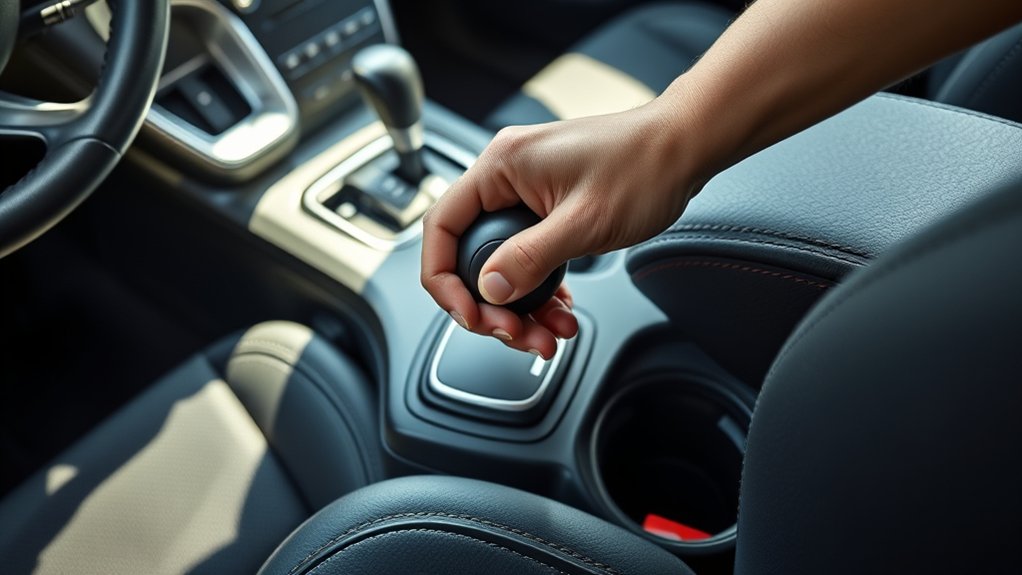
Before you can release the parking brake on your Jeep Grand Cherokee, you need to know exactly where it’s located. Depending on your model year, the parking brake might be a traditional hand lever between the driver and passenger seats or an electronic switch on the center console.
In older models, you’ll find a lever that you pull up to engage and push down to release. Newer models often have a small button or switch labeled with a “P” or a brake icon. Check near the gear shift or on the lower dashboard area.
Familiarizing yourself with its exact position guarantees you can quickly access it when needed, making your driving experience smoother and safer.
When and Why to Release the Parking Brake Before Driving
Although it might seem obvious, releasing the parking brake before driving is essential to prevent damage to your Jeep Grand Cherokee’s braking system and guarantee smooth movement.
You should always release it just before you start driving, not after you’ve begun moving. Leaving the parking brake engaged while driving causes unnecessary wear, overheating, and potential brake failure.
It also reduces fuel efficiency and can strain your drivetrain. Whether you’re parked on a flat surface or an incline, disengaging the parking brake ensures your vehicle rolls freely and responds correctly when you press the accelerator.
How to Keep Your Foot on the Brake While Releasing the Parking Brake
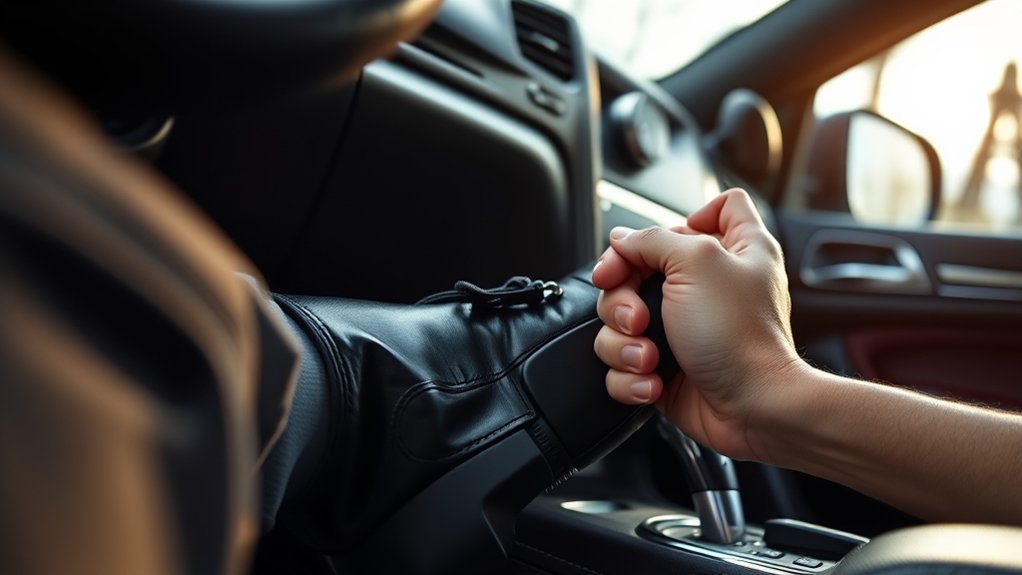
When you release the parking brake, keeping your foot firmly on the brake pedal guarantees your Jeep Grand Cherokee stays securely in place. Before you begin, press the brake pedal firmly with your right foot to prevent any unintended movement. This steady pressure ensures the vehicle won’t roll, especially on inclines.
While holding the pedal down, use your hand to disengage the parking brake, whether it’s a lever or button. Maintaining brake pressure during this step is essential; it provides control and safety.
Only after you’ve fully released the parking brake and confirmed the Jeep is stable should you consider easing off the brake pedal. This method protects you from sudden vehicle movement and helps you feel confident as you prepare to drive.
How to Turn Off the Electronic Parking Brake
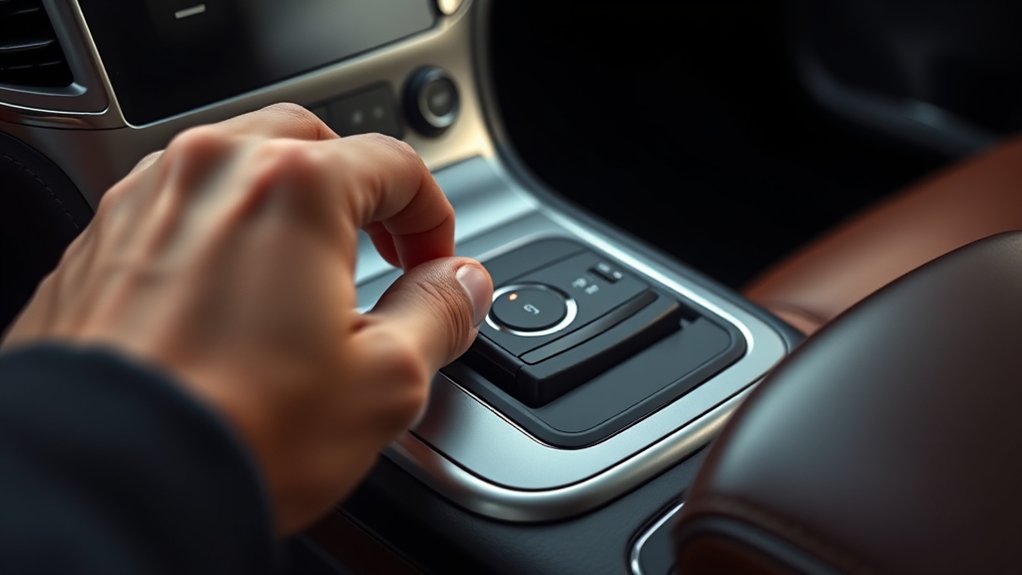
To turn off the electronic parking brake on your Jeep Grand Cherokee, you’ll first need to activate the system by pressing the brake pedal and the electronic brake switch.
If the electronic brake doesn’t release automatically, you can use the manual override procedure to disengage it.
Knowing both methods guarantees you can safely release the parking brake in any situation.
Activating The Electronic Brake
Since the electronic parking brake on your Jeep Grand Cherokee operates differently from a traditional handbrake, you’ll need to follow specific steps to deactivate it.
To activate the electronic brake, first verify your vehicle is fully stopped. Press the brake pedal firmly, then pull up the electronic parking brake switch located on the center console. You’ll hear a subtle motor sound, indicating the brake is engaging.
A parking brake indicator light will appear on your dashboard to confirm activation. This system securely holds your Jeep in place without the need for a manual lever.
Manual Override Procedure
Although the electronic parking brake usually disengages automatically when you press the accelerator, there are times you’ll need to manually override it. This can happen if the system malfunctions or the battery is low.
To manually turn off the electronic parking brake, you’ll typically need to:
- Turn the ignition to the “On” position without starting the engine.
- Press and hold the electronic parking brake switch.
- Apply steady pressure to the brake pedal while holding the switch.
- Wait for the brake warning light to turn off, indicating the brake is released.
If these steps don’t work, consult your owner’s manual or seek professional assistance.
Knowing this manual override procedure guarantees you can safely move your Jeep Grand Cherokee even when the electronic system fails.
How to Confirm the Parking Brake Light Is Off
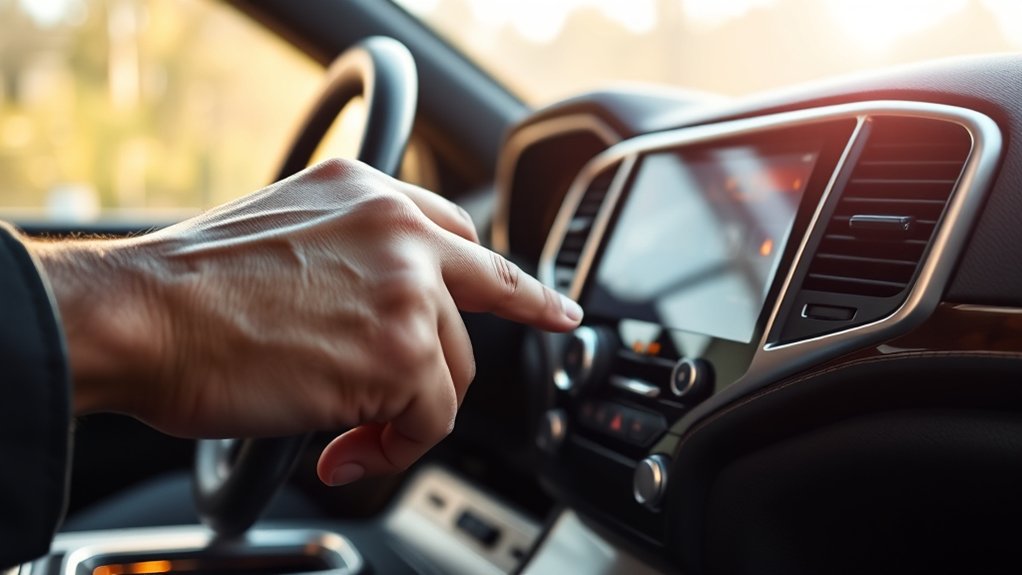
To verify the parking brake light is off, check the dashboard where the indicator is usually located.
The light typically glows red or amber when the brake is engaged, so it should disappear once released.
Make certain the dashboard light goes completely off before driving to ensure the brake is fully disengaged.
Parking Brake Light Location
Where can you find the parking brake light on your Jeep Grand Cherokee? It’s typically located on your dashboard, right within your line of sight when you’re behind the wheel. Knowing exactly where to look helps you quickly confirm if the parking brake is engaged or released.
Here’s where to check for the parking brake light:
- Center of the instrument cluster, near the speedometer or tachometer
- A small icon resembling a “P” inside a circle or an exclamation mark inside a circle
- Sometimes near the ABS or brake system warning lights
- On newer models, it may appear as a digital symbol on the driver information display
Indicator Light Color Meaning
The parking brake light on your Jeep Grand Cherokee uses specific colors to communicate its status, so understanding these colors helps you know when the brake is properly released.
When the parking brake is engaged, the indicator light typically glows red, signaling the brake is active and the vehicle shouldn’t move.
Once you release the parking brake, the red light should turn off completely, confirming the brake is disengaged.
In some models, the light might briefly flash or change to amber during system checks, but a steady red light means the brake is still applied.
Always wait until the red indicator goes off before driving to ensure your Jeep is safely ready to move without the parking brake engaged.
Dashboard Light Behavior
How can you be sure the parking brake is fully released just by looking at your dashboard? When you release the parking brake on your Jeep Grand Cherokee, the parking brake warning light should turn off. Here’s what to watch for:
- The red or amber brake symbol on the dashboard goes dark.
- No warning chimes accompany the light turning off.
- The light may briefly flicker during ignition but should disappear once the brake is released.
- If the light stays on or flashes, it could indicate the brake isn’t fully disengaged or there’s an issue with the brake system.
Always confirm the light is off before driving to ensure your parking brake is properly released and your vehicle is safe to operate.
What to Do If Your Jeep’s Parking Brake Won’t Release
If your Jeep’s parking brake won’t release, don’t panic—there are a few straightforward steps you can take to fix the issue.
First, make certain your vehicle is in park (or neutral if it’s a manual) and press the brake pedal firmly. Try releasing the parking brake lever or button again.
If it still won’t budge, check for debris or ice around the brake mechanism that might be causing it to stick.
Next, turn the ignition on and off, then attempt to release the brake once more.
If these steps don’t work, your parking brake cable or electronic actuator might be faulty.
In that case, it’s best to consult a professional mechanic to avoid causing further damage or unsafe conditions.
Tips for Maintaining Your Jeep Grand Cherokee’s Parking Brake System
When your parking brake struggles to release, it signals the importance of regular upkeep. Keeping your Jeep Grand Cherokee’s parking brake system in top shape prevents issues and guarantees safety.
Here are some essential tips to maintain it effectively:
- Regularly clean and lubricate the brake cables and moving parts to avoid rust and stiffness.
- Inspect brake pads and shoes for wear, replacing them as needed to maintain proper grip.
- Test the parking brake frequently, especially before long trips or after heavy use.
- Have a professional check the brake system during routine maintenance to catch hidden problems early.
Frequently Asked Questions
How Often Should I Check the Parking Brake Cable for Wear?
You should check the parking brake cable for wear at least once a year or every 12,000 miles. If you notice any stiffness or reduced brake effectiveness, inspect it sooner to avoid potential issues.
Can I Use the Parking Brake on Steep Hills Without Damaging It?
Think of your parking brake as a steadfast guardian. You can use it on steep hills without damaging it, as long as you engage it firmly and avoid relying solely on it—combine with your transmission for best safety.
Does the Parking Brake Affect My Jeep’s Fuel Efficiency?
No, the parking brake itself doesn’t affect your Jeep’s fuel efficiency since it’s only engaged when stationary. However, driving with it partially on can reduce efficiency and cause wear, so always make sure it’s fully released before driving.
What Are the Signs of a Failing Electronic Parking Brake Motor?
You’ll notice a failing electronic parking brake motor when it’s silent yet unresponsive, or noisy but ineffective. You can’t engage or release the brake smoothly, and warning lights might flash, signaling it’s time for a check-up.
Is It Safe to Tow My Jeep With the Parking Brake Engaged?
No, you shouldn’t tow your Jeep with the parking brake engaged. It can damage the brake system and tires. Always release the brake before towing to avoid costly repairs and guarantee safe transport of your vehicle.
Conclusion
Releasing your Jeep Grand Cherokee’s parking brake is easier than you think—just follow these simple steps! Remember, a smooth start begins with knowing when and how to disengage that brake. If trouble pops up, don’t panic; there’s always a fix. Think of your parking brake as a loyal guardian—treat it well, and it’ll keep your ride safe and sound. Now, get ready to hit the road with confidence and ease!