What Gas Does a Jeep Grand Cherokee Take?
Your Jeep Grand Cherokee typically runs on regular unleaded gasoline with an 87 octane rating. However, if you have a high-performance engine like the 5.7L V8 HEMI, premium fuel is recommended to maintain power and efficiency. Using the correct octane prevents knocking and engine damage while optimizing fuel economy. Choosing the right gas keeps your Jeep running smoothly and saves you money in the long run. Learn more to make sure you’re fueling your vehicle properly and protecting its performance.
What Gas Does a Jeep Grand Cherokee Use?

Although the specific gas type can vary by model and engine, most Jeep Grand Cherokees use regular unleaded gasoline with an octane rating of 87. When you fuel your Grand Cherokee, you’ll typically rely on this common grade, which balances performance and efficiency.
However, some models equipped with more powerful engines might suggest or require premium gasoline to operate at its best. You should always check your owner’s manual or the fuel door sticker for the exact fuel type to avoid any engine issues.
Using the recommended gas ensures your Jeep runs smoothly and helps maintain its longevity. If you’re unsure, sticking to regular unleaded 87 octane is often safe, but confirming specifics for your model is your best bet.
Why Octane Rating Matters for Jeep Grand Cherokee Engines
You want your Jeep Grand Cherokee to run smoothly and efficiently, and choosing the right octane rating helps with that. Using the correct octane optimizes engine performance and boosts fuel efficiency.
It also prevents engine knocking, which can cause long-term damage.
Engine Performance Optimization
How does the octane rating influence your Jeep Grand Cherokee’s engine performance? Using the right octane fuel helps prevent engine knocking and allows your engine to run smoothly and efficiently. Higher octane fuels resist premature combustion, which means your engine can deliver maximum power without damage.
Here’s a quick comparison:
| Octane Rating | Engine Knock Risk | Performance Impact |
|---|---|---|
| 87 (Regular) | Higher | Possible knocking, less smooth |
| 89 (Midgrade) | Moderate | Reduced knocking, better performance |
| 91+ (Premium) | Low | Peak power, smoothest ride |
Choosing the recommended octane ensures your Jeep Grand Cherokee maintains peak engine performance and longevity. Don’t compromise; use the octane rating specified in your owner’s manual.
Fuel Efficiency Impact
Why does the octane rating matter when it comes to your Jeep Grand Cherokee’s fuel efficiency? Higher octane fuel burns more steadily and resists premature ignition, which means your engine runs smoother and more efficiently.
When you use the recommended octane level, your engine can optimize combustion, translating to better mileage and less wasted fuel. If you opt for a lower octane than suggested, your engine mightn’t perform at its best, causing inefficient fuel use and reduced miles per gallon.
On the other hand, using a higher octane than required generally won’t improve efficiency—it just costs more. So, sticking to the manufacturer’s octane recommendation helps you get the most miles out of every gallon, saving you money and reducing fuel consumption over time.
Preventing Engine Knocking
Although engine knocking might seem like a minor issue, it can seriously damage your Jeep Grand Cherokee’s engine over time. Knocking occurs when fuel ignites prematurely in the combustion chamber, causing a knocking or pinging sound.
Using the correct octane fuel helps prevent this by ensuring the gas resists premature ignition. If your Grand Cherokee requires premium fuel, don’t settle for regular; lower octane fuel can lead to knocking, reducing engine performance and longevity.
Paying attention to the manufacturer’s recommended octane rating protects your engine’s components and maintains smooth operation. So, always choose the right gas to avoid costly repairs and keep your Jeep running efficiently.
Preventing knocking is a simple step to safeguard your investment.
Which Jeep Grand Cherokee Engines Need Premium Gas
You’ll want to use premium gas if your Jeep Grand Cherokee has a high-performance engine designed for higher octane fuel. Using premium can boost your engine’s efficiency and keep it running smoothly.
Let’s look at which engines really benefit from this and how it impacts your Jeep’s performance.
Engine Types Requiring Premium
Which Jeep Grand Cherokee engines actually need premium gas? If you own a Grand Cherokee with a high-performance engine, like the 5.7L V8 HEMI or the 6.4L V8 SRT, premium fuel is essential. These engines are designed for higher compression and performance, so using regular gas can reduce power and efficiency.
| Engine Type | Requires Premium Gas? |
|---|---|
| 3.6L V6 | No |
| 5.7L V8 HEMI | Yes |
| 6.4L V8 SRT | Yes |
| 3.0L EcoDiesel V6 | No |
| 2.0L Turbo Inline-4 | No |
Using premium ensures your engine runs smoothly and delivers the performance you expect from these powerful options.
Benefits Of Premium Fuel
Why choose premium fuel for your Jeep Grand Cherokee’s high-performance engines? Using premium gasoline guarantees your engine runs smoothly and efficiently, especially if your model requires it. Premium fuel has a higher octane rating, which helps prevent engine knocking and supports ideal combustion.
When you pick premium gas, you’re giving your engine the best chance to perform under demanding conditions.
Here are some key benefits you’ll notice:
- Improved engine longevity by reducing harmful deposits
- Enhanced fuel efficiency due to better combustion
- Reduced risk of engine knocking and related damage
Performance Impact On Engines
Choosing premium fuel sets the stage for peak performance, but knowing which Jeep Grand Cherokee engines actually require it helps you make the right choice at the pump.
Typically, the higher-output engines like the 5.7L HEMI V8 and the 6.4L V8 demand premium gas to run efficiently. Using regular fuel in these engines can lead to reduced power, sluggish acceleration, and even knocking, which might harm your engine over time.
On the other hand, the 3.6L V6 usually runs fine on regular unleaded without sacrificing performance.
So, if your Grand Cherokee has a V8 or a high-performance variant, premium fuel isn’t just a recommendation—it’s essential to maintain engine health and get the best driving experience.
Make sure you check your owner’s manual to confirm your specific engine’s needs.
Does Your Jeep Grand Cherokee Need Premium Gas Based on Driving?
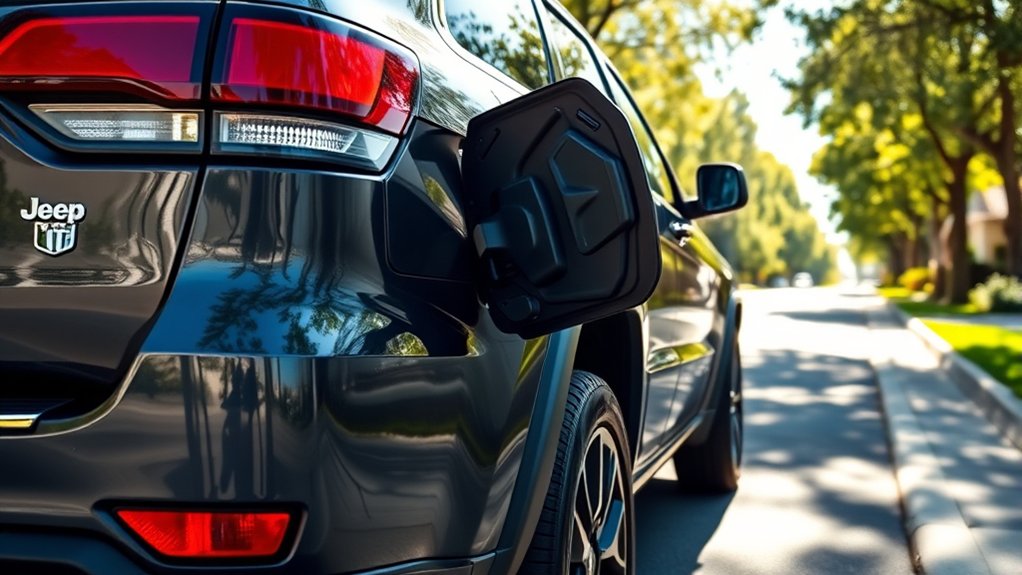
Even if your Jeep Grand Cherokee’s manufacturer recommends premium gas, your driving habits can influence whether you actually need it. Premium fuel is designed for engines that operate under high compression or turbocharging, but how you drive can impact whether you benefit from it.
Consider these factors:
- Aggressive acceleration and high speeds: These conditions increase engine demand, making premium gas more beneficial.
- Towing or heavy loads: Extra strain on the engine may require premium fuel to maintain performance.
- City vs. highway driving: Frequent stops and starts can reduce efficiency, where premium might help prevent knocking.
If your driving style is mostly relaxed or steady highway cruising, you mightn’t see a significant advantage from premium gas despite the recommendation.
Can You Use Regular Gas in a Jeep Grand Cherokee?
You might wonder if regular gas works in your Jeep Grand Cherokee. While some models can run on regular fuel, it may affect engine performance and efficiency.
Let’s explore how using regular gas impacts your ride.
Regular Gas Compatibility
Using regular gas in a Jeep Grand Cherokee depends on your specific model and engine type. Some Grand Cherokees are designed to run efficiently on regular unleaded gasoline, while others require premium fuel for peak performance.
Before filling up, check your owner’s manual or the fuel door label to confirm compatibility.
Generally, you can consider the following:
- Models with V6 engines often accept regular gas without issues.
- High-performance V8 engines typically recommend premium fuel.
- Newer turbocharged engines may require higher octane for proper operation.
Impact On Engine Performance
Although some Jeep Grand Cherokee models can run on regular gas, opting for the recommended fuel type considerably affects engine performance.
When you use the suggested premium fuel, your engine runs more efficiently, delivering better power and smoother acceleration.
Regular gas may cause knocking or pinging, which can damage your engine over time and reduce overall performance.
You might notice decreased fuel economy and sluggish responsiveness if you frequently fill up with lower-octane fuel.
To keep your Jeep Grand Cherokee running at its best, you should follow the manufacturer’s fuel recommendations.
This not only preserves engine health but also ensures peak power output and longevity.
Skimping on fuel quality might seem convenient, but it could cost you in repairs and diminished driving experience down the road.
What Happens If You Use the Wrong Gas in Your Jeep?
What could happen if you put the wrong type of gas in your Jeep Grand Cherokee? Using lower-octane fuel than recommended can cause knocking, reduce engine efficiency, and potentially damage internal components.
Conversely, using premium gas when it’s not required won’t harm the engine but may be an unnecessary expense.
Here’s what you might face with the wrong fuel:
- Engine knocking: Unstable combustion can damage pistons and valves over time.
- Reduced performance: Your Jeep may hesitate or lose power during acceleration.
- Potential long-term damage: Prolonged use of incorrect fuel can lead to costly repairs.
Avoiding the right gas type guarantees your Jeep Grand Cherokee runs smoothly and maintains its longevity.
What to Do If You Accidentally Put the Wrong Gas in Your Jeep
If you realize you’ve put the wrong gas in your Jeep Grand Cherokee, act quickly to minimize any potential damage. First, avoid starting the engine, as this can circulate the incorrect fuel, causing more harm.
Next, contact a professional mechanic or roadside assistance for guidance. They may recommend draining the fuel tank to remove the wrong gas completely.
If you’ve already started the engine, stop driving immediately and have your Jeep towed to a service center. Inform the technician about the mistake so they can inspect the fuel system for damage and perform necessary repairs.
Taking prompt action helps prevent costly repairs and guarantees your Jeep runs smoothly once the correct fuel is used again. Don’t delay—addressing the issue right away is essential.
Where to Find Your Jeep’s Recommended Fuel Type
Once you’ve addressed any fuel mix-ups, the next step is to confirm the right gas for your Jeep Grand Cherokee. Finding the recommended fuel type is simpler than you might think.
You can quickly locate this essential information in several places:
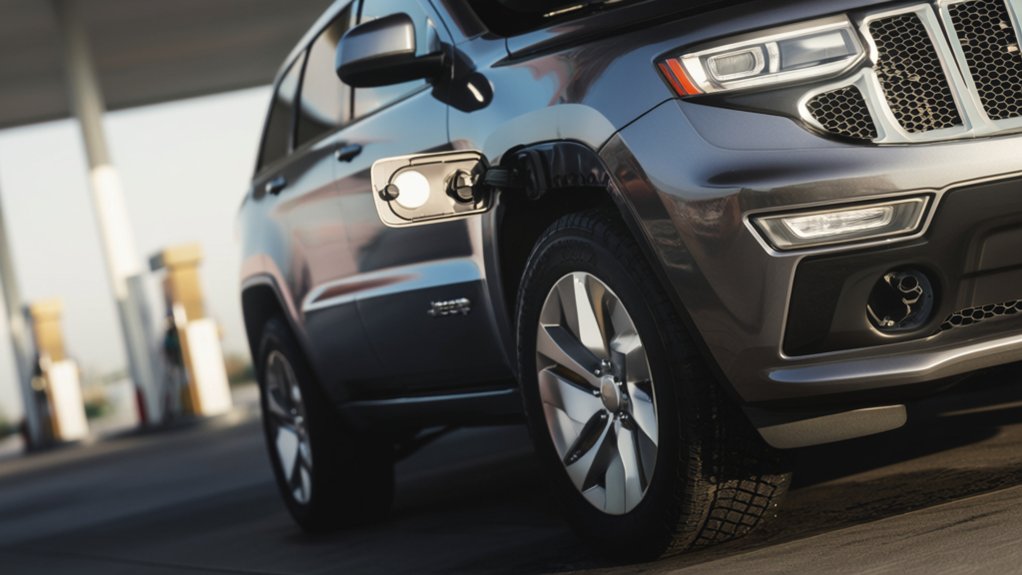
- Inside the fuel door, where a sticker usually specifies the required octane rating.
- In the owner’s manual, which provides detailed fuel guidelines tailored to your model year.
- On the driver’s side door jamb, where manufacturers often place labels with fuel recommendations.
Checking these sources ensures you use the correct fuel, helping your Jeep run smoothly and efficiently. Make it a habit to verify this information before filling up to avoid any unnecessary engine issues.
Does Gas Type Affect Jeep Grand Cherokee Fuel Efficiency?
Although choosing the right gas type might seem straightforward, it can substantially impact your Jeep Grand Cherokee’s fuel efficiency. Using the recommended fuel grade guarantees your engine runs at its best, preventing knocking and improving combustion.
If you opt for a lower octane than suggested, your engine may struggle, reducing miles per gallon and potentially causing long-term damage. Conversely, using a higher octane than required usually doesn’t boost fuel efficiency or performance, so it’s often unnecessary.
Sticking to the manufacturer’s guidelines balances power and economy, helping you get the most out of every gallon. In short, paying attention to gas type helps maintain your Jeep’s efficiency, ensuring you drive smoothly while maximizing fuel savings without risking engine health.
Save Money on Gas Without Hurting Your Jeep
Saving money on gas doesn’t mean you have to compromise your Jeep Grand Cherokee’s performance or health. You can reduce fuel costs while keeping your vehicle running smoothly by adopting smart habits and making informed choices.
To save efficiently, focus on these key strategies:
- Drive smoothly and avoid rapid acceleration or heavy braking to improve fuel efficiency.
- Keep your tires properly inflated; under-inflated tires increase rolling resistance and fuel consumption.
- Use cruise control on highways to maintain a steady speed and reduce unnecessary fuel use.
Engine Maintenance Tips to Protect Your Jeep’s Fuel System
To keep your Jeep Grand Cherokee running efficiently, you need to maintain its engine and fuel system regularly. This prevents clogs, improves fuel economy, and extends your vehicle’s life. Regularly check and replace your fuel filter, use quality fuel, and add a fuel system cleaner periodically. Also, make certain of timely oil changes and inspect fuel lines for leaks or damage.
| Maintenance Task | Recommended Frequency |
|---|---|
| Fuel Filter Replacement | Every 30,000 miles |
| Fuel System Cleaner | Every 3,000 to 5,000 miles |
| Oil Change | Every 5,000 to 7,500 miles |
| Fuel Line Inspection | During routine service |
Following these steps keeps your fuel system in top shape, so your Jeep Grand Cherokee delivers power and reliability every time you drive.
Frequently Asked Questions
How Often Should I Check My Jeep Grand Cherokee’s Fuel Filter?
You should check your Jeep Grand Cherokee’s fuel filter every 30,000 miles or once a year. If you notice performance issues or rough idling, inspect it sooner to keep your engine running smoothly.
Can I Use Alternative Fuels Like Ethanol in My Jeep Grand Cherokee?
Using ethanol in your Jeep is like mixing oil and water—it might work in small amounts, but too much can harm the engine. Always check your manual before trying alternative fuels to keep your ride running smoothly.
Does Cold Weather Affect the Type of Gas I Should Use?
Cold weather doesn’t change the type of gas you should use, but it can affect fuel efficiency and starting. Using the recommended octane and keeping your tank at least half full helps your Jeep Grand Cherokee perform well in cold conditions.
How Does Fuel Quality Impact My Jeep’s Emissions?
Poor fuel quality causes incomplete combustion, increasing your Jeep’s emissions and harming the environment. Using high-quality fuel guarantees cleaner burning, reduces pollutants, and helps your engine run efficiently, keeping emissions lower and performance ideal.
Are There Specific Gas Brands Recommended for Jeep Grand Cherokees?
Jeep doesn’t officially recommend specific gas brands for your Grand Cherokee. You should focus on using quality fuel that meets the required octane. Choosing reputable stations guarantees cleaner fuel and better engine performance for your vehicle.
Conclusion
Choosing the right gas for your Jeep Grand Cherokee isn’t just a suggestion—it’s the key to keeping your engine purring like a well-tuned orchestra. Whether your model demands premium or regular fuel, sticking to the recommended octane rating protects performance and efficiency. Remember, using the right gas fuels more than just your tank; it safeguards your investment. So, treat your Jeep well, and it’ll reward you with a smooth ride every time.