Dodge Durango Vs Jeep Grand Cherokee: 5 Key Performance Differences
If you want power and towing strength, the Durango’s V8 engine and 8,700-pound capacity give you an edge over the Grand Cherokee’s max 7,200 pounds. Inside, Durango offers spacious three-row seating, while Grand Cherokee focuses on luxury and a faster infotainment system. For off-road, Grand Cherokee shines with advanced traction and adaptive suspension, but Durango handles city roads smoothly. You’ll also find better fuel efficiency in the Grand Cherokee. Keep exploring to see which suits you best.
How the Engines Stack Up (Durango vs Grand Cherokee)
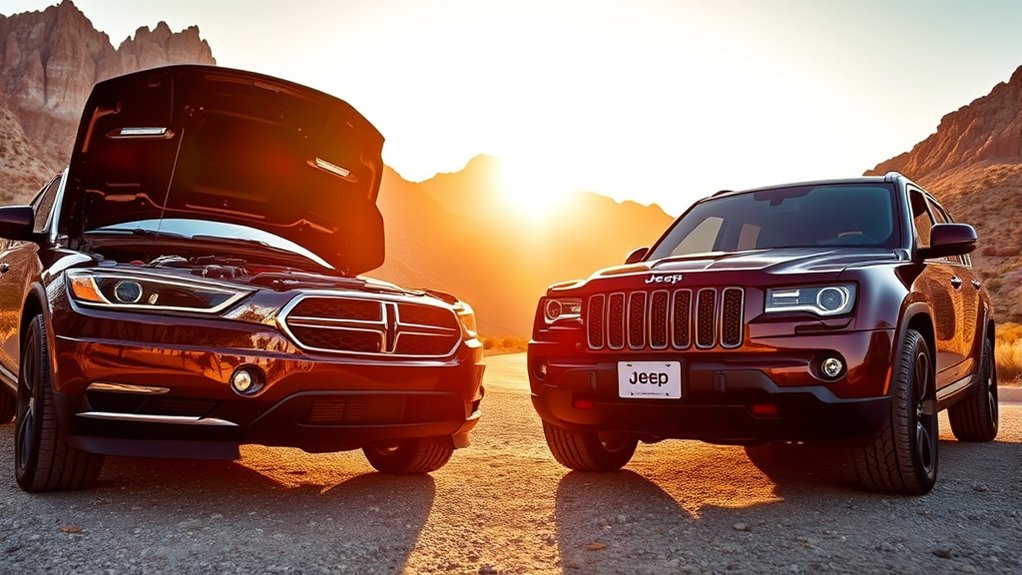
While both the Dodge Durango and Jeep Grand Cherokee offer powerful engine options, your choice depends on what you prioritize—whether it’s raw horsepower, fuel efficiency, or towing capacity.
The Durango gives you a robust V6 as standard, but you can opt for a V8 that delivers exhilarating power, perfect if you often tow heavy loads or crave aggressive performance.
The Grand Cherokee also features a strong V6, with available V8 and even diesel engines that balance power and efficiency.
If fuel economy matters, the Grand Cherokee’s diesel option might catch your eye, offering better mileage without sacrificing torque.
Ultimately, if you want maximum towing strength and thrilling acceleration, Durango’s V8 stands out.
For a more balanced engine lineup, Grand Cherokee has you covered.
Comfort and Tech: What You’ll Experience Inside (Durango vs Grand Cherokee)
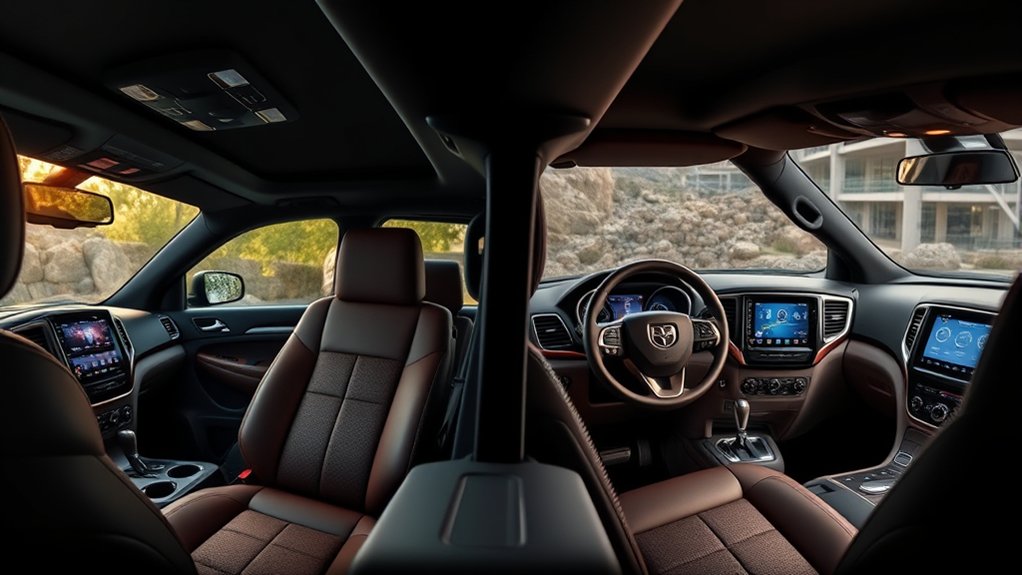
When you step inside the Dodge Durango or Jeep Grand Cherokee, you’ll immediately notice how both prioritize your comfort and convenience with thoughtfully designed cabins. Each SUV offers a blend of modern technology and cozy features to enhance your driving experience.
- Seating Comfort: Durango provides spacious seats with available leather, while Grand Cherokee boasts premium materials and supportive ergonomics.
- Infotainment Systems: Both SUVs include user-friendly touchscreens, but Grand Cherokee’s Uconnect system offers faster response and additional apps.
- Passenger Space: Durango excels with three-row seating, ideal for larger families, whereas Grand Cherokee focuses on a luxurious two-row setup.
- Convenience Features: You’ll find heated seats and steering wheels in both, but Durango adds rear-seat entertainment options for longer trips.
Handling On and Off Road (Durango vs Grand Cherokee)
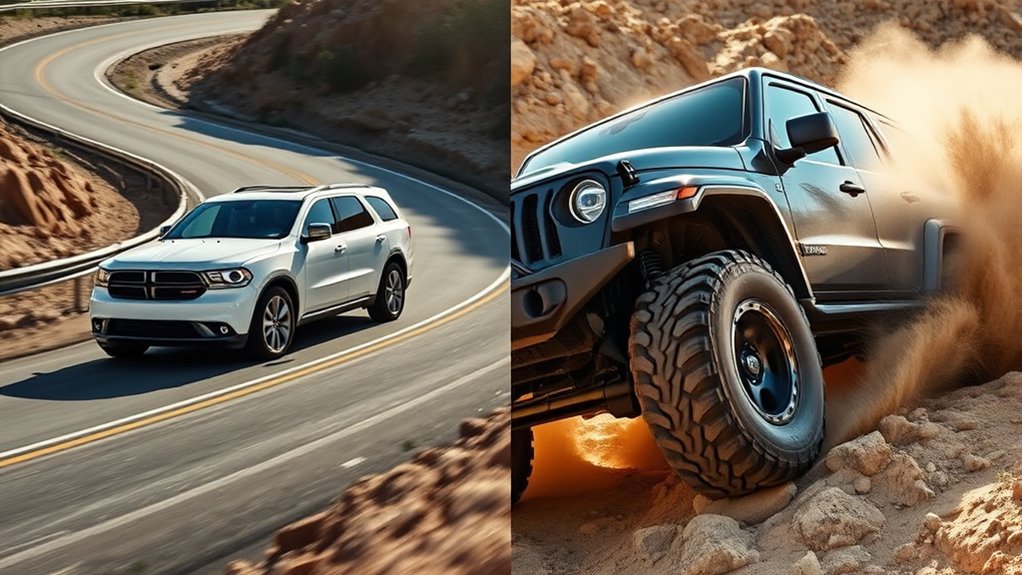
If you’re looking to tackle both city streets and rugged trails, the Dodge Durango and Jeep Grand Cherokee offer distinct handling capabilities that cater to different driving styles. The Durango provides a smooth, stable ride on pavement, while the Grand Cherokee excels off-road with advanced traction systems. Here’s a quick comparison:
| Feature | Dodge Durango |
|---|---|
| On-Road Handling | Smooth and responsive |
| Off-Road Capability | Moderate, suited for light trails |
| Suspension | Tuned for comfort |
| Drive Modes | Basic (Snow, Sport) |
| Feature | Jeep Grand Cherokee |
| On-Road Handling | Agile with solid cornering |
| Off-Road Capability | Exceptional, Trail Rated models |
| Suspension | Adaptive, off-road focused |
| Drive Modes | Multiple with off-road presets |
Towing Capacity: Durango vs Grand Cherokee
Because towing demands power and stability, you’ll want to think about how the Dodge Durango and Jeep Grand Cherokee stack up in this area. Both SUVs offer strong towing capabilities, but there are key differences that could impact your decision.
- Durango’s max towing capacity reaches up to 8,700 pounds, ideal for heavy trailers and boats.
- Grand Cherokee tops out around 7,200 pounds, which suits most everyday towing needs.
- Durango’s available V8 engine provides extra torque, enhancing towing performance on tough terrain.
- Grand Cherokee’s towing tech includes trailer sway control and integrated brake controller for safer hauling.
If you plan to tow frequently or carry heavier loads, the Durango gives you a clear edge in raw towing power.
Fuel Efficiency and Running Costs (Durango vs Grand Cherokee)
How much will you really spend at the pump and on upkeep with the Dodge Durango versus the Jeep Grand Cherokee?
The Grand Cherokee generally edges out the Durango in fuel efficiency, offering around 19-26 mpg combined, depending on the engine, while the Durango averages closer to 18-22 mpg. Over time, those extra miles per gallon can add up, saving you noticeable cash on fuel.
Maintenance costs for both SUVs are comparable, but the Durango’s larger size and heavier weight might mean slightly higher expenses for tires and brakes.
Also, the Durango’s V8 options tend to consume more fuel and require more frequent servicing.
If fuel economy and lower running costs matter most, the Grand Cherokee usually offers a smarter balance between performance and efficiency.
Frequently Asked Questions
What Are the Key Exterior Design Differences Between the Durango and Grand Cherokee?
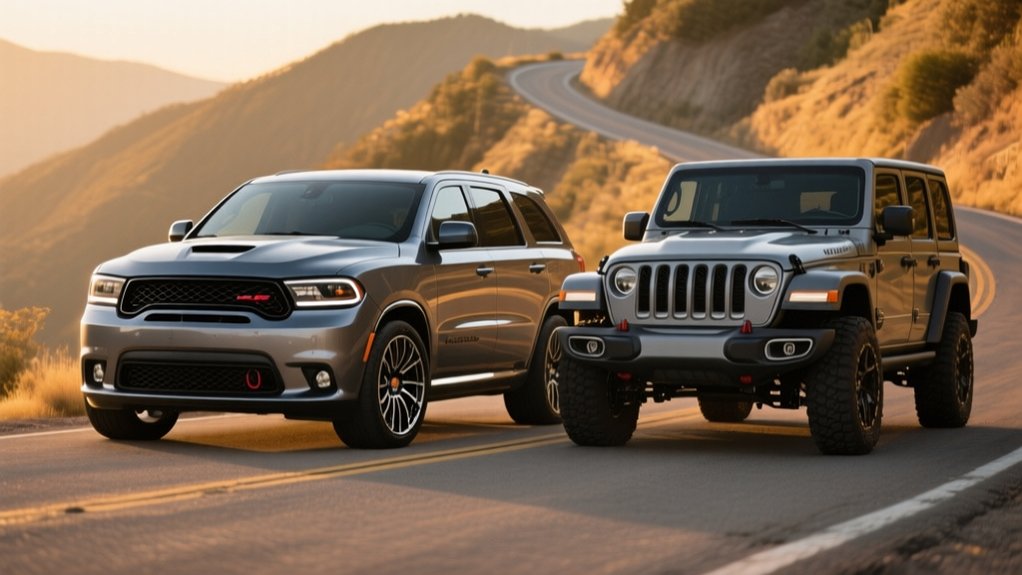
You’ll notice the Durango has a boxier, more aggressive stance with a wider grille, while the Grand Cherokee features a sleeker, refined look with a seven-slot grille and smoother lines, giving each a distinct road presence.
How Do Safety Features Compare Between the Two Models?
Safety’s a silent guardian in both, but you’ll find Jeep Grand Cherokee offers more advanced tech like adaptive cruise and lane-keep assist. Durango’s solid, yet Jeep’s features give you extra peace of mind on every drive.
What Are the Available Trim Levels for Each Vehicle?
You’ll find the Dodge Durango offers trims like SXT, GT, Citadel, and SRT, while the Jeep Grand Cherokee comes in Laredo, Limited, Trailhawk, Overland, and Summit. Each trim boosts features and performance uniquely.
How Does Cargo Space Differ in the Durango Vs Grand Cherokee?
You might think cargo space won’t matter much, but the Durango offers up to 85.1 cubic feet, while the Grand Cherokee maxes out around 68.3. So, you’ll get more room for gear with the Durango.
What Are the Warranty and Maintenance Plans Offered for Each SUV?
You get a 3-year/36,000-mile basic warranty and 5-year/60,000-mile powertrain coverage with both. Maintenance plans vary by dealer, but Jeep often offers prepaid plans, while Dodge includes some complimentary maintenance on select models.
Conclusion
When comparing the Dodge Durango and Jeep Grand Cherokee, you’ll notice distinct strengths. The Durango offers an impressive towing capacity of up to 8,700 pounds, making it a powerhouse for hauling heavy loads. Meanwhile, the Grand Cherokee shines with superior off-road handling and advanced tech features. Depending on your priorities—whether it’s raw power or refined comfort—you’ll find a clear winner that fits your lifestyle and driving needs perfectly.