Does Your Jeep Grand Cherokee Have All-Wheel Drive?
Your Jeep Grand Cherokee likely features an all-wheel drive (AWD) system, especially if you drive higher trims or have an off-road package. AWD automatically adjusts power between wheels to improve traction and handling on various surfaces without needing your input. You can verify by checking your owner’s manual, VIN details, or looking for a transfer case underneath. This system enhances safety and control both on and off the road. Keep exploring to understand how it works and benefits you.
What Is All-Wheel Drive vs. Four-Wheel Drive in the Jeep Grand Cherokee?
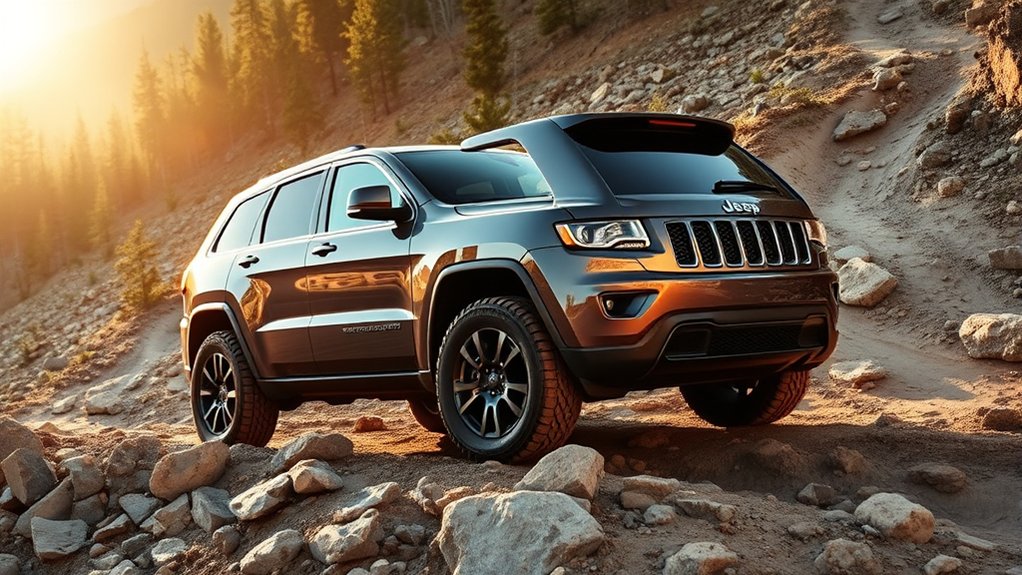
Although both all-wheel drive (AWD) and four-wheel drive (4WD) systems send power to all four wheels, they work differently in your Jeep Grand Cherokee. AWD constantly powers all wheels, adjusting torque automatically to improve traction on slippery roads without any input from you. It’s perfect for everyday driving and light off-road conditions.
On the other hand, 4WD is a more robust system designed for tougher terrains. You’ll engage 4WD manually or through a switch when you need extra grip, like in deep mud or snow. It locks the front and rear axles together, delivering equal power to all wheels for maximum traction.
Understanding these differences helps you use your Jeep’s capabilities effectively and safely wherever you drive.
Which Jeep Grand Cherokee Models and Trims Have AWD?
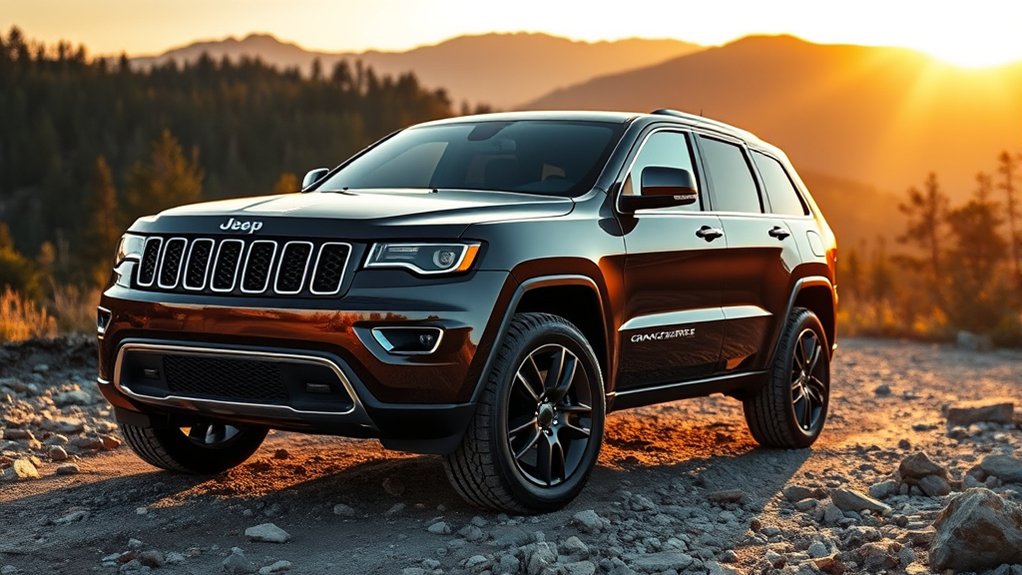
Which Jeep Grand Cherokee models come equipped with all-wheel drive? Most Grand Cherokee trims offer AWD options, but availability depends on the year and specific trim level.
For recent models, trims like the Laredo, Limited, and Overland often come with AWD as either standard or an upgrade. The Summit and Summit Reserve trims usually include AWD as standard, focusing on luxury and performance.
The Trailhawk trim, designed for off-road capability, features a sophisticated AWD system tailored for rugged terrains.
If you’re looking at older models, AWD might be less common or only available on higher trims. So, when shopping or checking your Jeep, always review the trim’s specifications to confirm AWD availability. This guarantees you get the drivetrain that fits your driving needs.
How to Tell If Your Jeep Grand Cherokee Has AWD
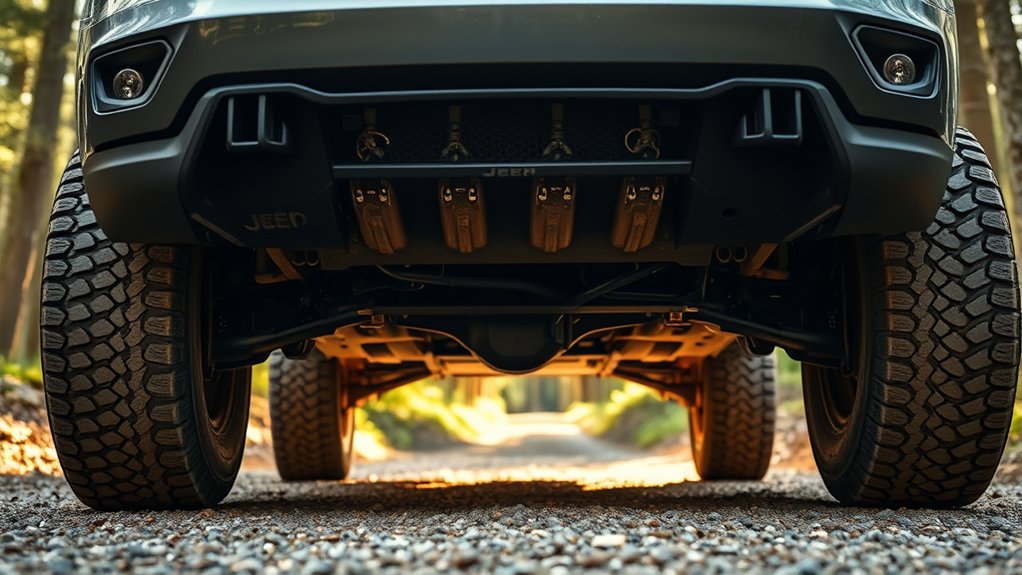
To find out if your Jeep Grand Cherokee has AWD, start by checking the vehicle’s specifications in the owner’s manual or online.
You can also inspect the drivetrain components underneath the vehicle for signs of AWD systems. These steps will help you confirm your Jeep’s drive setup quickly.
Check Vehicle Specifications
When you want to confirm if your Jeep Grand Cherokee has all-wheel drive, checking the vehicle specifications is a reliable step. Start by locating the owner’s manual, which lists drivetrain details clearly.
If you don’t have the manual, visit Jeep’s official website and enter your vehicle’s VIN or model year to access specific specs.
You can also find this information on the window sticker if you still have it. Look for terms like “AWD” or “4WD” under drivetrain or transmission sections.
Keep in mind that some trims come standard with AWD, while others offer it as an option.
Inspect Drivetrain Components
Although reviewing your Jeep Grand Cherokee’s specs is helpful, physically inspecting the drivetrain components gives you direct confirmation of whether it has all-wheel drive.
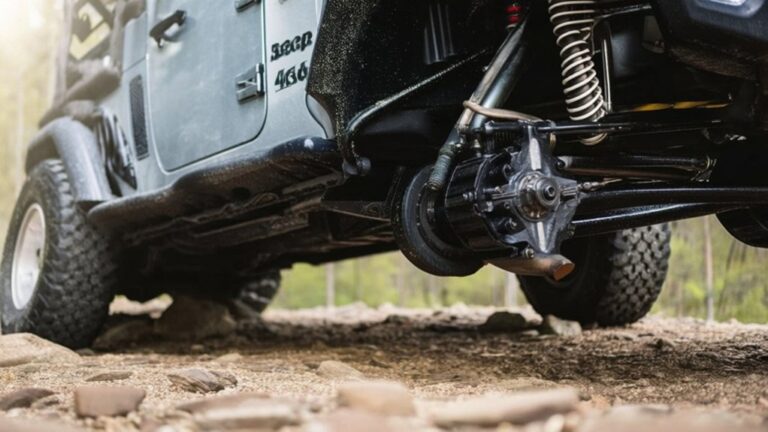
Start by looking under the vehicle. Check for a rear differential and a driveshaft that connects both the front and rear axles.
AWD models have a center differential or transfer case, which distributes power to all wheels. You can usually spot this between the transmission and the rear axle.
Also, look for constant velocity (CV) joints on both front axles; these indicate power delivery to the front wheels.
If these components are missing or you see only a rear differential with no driveshaft to the front, your Jeep likely has rear-wheel drive instead of AWD.
This hands-on check proves invaluable.
How Jeep’s AWD System Works on the Grand Cherokee
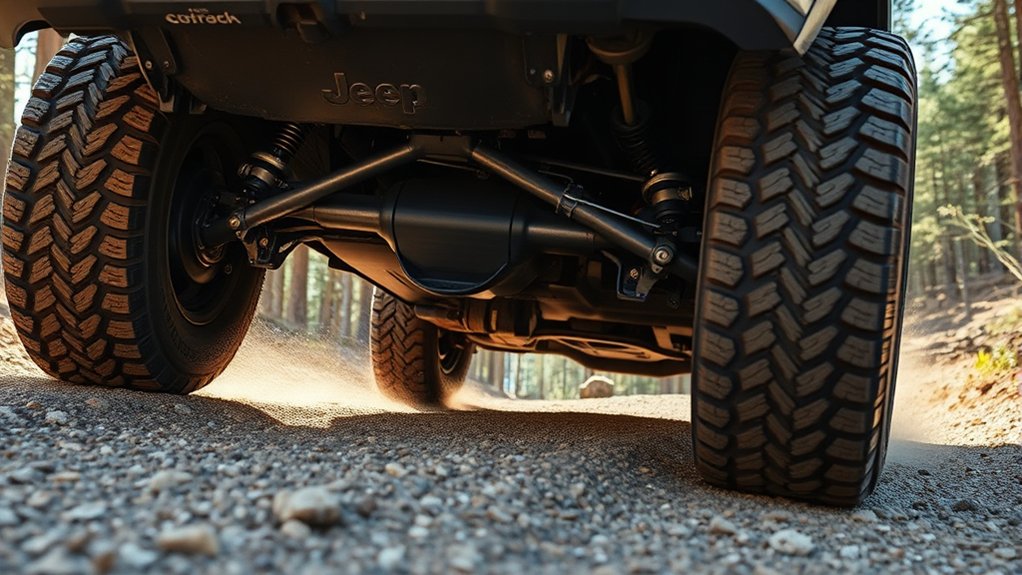
You’ll notice Jeep’s AWD system on the Grand Cherokee actively manages torque distribution to keep you stable on varied terrain.
It also includes Terrain Response features that adjust settings based on the conditions you face.
Understanding how AWD differs from 4WD helps you get the most out of your vehicle’s capabilities.
Torque Distribution Mechanics
How exactly does the Jeep Grand Cherokee manage power between its wheels to keep you moving smoothly? It uses an advanced torque distribution system that automatically adjusts how much power goes to the front and rear wheels.
When you’re cruising on a dry road, most power goes to the rear wheels for efficiency and handling. But if the system detects wheel slip or challenging conditions, it instantly sends more torque to the wheels with better grip.
This dynamic adjustment happens seamlessly through sensors and an electronically controlled transfer case. By continuously monitoring traction, the Grand Cherokee guarantees you get maximum stability and control, no matter the terrain or weather.
This smart torque management is key to the Jeep’s confident, sure-footed performance.
Terrain Response Features
Beyond its smart torque distribution, the Jeep Grand Cherokee takes off-road capability to the next level with its Terrain Response system. This feature lets you tailor the vehicle’s AWD system to match specific driving conditions like snow, sand, mud, or rock.
By selecting the appropriate mode, the system adjusts throttle response, traction control, and torque delivery to maximize grip and stability. You don’t have to guess which settings to use—the Grand Cherokee makes it simple with intuitive controls.
Whether you’re climbing steep trails or cruising on slippery roads, Terrain Response optimizes power distribution to keep you moving confidently. This adaptive technology guarantees your Jeep handles diverse terrains effortlessly, making every drive safer and more controlled without requiring constant manual adjustments.
AWD vs 4WD Systems
Although both AWD and 4WD systems improve traction, they work differently to suit various driving needs. AWD on the Jeep Grand Cherokee automatically distributes power to all four wheels without driver input, ideal for on-road and light off-road conditions. In contrast, 4WD requires manual activation and is designed for tougher terrains, providing maximum traction.
Here’s a quick comparison to help you decide:
| Feature | AWD | 4WD |
|---|---|---|
| Activation | Automatic | Manual |
| Best Use | On-road, light off-road | Heavy off-road, rugged terrain |
| Traction Control | Continuous power distribution | Locked differentials available |
| Fuel Efficiency | Generally better | Typically lower |
| Driving Ease | Hands-off operation | Requires driver engagement |
Understanding these differences helps you get the most from your Grand Cherokee.
Why AWD Benefits Your Jeep Grand Cherokee
When you drive a Jeep Grand Cherokee equipped with all-wheel drive, you gain improved traction and stability on various terrains. This means you can confidently navigate wet roads, light snow, or uneven pavement without worrying about losing control.
AWD automatically adjusts power between the front and rear wheels, giving you better grip when you need it most. You don’t have to switch modes or engage the system manually—AWD works seamlessly in the background to keep you safe.
Plus, it enhances your vehicle’s handling during everyday driving by maintaining balanced power distribution. Ultimately, AWD benefits your Jeep Grand Cherokee by providing peace of mind and improved control, so you can focus on the road ahead no matter what conditions you face.
How AWD Affects Off-Road and On-Road Performance
When you take your Jeep Grand Cherokee off-road, AWD helps you maintain traction on uneven or slippery surfaces.
On paved roads, it improves your handling and stability, especially in bad weather.
Let’s explore how these benefits work in both settings.
Off-Road Traction Benefits
How does all-wheel drive enhance your Jeep Grand Cherokee’s performance off the beaten path? AWD continuously sends power to all four wheels, improving grip on uneven terrain. This means you’ll handle mud, gravel, and rocks with greater confidence and less wheel slip.
Here’s how AWD benefits your off-road adventures:
| Terrain Type | AWD Advantage | Result |
|---|---|---|
| Mud | Power distribution | Avoids getting stuck |
| Gravel | Enhanced traction | Maintains momentum |
| Rocks | Improved control | Safer navigation |
With AWD, your Jeep adjusts power dynamically, so you get better traction without driver input. This system helps you conquer tough trails and maintain steady progress, making your off-road experience smoother and more reliable.
On-Road Handling Stability
Although all-wheel drive is often praised for its off-road capabilities, it also plays a crucial role in enhancing your Jeep Grand Cherokee’s on-road handling stability.
When you’re driving on wet, icy, or uneven pavement, AWD constantly adjusts power distribution between the front and rear wheels, helping you maintain traction and control. This reduces wheel slip during acceleration and cornering, so you can take turns with confidence and avoid unexpected skids.
Additionally, the system improves your vehicle’s balance by evenly distributing torque, which minimizes understeer and oversteer. Whether you’re cruising on the highway or steering through city streets, AWD enhances your Grand Cherokee’s responsiveness and stability, making your drive safer and more predictable in various road conditions.
How to Switch Drive Modes in Your Jeep Grand Cherokee AWD
Since your Jeep Grand Cherokee AWD offers multiple drive modes, you can easily adapt your vehicle’s performance to different road conditions. To switch drive modes, locate the drive mode selector dial or buttons on your center console.
Turn the dial or press the mode button to cycle through options like Auto, Snow, Sand, Mud, or Rock. Each mode adjusts your AWD system, throttle response, and traction control to optimize grip and stability.
You don’t need to stop your vehicle—just change settings while driving at low speeds for seamless shifts. The selected mode will display on your dashboard, confirming your choice.
Using these modes helps you get the best traction and control, whether you’re cruising on highways or tackling rugged terrain.
How to Tell When Your Grand Cherokee Is Using AWD
When your Jeep Grand Cherokee engages its AWD system, you’ll notice subtle changes that help you confirm it’s active. First, pay attention to the dashboard; an AWD indicator light usually illuminates, signaling the system is working.
You might also feel improved traction, especially when driving on slippery or uneven surfaces—the vehicle handles more confidently without slipping. Listen for slight differences in engine or drivetrain sounds as AWD distributes power to all wheels.
Additionally, when accelerating or turning, you may sense smoother, more controlled responses compared to two-wheel drive. If your Grand Cherokee has selectable drive modes, switching to “Auto” or “AWD” mode ensures the system activates when needed.
These signs make it easier for you to tell when AWD is in use.
Maintaining Your Jeep Grand Cherokee’s AWD System
To keep your Jeep Grand Cherokee’s AWD system performing at its best, you need to stay on top of regular maintenance. Check the fluid levels in your transfer case and differentials every 30,000 miles, and replace them as recommended. Inspect your tires frequently, ensuring they have even tread wear and proper pressure to avoid straining the AWD system. Regularly clean and lubricate the driveshaft and axle components to prevent rust and wear.
| Maintenance Task | Recommended Frequency |
|---|---|
| Transfer Case Fluid | Every 30,000 miles |
| Tire Inspection | Monthly |
| Driveshaft Lubrication | Every 15,000 miles |
Following these steps helps preserve your AWD system’s functionality and extends its lifespan.
How AWD Impacts Fuel Economy and Tire Wear on the Grand Cherokee
Although AWD provides better traction and control, it can affect your Jeep Grand Cherokee’s fuel economy and tire wear. Since AWD sends power to all four wheels, your engine works harder, which often leads to slightly lower gas mileage compared to two-wheel drive models. You might notice a drop of a few miles per gallon, especially during city driving or stop-and-go traffic.
Additionally, AWD systems can cause uneven tire wear if tires aren’t properly rotated or matched in size. To minimize this, rotate your tires regularly and replace all four tires simultaneously when needed.
Staying on top of tire maintenance helps you avoid premature wear and keeps your AWD system functioning smoothly, ensuring you get the best performance and efficiency from your Grand Cherokee.
AWD Differences: Older vs. Newer Jeep Grand Cherokees
Since Jeep has continually refined its AWD systems, you’ll notice clear differences between older and newer Grand Cherokee models. Older versions often feature a simpler full-time AWD setup, focusing on durability and off-road capability. In contrast, newer models use advanced systems with electronic controls, improving traction and efficiency. You’ll find upgrades like adaptive torque distribution and terrain-specific modes in recent models, enhancing performance in various conditions.
| Feature | Older Models | Newer Models |
|---|---|---|
| AWD Type | Mechanical full-time AWD | Electronically controlled AWD |
| Traction Control | Basic system | Advanced, with multiple modes |
| Fuel Efficiency | Lower due to fixed AWD | Improved with smart AWD control |
| Off-Road Capability | Strong, rugged design | Enhanced with terrain management |
When to Choose an AWD Jeep Grand Cherokee Over Other Drivetrains
When you need reliable traction in unpredictable conditions, choosing an AWD Jeep Grand Cherokee makes a significant difference. You’ll benefit from enhanced grip on wet, snowy, or uneven roads, giving you confidence behind the wheel.
If your daily drives often involve varying weather or occasional off-road adventures, AWD is a smart choice over two-wheel or four-wheel drive options. AWD systems automatically adjust power distribution, so you don’t have to manage it manually, making it ideal for mixed driving environments.
However, if you mostly stick to dry pavement or require maximum towing capacity, other drivetrains might suit you better.
Ultimately, go with AWD if you want seamless traction and improved safety without sacrificing convenience.
Frequently Asked Questions
Can I Add AWD to a Jeep Grand Cherokee That Lacks It?
You can add AWD to a Jeep Grand Cherokee that lacks it, but it’s complicated and costly. You’ll need parts like a transfer case, differentials, and professional installation to guarantee proper function and safety.
Does AWD Affect Jeep Grand Cherokee Resale Value?
Absolutely, AWD adds allure and amplifies your Jeep Grand Cherokee’s resale value. Buyers boost bids because all-wheel drive offers better traction, tougher terrain handling, and trusted performance, making your SUV more sought-after and simpler to sell swiftly.
Are AWD Repairs Expensive for the Jeep Grand Cherokee?
Yes, AWD repairs for your Jeep Grand Cherokee can be pricey because of complex components like differentials and transfer cases. Regular maintenance helps, but if something breaks, expect higher labor and parts costs compared to 2WD models.
How Does AWD Impact Jeep Grand Cherokee Insurance Rates?
If you have AWD on your Jeep Grand Cherokee, expect insurance rates to be slightly higher due to increased repair costs. For example, Sarah’s insurer raised her premium by 8% after adding AWD coverage.
Can I Tow Heavier Loads With AWD on My Jeep Grand Cherokee?
You can tow heavier loads more confidently with AWD on your Jeep Grand Cherokee because it improves traction and stability. However, always check your vehicle’s towing capacity to avoid overloading and guarantee safe towing.
Conclusion
Now that you know how to spot and maintain your Jeep Grand Cherokee’s AWD system, you’re better equipped to maximize its benefits. Remember, “a stitch in time saves nine”—keeping your AWD in top shape prevents bigger issues down the road. Whether you’re steering through city streets or off-road trails, AWD enhances your control and safety. So, trust your Grand Cherokee’s drivetrain to deliver the performance you need, whenever and wherever you drive.