Jeep Wrangler Vs Gladiator: 10 Key Differences You Need to Know
If you want nimble off-road thrills and open-air freedom, the Jeep Wrangler’s compact size, removable doors, and roof fit you best. But if you need serious cargo space, towing power, and versatile utility, the Gladiator’s larger truck bed and stronger engines are ideal. Both excel off-road with advanced 4×4 systems, but your choice hinges on whether you prioritize agility or hauling capacity. Keep going to uncover all the essential differences.
Key Differences Between Jeep Wrangler and Gladiator
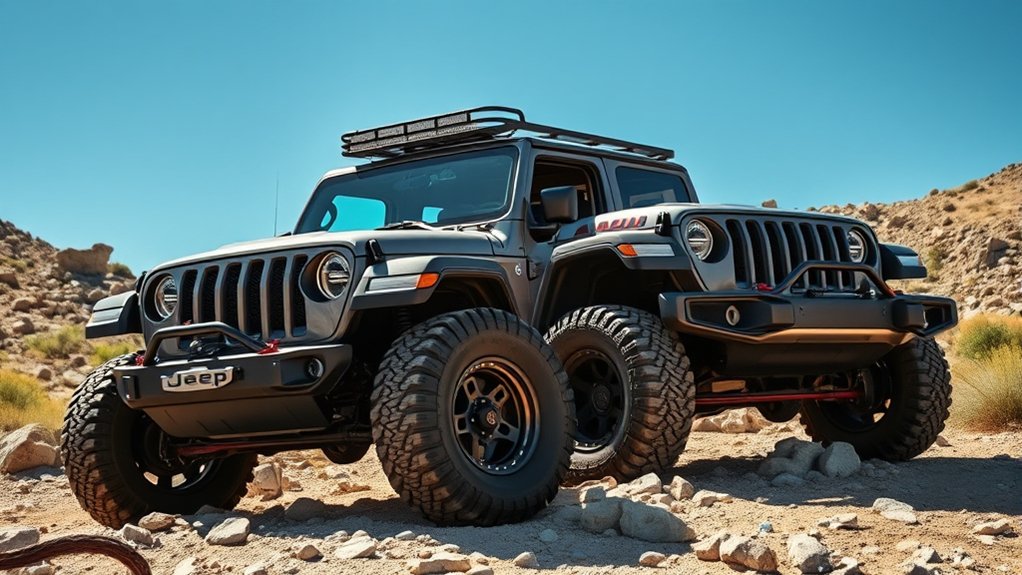
Although the Jeep Wrangler and Gladiator share many design elements, they serve different purposes that affect their features and capabilities.
When you choose the Wrangler, you’re getting a classic off-roader focused on agility and rugged terrain performance. It’s smaller, lighter, and built primarily for adventure on trails.
The Gladiator, on the other hand, blends off-road ability with pickup truck functionality. You’ll find it larger, with a truck bed that adds hauling versatility.
Under the hood, both offer strong engines, but the Gladiator typically handles heavier loads and towing better.
Suspension setups differ, too, with the Gladiator designed to support extra weight.
Design Features Tailored to Different Uses and Lifestyles
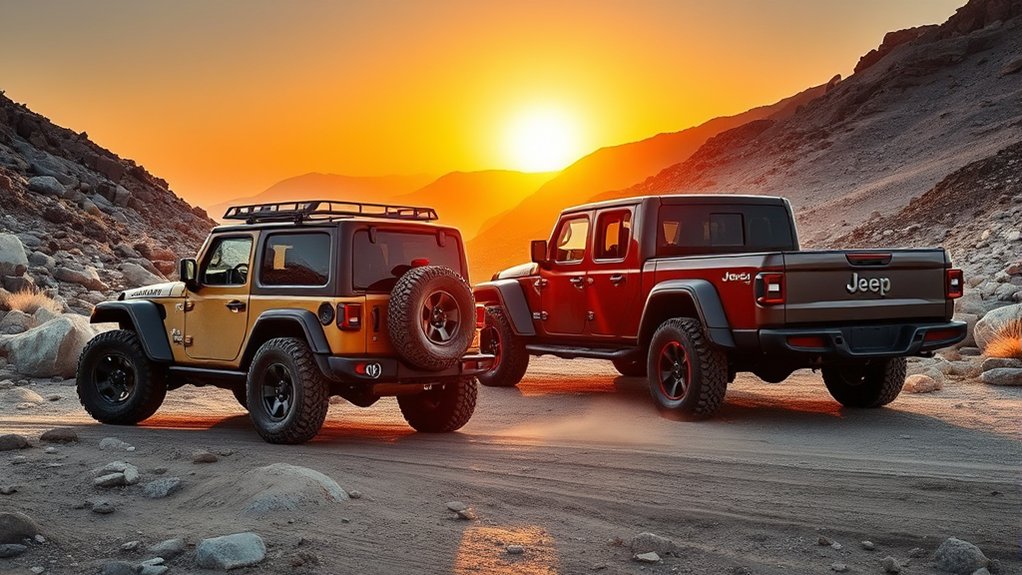
When you look closely at the design features of the Jeep Wrangler and Gladiator, you’ll see how each model caters to distinct lifestyles and uses. The Wrangler focuses on pure off-road adventure, while the Gladiator blends rugged utility with everyday practicality.
Here’s how they differ to fit your world:
- Wrangler’s removable doors and roof let you fully embrace open-air freedom.
- Gladiator offers a spacious truck bed, perfect for hauling gear or work supplies.
- Wrangler’s compact design makes tight trails and city streets easier to navigate.
- Gladiator’s towing capacity supports your larger hauling needs without sacrificing comfort.
Choosing between them depends on whether you crave thrill-seeking exploration or need serious cargo capability for your lifestyle.
How Their Size and Dimensions Affect Your Choice
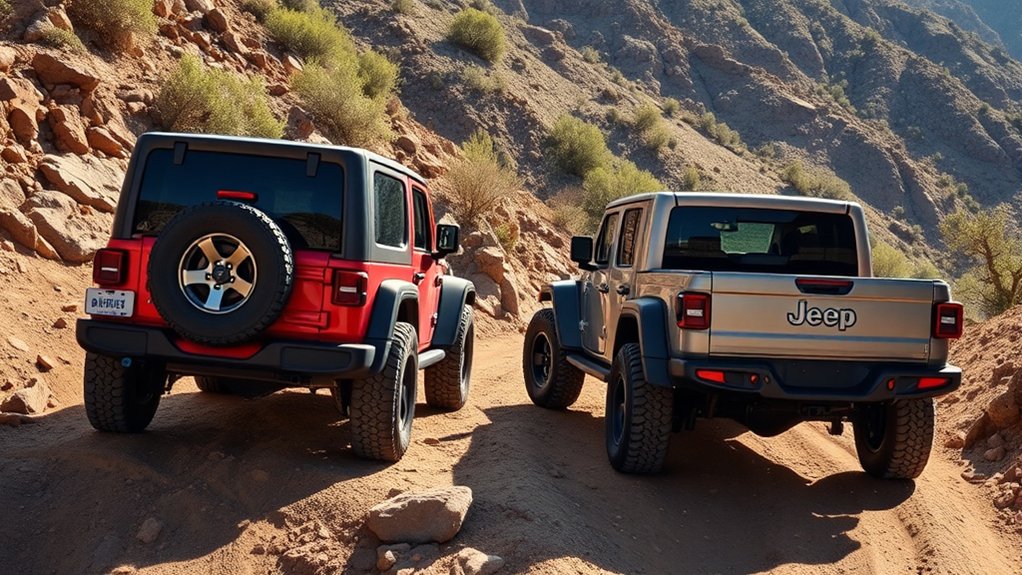
Since size plays a crucial role in how a vehicle fits your lifestyle, understanding the dimensions of the Jeep Wrangler and Gladiator can help you make a smarter choice. The Wrangler is more compact and easier to maneuver in tight city streets or parking lots. On the other hand, the Gladiator is longer, giving you extra cargo space and a truck bed for hauling gear.
| Dimension | Jeep Wrangler | Jeep Gladiator |
|---|---|---|
| Length | About 166-188 inches | About 218 inches |
| Cargo Space | Limited trunk area | 5-foot truck bed |
Choosing between them depends on whether you prioritize daily urban driving or need extra hauling capability for work or adventure.
Comparing Off-Road Capability and Trail Performance
Beyond size and cargo space, how these vehicles handle off-road challenges can make a big difference in your choice. When you hit the trails, both the Wrangler and Gladiator shine, but each brings unique strengths:
- Wrangler’s shorter wheelbase lets you navigate tight, rocky paths with confidence.
- Gladiator’s longer frame offers better stability on rough terrain and when hauling gear.
- Both come with advanced 4×4 systems, but Wrangler’s Trail Rated badge guarantees serious off-road readiness.
- You’ll appreciate Gladiator’s higher payload and towing capacity when your adventures demand extra equipment.
Ultimately, if you crave nimble trail performance, Wrangler edges ahead. For tougher jobs and larger loads off-road, Gladiator stands tall. Your off-road thrill depends on which strengths fit your style.
Engine and Powertrain Options Compared
When you look at the Jeep Wrangler and Gladiator, their engine choices play a big role in how they perform. You’ll find different powertrain options that impact towing, acceleration, and fuel efficiency.
Let’s compare what each offers under the hood so you can see which fits your needs best.
Engine Types Overview
Although both the Jeep Wrangler and Gladiator share some engine options, each offers distinct powertrain choices that cater to different driving needs. When you’re picking between them, consider these engine types:
- 3.6L Pentastar V6 – A reliable, naturally aspirated engine delivering solid power for everyday adventures.
- 2.0L Turbocharged Inline-4 – Offers a balance of fuel efficiency and responsive performance, perfect for city and trail.
- 3.0L EcoDiesel V6 – Ideal if you want strong torque and better fuel economy for towing or long trips.
- 6.4L V8 HEMI (Gladiator only) – Packs a punch for serious power and off-road capability.
Knowing these options helps you choose the right engine that fits your lifestyle and driving style.
Powertrain Performance Comparison
Choosing between the Jeep Wrangler and Gladiator means weighing how their engine options translate into real-world performance. Both offer a 3.6-liter V6 engine delivering 285 horsepower, but the Gladiator’s truck frame allows it to handle heavier loads and tow more, giving it an edge if you need power for hauling.
The Wrangler, meanwhile, offers a 2.0-liter turbocharged four-cylinder with 270 horsepower, balancing fuel efficiency with spirited driving.
Both vehicles provide an eight-speed automatic transmission or a six-speed manual, but the Gladiator’s powertrain is tuned to optimize torque for towing and off-road work.
If you prioritize raw power and utility, Gladiator stands out. If you want nimble off-road fun with decent power, the Wrangler fits better.
Interior Features and Comfort in Wrangler vs Gladiator
While both the Jeep Wrangler and Gladiator deliver rugged capability, their interiors offer distinct experiences tailored to different needs. You’ll find the Wrangler focuses on a compact, off-road-friendly cabin, while the Gladiator adds space and utility for longer trips.
Here’s what you can expect:
- Wrangler’s interior feels cozy and functional, perfect for solo adventures or small groups.
- Gladiator provides extra rear-seat room and storage, ideal if you carry passengers or gear.
- Both offer modern tech like touchscreen infotainment and smartphone integration to keep you connected.
- Comfort-wise, Gladiator’s seats are generally more spacious, helping on extended drives.
Choosing between them comes down to whether you prioritize nimble off-roading or versatile, comfortable hauling.
Jeep Wrangler vs Gladiator Price Comparison
When comparing the Jeep Wrangler and Gladiator, you’ll want to start with their base model pricing. It’s important to take into account how trim levels affect overall cost and what extra features come with each.
Don’t forget to factor in additional ownership costs like fuel, maintenance, and insurance.
Base Model Pricing
How much should you expect to pay for the base models of the Jeep Wrangler and Gladiator? Here’s the quick breakdown to help you decide:
- The Jeep Wrangler Sport starts around $31,500, offering iconic off-road capability without breaking the bank.
- The Gladiator Sport, being a midsize pickup, begins at about $37,000, reflecting its added utility and size.
- You’ll notice the Gladiator’s higher price tags come with more towing and payload capacity.
- Wrangler’s lower base price makes it a more budget-friendly choice if you don’t need a truck bed.
If you want rugged adventure on a tighter budget, Wrangler fits. But if you need a versatile truck with off-road flair, be ready to invest a bit more for Gladiator’s base model.
Trim Level Differences
The price difference between the base models of the Jeep Wrangler and Gladiator sets the stage for understanding what you get as you move up their trim levels.
As you explore higher trims, the Gladiator generally comes with more rugged, truck-specific features like a larger bed and enhanced towing options, which add to its price.
The Wrangler trims focus more on off-road capability and customization, offering options like advanced 4×4 systems and removable doors.
You’ll notice the Gladiator’s trims tend to be pricier overall due to its larger size and added utility.
If you want a balance of everyday drivability and ruggedness, the Gladiator’s trims justify their cost, while the Wrangler’s trims provide a sportier, more versatile off-road experience without the truck’s extra bulk.
Additional Ownership Costs
Although the base price gives you an initial idea, you’ll want to take into account additional ownership costs when comparing the Jeep Wrangler and Gladiator. These costs can impact your budget more than you might expect. Here’s what to consider:
- Fuel Expenses: The Gladiator’s larger size and engine typically mean higher gas consumption compared to the Wrangler.
- Insurance Rates: The Gladiator often costs more to insure due to its truck classification.
- Maintenance and Repairs: Both share parts, but the Gladiator’s complexity might lead to slightly higher service costs.
- Depreciation: The Wrangler tends to hold its value better, potentially saving you money in the long run.
Weigh these factors carefully to choose the vehicle that fits your wallet as well as your lifestyle.
Cargo Space and Towing Capacity Comparison
When you need to haul gear or tow a trailer, the Jeep Wrangler and Gladiator offer distinct advantages.
The Gladiator shines with its truck bed, giving you about 52.8 cubic feet of cargo space, perfect for larger or messy loads you want separate from the cabin.
The Wrangler, meanwhile, offers around 31.7 cubic feet behind the rear seats—ample for daily gear but less than the Gladiator.
When it comes to towing, the Gladiator leads with a maximum capacity of up to 7,650 pounds, ideal for boats or trailers.
The Wrangler can tow up to 3,500 pounds, enough for smaller trailers or campers.
Jeep Wrangler and Gladiator Customization and Aftermarket Support
You’ll find a huge range of popular aftermarket accessories for both the Jeep Wrangler and Gladiator, from lift kits to roof racks. Customization options let you tailor your ride for style, comfort, or serious off-road performance.
Let’s look at the top trends in off-road mods and how they enhance each vehicle’s capabilities.
Popular Aftermarket Accessories
Because both the Jeep Wrangler and Gladiator have passionate fan bases, the aftermarket accessory market offers you countless options to personalize your ride. Whether you want to enhance performance, style, or functionality, there’s something for every Jeep enthusiast.
Here are four popular accessories that’ll elevate your experience:
- Lift kits – Give your Jeep improved ground clearance and an aggressive stance.
- All-terrain tires – Boost traction and durability for off-road adventures.
- Winches – Equip yourself for recovery situations and tough trails.
- LED light bars – Increase nighttime visibility and add a modern look.
These accessories not only improve your Jeep’s capability but also let you express your unique personality on and off the road.
Customization Options Overview
Although both the Jeep Wrangler and Gladiator come well-equipped from the factory, their true appeal lies in the extensive customization options available. Whether you want rugged off-road gear or stylish upgrades, both vehicles support a wide range of aftermarket parts and accessories, letting you tailor your ride exactly how you like it.
| Customization Area | Wrangler |
|---|---|
| Exterior | Removable doors, roof options |
| Interior | Upgraded tech, storage solutions |
| Performance | Engine tunes, suspension kits |
| Utility | Roof racks, tow hooks |
| Customization Area | Gladiator |
| Exterior | Bed accessories, hard/soft tops |
| Interior | Premium seating, infotainment |
| Performance | Exhaust upgrades, lift kits |
| Utility | Bed liners, cargo management |
You’ll find plenty of parts from OEM and third-party brands for both models, ensuring you can make your Jeep uniquely yours.
Off-Road Modification Trends
When customizing your Jeep Wrangler or Gladiator, off-road modifications often top the list for enthusiasts seeking enhanced performance and capability. Both vehicles benefit from a robust aftermarket scene, making it easy to tailor your ride to tackle tough terrain.
You’ll find popular upgrades that boost traction, durability, and style. Here are four key trends:
- Suspension lifts for improved ground clearance and obstacle navigation.
- Heavy-duty skid plates to protect essential components from rough trails.
- Aggressive off-road tires designed for mud, rocks, and sand.
- Winches and recovery gear, crucial for overcoming unexpected challenges.
Which Jeep Fits Your Adventure Style Best?
If your adventures demand nimble off-road capability and open-air freedom, the Jeep Wrangler is built to deliver exactly that experience. It’s perfect for trailblazers who crave tight maneuvering through rugged terrain and love the feeling of the wind while tackling tough trails.
On the other hand, if your adventure style includes hauling gear, towing, or camping with larger setups, the Jeep Gladiator suits you better. It combines off-road prowess with a practical truck bed, giving you versatility for work and play.
You’ll appreciate the Gladiator’s extra space without sacrificing the Jeep spirit. Ultimately, choose the Wrangler for pure off-road thrills and open-air fun, or the Gladiator if your adventures need both rugged capability and utility.
Frequently Asked Questions
What Is the Fuel Efficiency Difference Between the Wrangler and Gladiator?
You’ll find the Wrangler generally gets better fuel efficiency, averaging around 17-25 MPG, while the Gladiator, being heavier and a truck, averages about 16-23 MPG. So, you’ll spend a bit more fuel with the Gladiator.
How Do Safety Ratings Compare Between the Jeep Wrangler and Gladiator?
You’ll find both vehicles have similar strong safety ratings, but the Gladiator often scores slightly higher due to its larger size and enhanced structural reinforcements. Still, both offer advanced safety features to keep you protected.
Are There Significant Differences in Maintenance Costs for Both Vehicles?
Maintenance costs don’t wildly differ; you’ll find them dancing closely in price. The Gladiator might edge higher due to its truck components, but overall, both require similar upkeep—expect routine expenses without any wallet-shaking surprises.
Which Model Has Better Resale Value Over Time?
You’ll find the Jeep Wrangler holds better resale value over time thanks to its iconic status and strong demand. The Gladiator also retains value well but usually depreciates faster due to its truck classification.
Do Wrangler and Gladiator Offer Different Technology or Infotainment Updates?
Like two dancers with unique moves, both Wrangler and Gladiator offer updated infotainment systems, but Gladiator’s tech leans toward truck-specific features. You’ll find touchscreen displays, Apple CarPlay, and Android Auto in both, keeping you connected.
Conclusion
When choosing between the Jeep Wrangler and Gladiator, remember that “you can’t have your cake and eat it too.” The Wrangler excels in off-road agility and compact design, perfect for trail lovers, while the Gladiator offers more cargo and towing muscle for work and adventure. Your decision hinges on your lifestyle and needs—whether you want nimble freedom or rugged utility, both deliver authentic Jeep experiences tailored just for you.