What All-Wheel Drive Does the Jeep Wrangler Use?
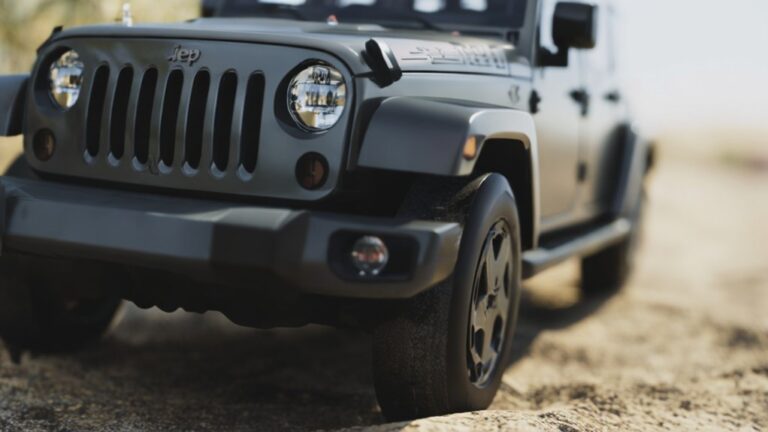
The Jeep Wrangler doesn’t use all-wheel drive; instead, it relies on a rugged part-time 4WD system designed for off-roading. This lets you switch between 2WD and 4WD to improve traction and fuel efficiency when needed. Its solid axles and transfer case work together to deliver power evenly and handle tough terrain efficiently. Whether you’re on-road or off, the Wrangler’s drivetrain adapts to keep control. Keep exploring, and you’ll find out how each system boosts your adventure.
Key Takeaways
- The Jeep Wrangler primarily uses part-time 4WD systems, not full-time all-wheel drive (AWD).
- It offers manual 4WD engagement, allowing drivers to switch between 2WD and 4WD modes for off-road use.
- Available systems include Command-Trac and Rock-Trac, both designed for rugged off-road traction and control.
- Selec-Trac provides an automated torque distribution system, offering seamless switching between 2WD and 4WD.
- Wrangler’s drivetrain optimizes fuel efficiency by limiting 4WD engagement and adapting torque based on terrain conditions.
Does the Jeep Wrangler Use AWD or 4WD?
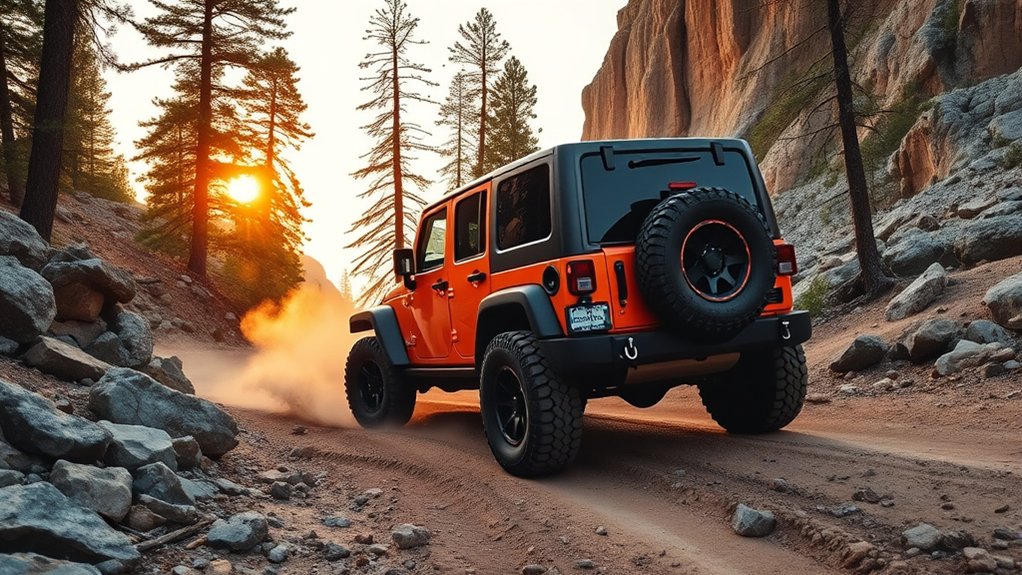
Wondering whether the Jeep Wrangler uses AWD or 4WD? The answer is 4WD. Unlike all-wheel drive systems that operate full-time and distribute power automatically, the Wrangler’s 4WD system is designed for rugged off-road use. You’ll find that it offers part-time 4WD options, which means you can switch between 2WD and 4WD depending on the terrain. This setup gives you better control and traction when you’re tackling rough trails, mud, or snow. While AWD handles everyday driving conditions smoothly, the Wrangler’s 4WD system excels in challenging environments, providing the torque and durability needed for off-road adventures. So, if you’re planning serious off-roading, the Wrangler’s 4WD system is built to handle it.
Why Part-Time 4WD Makes a Difference Off-Road

When you switch to part-time 4WD, you get better traction control where it counts most—off-road. You’ll also notice improved fuel efficiency since you’re not running 4WD all the time. Plus, the simpler drivetrain operation makes it easier to handle tough terrain without extra hassle.
Enhanced Traction Control
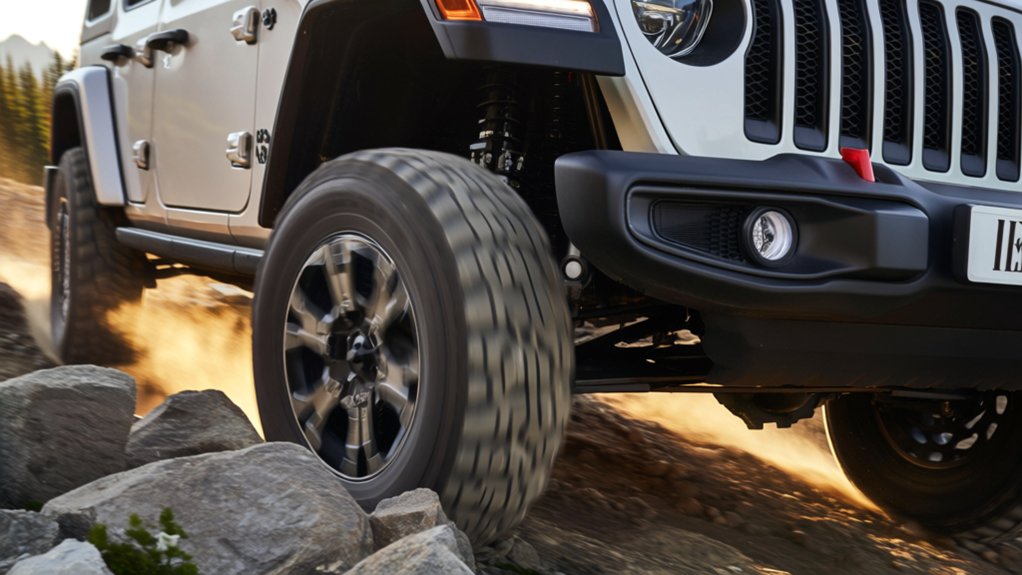
How does part-time 4WD enhance your Jeep Wrangler’s traction control off-road? When you engage part-time 4WD, power splits evenly between the front and rear wheels, ensuring all tires grip the terrain effectively. This balanced power distribution helps prevent wheel slip on loose surfaces like mud, sand, or rocks. You’ll notice improved stability and control, especially when steering through uneven or slippery trails. Unlike full-time systems, part-time 4WD lets you switch modes, so you only use enhanced traction when necessary, reducing wear on the drivetrain. This setup gives you the confidence to tackle challenging off-road conditions without worrying about losing control. With part-time 4WD, your Wrangler’s traction control becomes more responsive and capable, making every adventure safer and more enjoyable.
Improved Fuel Efficiency
Beyond enhancing traction control, part-time 4WD also plays a key role in improving your Jeep Wrangler’s fuel efficiency during off-road driving. When you switch to part-time 4WD only as needed, your vehicle avoids the constant energy drain that full-time systems impose. This selective engagement means your engine works smarter, not harder, saving fuel during less demanding conditions. Here’s why part-time 4WD makes a difference:
- It reduces drivetrain drag by disengaging unnecessary components.
- It limits power loss by only powering all wheels when traction demands it.
- It allows you to optimize fuel use on varying terrains without sacrificing capability.
Simplified Drivetrain Operation
Since off-road conditions demand quick adaptability, part-time 4WD simplifies your Jeep Wrangler’s drivetrain operation by letting you engage four-wheel drive only when necessary. You don’t have to worry about complex systems constantly running or draining power. This setup gives you control to switch between two-wheel drive for everyday driving and four-wheel drive when the terrain gets tough. Engaging 4WD only when needed reduces wear on drivetrain components and helps maintain ideal handling on regular roads. When you hit mud, rocks, or steep inclines, flipping the transfer case to 4WD locks both axles together, distributing power evenly for better traction. This straightforward operation keeps things reliable and efficient, so you can focus on conquering trails without overcomplicating your Jeep’s performance.
How the Transfer Case Powers Your Wrangler’s 4×4

When you engage your Wrangler’s 4×4, the transfer case steps in to distribute power between the front and rear axles. This essential component guarantees both axles receive torque, improving traction and control on tough terrain. The transfer case lets you switch between two-wheel drive and various four-wheel drive modes, adapting to different driving conditions.
Here’s what it does for you:
- Splits engine power equally or variably to front and rear wheels
- Allows shifting into low-range gears for extra torque on steep or slippery surfaces
- Manages power delivery seamlessly for smooth changeovers between drive modes
How the Wrangler’s Solid Axles Work With Its 4WD System
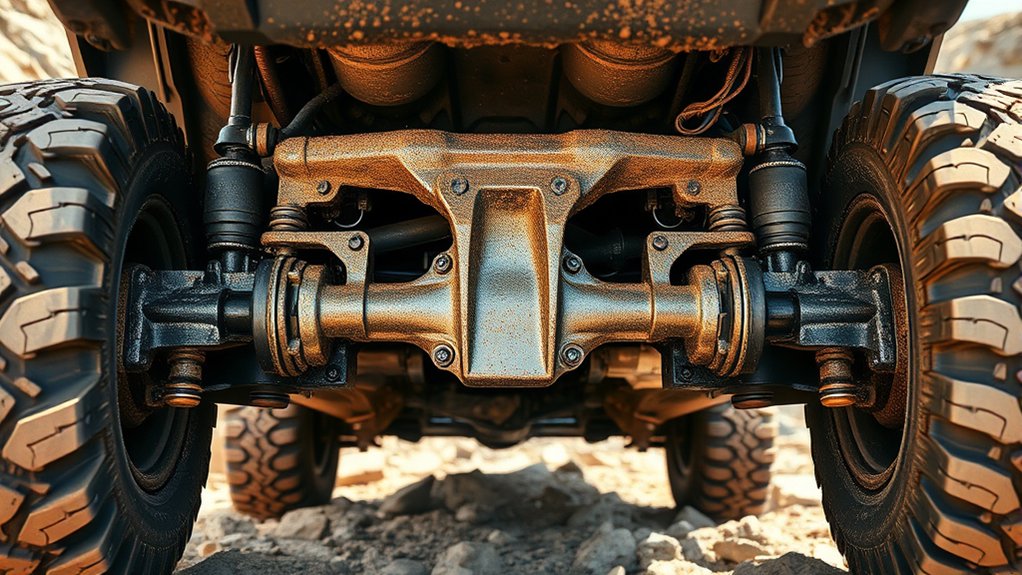
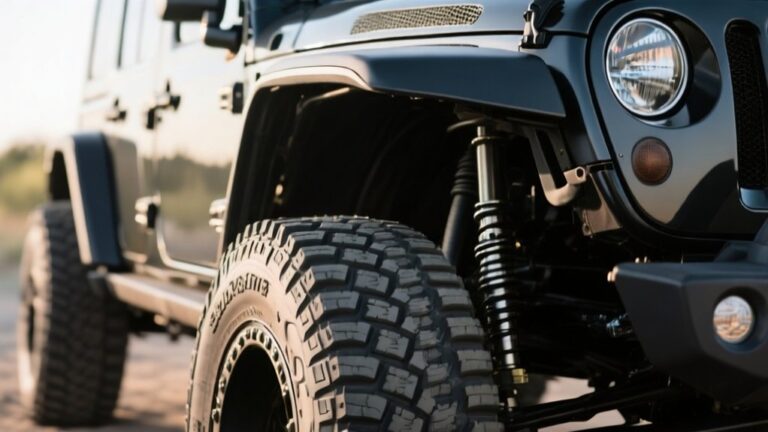
Although the solid axles might seem simple, they play a essential role in your Wrangler’s 4WD system by delivering consistent power and durability over rough terrain. These axles connect both wheels on each axle, ensuring power is evenly distributed, which helps maintain traction when one wheel loses grip. Solid axles are tough, able to withstand the harsh impacts and stresses you encounter off-road. They allow your Wrangler to flex and articulate, keeping the tires in contact with uneven surfaces. Because the axles are rigid, they provide greater stability and help your 4WD system work efficiently by transferring torque directly to the wheels. This setup is one reason your Wrangler can tackle challenging trails with confidence and reliability.
What the Selec-Trac System Adds to Wrangler Drivetrains
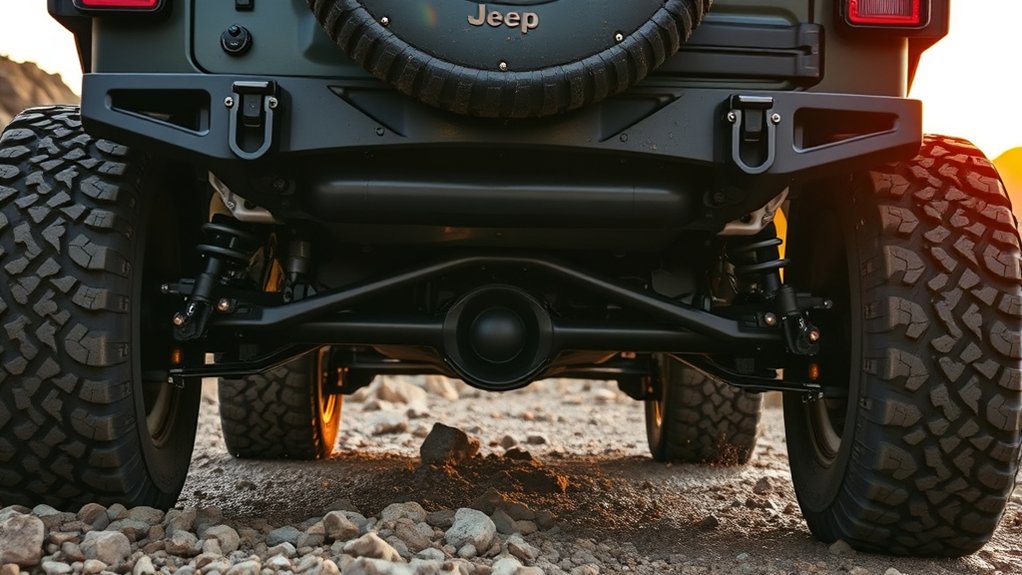
You’ll find the Selec-Trac system adds versatile control to your Wrangler’s drivetrain, enhancing both on- and off-road performance. It automatically adjusts torque distribution to match the terrain, giving you better traction when you need it most. Plus, it integrates smoothly with various Wrangler models, making it a smart upgrade for any adventure.
Selec-Trac System Overview
Because the Selec-Trac system enhances the Wrangler’s drivetrain, it gives you greater control and versatility on various terrains. This system lets you switch between two-wheel drive and full-time four-wheel drive with ease, adapting to changing road conditions without stopping. It also features an automatic mode that adjusts torque distribution based on traction needs, so you don’t have to think twice when the terrain shifts.
With Selec-Trac, you get:
- Seamless shift between 2WD and 4WD for efficiency
- Automatic torque management for improved stability
- Enhanced drivability on mixed road surfaces
This setup guarantees you’re ready for anything, from dry pavement to slippery or uneven ground, without manual intervention or complicated controls.
Off-Road Performance Benefits
How does the Selec-Trac system transform your Wrangler’s off-road capabilities? It gives you seamless control over power distribution, enhancing traction on unpredictable terrain. When you hit slippery mud or loose gravel, Selec-Trac automatically adjusts torque between front and rear wheels, preventing wheel spin and keeping you moving forward confidently. You’ll appreciate its ability to switch between two-wheel and four-wheel drive modes on the fly, optimizing fuel efficiency without sacrificing grip when conditions demand it. Plus, it reduces drivetrain binding on tight turns, protecting your vehicle while improving maneuverability. With Selec-Trac, you get more precise handling and stability off-road, allowing you to tackle obstacles and rough trails with greater ease and confidence, no matter where your adventure takes you.
Integration With Wrangler Models
Selec-Trac doesn’t just boost your Wrangler’s off-road performance; it’s also carefully integrated into different Wrangler models to maximize drivetrain efficiency and versatility. Whether you’re in a Rubicon, Sahara, or Sport model, Selec-Trac adapts to your driving needs seamlessly. It automatically switches between 2WD and 4WD modes, ensuring you get peak traction without sacrificing fuel economy. Here’s what it adds to Wrangler drivetrains:
- Enhanced torque distribution for smoother handling on varied surfaces
- Automatic mode switching that reacts to changing road conditions
- Compatibility with advanced traction control and stability systems
With Selec-Trac, your Wrangler delivers a balanced mix of capability and convenience, making every drive confident and controlled.
Comparing Command-Trac and Rock-Trac 4×4 Systems
What sets the Command-Trac and Rock-Trac 4×4 systems apart when you’re behind the wheel of a Jeep Wrangler? Command-Trac offers a reliable part-time 4WD with a two-speed transfer case, letting you switch between 2H and 4L for general off-roading and daily driving. It’s straightforward and durable, perfect if you want solid off-road capability without complexity. Rock-Trac, on the other hand, is designed for serious off-road enthusiasts. It features a lower crawl ratio thanks to its 4:1 low gear, giving you more control over rough terrain and steep climbs. Plus, Rock-Trac includes heavy-duty components for enhanced durability. So, if you want more precision and toughness for challenging trails, Rock-Trac is your go-to. For everyday adventures, Command-Trac strikes a great balance.
How Wrangler’s 4WD Adapts to Different Terrains
You’ll appreciate how the Wrangler’s 4WD system uses terrain detection technology to adjust settings on the fly. It smartly distributes torque to the wheels that need it most, boosting your grip on tricky surfaces. Plus, the traction control system helps you maintain stability no matter where you’re driving.
Terrain Detection Technology
How does the Jeep Wrangler’s 4WD system handle shifting terrain without missing a beat? It uses advanced Terrain Detection Technology to instantly recognize and respond to changing surfaces. This smart system monitors wheel slip, speed, and surface conditions, then adjusts power delivery and traction control for maximum grip.
With this technology, you get:
- Real-time surface analysis that adapts to mud, sand, or rocks
- Automatic adjustments to stability and traction systems
- Enhanced off-road confidence without manual input
You don’t have to guess or constantly switch modes—Terrain Detection takes care of it, ensuring you maintain control and momentum no matter where you go. It’s like having a co-pilot constantly tuning your Wrangler’s 4WD for the best performance.
Torque Distribution Methods
When terrain shifts beneath your wheels, the Jeep Wrangler’s 4WD system doesn’t just react—it actively manages torque distribution to keep you moving forward. It dynamically allocates power between the front and rear axles based on traction needs, ensuring ideal grip on mud, rocks, or snow. You’ll find modes like Part-Time 4WD for rugged trails and Full-Time 4WD for everyday driving. The system redistributes torque instantly, preventing wheel spin and maintaining control.
| Terrain Type | Torque Distribution Strategy |
|---|---|
| Dry pavement | Primarily rear-wheel drive |
| Muddy or slippery | Balanced front and rear torque |
| Rocky terrain | Increased torque to rear axle |
| Snow or ice | Equal torque front and rear |
This adaptability keeps your Wrangler confident and capable across diverse conditions.
Traction Control Systems
Although the Jeep Wrangler’s torque distribution sets the foundation for off-road capability, its traction control systems take adaptability to the next level. These systems constantly monitor wheel slip and adjust power delivery to keep you moving smoothly, no matter the terrain. When you’re tackling mud, rocks, or snow, the Wrangler’s traction control steps in to prevent wheel spin and maintain grip.
Here’s what you can expect from the Wrangler’s traction control systems:
- Electronic Limited Slip Differential (ELSD): Automatically applies brake pressure to slipping wheels for better traction.
- Hill Start Assist: Prevents rollback when starting on steep inclines.
- Selec-Trac® and Rock-Trac® Systems: Offer tailored traction modes for various terrains, enhancing off-road performance.
With these tools, you stay confident and in control wherever you go.
Manual vs. Automatic 4WD Engagement: Which Is Better?
Deciding between manual and automatic 4WD engagement boils down to your driving style and the conditions you face. If you prefer full control and enjoy off-roading, manual 4WD lets you decide exactly when to engage or disengage, giving you better command on tricky terrain. You’ll need to pay attention and switch modes at the right time, which can be rewarding but requires focus. On the other hand, automatic 4WD systems work behind the scenes, detecting wheel slip and activating 4WD without your input. This convenience suits daily driving and sudden changes in road conditions, ensuring better traction without effort. Ultimately, if you want hands-on control, go manual; if you value ease and adaptability, automatic 4WD fits better.
How the Wrangler’s 4WD Handles On-Road vs. Off-Road
Whether you’re cruising city streets or tackling rugged trails, the Wrangler’s 4WD system adapts to deliver peak performance. On-road, it provides stable traction and smooth handling, ensuring you stay confident in wet or slippery conditions. Off-road, it shifts to tackle rough terrain by sending power to the wheels with the most grip, helping you overcome mud, rocks, or sand.
Here’s how it handles different environments:
- On-Road: Distributes power evenly for controlled, efficient driving
- Off-Road: Engages low-range gearing for maximum torque and traction
- Automatic Response: Reacts instantly to changing surfaces for supreme grip
This versatility means you get both safety on pavement and capability off it without switching vehicles.
Common Misconceptions About Jeep Wrangler’s 4WD System
Many drivers assume the Jeep Wrangler’s 4WD system works like traditional all-wheel drives, but it actually offers unique features tailored for serious off-roading. You might think it’s always active, but Wrangler’s part-time 4WD requires you to manually engage it when needed. It’s not designed for constant use on dry pavement, unlike full-time AWD systems. Another misconception is that 4WD means better traction in all conditions; however, without proper tires and driver input, it won’t guarantee grip. Ultimately, some believe the Wrangler’s 4WD automatically handles every terrain, but you need to understand when to shift between modes like 2H, 4H, and 4L to maximize performance and protect your drivetrain. Knowing these facts helps you use the system effectively.
Choosing the Right Wrangler for Your 4WD Needs
Understanding how the Wrangler’s 4WD system operates lays the foundation for picking the right model that fits your off-road adventures. You’ll want to match the capabilities of the Wrangler to your terrain and driving style. Some models offer more advanced 4WD features tailored for rugged trails, while others focus on everyday usability.
Consider these factors when choosing your Wrangler:
- Terrain type: rocky, muddy, or sandy conditions demand different 4WD strengths.
- Frequency of off-road use: occasional trail runs or regular, intense off-roading.
- Additional features: locking differentials and sway bar disconnects enhance off-road performance.
Key Drivetrain Features to Consider Before Buying a Wrangler
Before you commit to a Jeep Wrangler, you’ll want to closely examine its drivetrain features to make certain they meet your specific needs. Pay attention to the type of four-wheel-drive systems available, like the Command-Trac or Rock-Trac, as each offers different capabilities for on- and off-road conditions. Consider the Wrangler’s transfer case, which controls power distribution to the wheels, and whether it has manual or electronic shifting. Don’t forget locking differentials—they’re vital for maintaining traction on tough terrain. Also, look at the axle ratios, since they affect both power delivery and fuel efficiency. By understanding these key drivetrain components, you’ll guarantee your Wrangler performs exactly how you want, whether you’re steering through city streets or tackling rugged trails.
Frequently Asked Questions
What Maintenance Is Required for the Jeep Wrangler’s 4WD System?
You’ll need to check and change the transfer case and differential fluids regularly, inspect the drive shafts and U-joints, and keep the 4WD system clean to prevent damage. Don’t forget to test engagement often.
Can the Jeep Wrangler’s 4WD System Improve Fuel Efficiency?
You won’t see much fuel efficiency improvement from the Jeep Wrangler’s 4WD system since it adds weight and mechanical drag. To save fuel, switch to 2WD on smooth roads whenever you can and keep your system maintained.
How Does Tire Choice Affect the Wrangler’s 4WD Performance?
Tire choice can make or break your Wrangler’s 4WD performance—you’ll feel like you’re either gripping the moon or sliding on ice. Picking the right tires boosts traction, control, and off-road confidence like nothing else can.
Are There Aftermarket Upgrades Available for Wrangler’s 4WD System?
Yes, you can upgrade your Wrangler’s 4WD with lockers, limited-slip differentials, and upgraded transfer cases. These aftermarket parts improve traction and durability, letting you tackle tougher trails with confidence and enhanced control.
What Is the Warranty Coverage for the Jeep Wrangler’s Drivetrain?
You probably won’t need the warranty, but Jeep’s drivetrain coverage lasts five years or 60,000 miles. So, if your Wrangler’s guts decide to quit early, you’re covered—just don’t blame Jeep for your off-road adventures!
Conclusion
When it comes to the Jeep Wrangler, you’re getting a true 4WD system built for rugged off-road adventures. It’s not just AWD—this part-time 4WD, with its solid axles and advanced Selec-Trac options, gives you control both on and off the road. Remember, “Don’t judge a book by its cover”—the Wrangler’s drivetrain might seem complex, but it’s designed to handle whatever terrain you throw at it. Choose wisely based on your needs.