Are Jeep Wrangler Hard Tops Interchangeable?
You can’t just swap Jeep Wrangler hard tops between TJ, JK, and JL models because each has different body dimensions, mounting points, and designs. TJ hard tops are smaller and won’t fit JK or JL frames properly, while JK and JL tops vary in roof length, clips, and locking mechanisms, affecting fit and sealing. To guarantee a perfect fit and avoid leaks, use hard tops made specifically for your Jeep model. Keep going to discover how to check compatibility and get the best fit.
Key Takeaways
- Jeep Wrangler hard tops from TJ, JK, and JL models are not directly interchangeable due to differing body dimensions and mounting points.
- Variations in rear window shapes, hinge placements, and roof length affect fitment between different Jeep generations.
- Even within the same model, year-to-year design changes can cause installation and sealing issues with hard tops.
- Using a hard top specifically designed for your Jeep’s model and year ensures proper fit, sealing, and functionality.
- Always verify mounting hardware compatibility and consult manufacturer guidelines before attempting to swap hard tops.
Can You Swap Jeep Wrangler Hard Tops Between TJ, JK, and JL Models?
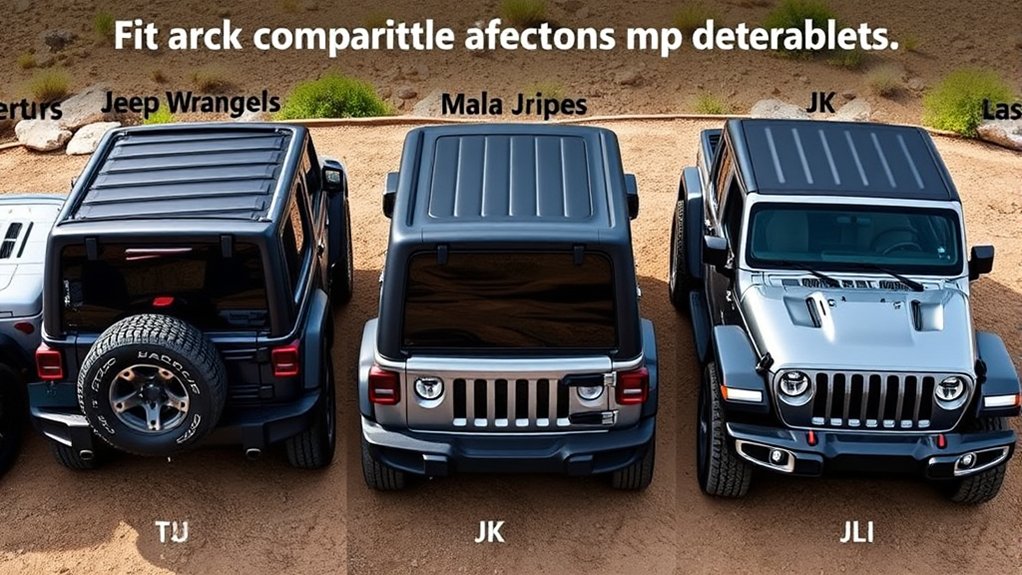
When you’re considering swapping hard tops between Jeep Wrangler TJ, JK, and JL models, you’ll quickly find they aren’t directly interchangeable. Each generation features unique body dimensions and mounting points, meaning a hard top from a TJ won’t fit properly on a JK or JL without modifications.
The TJ hard tops are smaller and designed for its compact frame, while JK and JL models have larger, more squared-off designs. Additionally, the JK and JL have different rear window shapes and hinge placements, further complicating direct swaps.
You might be able to make some adjustments or use adapters, but that requires extra effort and isn’t guaranteed to work seamlessly. So, if you want a perfect fit, it’s best to stick with hard tops made specifically for your Wrangler’s generation.
How to Check Jeep Wrangler Hard Top Compatibility
Wondering how to guarantee a Jeep Wrangler hard top will fit your model? Start by identifying your Jeep’s specific model and year—this info is vital since dimensions and mounting points vary.
Next, compare the hard top’s specifications, including size, shape, and latch mechanisms, with your Jeep’s requirements. Check manufacturer guidelines or trusted forums for compatibility insights.
Compare hard top specs like size and latches with your Jeep’s needs using guides and forums.
Don’t forget to examine the mounting hardware; even if the top looks right, incompatible fasteners can cause fitment problems.
If possible, test-fit the hard top before committing.
Finally, consult with Jeep dealerships or experienced off-road shops—they can confirm compatibility and offer advice.
Taking these steps ensures you avoid costly mistakes and get a hard top that fits securely and functions properly.
Jeep Hard Top Differences by Model Year
Understanding the differences in Jeep hard tops across model years is key to finding the right fit for your Wrangler. Each model year often introduces subtle changes that affect hard top compatibility. If you don’t account for these, you might struggle with improper fit or installation issues.
Here are some key differences to keep in mind:
- Mounting points: These can shift slightly between model years, impacting how the top attaches.
- Window design: Changes in rear and side window shapes affect hard top configurations.
- Material and insulation: Newer models may use improved materials for better durability and soundproofing.
Knowing these distinctions helps you select a hard top that fits securely and functions well with your Wrangler’s specific year.
How Roof Design Changes Impact Hard Top Fit
Although Jeep Wrangler roof designs may seem similar at first glance, even small changes can considerably affect how a hard top fits your vehicle. Variations in dimensions, attachment points, and contour shapes mean you can’t simply swap hard tops across models without verifying compatibility. These design tweaks influence sealing, alignment, and overall security.
| Design Element | Impact on Hard Top Fit |
|---|---|
| Roof Length | Affects full coverage |
| Attachment Clips | Determines secure locking |
| Curvature | Influences edge sealing |
| Window Frame | Changes visibility and fit |
| Weather Stripping | Impacts water and wind resistance |
Understanding these details helps you avoid fitment issues and ensures your hard top performs as expected.
How to Measure Your Jeep for a Perfect Hard Top Fit
Before purchasing a hard top, you’ll want to measure your Jeep carefully to guarantee a perfect fit. Start by knowing your Jeep’s model year and trim, as dimensions can vary.
Next, use a tape measure to check key areas, ensuring your new hard top will align correctly and seal out the elements.
Focus on these critical measurements:
- Roof dimensions: Measure length and width of the top frame to match the hard top base.
- Door frame height: Check from the roof frame to the door seals for proper clearance.
- Mounting points: Identify bolt locations and spacing to ensure compatibility.
Taking these steps helps you avoid fit issues, ensuring your hard top installs smoothly and performs well.
Benefits of Upgrading to a Newer Jeep Hard Top
When you upgrade to a newer Jeep hard top, you gain improved durability, enhanced weather protection, and a sleeker design that complements your vehicle.
Newer models often use advanced materials that resist wear and damage better than older versions, giving you longer-lasting performance. You’ll also appreciate modern features like easier installation systems and improved insulation, which make your driving experience more comfortable.
Plus, a fresh hard top can boost your Jeep’s resale value and curb appeal, making it look sharp and well-maintained. Whether you’re tackling rugged trails or cruising around town, a newer hard top offers reliability and style that older models might lack.
Upgrading guarantees you get the best fit and function for your Jeep Wrangler.
How Does Weatherproofing Differ Among Jeep Hard Tops?
You’ll notice that weatherproofing varies between Jeep hard tops based on the sealing materials used and how drainage systems are designed.
Some models offer better climate adaptability features, making them more effective in extreme conditions.
Understanding these differences helps you choose the right hard top for your needs.
Sealing Materials Comparison
Although Jeep Wrangler hard tops share many design features, their sealing materials can vary considerably, affecting how well they keep out the elements. When you switch between hard tops, you might notice differences in how snugly they fit and how much noise or moisture seeps in, largely due to the type and quality of seals used.
Here’s what you should consider about sealing materials:
- Rubber Gaskets: Common, flexible, and durable, but quality varies by model year and manufacturer.
- Foam Seals: Provide extra cushioning and sound dampening, yet may degrade faster under harsh conditions.
- Silicone Seals: More resistant to extreme temperatures and UV rays, offering longer-lasting weatherproofing.
Choosing the right sealing material impacts your comfort and protection from rain, wind, and dust.
Drainage System Designs
Since water can easily find its way into tight spaces, Jeep Wrangler hard tops use different drainage system designs to keep the interior dry. You’ll notice that some hard tops feature integrated channels around window edges and door frames that direct water away from seals. Others rely on strategic drain holes placed at low points to allow trapped moisture to escape quickly.
These variations impact how well each hard top manages rain, snow, or car washes. If you switch hard tops between models, mismatched drainage paths can lead to leaks or water pooling. So, when considering interchangeability, pay attention to how the drainage system aligns with your Jeep’s body.
Proper drainage guarantees your interior stays dry and prevents damage from prolonged moisture exposure.
Climate Adaptability Features
When you rely on your Jeep Wrangler in various climates, the hard top’s weatherproofing becomes essential. Different hard tops offer varying levels of protection against elements like rain, snow, and UV rays. Some feature enhanced seals and insulated panels designed to keep moisture out and maintain cabin temperature.
Others might prioritize lightweight construction but sacrifice some weather resistance.
To guarantee your hard top suits your environment, consider these climate adaptability features:
- Sealing Quality: High-grade rubber gaskets prevent leaks and drafts.
- Insulation: Foam or composite layers help regulate interior temperature.
- UV Resistance: Durable coatings protect against sun damage and fading.
Choosing the right hard top means balancing weatherproofing with your local climate demands for ideal comfort and durability.
Where to Find Replacement and Aftermarket Jeep Hard Tops
If you need a replacement or want to upgrade your Jeep Wrangler hard top, several reliable sources make the process straightforward. You can start by checking authorized Jeep dealerships, where OEM hard tops guarantee perfect fit and warranty coverage.
For more budget-friendly or specialized options, explore reputable aftermarket brands like Bestop or Rampage, which offer various styles and materials.
Online marketplaces such as eBay and Amazon also provide a wide range of new and used hard tops, but be sure to verify compatibility with your Wrangler model year.
Additionally, local Jeep forums and off-road communities often have listings or recommendations for hard tops.
Tools and Tips for Installing a Jeep Hard Top
You’ll need just a few essential tools to get your Jeep hard top installed smoothly.
Following simple step-by-step mounting tips can make the process faster and safer.
Let’s walk through what you’ll need and how to get it done right.
Essential Installation Tools
What tools do you really need to install a Jeep hard top efficiently? Having the right tools makes the job smoother and safer. You don’t want to struggle with poorly fitting equipment or risk damage to your Jeep or hard top.
Here are the essentials you should have on hand before you start:
- Socket wrench set: Crucial for tightening bolts securely without stripping them.
- Torx drivers: Many Jeep hard tops use Torx screws, so these drivers ensure proper fit.
- Rubber mallet: Helps gently tap components into place without scratching or damaging surfaces.
With these tools ready, you’ll avoid common installation hiccups and protect your vehicle’s finish. Keep them organized and within reach to speed up the process and maintain control over every step.
Step-by-Step Mounting Tips
Having the right tools within reach sets you up for a smooth hard top installation. Start by positioning the hard top close to your Jeep, ideally on a soft surface to avoid scratches.
With a helper, lift the top carefully and align it with the roll bars. Secure the front clamps first, ensuring they’re tight but not overdone.
Next, fasten the rear bolts, checking the rubber seals to prevent leaks. Don’t forget to connect any electrical components, like the rear defroster, if your hard top has them.
Finally, inspect all latches and seals for a snug fit. Taking your time during each step helps prevent damage and guarantees your hard top fits securely and functions properly.
Troubleshooting Common Jeep Hard Top Fit Issues
Although Jeep Wrangler hard tops are designed to fit securely, you might encounter common issues like gaps, misalignment, or difficulty latching. When this happens, don’t worry—these problems usually stem from minor alignment errors, worn seals, or hardware issues.
Start by checking the seals for cracks or debris that could prevent a tight fit. Next, inspect the mounting points and hinges for damage or misalignment. Finally, verify your latches are clean and properly adjusted.
Here’s how to troubleshoot effectively:
- Clean and lubricate latches and hinges to ease operation
- Adjust mounting bolts and hinges to realign the hard top
- Replace worn or damaged rubber seals to eliminate gaps
Taking these steps can help you achieve a snug, secure fit quickly.
Frequently Asked Questions
Can Jeep Wrangler Hard Tops Improve Vehicle Security?
Yes, Jeep Wrangler hard tops can improve your vehicle’s security by providing a solid, lockable barrier against theft and weather. They’re tougher to break into compared to soft tops, giving you better protection overall.
Do Hard Tops Affect Jeep Wrangler Fuel Efficiency?
Yes, hard tops can improve your Jeep Wrangler’s fuel efficiency by reducing wind drag compared to soft tops. You’ll notice smoother airflow, which helps your engine work less, saving fuel especially during highway driving.
Are Jeep Hard Tops Insulated for Temperature Control?
Jeep hard tops offer some insulation, but they’re not fully designed for temperature control. You’ll notice improved protection from wind and rain, but for extreme weather, you might want additional insulation or climate control options inside your Wrangler.
How Do Hard Tops Impact Jeep Wrangler Resale Value?
You’ll boost your Jeep Wrangler’s resale value by keeping a hard top, as buyers appreciate added protection and versatility. Hard tops show your vehicle’s cared-for condition, making it more appealing and potentially increasing its market price.
Can Jeep Wrangler Hard Tops Be Painted Custom Colors?
Yes, you can paint Jeep Wrangler hard tops custom colors. Just make sure to use automotive paint designed for fiberglass or metal, prep the surface properly, and consider professional help to guarantee a durable, smooth finish that matches your style.
Conclusion
Swapping Jeep Wrangler hard tops isn’t as simple as trading hats—you need to know your model’s fit like a tailor measures a suit. One Jeep owner tried tossing a JK hard top onto his TJ and ended up with gaps letting in rain, proving fit matters. By checking compatibility and measuring carefully, you’ll avoid that soggy surprise. With the right tools and know-how, you’ll have a weatherproof, snug top that fits like it was made just for your Wrangler.