What Does the Auxiliary Battery Do in a Jeep Wrangler?
The auxiliary battery in your Jeep Wrangler powers accessories like interior lights, winches, and GPS without draining the main battery. It works alongside the primary battery to keep your vehicle running smoothly, especially during off-road trips or camping. This backup power source helps prevent getting stranded by supporting critical electronics when you’re off the grid. It also protects your main battery from excessive drain, boosting reliability. If you want to understand how to maintain or upgrade it, there’s more to explore.
Key Takeaways
- The auxiliary battery powers accessories without draining the main battery in a Jeep Wrangler.
- It supports off-road equipment like winches, lights, and communication devices for reliable use.
- It operates independently but works alongside the main battery to ensure continuous power availability.
- The auxiliary battery enhances electrical system efficiency by separating accessory loads from engine start functions.
- It provides backup power during extended accessory use, preventing vehicle start failures in remote conditions.
What Is an Auxiliary Battery in a Jeep Wrangler?
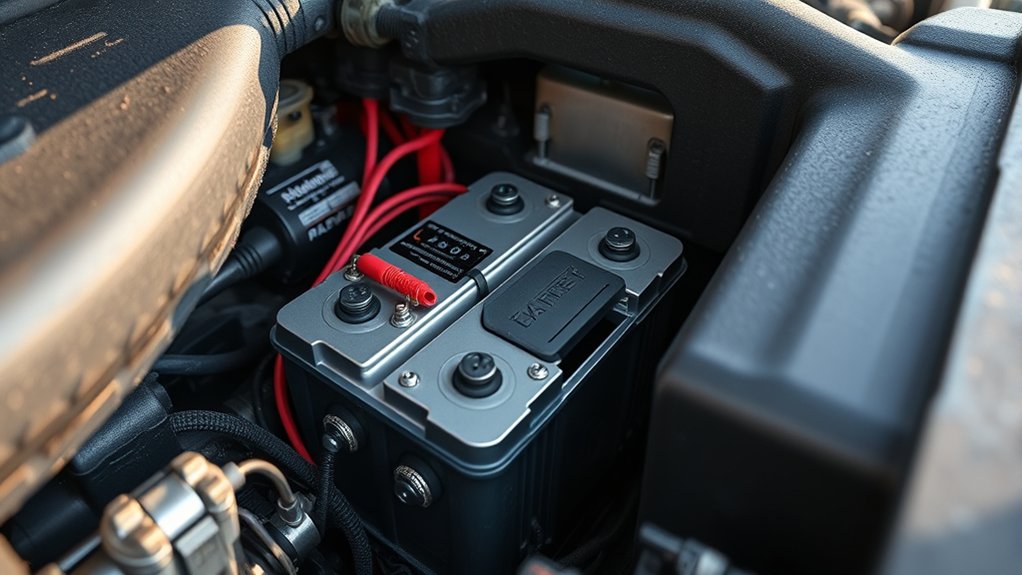
An auxiliary battery in a Jeep Wrangler serves as a secondary power source that supports your vehicle’s electrical systems. Unlike the main battery, which starts the engine, the auxiliary battery provides extra power when you’re running multiple accessories or devices.
This means you won’t drain your primary battery during extended use of electronics like winches, lights, or camping gear. The auxiliary battery operates independently but works alongside the main battery to guarantee your Jeep runs smoothly.
It’s especially helpful when you’re off-roading or camping, where access to external power is limited. By having this additional battery, you can rely on your Jeep to power various systems without worrying about leaving yourself stranded with a dead main battery.
How Your Jeep’s Auxiliary Battery Powers Electrical Systems
When you rely on your Jeep Wrangler’s auxiliary battery, it kicks in to power various electrical systems without tapping into the main battery. This setup guarantees your vehicle’s essential functions stay operational even when the main battery is under heavy load or off. The auxiliary battery handles accessories like lights, winches, and infotainment systems, preventing main battery drain and unexpected shutdowns.
| Electrical System | Powered By | Purpose |
|---|---|---|
| Interior Lighting | Auxiliary Battery | Keeps cabin lights running |
| Winch | Auxiliary Battery | Provides power for off-road winching |
| Audio System | Auxiliary Battery | Maintains sound without draining main battery |
| Main Engine Start | Main Battery | Starts the engine |
| Infotainment | Auxiliary Battery | Powers GPS and entertainment |
This division boosts reliability during your adventures.
Why Jeep Wrangler Auxiliary Batteries Are Essential Off-Road
Because off-road adventures often demand extra power for accessories and emergency equipment, your Jeep Wrangler’s auxiliary battery plays an essential role in keeping everything running smoothly. When you’re tackling tough trails, this extra battery ensures you don’t lose power when you need it most.
Here’s why your auxiliary battery is vital off-road:
- Powering Accessories: It keeps winches, lights, and air compressors running without draining the main battery.
- Supporting Electronics: GPS units and communication devices stay powered for navigation and safety.
- Backup Energy: If the main battery weakens, the auxiliary battery provides a reliable energy reserve to avoid getting stranded.
With an auxiliary battery, you can focus on the adventure, knowing your Jeep’s electrical needs are covered.
How the Auxiliary Battery Protects Your Main Battery
Your Jeep’s auxiliary battery helps prevent your main battery from draining by taking on extra electrical loads. This means your main battery stays charged and ready for essential functions.
Let’s look at how this setup keeps your vehicle running smoothly.
Preventing Main Battery Drain
Although the main battery powers your Jeep Wrangler’s essential systems, it can quickly drain if you use accessories like lights, radios, or winches while the engine is off. That’s where the auxiliary battery steps in to protect your main battery from getting drained. Here’s how it helps:
- Separates accessory power – It powers your additional devices independently, so your main battery stays reserved for starting the engine.
- Prevents deep discharge – It absorbs heavy loads, reducing the risk of your main battery losing critical charge and failing.
- Ensures reliable starts – By preserving the main battery’s charge, it guarantees you’ll have enough power to start your Jeep even after long accessory use.
This system keeps your main battery ready and reliable every time you hit the road.
Supporting Electrical Load
How does the auxiliary battery help manage the electrical demands in your Jeep Wrangler? It takes on extra electrical loads, so your main battery doesn’t get overwhelmed. When you use accessories like winches, lights, or audio systems, the auxiliary battery powers them separately. This separation prevents your main battery from draining quickly, ensuring your Jeep starts reliably every time.
| Electrical Component | Battery Supported |
|---|---|
| Winch | Auxiliary Battery |
| Off-road Lights | Auxiliary Battery |
| Audio System | Auxiliary Battery |
| Engine Starter | Main Battery |
What Jeep Accessories Use the Auxiliary Battery?
Which Jeep accessories rely on the auxiliary battery to keep your Wrangler running smoothly? The auxiliary battery powers several key components that enhance your off-road experience and convenience. You’ll find it especially critical for:
The auxiliary battery powers essential accessories to keep your Wrangler running smoothly and enhance your off-road experience.
- Remote Start System – It guarantees your Wrangler starts remotely without draining the main battery.
- Electronic Safety Features – Systems like hill descent control and traction control depend on it for consistent power.
- Infotainment and Navigation – Your touchscreen, GPS, and audio systems stay operational, even when the engine is off.
What Happens If the Auxiliary Battery Fails?
If your Jeep’s auxiliary battery fails, you might notice issues with the vehicle’s electrical system and have trouble starting the engine. These problems happen because the auxiliary battery supports key accessories and helps manage power demands.
When this battery goes bad, replacing it promptly is essential to keep your Jeep running smoothly.
Vehicle Electrical System Impact
When the auxiliary battery in your Jeep Wrangler fails, you’ll notice immediate effects on the vehicle’s electrical system. This battery supports various electronics and accessories, so its failure disrupts normal function.
Here’s what you can expect:
- Electrical Component Malfunctions: Systems like the infotainment, navigation, and interior lighting may flicker or shut down unexpectedly.
- Accessory Power Loss: Devices relying on auxiliary power, such as USB ports and power outlets, might stop working.
- Increased Load on Main Battery: The primary battery compensates, leading to faster depletion and potential strain on the starter system.
Recognizing these signs early helps you address the issue before it escalates, ensuring your Jeep’s electrical system stays reliable.
Starting Difficulties Explained
Although the auxiliary battery doesn’t directly start your Jeep Wrangler, it plays a crucial role in supporting systems that help the engine fire up smoothly. If this battery fails, you might notice slower starts or even difficulty getting the engine to turn over. Essential components like the fuel pump and electronic control units rely on the auxiliary battery’s power. When it’s dead or weak, these systems can falter.
Here’s what you might experience with a failing auxiliary battery:
| Symptom | Effect on Starting |
|---|---|
| Weak auxiliary power | Delayed fuel pump activation |
| Electrical system lag | Slow ECU response |
| Battery drain | Intermittent engine cranking |
In short, a failing auxiliary battery can make starting your Jeep frustrating and unreliable.
Auxiliary Battery Replacement
Since the auxiliary battery powers essential systems in your Jeep Wrangler, neglecting its failure can lead to persistent starting issues and electrical malfunctions. If your auxiliary battery fails, here’s what you can expect:
- Loss of Power to Accessories: Features like your infotainment system, interior lights, and power outlets may stop working.
- Increased Strain on Main Battery: The main battery will compensate, causing it to drain faster and wear out prematurely.
- Starting Problems: Your Jeep could struggle to start or fail to start, especially in cold weather.
Replacing the auxiliary battery promptly prevents these issues. You can either replace it yourself with the correct type or have a professional do it to ensure proper installation and avoid damage to your Jeep’s electrical system.
How to Check and Maintain Your Jeep’s Auxiliary Battery
To keep your Jeep’s auxiliary battery in good shape, you need to regularly inspect its condition and connections. Start by checking for corrosion on the terminals and clean them with a battery terminal cleaner or a mixture of baking soda and water if needed. Make sure the terminals are tight to guarantee a solid connection.
Regularly inspect and clean your Jeep’s auxiliary battery terminals to ensure a strong, corrosion-free connection.
Next, test the battery voltage using a multimeter; a fully charged auxiliary battery should read around 12.6 volts or higher. If the voltage drops below 12.4 volts, consider charging it to prevent issues.
Also, inspect the battery case for cracks or leaks, which indicate replacement is necessary. Finally, keep the battery secure in its tray to avoid vibrations that can damage it over time.
Regular checks help extend your Jeep’s battery life and reliability.
Can You Upgrade or Replace the Jeep Wrangler Auxiliary Battery?
You can upgrade or replace your Jeep Wrangler’s auxiliary battery to improve performance and reliability. There are several replacement options to evaluate, each with different benefits and compatibility factors.
Knowing how to install the battery properly guarantees your Jeep runs smoothly without any electrical issues.
Benefits Of Upgrading
Although the stock auxiliary battery in your Jeep Wrangler handles basic functions, upgrading it can substantially boost your vehicle’s performance and reliability. When you choose to upgrade, you’ll notice several key benefits:
- Enhanced Power Capacity – An upgraded battery provides more reserve power, supporting additional electronics and accessories without draining your main battery.
- Improved Battery Life – Higher-quality batteries often last longer under tough conditions, reducing the frequency and hassle of replacements.
- Better Cold Weather Performance – Upgraded batteries maintain stronger starts and consistent power delivery in low temperatures, essential for off-road adventures.
Replacement Battery Options
Upgrading your Jeep Wrangler’s auxiliary battery often leads to contemplating replacement options that fit your specific needs. You can choose from traditional lead-acid batteries, AGM (Absorbent Glass Mat) batteries, or lithium-ion options. Each type offers distinct advantages depending on your usage and budget. Here’s a quick comparison:
| Battery Type | Pros | Cons |
|---|---|---|
| Lead-Acid | Affordable, reliable | Heavier, shorter life |
| AGM | Maintenance-free | Higher cost |
| Lithium-Ion | Lightweight, durable | Expensive, requires specific charger |
Whether you want longer life, lighter weight, or cost efficiency, there’s a suitable auxiliary battery for your Jeep. Replacing the battery with the right type can improve your vehicle’s performance and accessory support.
Installation And Compatibility
Choosing to install or replace the auxiliary battery in your Jeep Wrangler involves understanding compatibility factors to guarantee peak performance. You can upgrade or swap the battery, but you need to consider key points.
- Battery Type: Ensure the new battery matches the original’s specifications (AGM or lead-acid) to avoid electrical issues.
- Physical Size: Confirm the replacement fits securely in the auxiliary battery compartment without modifications.
- Electrical Capacity: Match or exceed the original battery’s amp-hour rating to maintain system reliability.
If you pick a battery that fits these criteria, installation will be straightforward, and your Jeep’s electrical systems will stay stable.
Upgrading can boost auxiliary power, but improper choices might cause malfunctions. Always consult your owner’s manual or a professional before making changes.
Differences Between the Main and Auxiliary Batteries in a Jeep Wrangler
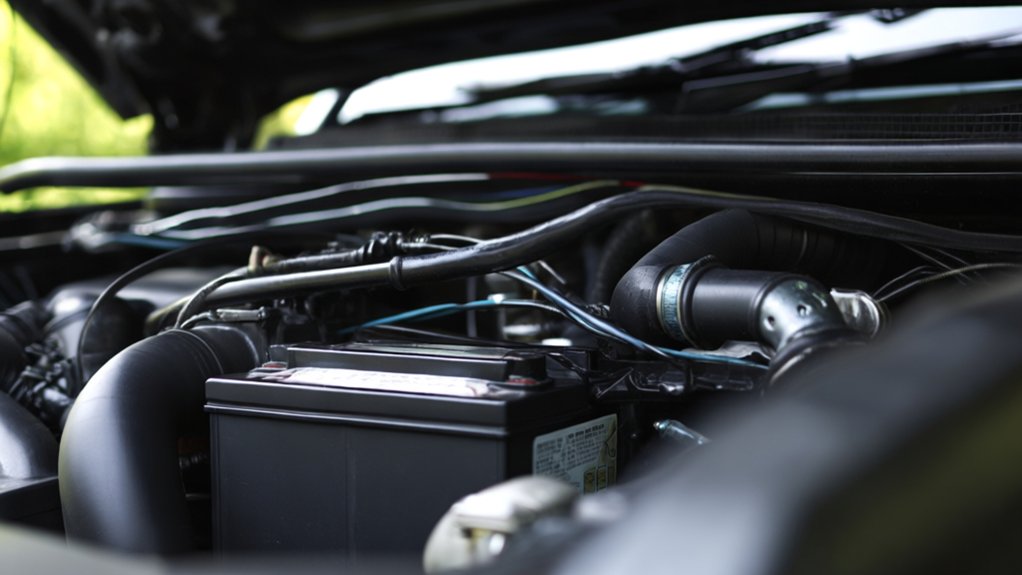
When you look under the hood of your Jeep Wrangler, you’ll notice two batteries serving distinct roles. The main battery powers essential systems like starting the engine and running primary electronics. It’s designed to deliver a strong burst of energy when you crank your Jeep.
The auxiliary battery, on the other hand, supports additional accessories such as winches, off-road lights, or audio systems, especially when the engine is off. This separation prevents draining your main battery during extended use of these extras.
While the main battery focuses on starting power, the auxiliary battery handles continuous energy demands. Understanding this difference helps you maintain both batteries properly and guarantees your Jeep’s electrical system runs smoothly during daily drives and off-road adventures.
How to Troubleshoot Common Auxiliary Battery Issues
Knowing the distinct roles of your Jeep Wrangler’s main and auxiliary batteries helps you spot issues faster when something goes wrong.
If your auxiliary battery isn’t powering accessories or seems drained, start troubleshooting with these steps:
- Check the Connections: Ensure all terminals are clean and tightly connected. Corrosion or loose cables often cause power loss.
- Test Battery Voltage: Use a multimeter to measure voltage. A fully charged auxiliary battery should read around 12.6 volts. Anything below 12 volts signals a problem.
- Inspect the Charging System: Confirm the battery is charging properly when the engine runs. A faulty alternator or wiring can prevent the auxiliary battery from replenishing power.
Frequently Asked Questions
How Long Does the Auxiliary Battery Typically Last in a Jeep Wrangler?
You can expect the auxiliary battery in your Jeep Wrangler to last about 3 to 5 years, depending on usage and maintenance. Regular checks and avoiding deep discharges will help you get the most out of it.
Can the Auxiliary Battery Be Charged by Solar Panels?
Yes, you can charge the auxiliary battery with solar panels. Just make sure your solar setup matches the battery’s voltage and includes a charge controller to prevent overcharging, so you keep your Jeep’s systems running smoothly off-grid.
Does the Auxiliary Battery Affect Jeep Wrangler Resale Value?
Yes, the auxiliary battery can boost your Jeep Wrangler’s resale value because it shows you’ve invested in enhanced electrical capacity and reliability, especially for off-road gear or accessories, making your vehicle more appealing to buyers.
Are There Any Warranty Considerations for the Auxiliary Battery?
Yes, you should check your Jeep’s warranty details since the auxiliary battery might have specific coverage terms. Avoid unauthorized modifications or replacements to keep your warranty valid and guarantee any issues with the battery are properly covered.
Can the Auxiliary Battery Be Used in Other Jeep Models?
Think of the auxiliary battery as a trusty sidekick. You can use it in other Jeep models, but compatibility varies. Always check your specific model’s requirements to guarantee it fits and functions properly without any hiccups.
Conclusion
Now that you know your Jeep Wrangler’s auxiliary battery powers essential accessories without depleting the main battery, imagine being deep off-road at night. Your auxiliary battery keeps your fridge running and lights on, so you stay comfortable and safe. Without it, you’d risk getting stranded with a dead main battery. Taking care of this battery guarantees your adventures stay worry-free and your Jeep ready for whatever comes next.