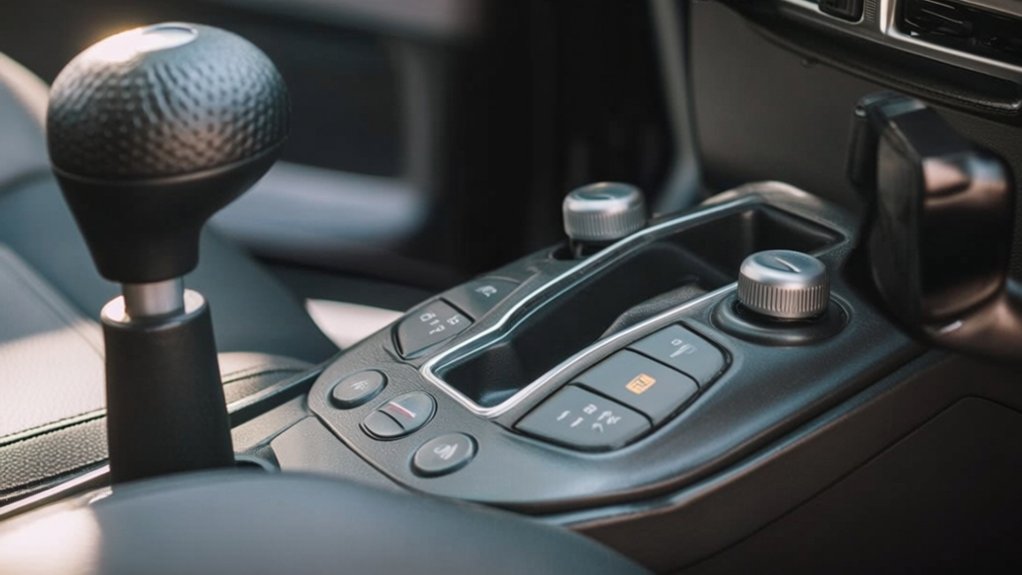
How to Engage 4WD on Jeep Wrangler in 5 Easy Steps
To engage 4WD on your Jeep Wrangler, first locate the 4WD controls near the gear shifter—a lever on older models or a rotary dial on newer ones. Next, prepare by stopping or moving very slowly and shifting into neutral if needed. Then, shift from 2H to 4H while driving under 55 mph or switch to 4L when stopped. Check for the 4WD indicator light on the dashboard and test traction gently. Keep going to discover tips for different terrains.
Find Your Jeep Wrangler’s 4WD Controls
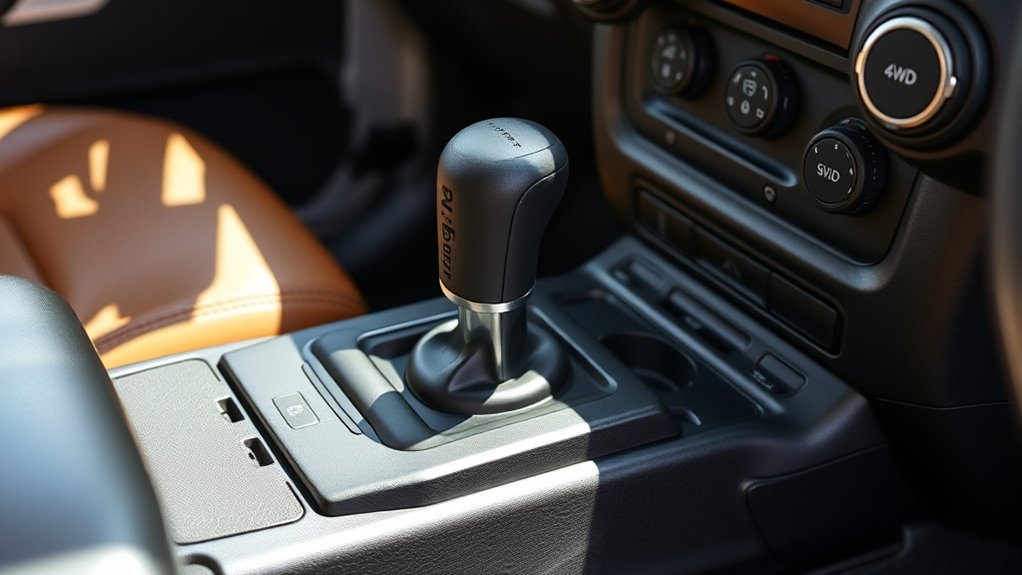
Where exactly are your Jeep Wrangler’s 4WD controls located? You’ll typically find them on the center console, right near the gear shifter. Depending on your model, you might see a lever or a rotary dial.
The lever is common in older Wranglers, allowing you to manually shift between 2WD, 4WD high, and 4WD low. Newer models often feature an electronic rotary dial, making it easier to switch modes with a simple turn.
Sometimes, additional buttons control features like locking differentials or sway bar disconnects, but the primary 4WD selector remains central. Knowing where these controls are lets you quickly engage the right mode for your driving conditions, keeping your Jeep ready for off-road adventures or slippery roads.
Get Your Jeep Ready for 4WD Engagement

Now that you know where your Jeep Wrangler’s 4WD controls are, it’s time to prepare your vehicle for engagement. First, verify your Jeep is at a complete stop or moving very slowly. Check that your tires have proper pressure and are free from debris. You’ll also want to shift your transmission into neutral if your model requires it for 4WD activation. Confirm that the terrain ahead justifies switching to 4WD to avoid unnecessary wear.
| Step | Action |
|---|---|
| 1 | Stop or slow down |
| 2 | Check tire pressure and condition |
| 3 | Shift transmission to neutral (if needed) |
| 4 | Assess terrain before engaging 4WD |
Following these steps helps protect your Jeep’s drivetrain and ensures smooth 4WD engagement.
How to Shift Into 4WD on Your Jeep Wrangler

Before you switch into 4WD on your Jeep Wrangler, make sure the vehicle is properly prepared and your speed is low enough for a smooth changeover. To shift into 4WD, locate the transfer case shifter or the 4WD selector knob, depending on your model.
If you have a manual transfer case, firmly move the shifter from 2H (two-wheel drive high) to 4H (four-wheel drive high) while driving under 55 mph.
For engaging 4L (four-wheel drive low), bring your Jeep to a complete stop, shift into neutral, then move the transfer case lever into 4L.
If you have an electronic 4WD system, simply turn the dial or press the button to select 4H or 4L, following your Jeep’s prompts. This will engage 4WD smoothly and safely.
Confirm Your Jeep’s 4WD Is Engaged Correctly
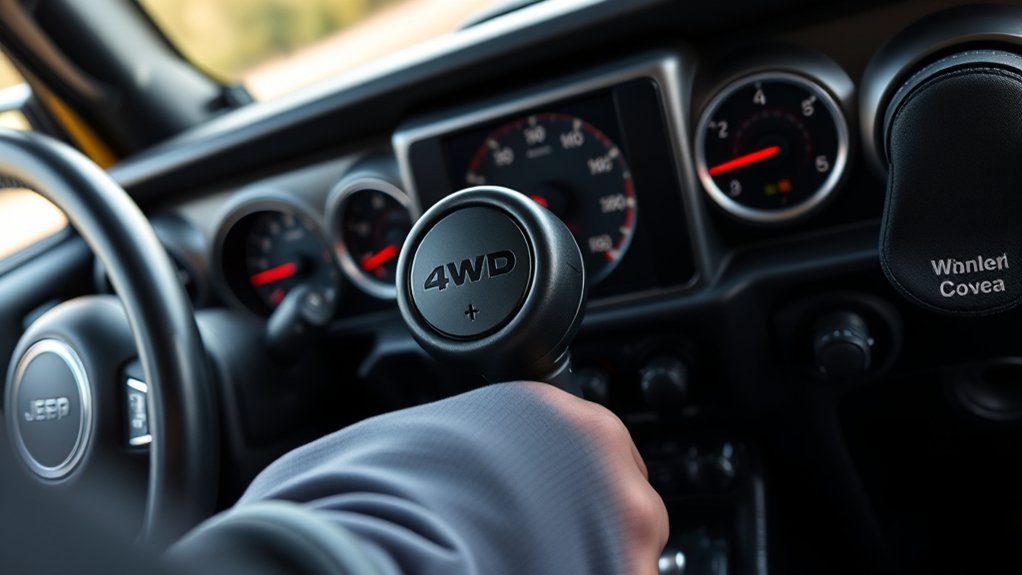
After engaging 4WD on your Jeep Wrangler, you’ll want to verify that the system is properly activated to guarantee peak performance and safety. Start by checking your dashboard for the 4WD indicator light—this confirms the transfer case has shifted.
Next, gently test your Jeep’s response by driving forward slowly on a flat surface. You should feel the increased traction and resistance typical of 4WD engagement. Avoid sudden acceleration or sharp turns until you’re sure the system is fully engaged.
If your Jeep has electronic 4WD, listen for any unusual noises or delays, which might signal incomplete engagement. By confirming 4WD activation promptly, you ensure your Jeep is ready for challenging terrain and prevent potential drivetrain damage.
Tips for Using 4WD on Mud, Snow, and Rocks
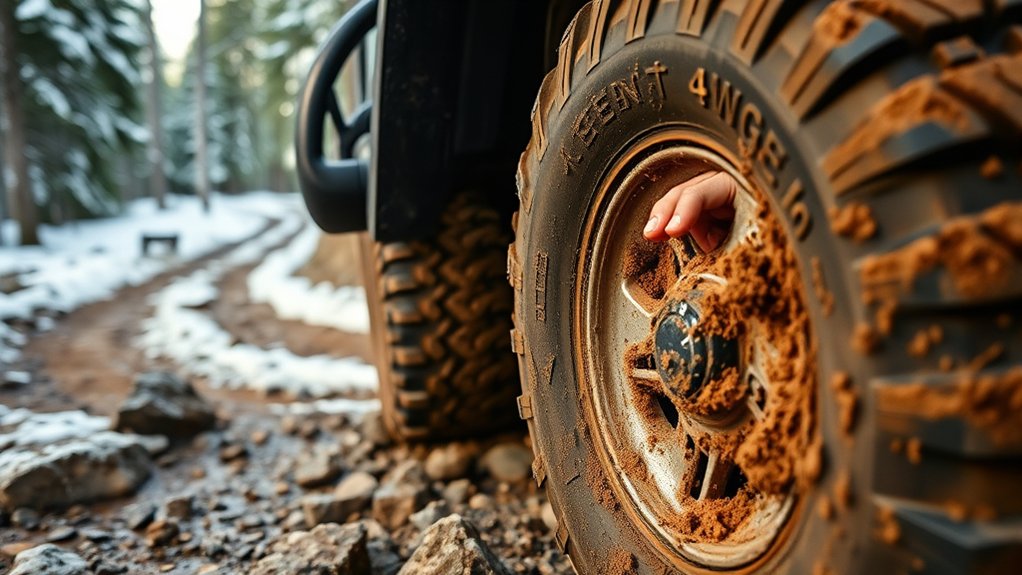
When tackling mud, snow, or rocky terrain, using 4WD correctly can make all the difference in maintaining control and avoiding getting stuck. You’ll want to engage low-range 4WD for maximum torque on rocks and thick mud, while high-range 4WD works well for snow and less severe conditions. Keep your speed steady and avoid sudden acceleration or braking to maintain traction.
| Terrain | Tip |
|---|---|
| Mud | Use low-range, steady throttle |
| Snow | Engage high-range, gentle inputs |
| Rocks | Low-range, slow and deliberate |
| All | Avoid sharp turns or sudden stops |
Following these tips helps you conquer tough terrains confidently and keep your Jeep moving forward.
Frequently Asked Questions
Can I Use 4WD on Dry Pavement Without Damaging My Jeep?
You shouldn’t use 4WD on dry pavement because it can cause drivetrain binding and damage. Save 4WD for slippery or off-road conditions where extra traction is necessary to protect your Jeep and guarantee proper function.
What Maintenance Is Required for the 4WD System?
You should check and change your transfer case fluid every 30,000 miles; neglecting it can reduce system lifespan by 40%. Also, regularly inspect CV joints and keep your 4WD components clean to guarantee smooth operation and prevent damage.
How Does 4WD Affect Fuel Efficiency?
Using 4WD lowers your fuel efficiency because it powers all four wheels, increasing drivetrain resistance and weight. You’ll notice your Jeep consumes more gas, so save 4WD for off-road or slippery conditions to conserve fuel.
Can I Engage 4WD While Driving at High Speeds?
You generally shouldn’t engage 4WD at high speeds, as it can damage the drivetrain. However, some Jeep Wranglers with part-time 4WD allow shifting into 4WD High up to certain speeds—check your manual to be sure.
What Are Common Signs of 4WD System Failure?
You’ll notice grinding noises, difficulty shifting, or your 4WD light flashing. If your Jeep feels stuck or the system won’t engage properly, those are common signs your 4WD system might be failing and needs checking.
Conclusion
Now that you’ve mastered engaging 4WD on your Jeep Wrangler, you’re basically unstoppable—like turning your ride into a superhero with off-road powers! Whether you’re tackling mud so thick it feels like quicksand, snow that could bury a small village, or rocks that look like mountain boulders, your Jeep’s ready to conquer it all. Just follow these simple steps, and you’ll be ruling every trail like a true off-road legend!