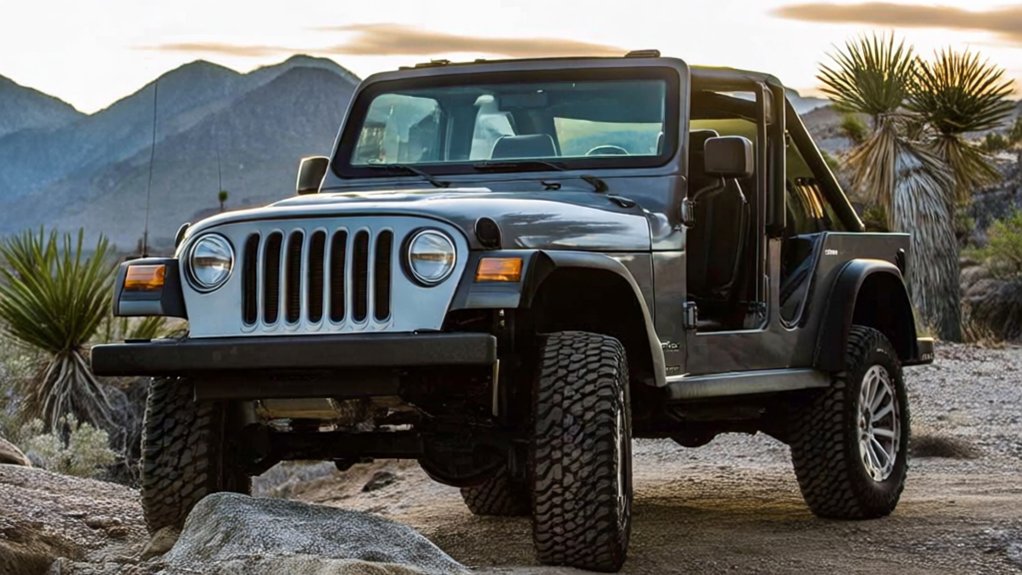
How to Identify How a Jeep Wrangler Is Classified
You can identify how your Jeep Wrangler is classified by checking its VIN, especially the 4th to 8th characters, and verifying the manufacturer’s label found inside the driver’s door frame. The VIN reveals key details like model year, body style, engine type, and safety features that influence classification. Also, consult your owner’s manual or official resources for exact info. Understanding this helps with legal compliance, insurance, and resale value. Keep exploring to uncover how trim levels and modifications play a role too.
Key Takeaways
- Check the Jeep Wrangler’s VIN for classification details in the fourth through eighth characters describing model, body style, engine, and restraint system.
- Review the manufacturer’s label inside the driver’s door frame for official vehicle classification and regulatory compliance information.
- Consult the owner’s manual or manufacturer’s website to confirm the Wrangler’s classification as a light truck, multipurpose passenger vehicle, or SUV.
- Verify the model year in the 10th VIN character, as it influences safety, emissions standards, and official vehicle categorization.
- Contact the dealership or local DMV to obtain authoritative classification details and understand legal registration requirements.
Official Jeep Wrangler Classifications By Regulatory Agencies
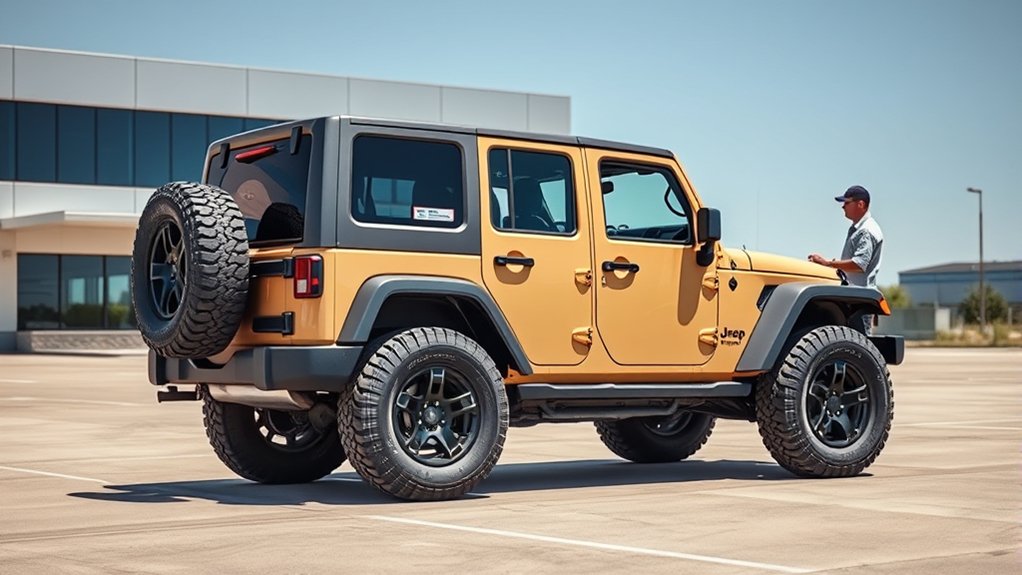
How does the government officially classify your Jeep Wrangler? Regulatory agencies like the National Highway Traffic Safety Administration (NHTSA) and the Environmental Protection Agency (EPA) categorize it mainly as a light truck or multipurpose passenger vehicle. This classification influences safety standards, emissions regulations, and fuel economy requirements your Wrangler must meet.
The NHTSA looks at factors such as vehicle weight, design, and intended use to assign its category. Meanwhile, the EPA focuses on emissions and fuel consumption standards based on that classification.
Knowing this helps you understand why your Jeep Wrangler has specific safety features and environmental controls. If you want to modify or register your vehicle, these classifications determine what’s legally allowed, so it’s essential to be aware of how regulatory agencies see your Wrangler.
Identifying Your Jeep Wrangler’s Model Year And Its Impact
When did your Jeep Wrangler roll off the production line? Knowing its model year is vital because Jeep made notable changes in design, features, and safety standards over time. These changes influence how your Wrangler is classified by regulatory bodies, impacting everything from emissions requirements to insurance rates.
You can find the model year on the vehicle identification number (VIN) plate, usually located near the windshield or driver’s side door jamb. The 10th character in the VIN represents the model year, using letters and numbers.
Understanding your Wrangler’s model year helps you identify applicable regulations and guarantees you comply with legal and safety standards. It also helps when discussing your vehicle with authorities or when looking up specifications tied to that specific year.
Trim Levels Explained: How They Affect Jeep Wrangler Classification
Since trim levels define the features and capabilities of your Jeep Wrangler, they play a crucial role in how it’s classified. Each trim, from the base Sport to the rugged Rubicon, offers different equipment, performance, and off-road abilities.
Trim levels shape your Jeep Wrangler’s features and performance, determining its classification and off-road capabilities.
When you know your Wrangler’s trim, you understand its intended use and value. For example, a Rubicon trim comes with advanced off-road gear, affecting its classification as a more capable, trail-ready vehicle.
Meanwhile, the Sahara trim balances comfort and off-road features, placing it in a different category.
Trim levels also impact your Wrangler’s appeal in insurance, resale, and regulatory contexts. So, identifying your trim helps you grasp where your Jeep stands in the lineup and how it’s officially recognized.
How Modifications Affect Your Jeep Wrangler’s Classification
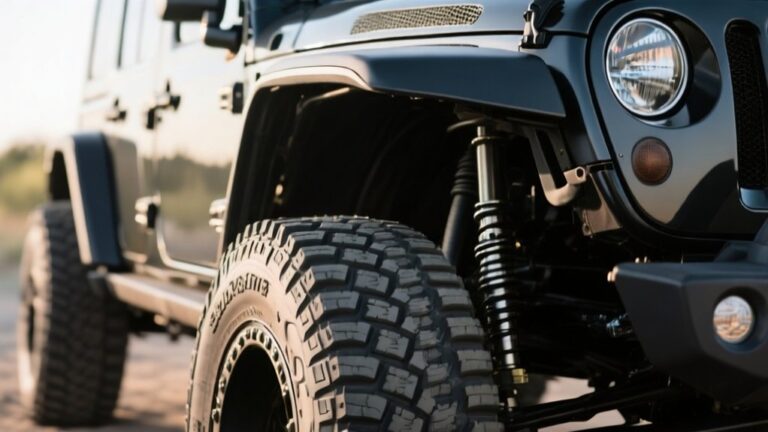
Although your Jeep Wrangler comes with a specific factory classification, making modifications can change how it’s officially viewed. When you add or alter parts, such as lift kits or oversized tires, your Wrangler might be reclassified for insurance, registration, or safety standards. Some modifications can shift it from a standard passenger vehicle to a specialized off-road or commercial classification.
| Modification Type | Potential Classification Impact | Notes |
|---|---|---|
| Lift Kits | Off-road vehicle | May require inspection |
| Tire Upgrades | Off-road or heavy vehicle | Affects speedometer accuracy |
| Engine Swaps | Commercial or performance class | Could void emissions compliance |
| Safety Enhancements | May maintain original class | Improves compliance |
Understanding these effects helps you keep your Wrangler legal and properly insured.
Factory Vs. Aftermarket Upgrades On Your Jeep Wrangler
You’ll notice factory upgrades often come with warranties and maintain your Jeep’s original classification.
Aftermarket modifications, like lift kits or custom bumpers, offer more personalization but can affect how your vehicle is classified.
Understanding these differences helps you make smart choices without risking your Jeep’s status.
Factory Upgrade Benefits
When choosing upgrades for your Jeep Wrangler, factory options often provide a seamless fit and guaranteed compatibility. You won’t have to worry about parts not aligning or causing mechanical issues because these upgrades are designed specifically for your model.
Factory upgrades usually maintain your vehicle’s warranty, giving you peace of mind. They also tend to retain resale value better since they’re recognized as original equipment.
Installation is typically straightforward, saving you time and potential headaches. Plus, you can trust that these enhancements meet safety and quality standards set by the manufacturer.
If you want reliable performance and a hassle-free experience, factory upgrades are a smart choice that keeps your Jeep running smoothly and looking authentic.
Aftermarket Modification Types
Since your Jeep Wrangler is built for customization, understanding the difference between factory and aftermarket upgrades is essential.
Factory upgrades come directly from Jeep, ensuring compatibility and maintaining warranty coverage.
Aftermarket modifications, however, are made by third-party manufacturers and offer a wider variety of options, like lift kits, upgraded bumpers, or performance exhausts. These parts let you tailor your Jeep’s look and capability beyond stock specifications.
While factory parts are tested for reliability and fit, aftermarket parts vary in quality and may require additional adjustments or expertise to install.
You’ll find aftermarket modifications range from cosmetic changes to serious performance enhancements.
Knowing these differences helps you choose upgrades that fit your needs without compromising your Jeep’s integrity or safety.
Impact on Vehicle Classification
Understanding the differences between factory and aftermarket upgrades sets the stage for recognizing how these modifications can affect your Jeep Wrangler’s classification. Factory upgrades usually maintain the original vehicle specifications, guaranteeing your Wrangler stays within its intended class.
Aftermarket modifications, however, can alter critical aspects like suspension height, tire size, or engine performance. These changes might shift your Wrangler into a different classification, impacting insurance rates, registration, and compliance with local regulations.
When you add aftermarket parts, you should check how they influence your vehicle’s legal status. Some upgrades might require inspections or additional paperwork.
Classifying Jeep Wranglers By Use: Off-Road Or Street
Although Jeep Wranglers are built tough enough for rugged trails, how you plan to use yours plays a key role in its classification. If you mainly take it off-road, your Wrangler is considered an off-road vehicle, emphasizing durability and terrain capability. On the other hand, if you use it primarily on paved streets, it falls under street classification, focusing more on comfort and fuel efficiency.
| Use Type | Key Features |
|---|---|
| Off-Road | Enhanced suspension, skid plates |
| Off-Road | All-terrain tires |
| Street | Smoother ride, quieter cabin |
| Street | Better fuel economy |
Understanding this helps you choose the right model and modifications for your driving needs.
How To Decode Your Jeep Wrangler’s VIN For Classification Details
You can learn a lot about your Jeep Wrangler by decoding its VIN. Start by understanding the VIN’s structure and locating the sections that reveal classification details.
Once you identify these key codes, you’ll be able to interpret how your Jeep is officially classified.
Understanding VIN Structure
When you examine your Jeep Wrangler’s Vehicle Identification Number (VIN), you’ll find a unique code that reveals its classification and key details. The VIN consists of 17 characters, each representing specific information about your vehicle.
The first three characters identify the manufacturer and the vehicle type, while the fourth through eighth characters describe features like model, body style, engine type, and restraint system.
The ninth character is a check digit used to verify the VIN’s authenticity.
Characters ten through seventeen provide the model year, assembly plant, and production sequence number.
Locating Key VIN Sections
Where can you find the essential information within your Jeep Wrangler’s VIN to uncover its classification? Focus on specific sections: the first three characters, known as the World Manufacturer Identifier (WMI), reveal the manufacturer and country of origin.
Next, examine characters four through eight, the Vehicle Descriptor Section (VDS), which detail the model, body style, engine type, and restraint system.
The ninth character is a check digit, mainly for validation, so you can skip it for classification purposes.
Finally, characters ten through seventeen form the Vehicle Identifier Section (VIS), providing production year, assembly plant, and serial number.
Interpreting Classification Codes
Having located the key sections within your Jeep Wrangler’s VIN, the next step is to decode those characters to reveal the vehicle’s classification. The VIN uses specific codes to indicate the model type, body style, engine, and restraint system, giving you clear insight into your Wrangler’s identity. Focus on the fourth through eighth characters, as they hold the primary classification info.
| VIN Position | Meaning |
|---|---|
| 4 | Model Type |
| 5 | Body Style |
| 6 | Engine Type |
| 7 | Restraint System |
| 8 | Vehicle Series |
How Engine Types Influence Jeep Wrangler Classification
How does the engine type affect your Jeep Wrangler’s classification? The engine you choose plays a key role in how your Wrangler is categorized. Different engines impact performance specs, fuel efficiency, and emissions, which in turn influence vehicle class designations.
For example, a Wrangler with a V6 engine may fall under a different classification than one with a turbocharged four-cylinder or a diesel engine. These distinctions matter because they affect regulatory standards and sometimes even your vehicle’s eligibility for certain uses or modifications.
When identifying your Wrangler’s classification, always check the engine type listed on the manufacturer’s label or in your vehicle documentation. Understanding this helps you accurately determine your Jeep’s official class and guarantees you’re compliant with relevant regulations.
How Insurance Companies Classify Jeep Wranglers
Why do insurance companies classify Jeep Wranglers the way they do? They base it on factors that affect your risk and premium costs. Understanding their criteria helps you get the best coverage and rates.
Here’s how they typically classify Jeep Wranglers:
- Vehicle Type: Wranglers are often classified as SUVs or off-road vehicles, which influences coverage options.
- Usage: Insurance companies consider how you use your Jeep—daily driving, off-roading, or occasional trips—since this impacts risk.
- Safety and Theft Ratings: They evaluate safety features and theft rates to determine your premium.
Registration Categories For Different Jeep Wrangler Models
You’ll want to check how your Jeep Wrangler is registered, as it can fall under different categories like passenger vehicle or off-road vehicle.
Some models may even qualify for commercial use, depending on how you plan to use them.
Understanding these registration types helps guarantee you meet legal requirements and get the right coverage.
Passenger Vehicle Classification
When registering your Jeep Wrangler, understanding its passenger vehicle classification is essential. This classification affects how your vehicle is taxed, insured, and even where you can drive it.
Jeep Wranglers typically fall into specific passenger vehicle categories based on their configuration and intended use. Here’s what you need to know:
- Standard Passenger Vehicle – Most Wranglers with typical seating and no heavy modifications fit here, classified as a regular SUV or passenger car.
- Multi-Purpose Vehicle (MPV) – Some models equipped for mixed uses, like carrying passengers and cargo, may fall under MPV.
- Special Purpose Vehicle – Certain Wranglers outfitted for unique functions (like emergency or utility use) might receive this classification.
Knowing these categories helps you guarantee proper registration and compliance with local laws.
Off-Road Vehicle Designation
How does your Jeep Wrangler’s off-road capability affect its registration? Depending on its design and features, your Wrangler may qualify for specific off-road vehicle designations during registration.
Models equipped with enhanced suspension, higher ground clearance, and specialized tires often fall under off-road or all-terrain vehicle categories, which differ from standard passenger vehicle classifications. These designations can influence your registration fees, insurance rates, and even where you’re legally allowed to drive your Jeep.
For instance, a Wrangler with factory off-road packages might be registered as an off-highway vehicle, granting you access to certain trails but also subjecting you to unique regulations.
Understanding these distinctions helps guarantee you register your Jeep correctly, so you stay compliant while enjoying your off-road adventures.
Commercial Use Eligibility
Although Jeep Wranglers are primarily known for their recreational use, certain models qualify for commercial registration based on their configuration and intended purpose. You’ll want to check if your Wrangler fits these criteria to determine commercial use eligibility.
- Modified Cargo Capacity: If your Wrangler has been altered to carry tools, equipment, or goods, it may qualify as a commercial vehicle.
- Business Use Declaration: Registering the vehicle under a business name or for business purposes often makes it eligible for commercial classification.
- Weight and Equipment Limits: Some states require commercial registration if the Wrangler exceeds specific weight limits or includes specialized commercial equipment.
Emissions And Safety Standards Affecting Jeep Wrangler Classification
Because emissions and safety standards vary by region, they play a crucial role in determining how your Jeep Wrangler is classified. Depending on where you live, your Wrangler may need to meet specific environmental regulations, such as California’s strict emissions rules or federal EPA standards.
These factors influence whether your vehicle is categorized as a passenger car, light truck, or off-road vehicle. Safety requirements also impact classification; your Wrangler must comply with crash test ratings, airbags, and other mandatory features.
If your model lacks certain safety equipment, it might fall under a different classification or face usage restrictions. Understanding these standards helps you guarantee your Jeep Wrangler’s classification aligns with local laws, avoiding fines or registration issues while maximizing your vehicle’s legal use.
How Classification Influences Jeep Wrangler Resale Value
Emissions and safety standards not only affect your Jeep Wrangler’s classification but also play a significant role in its resale value. A vehicle classified under stricter emissions and safety regulations often appeals more to buyers, boosting its market price.
Here’s how classification influences your Wrangler’s resale:
- Market Demand: Models meeting current standards attract more buyers, increasing resale value.
- Regulatory Compliance: Classified Jeeps that comply with emissions and safety laws avoid costly modifications for new owners.
- Insurance Costs: Proper classification can lower insurance premiums, making your Wrangler more affordable and desirable.
Understanding your Jeep Wrangler’s classification helps you anticipate its resale value and negotiate better when selling or trading it in.
Quick Tips To Confirm Your Jeep Wrangler’s Classification
When you want to confirm your Jeep Wrangler’s classification, start by checking the vehicle identification number (VIN) and the manufacturer’s label inside the driver’s door frame. These sources provide official classification details, including weight ratings and vehicle type.
Next, review your owner’s manual or visit the manufacturer’s website to cross-reference this information.
Don’t forget to look at your registration and insurance documents, as they often list the classification used by authorities.
If you’re still unsure, a quick call to your dealership or a visit to your local DMV can clear things up.
Following these tips ensures you accurately understand your Jeep’s classification, which helps with maintenance, resale, and legal compliance.
Stay proactive and keep this info handy for peace of mind.
Frequently Asked Questions
What Are the Most Common Aftermarket Accessories for Jeep Wranglers?
You’ll find the most common aftermarket accessories for Jeep Wranglers include lift kits, off-road tires, winches, roof racks, and LED light bars. These upgrades enhance your Jeep’s performance, style, and off-road capability effortlessly.
How Does Weather Affect Jeep Wrangler Performance?
Weather affects your Jeep Wrangler’s performance by altering traction, engine efficiency, and braking. Rain makes roads slippery, cold reduces battery power, and heat can cause overheating. You’ll need to adjust driving and maintenance accordingly.
What Is the Typical Fuel Economy of a Jeep Wrangler?
Fuel economy in a Jeep Wrangler dances between 17-25 MPG, depending on the model and drive. You’ll find it’s not the most frugal, but it’s built for adventure, not just saving every drop of gas.
Are Jeep Wranglers Suitable for Daily Commuting?
Yes, Jeep Wranglers can handle daily commuting, but you’ll notice lower fuel efficiency and a rougher ride compared to sedans. If you value rugged style and off-road capability, they’re a fun, practical choice for everyday use.
How Do Jeep Wrangler Warranties Differ by Model?
Just like heroes in different legends, Jeep Wrangler warranties vary by model—some offer basic coverage, while others grant extended powertrain protections. You’ll want to check specifics to match your adventure style and peace of mind.
Conclusion
Now that you know how to identify your Jeep Wrangler’s classification, isn’t it easier to navigate registration, modifications, and resale? Understanding official classifications, trim levels, and the impact of upgrades helps you keep your Jeep compliant and valuable. Remember, knowing your Wrangler’s model year and how emissions or safety standards apply can save you time and hassle. So, why guess when you can confidently classify your Jeep and make the most of it?