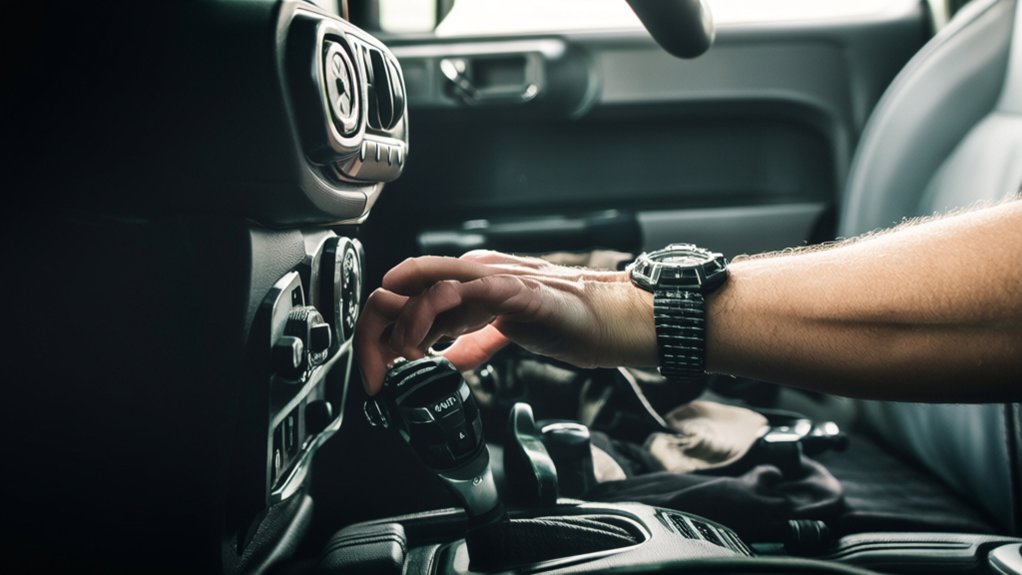
How to Put Jeep Gladiator in 4 Wheel Drive in 7 Easy Steps
To put your Jeep Gladiator in 4-wheel drive, first locate the 4WD controls on the dashboard or center console. For part-time 4WD, stop or slow below 5 mph, then pull the lever back until it clicks. For full-time 4WD, turn the selector knob from 2WD to 4WD High below 50 mph. Use low range by stopping, shifting to neutral, then moving the lever to low for tough terrain. Confirm engagement by checking the dashboard light. Keep following these steps for a smoother drive.
Locate 4WD Controls on Your Jeep Gladiator
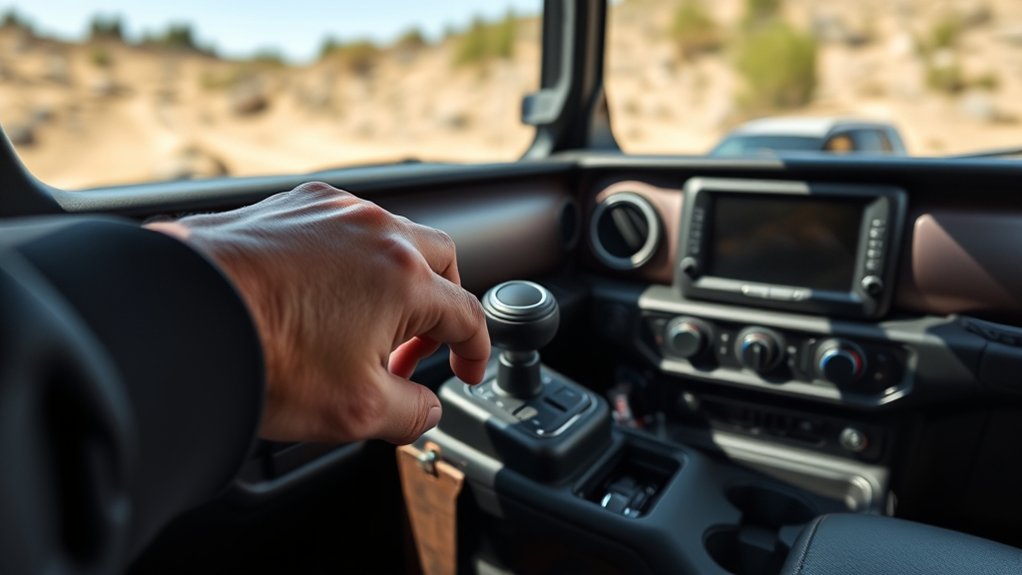
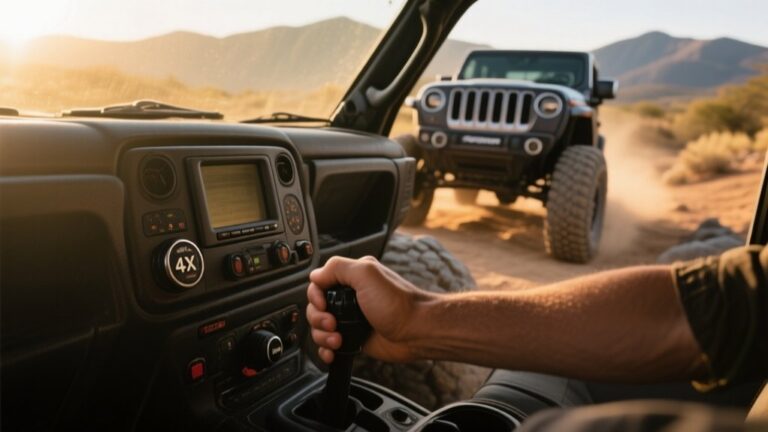
Before you can engage 4-wheel drive, you need to find the 4WD controls on your Jeep Gladiator. These controls are typically located on the dashboard or center console, within easy reach of the driver.
Look for a rotary dial or a set of buttons marked with “2H,” “4H,” “N,” and “4L,” which stand for different drive modes. The dial or buttons are usually labeled clearly to help you switch between 2-wheel drive and various 4-wheel drive settings.
If you’re having trouble locating them, consult your owner’s manual for the exact position. Knowing exactly where these controls are will make shifting into 4WD smoother and quicker when the time comes.
Shift Into Part-Time 4WD Mode

Now that you’ve found the 4WD controls, it’s time to engage the 4WD lever. Make sure to shift smoothly into part-time 4WD mode.
Once done, confirm that your Jeep Gladiator’s drive mode has successfully changed.
Engaging 4WD Lever
When you’re ready to tackle tougher terrain, you’ll engage the 4WD lever to shift into part-time 4WD mode. Here’s how you do it smoothly:
- Bring the vehicle to a stop or slow down to under 5 mph for easier engagement.
- Firmly grasp the 4WD lever located on the center console.
- Pull the lever straight back toward you until it clicks into the 4WD position.
You’ll feel resistance as the system locks the front axle, distributing power to all four wheels. This engagement improves traction on slippery or uneven surfaces.
Remember, part-time 4WD is designed for off-road or low-traction conditions, so avoid using it on dry pavement to prevent drivetrain damage.
Once engaged, you’re set to confidently drive through mud, snow, or rocky trails.
Confirming Drive Mode
Although you’ve engaged the 4WD lever, you’ll want to verify that your Jeep Gladiator has successfully shifted into part-time 4WD mode before heading off-road. Check your dashboard for the 4WD indicator light; it should illuminate when part-time 4WD is active.
If your model includes a digital display, navigate to the drive mode section to confirm the status. You can also feel the difference as the vehicle’s traction improves and the drivetrain engages more firmly.
To be sure, gently accelerate and listen for any unusual noises indicating incomplete engagement. If the indicator doesn’t light up or you notice slipping, disengage and try shifting the lever again, possibly while moving slowly.
Confirming drive mode guarantees you’re set for maximum traction and safety on rough terrain.
Shift Into Full-Time 4WD for Tough Trails
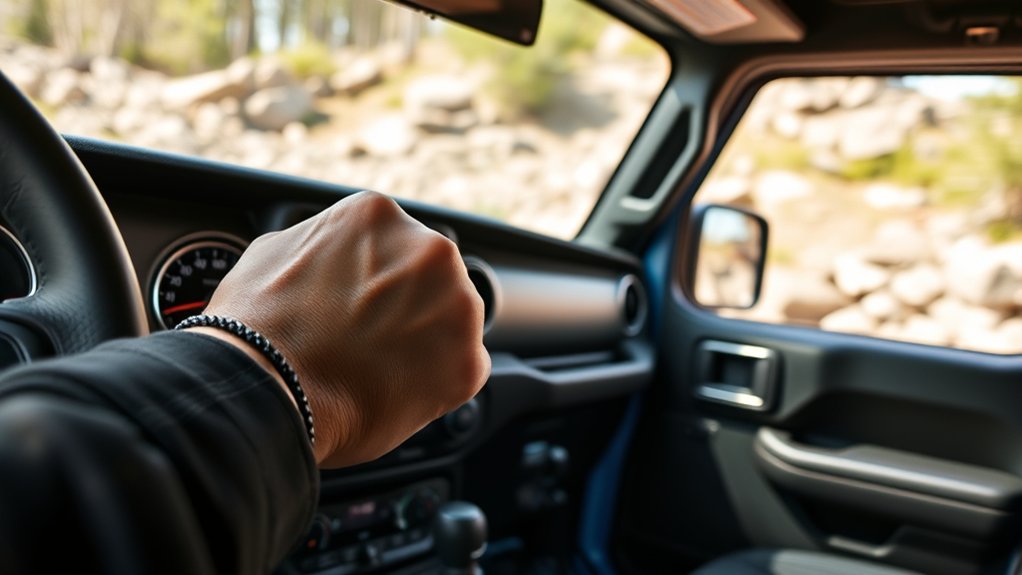
Since tough trails demand maximum traction, you’ll want to shift your Jeep Gladiator into full-time 4WD to tackle uneven terrain confidently. Here’s how to do it smoothly:
- Bring your vehicle to a complete stop or slow down to under 50 mph.
- Locate the 4WD selector knob on your dashboard.
- Turn the knob from 2WD to 4WD High (full-time 4WD mode).
This mode evenly distributes power between the front and rear wheels, enhancing grip on rocky, muddy, or sandy trails. You don’t need to worry about wheel slippage here, as the system keeps traction balanced without manual intervention.
Once engaged, you’re set to handle challenging off-road conditions with improved stability and control. Remember to switch back to 2WD on paved roads to avoid unnecessary wear.
Use Low Range 4WD for Maximum Traction
If you need maximum traction on steep or slippery terrain, switching to Low Range 4WD is essential. This mode provides more torque to your wheels at lower speeds, helping you tackle challenging conditions like deep mud, snow, or rocky inclines.
To engage Low Range, bring your Jeep Gladiator to a complete stop, shift the transmission into neutral, then move the transfer case lever to the low range position. You’ll feel the difference as your vehicle gains better control and power.
When to Use 4WD on Your Jeep Gladiator
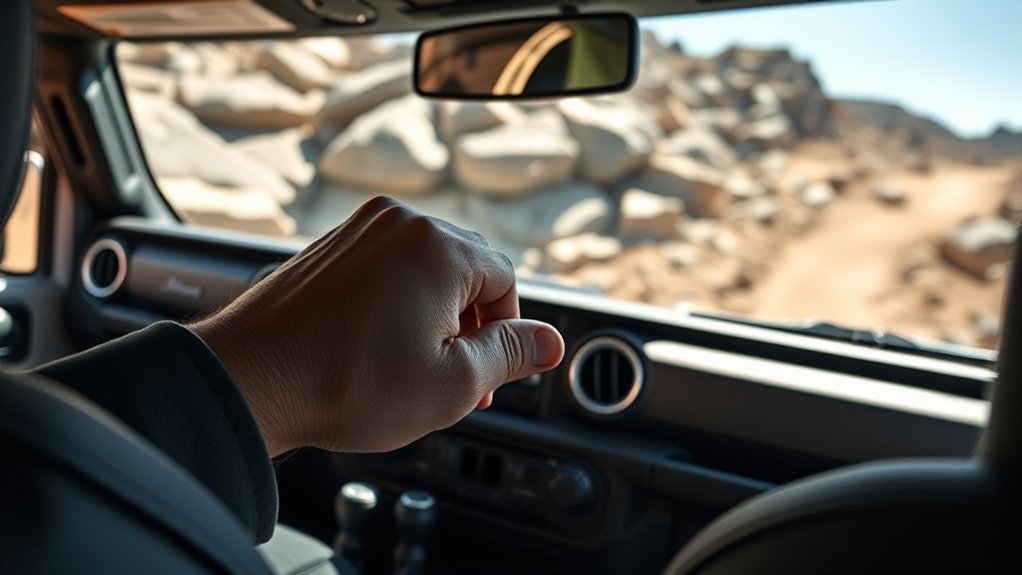
When should you activate 4WD on your Jeep Gladiator? Knowing the right time to switch can improve traction and keep you safe. Here are three key situations:
- Off-Road Trails: Rocky, sandy, or muddy paths demand extra grip. Engage 4WD to navigate tough terrains without getting stuck.
- Slippery Conditions: Snow, ice, or wet roads reduce traction. Switching to 4WD helps maintain control and stability.
- Steep Inclines or Declines: Climbing or descending steep hills requires balanced power distribution. 4WD ensures all wheels work together to avoid slipping.
Use 4WD only when necessary, as it can increase fuel consumption and wear. By activating it during these conditions, you’ll maximize performance and safety on your Jeep Gladiator.
Confirm 4WD Engagement on Your Jeep Gladiator
After deciding the right moment to engage 4WD on your Jeep Gladiator, you need to make certain the system has properly activated. Start by checking the dashboard indicator light; it should illuminate to confirm 4WD is engaged.
Next, gently accelerate and listen for any unusual noises—engagement should be smooth without grinding sounds. You can also feel the difference when driving; the vehicle should pull more confidently, especially on loose or slippery surfaces.
If your model has a selector knob, you might notice a slight resistance or click when switching modes.
Finally, you can test by turning sharply at low speed—your Gladiator should maintain traction without slipping. Confirming proper 4WD engagement ensures you’re ready to tackle challenging terrain safely and effectively.
Troubleshoot Common 4WD Activation Issues
Though engaging 4WD on your Jeep Gladiator is usually straightforward, you might encounter occasional hiccups that prevent proper activation. If your 4WD isn’t engaging, start by checking these common issues:
- Inspect the 4WD switch or lever: Ensure it’s fully engaged and not damaged or stuck.
- Check for electrical problems: Look for blown fuses or faulty wiring that might disrupt the 4WD system.
- Examine the front axle and driveshaft: They must be properly connected and free of damage to allow power transfer.
If you’ve checked these and still face issues, your transfer case or actuator might need professional inspection.
Regular maintenance helps prevent problems, so keep an eye on your Jeep Gladiator’s 4WD components to stay adventure-ready.
Frequently Asked Questions
How Often Should I Service the 4WD System on My Jeep Gladiator?
You should service your Jeep Gladiator’s 4WD system every 30,000 miles or as recommended in your owner’s manual. Regular checks keep it running smoothly and prevent costly repairs down the road, so don’t skip them.
Can I Use 4WD on Dry Pavement Without Damaging the Vehicle?
Using 4WD on dry pavement is like wearing snow boots in the desert—it can cause unnecessary wear. You shouldn’t do it because it stresses the drivetrain and tires, leading to damage over time.
What Are the Fuel Efficiency Impacts of Using 4WD?
Using 4WD lowers your Jeep Gladiator’s fuel efficiency because it engages more drivetrain components, increasing mechanical drag and weight. You’ll notice higher fuel consumption, especially during extended use on dry or smooth surfaces.
Are There Any Modifications Needed for Off-Road 4WD Use?
You don’t necessarily need mods for basic off-road 4WD use, but upgrading tires, suspension, skid plates, and locking differentials will improve performance and durability. Consider these to tackle tougher terrain confidently and protect your Jeep Gladiator.
How Does 4WD Affect Towing Capacity on the Jeep Gladiator?
Using 4WD on your Jeep Gladiator doesn’t change its towing capacity, but it improves traction on rough terrain. Just remember, 4WD helps control, not increase the maximum weight your truck can safely tow.
Conclusion
Now that you know how to engage 4WD on your Jeep Gladiator, you’re ready for any terrain. Imagine cruising through muddy trails, shifting into low range 4WD to conquer slippery slopes without a hitch. Remember, using the right mode at the right time keeps you safe and your vehicle performing its best. If you ever face issues, troubleshooting steps will get you back on track quickly. Happy off-roading!