How Long Do Jeep Wrangler Batteries Last
You can expect your Jeep Wrangler’s battery to last between three and five years with proper care. Watch for signs like slow starts, dim headlights, or corrosion around terminals, which signal wear. Regularly check battery voltage and keep terminals clean to avoid premature failure. Weather and driving habits also play a big role in battery life. Keep these tips in mind, and you’ll understand how to extend your battery’s performance and know when it’s time for a replacement.
Signs Your Jeep Wrangler Battery Is Failing

Although a Jeep Wrangler battery can last for years, you’ll want to watch for early signs that it’s failing. If you notice your engine cranks slower than usual or struggles to start, that’s a clear warning.
Dim headlights or electrical components acting erratically also hint that your battery’s power is weakening. You might smell a rotten egg odor, which signals a leaking battery.
Corrosion around the battery terminals or swelling of the battery case are physical signs you shouldn’t overlook.
If your Jeep’s electrical accessories, like the radio or power windows, start malfunctioning, it’s time to pay attention.
Catching these signs early helps you avoid getting stranded and ensures your Wrangler stays reliable on every adventure.
How to Test Your Jeep Wrangler Battery’s Health

When you want to guarantee your Jeep Wrangler battery is still in good shape, testing its health is a vital step.
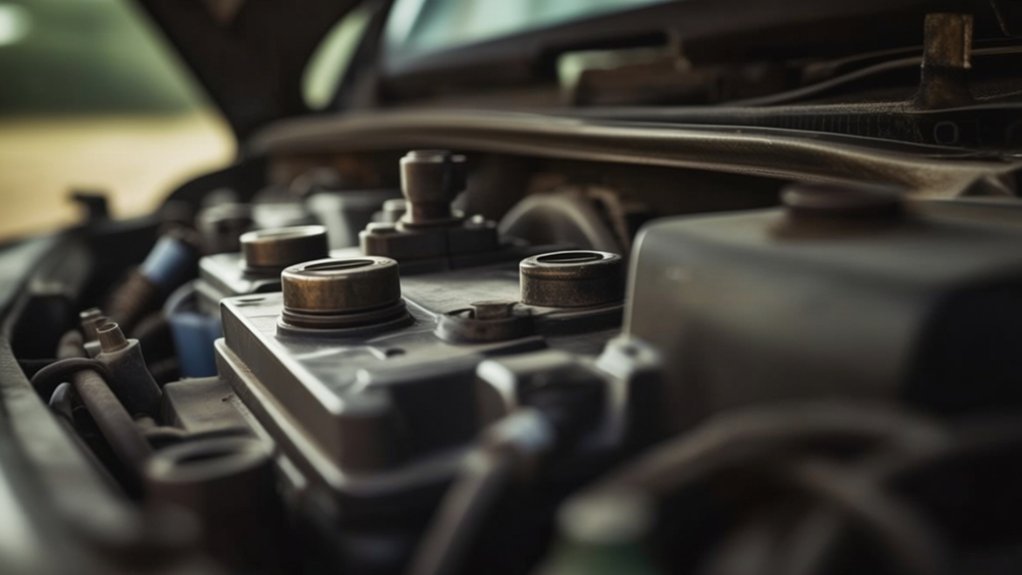
You can start by visually inspecting the battery for corrosion or damage.
Then, use a multimeter to check the voltage; a healthy battery should read around 12.6 volts when the engine is off.
Next, perform a load test to see how the battery handles stress.
Also, check the battery terminals for tightness and cleanliness.
Finally, consider using a battery tester that provides a detailed health report.
Here’s a quick checklist to test your battery’s health:
- Inspect for corrosion or leaks
- Measure voltage with a multimeter
- Conduct a load test
- Ensure terminals are clean and tight
- Use a specialized battery tester
How Long Does a Jeep Wrangler Battery Typically Last?
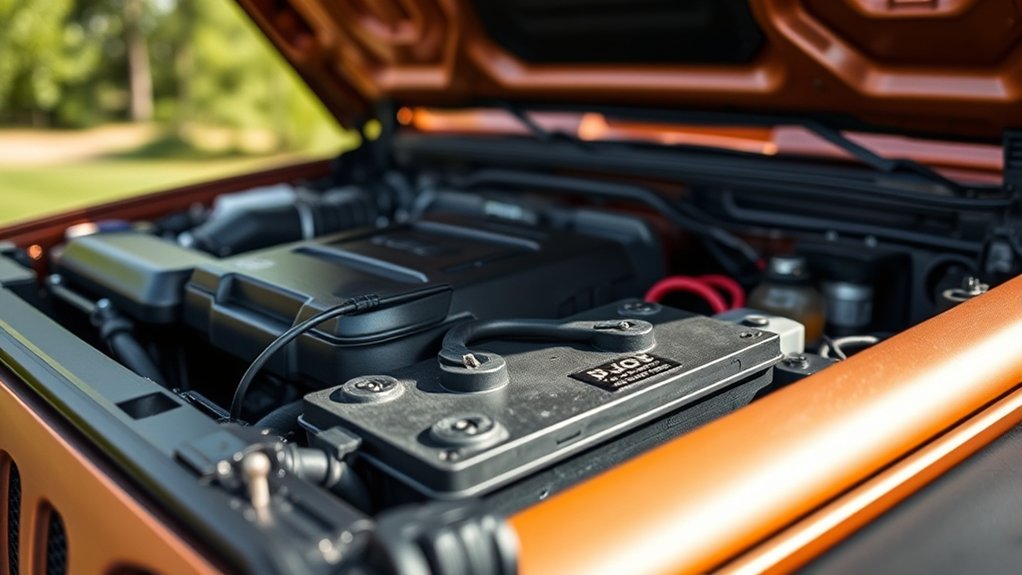
Since batteries endure constant use and exposure to varying conditions, your Jeep Wrangler battery typically lasts between three to five years. This timeframe gives you a good window before you need to think about replacement.
You might notice a drop in performance as the battery ages, like slower starts or dimmer headlights. If your Wrangler is newer or you drive it less frequently, the battery could last on the higher end of this range.
On the other hand, older models or frequent short trips may shorten battery life. Keeping an eye on how your Jeep starts and runs can help you anticipate when it’s time for a new battery, ensuring your vehicle stays reliable every time you hit the road.
Key Factors That Affect Your Jeep Wrangler Battery Life
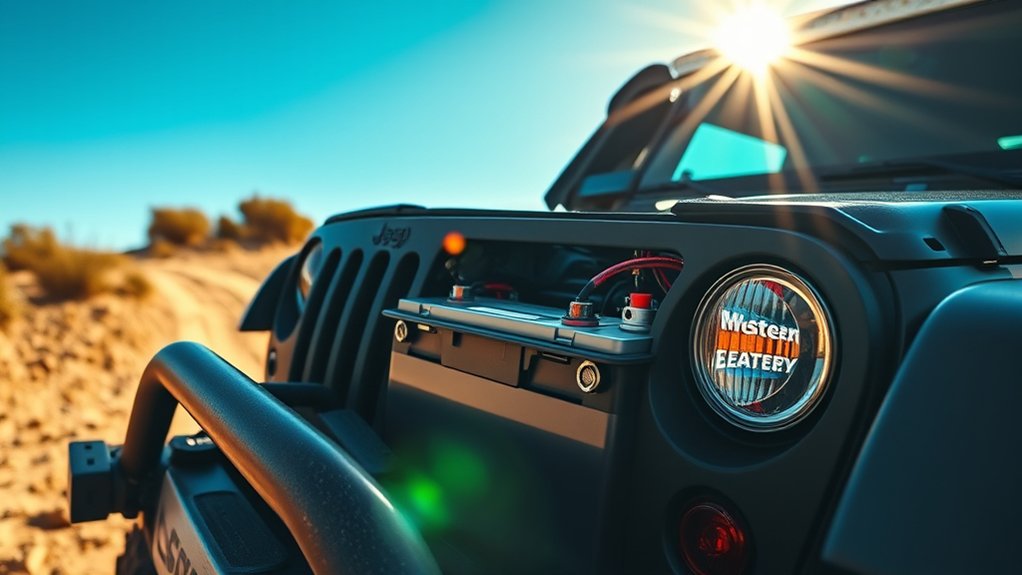
Because various factors influence how long your Jeep Wrangler battery lasts, understanding these can help you extend its life. Your battery’s lifespan depends on how you use and maintain your vehicle daily. Here are key factors to take into account:
- Driving Habits: Frequent short trips prevent the battery from fully charging.
- Electrical Load: Using many accessories drains the battery faster.
- Battery Quality: Higher-quality batteries tend to last longer.
- Maintenance Routine: Regularly checking and cleaning terminals prevents corrosion.
- Age of the Battery: Older batteries naturally lose capacity over time.
How Weather Conditions Affect Your Jeep Wrangler Battery
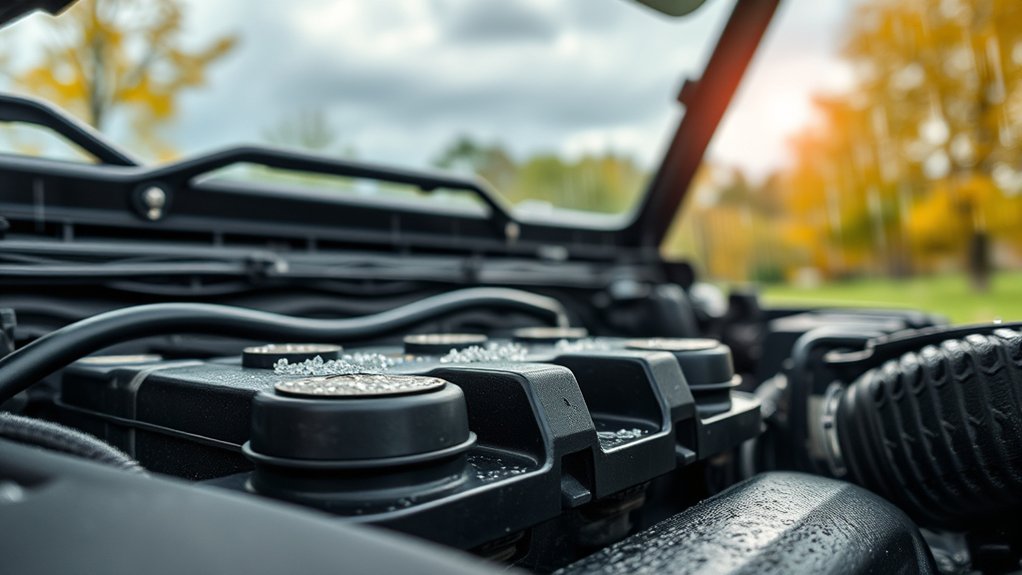
Although your Jeep Wrangler battery performs reliably under many conditions, extreme weather can take a serious toll on its lifespan and efficiency. Cold temperatures slow chemical reactions inside the battery, reducing its ability to start your engine. Meanwhile, intense heat accelerates battery fluid evaporation, causing internal damage over time. Understanding these effects helps you take steps to protect your battery.
| Weather Condition | Impact on Battery | Maintenance Tip |
|---|---|---|
| Cold | Reduced starting power | Use a battery warmer |
| Heat | Fluid evaporation | Park in shade, check fluid |
| Humidity | Corrosion risk | Clean terminals regularly |
| Freeze-Thaw Cycles | Case damage and cracks | Inspect battery casing |
| Dry Conditions | No immediate effect | Regular charge checks |
Stay proactive to extend your battery’s life through changing weather.
How Driving Habits Impact Jeep Wrangler Battery Life
When you frequently take short trips or leave your Jeep Wrangler idling for long periods, you put extra strain on the battery. These habits prevent the alternator from fully recharging it, shortening its lifespan.
On the other hand, long drives allow the battery to recharge thoroughly, promoting longevity. Sudden power demands, like using multiple electronics simultaneously, also drain the battery faster.
To protect your battery, consider these driving habits:
- Avoid frequent short trips without enough time to recharge
- Limit extended idling periods
- Reduce simultaneous use of power-hungry accessories
- Drive at steady speeds to help the alternator work efficiently
- Turn off electronics when not needed
How Off-Roading Influences Jeep Wrangler Battery Durability
Your driving habits play a big role in how long your Jeep Wrangler battery lasts, but off-roading introduces additional challenges that can impact battery durability. When you tackle rough trails, mud, and water crossings, your battery faces more strain.
Vibrations and jolts from uneven terrain can loosen connections or damage battery components. Plus, frequent starts and stops during off-road adventures demand extra power, which drains your battery faster.
If you use accessories like winches, lights, or air compressors, those draw additional current, putting more stress on the battery. To protect your battery, make sure it’s securely mounted and regularly inspect terminals for corrosion or looseness.
Proper maintenance and being mindful of accessory use during off-roading will help extend your Jeep Wrangler battery’s life.
Common Battery Issues Jeep Wrangler Owners Face
You might notice your Jeep Wrangler’s battery draining faster than expected, often due to electrical accessories or leaving lights on.
Corrosion on the battery terminals can also cause starting problems and reduce battery life.
Staying on top of regular maintenance helps prevent these common issues and keeps your battery reliable.
Battery Drain Causes
Although Jeep Wranglers are built tough, they aren’t immune to battery drain issues that can leave you stranded. Understanding what drains your battery helps you avoid unexpected failures.
Common causes include electrical components that continue drawing power even when the vehicle’s off. Here are some key battery drain culprits to watch for:
- Leaving interior or exterior lights on accidentally
- Faulty alternator failing to recharge the battery
- Aftermarket accessories like radios or alarms drawing excessive power
- Loose or corroded wiring causing power leaks
- Parasitic drain from modules that don’t enter sleep mode properly
Corrosion And Maintenance
Since Jeep Wranglers often face tough conditions, corrosion on battery terminals can quickly become a common issue that impacts performance. You might notice a white, powdery buildup around the terminals, which can interfere with the battery’s ability to deliver power efficiently.
To prevent this, regularly inspect and clean the terminals using a mixture of baking soda and water or a dedicated battery terminal cleaner. Make sure to disconnect the battery before cleaning to avoid short circuits.
Also, apply a thin layer of petroleum jelly or terminal protectant spray after cleaning to slow corrosion. Proper maintenance guarantees your battery stays reliable, helping you avoid unexpected starting problems and extending its overall lifespan.
Staying proactive with corrosion control will save you time and money in the long run.
How Regular Maintenance Keeps Your Jeep Wrangler Battery Strong
You’ll want to inspect your Jeep Wrangler’s battery regularly to catch any early signs of wear or corrosion.
Keeping the battery terminals clean guarantees a strong connection and reliable power flow.
Also, monitoring your electrical usage helps prevent unnecessary drain and extends your battery’s life.
Battery Inspection Importance
When you regularly inspect your Jeep Wrangler’s battery, you catch potential issues before they become serious problems. This simple habit helps extend battery life and guarantees your vehicle starts reliably every time. By checking your battery, you can identify early signs of wear or damage and take action promptly.
During inspection, focus on these key points:
- Verify the battery’s charge level and voltage
- Check for cracks, bulges, or leaks in the battery casing
- Inspect battery connections for looseness or corrosion
- Ensure the battery is securely mounted to prevent vibrations
- Look for any unusual odors indicating internal damage
Staying proactive with battery inspections saves you from unexpected failures and costly replacements down the road.
Cleaning Battery Terminals
Regularly inspecting your Jeep Wrangler’s battery helps spot problems early, but keeping the battery terminals clean plays a big role in maintaining a strong connection and reliable performance.
Corrosion buildup on terminals can block electrical flow, causing starting issues and reducing battery life. To clean them, first disconnect the negative cable, then the positive.
Use a mixture of baking soda and water with a brush to scrub away corrosion gently. Rinse with water and dry thoroughly before reconnecting the cables, positive first.
Applying a thin layer of petroleum jelly or terminal protector spray prevents future corrosion.
Monitoring Electrical Usage
How often do you consider the electrical demands your Jeep Wrangler faces daily? Monitoring electrical usage is key to keeping your battery strong and extending its lifespan. You need to stay aware of what accessories and systems draw power, especially when the engine isn’t running.
Regular checks help you spot issues before they drain your battery. Keep an eye on your Jeep’s electrical system by:
- Turning off lights and electronics when not in use
- Avoiding extended use of accessories with the engine off
- Inspecting wiring and connections for damage
- Using a voltage meter to check battery charge levels
- Scheduling professional electrical system inspections during maintenance
When Should You Replace Your Jeep Wrangler Battery?
If you notice your Jeep Wrangler struggling to start or the electrical components acting up, it’s a clear sign that your battery might be nearing the end of its life. You should also watch for dim headlights, slow engine crank, or the check engine light flickering.
If your battery is over three to five years old, it’s wise to have it tested regularly. Extreme temperatures and frequent short trips can shorten battery life, so factor those into your decision.
When you experience repeated jump starts or your battery fails a voltage or load test, it’s time to replace it. Don’t wait for a complete failure; proactive replacement helps avoid inconvenient breakdowns and keeps your Wrangler running smoothly.
How to Choose the Right Replacement Battery for Your Wrangler
Once you’ve decided it’s time for a new battery, picking the right one for your Jeep Wrangler becomes a priority. You want a battery that fits perfectly and delivers reliable power. Start by checking your Wrangler’s manual for the recommended battery size and specifications.
Next, consider the cold cranking amps (CCA) to ensure it performs well in all weather conditions. Don’t forget to look for a battery with a good reserve capacity to handle your Wrangler’s electrical demands.
Finally, choose a reputable brand known for durability.
Keep these factors in mind when selecting your battery:
- Correct group size for your Wrangler model
- Adequate cold cranking amps (CCA)
- High reserve capacity
- Maintenance-free features
- Strong warranty coverage
How to Install a New Battery in Your Jeep Wrangler
Before installing your new battery, make sure your Jeep Wrangler is turned off and parked on a flat surface to guarantee safety.
Open the hood and locate the battery.
Use a wrench to loosen the negative (black) terminal first, then the positive (red) terminal.
Carefully remove the battery hold-down clamp and lift the old battery out.
Place the new battery in the tray, ensuring it’s properly seated.
Reattach the hold-down clamp to secure it.
Connect the positive terminal first, tightening it firmly, then connect the negative terminal.
Double-check that both terminals are tight and free of corrosion.
Close the hood, start your Jeep to confirm the battery is working, and you’re all set with your new power source.
Tips to Maximize Your Jeep Wrangler Battery Life
To get the most out of your Jeep Wrangler battery, you should perform regular maintenance like cleaning terminals and checking for corrosion.
Also, try to minimize power drain by turning off electronics when the engine isn’t running.
These simple steps can help extend your battery’s life considerably.
Regular Battery Maintenance
Although Jeep Wrangler batteries are built tough, you can extend their lifespan considerably by performing regular maintenance. Taking a few simple steps helps guarantee your battery stays healthy and reliable.
Start by checking the terminals for corrosion and cleaning them with a baking soda solution if needed. Keep the battery securely fastened to avoid vibrations that can damage internal components. Regularly inspect the battery case for cracks or leaks. Make sure the battery is fully charged, especially if you don’t drive often.
Finally, test the battery voltage periodically to catch early signs of failure.
- Clean terminals and cables regularly
- Secure battery firmly in place
- Inspect for physical damage
- Maintain a full charge
- Test voltage every few months
Following these steps keeps your Jeep’s battery performing at its best.
Minimize Power Drain
Since your Jeep Wrangler’s battery powers everything from the ignition to interior electronics, minimizing unnecessary power drain is key to extending its life. Always make sure to turn off lights, the radio, and other electronic devices when you park.
Avoid leaving accessories plugged in when the engine is off, as they slowly drain power. If you use aftermarket electronics, like a winch or extra lighting, check their installation to prevent constant battery draw.
Also, be mindful of short trips; frequent starts without enough driving time don’t give the alternator a chance to recharge fully.
Finally, consider investing in a battery maintainer or trickle charger if you don’t drive your Jeep regularly. These steps help keep your battery charged and healthy longer.
How to Store Your Jeep Wrangler to Protect Its Battery
When you plan to store your Jeep Wrangler for an extended period, taking steps to protect its battery is essential. Without proper care, the battery can drain, reducing its lifespan or causing failure.
To keep your battery in good shape, follow these tips:
- Disconnect the battery or use a battery maintainer to prevent drain
- Clean the battery terminals to avoid corrosion
- Store your Jeep in a cool, dry place away from extreme temperatures
- Check the battery charge monthly and recharge if needed
- Remove any accessories that may draw power when the vehicle is off
Frequently Asked Questions
Can I Use a Jeep Wrangler Battery in Other Jeep Models?
Yes, you can use a Jeep Wrangler battery in other Jeep models if the battery size, voltage, and cold cranking amps match your vehicle’s requirements. Always double-check compatibility to avoid performance issues or damage.
How Do Jeep Wrangler Batteries Compare to Other Off-Road Vehicles?
Jeep Wrangler batteries typically outperform many off-road vehicles with their durability and cold-cranking amps. You’ll find they handle rough conditions well, giving you reliable starts and longer life compared to standard off-road batteries.
Are There Any Warranty Options for Jeep Wrangler Batteries?
You know what they say, “An ounce of prevention is worth a pound of cure.” Jeep Wrangler batteries often come with warranties, typically covering 2-3 years, so you can protect your investment and avoid unexpected costs down the road.
What Are the Environmental Impacts of Disposing Jeep Wrangler Batteries?
You’ll face toxic chemical leaks and heavy metal pollution if you dispose of Jeep Wrangler batteries improperly. Recycling helps reduce environmental harm by recovering materials and preventing soil and water contamination, so always recycle your old battery.
Can Solar Chargers Be Used to Maintain a Jeep Wrangler Battery?
Yes, you can use solar chargers to maintain your Jeep Wrangler battery. They provide a steady trickle charge, especially if you don’t drive often, helping prevent battery drain and extending its overall life without overcharging.
Conclusion
Taking care of your Jeep Wrangler’s battery is like tending a campfire—it needs attention to keep burning strong. By recognizing signs of failure, testing regularly, and choosing the right replacement, you’ll extend its life through all kinds of weather. Follow simple tips and proper storage to avoid getting stranded. With a little effort, your battery will power your adventures mile after mile, ready whenever you are to hit the open road.