Does Jeep Wrangler Have Airbags and How to Check Your Safety Features
Yes, your Jeep Wrangler comes with airbags as a standard safety feature, including front and often side airbags for thorough protection. To check your airbags, look for airbag labels on the steering wheel, dashboard, or door jamb, consult your owner’s manual, or use your VIN for detailed safety info. If your airbag warning light stays on, get it checked by a professional promptly for your safety. Discover how these systems have evolved and how to maintain them effectively.
Does the Jeep Wrangler Come With Airbags As a Standard Feature?
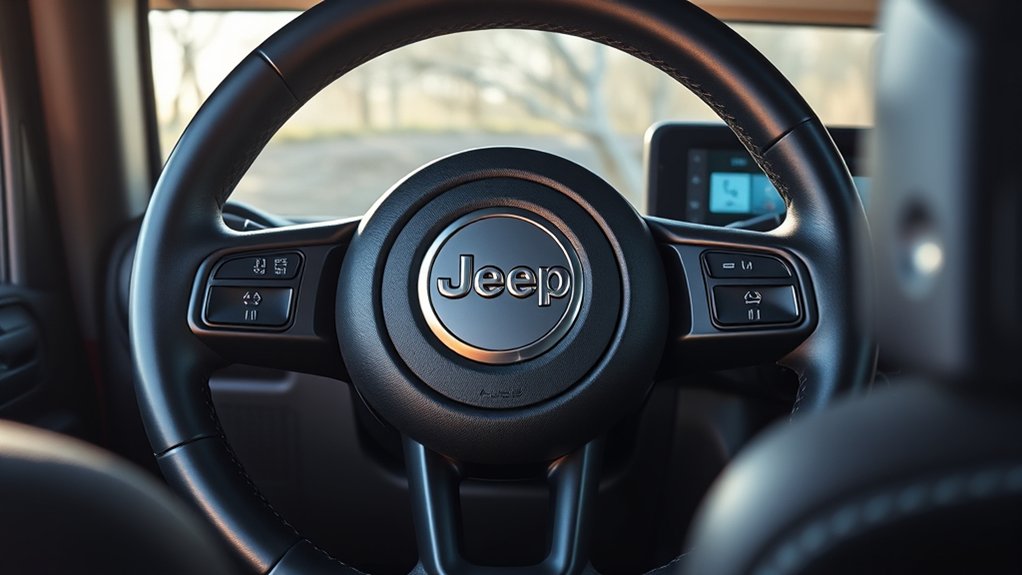
Although the Jeep Wrangler is known for its rugged design, it doesn’t skimp on safety—you’ll find airbags as a standard feature in every model.
When you step inside, you’ll notice front airbags for both driver and passenger, designed to provide vital protection in a collision.
Additionally, side airbags are typically included to shield you from side impacts.
This means the Wrangler balances toughness with essential safety measures, ensuring you’re protected on and off the road.
If you’re curious about your specific Wrangler’s airbag setup, checking the owner’s manual or the vehicle’s safety information label inside the door frame can give you precise details.
Rest assured, Jeep has made airbags a priority, so you don’t have to compromise safety for adventure.
How Jeep Wrangler Airbags Have Evolved
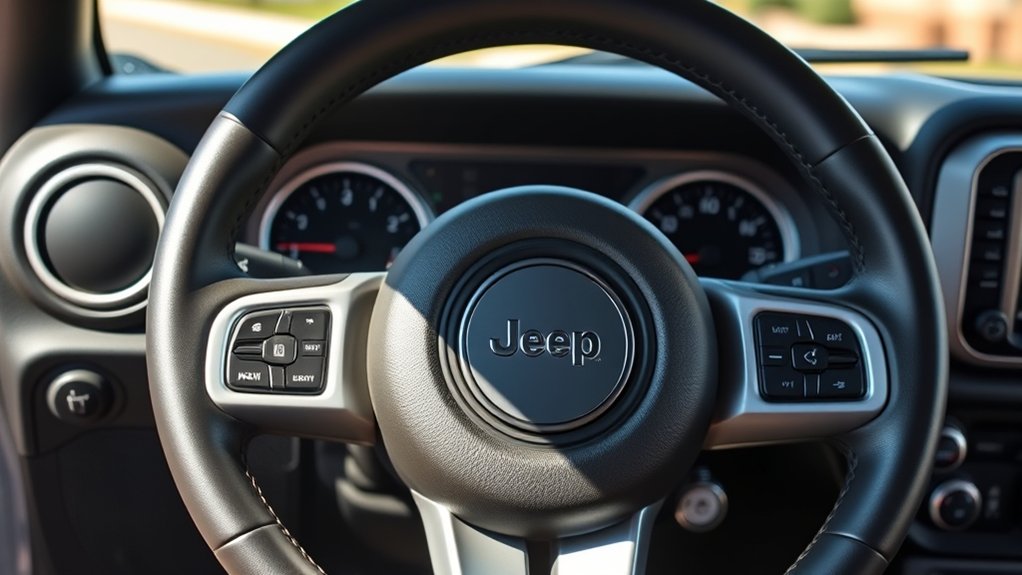
You’ll notice that Jeep Wrangler airbags have come a long way since their early days. Over the years, advances in airbag technology have improved how they protect you during a crash.
Let’s explore the modern safety enhancements that make today’s Wranglers safer than ever.
Early Airbag Implementation
When Jeep first introduced airbags in the Wrangler, they focused primarily on driver and front passenger protection, making a significant leap in safety for off-road enthusiasts. You’ll notice that early models included basic frontal airbags designed to deploy in moderate to severe frontal collisions.
Jeep prioritized ruggedness while integrating these new safety features, ensuring the airbags didn’t interfere with the vehicle’s off-road capabilities. If you’re checking older Wranglers, you might find airbags labeled as supplemental restraint systems (SRS) in the front seats only.
These early airbags laid the groundwork for later enhancements. Understanding this helps you appreciate how Jeep balanced safety with the Wrangler’s adventurous spirit from the start. It also guides you when inspecting your vehicle’s safety features, especially if you own an earlier model.
Advances in Airbag Technology
As Jeep continued to enhance the Wrangler, they integrated more advanced airbag systems to boost your protection on and off the road. Early models offered basic front airbags, but newer Wranglers include side-curtain airbags that deploy during side impacts, guarding your head and upper body.
You’ll also find driver and passenger seat-mounted airbags designed to reduce injury in frontal crashes. Over time, Jeep improved airbag sensors to detect crash severity more accurately, enabling timely deployment while minimizing unnecessary inflation.
These upgrades mean the Wrangler’s airbags work smarter, responding precisely to protect you in various crash scenarios. By understanding how these systems evolved, you can appreciate the increased safety the Wrangler offers, whether you’re steering through city streets or rugged trails.
Modern Safety Enhancements
Jeep didn’t stop at improving basic airbag designs—they’ve continuously refined the Wrangler’s safety features to meet modern demands. Now, you’ll find advanced multi-stage airbags that adjust inflation based on collision severity and occupant size, enhancing protection without causing unnecessary harm.
Side-curtain airbags extend coverage to shield your head in side impacts or rollovers—a vital upgrade for off-road adventures. The Wrangler also integrates sensors that communicate with the vehicle’s stability control and seatbelt systems, ensuring airbags deploy only when needed.
You can expect smarter, more responsive safety tech designed to protect you in diverse driving conditions. Checking these features is easier than ever, letting you stay confident that your Wrangler keeps you safe on every journey.
What Types of Airbags Are Installed in Different Wrangler Models
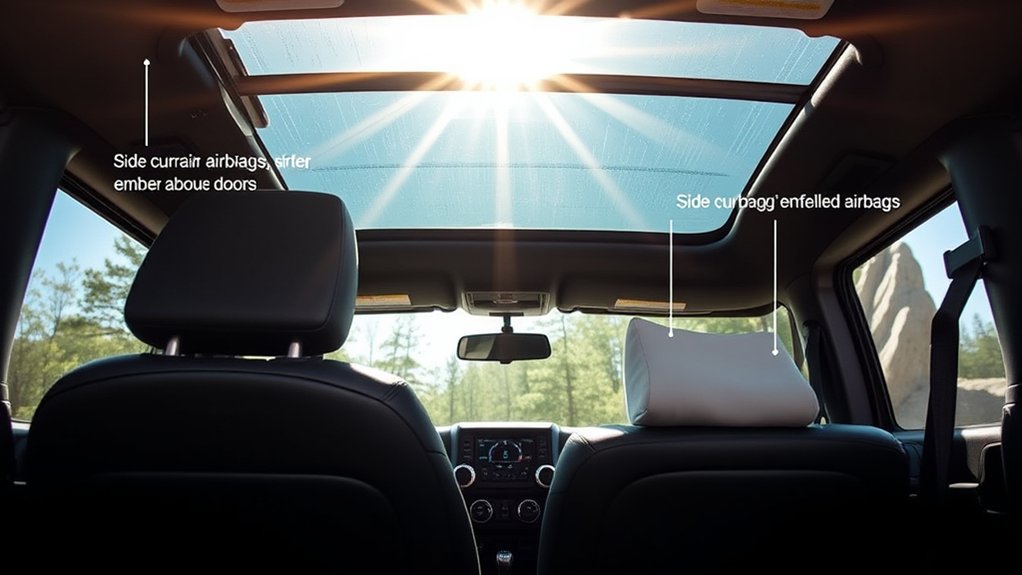
You’ll find that front airbags vary between Wrangler models, offering different levels of protection. Some models also include side airbags to enhance your safety on the road.
Let’s look closer at these features and see which ones your Wrangler might have.
Front Airbag Variations
While different Wrangler models share a rugged design, their front airbag systems can vary considerably depending on the year and trim level. If you own a newer Wrangler, especially from 2018 onward, you’ll likely find advanced dual-stage front airbags that adjust deployment force based on crash severity.
Older models, like those from the early 2000s, typically come with standard single-stage front airbags. Higher trims often include enhanced front airbags with occupant classification systems to better protect both the driver and passenger.
To know exactly what’s installed in your Wrangler, check your owner’s manual or look for airbag labels on the steering wheel and dashboard. Understanding your specific front airbag setup helps you stay informed about your vehicle’s safety capabilities.
Side Airbag Availability
How do side airbags differ across Wrangler models? Generally, newer Jeep Wranglers come equipped with side airbags integrated into the front seats, designed to protect you during side-impact collisions. These side airbags deploy from the seat’s outer edge, cushioning your torso and reducing injury risk.
However, earlier Wrangler models, especially those before 2012, might lack side airbags altogether or have limited options. You’ll find that side curtain airbags, which shield your head, are also standard in recent models but were less common in older versions.
When checking your Wrangler, look for labels on the seats or consult your owner’s manual to confirm if side airbags are present. This way, you’ll know exactly what protection your vehicle offers in a side impact.
Model-Specific Airbag Features
Several Jeep Wrangler models come with distinct airbag configurations tailored to enhance safety based on the vehicle’s design and year. You’ll find front airbags standard across most models, while newer versions add side and curtain airbags for extra protection. Knowing your specific model’s airbag setup helps you feel more secure and prepared.
| Model Year | Airbag Types Installed | Safety Impact |
|---|---|---|
| 2010-2015 | Front airbags | Basic frontal crash protection |
| 2016-2018 | Front + side airbags | Improved side impact safety |
| 2019-2024 | Front + side + curtain airbags | Extensive occupant protection |
Checking your model’s airbag features ensures peace of mind on every drive.
How to Find Out If Your Specific Jeep Wrangler Has Airbags
To determine if your Jeep Wrangler has airbags, start by checking the vehicle’s manual or the driver’s side door jamb for safety feature information. The manual typically lists all installed safety components, including airbags.
On the door jamb, look for labels indicating airbag presence or warnings about airbag systems. You can also inspect the steering wheel and dashboard for airbag symbols or seams where airbags deploy.
If you still aren’t sure, use your VIN (Vehicle Identification Number) to get a detailed report from Jeep’s official website or a trusted vehicle history service.
Ultimately, visiting a Jeep dealership for a quick safety feature inspection can confirm whether your Wrangler is equipped with airbags. These steps ensure you know exactly what safety features your specific Jeep has.
Why Airbags Matter for Off-Road and On-Road Safety
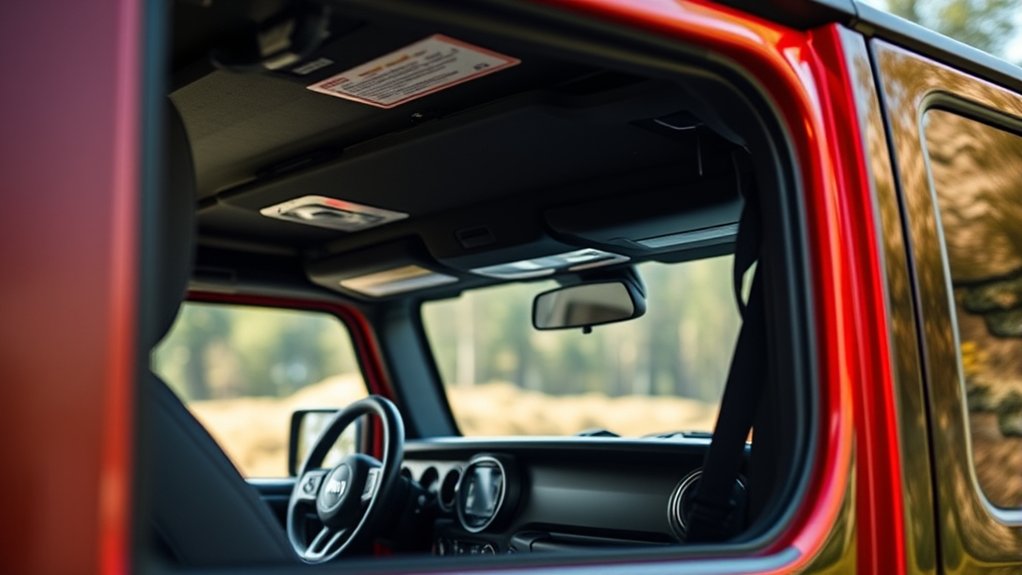
You rely on airbags to cushion impacts by deploying instantly during a crash. Whether you’re tackling rough off-road trails or driving on busy streets, airbags provide vital protection.
Understanding how they work can help you appreciate their role in keeping you safe in all conditions.
Airbag Functionality Explained
Although off-road adventures often focus on rugged terrain and vehicle durability, airbags play a vital role in protecting you during unexpected impacts. When a collision occurs, sensors in your Jeep Wrangler detect sudden deceleration and instantly trigger the airbags to inflate.
This rapid inflation cushions you, reducing the risk of serious injuries by preventing your body from striking hard surfaces like the steering wheel or dashboard. Once deployed, the airbags quickly deflate, allowing you to move freely and exit the vehicle if necessary.
Understanding this process helps you appreciate that airbags aren’t just for highway crashes—they’re a critical safety feature designed to protect you whether you’re steering through city streets or off-road trails. Always ensure your airbags are functioning properly for maximum safety.
Off-Road Impact Protection
Airbags don’t just protect you during typical road accidents—they also play a significant role when you’re tackling off-road challenges. Off-roading often involves uneven terrain, sudden drops, and unexpected obstacles, increasing the risk of rollovers and side impacts.
In these situations, airbags provide vital cushioning that helps minimize injuries by absorbing the force of impact. They work alongside your seatbelts to keep you securely in place, reducing the chance of being thrown around inside the vehicle.
Without airbags, even a minor off-road mishap could lead to serious harm. So, when you’re pushing your Jeep Wrangler through rough trails, knowing your airbags are functional adds an essential layer of protection, helping you stay safer in unpredictable off-road conditions.
On-Road Safety Benefits
Three key safety features work together to protect you on the road, and airbags are a crucial part of that system. When you’re driving your Jeep Wrangler on highways or city streets, airbags provide critical cushioning during collisions, reducing the risk of severe injuries. They deploy instantly upon impact, absorbing force that would otherwise harm your head, chest, or limbs.
Combined with seat belts and advanced braking systems, airbags markedly enhance your overall safety.
You might think airbags only matter off-road, but on-road accidents happen more often. Having properly functioning airbags means you’re protected in various scenarios, from rear-end collisions to side impacts.
Always check your Jeep Wrangler’s safety features regularly to guarantee these life-saving airbags perform when you need them most.
Checking Your Wrangler’s Airbag Warning Light
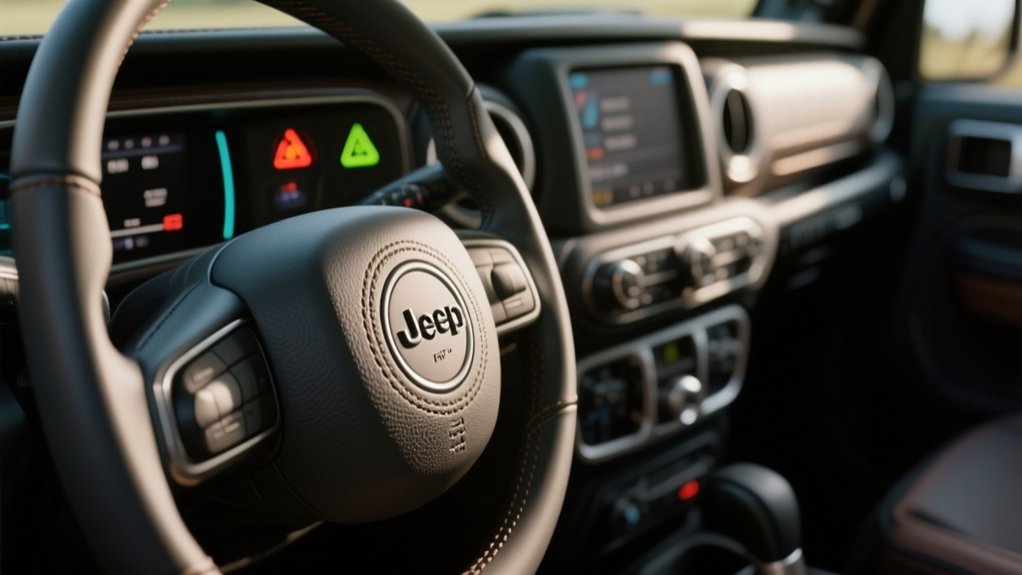
When you start your Jeep Wrangler, pay close attention to the airbag warning light on the dashboard. This light briefly illuminates as part of the system’s self-check and should turn off within a few seconds.
If it stays on or starts flashing, it signals a potential problem with the airbag system. You shouldn’t ignore this warning because it means your airbags mightn’t deploy properly in an accident.
To be safe, have your vehicle inspected by a certified technician as soon as possible. Regularly monitoring this light helps ensure your Wrangler’s safety features are functioning correctly, giving you peace of mind every time you hit the road.
How to Use the Owner’s Manual to Check Your Wrangler’s Safety Features
If your Wrangler’s airbag warning light signals a problem, your owner’s manual becomes a valuable resource for troubleshooting and understanding your vehicle’s safety features. Here’s how you can use it effectively:
- Locate the safety section: Your manual includes a dedicated chapter on airbags and other safety systems.
- Identify airbag types: Find detailed descriptions of front, side, and curtain airbags installed in your Wrangler.
- Understand warning lights: Learn what different airbag warning indicators mean and when to seek professional help.
- Review maintenance tips: Follow manufacturer recommendations to keep your safety features fully operational.
Where to Find Airbag Modules and Sensors Inside Your Wrangler
Inside your Jeep Wrangler, airbag modules and sensors are strategically placed to maximize your safety during a collision. You’ll find the main airbag module housed within the steering wheel for the driver and inside the dashboard for the front passenger.
Side impact sensors are typically embedded in the front doors or near the B-pillars to detect side collisions. Additionally, crash sensors are mounted in the front end of the vehicle to sense frontal impacts.
Some models also include seat-mounted side airbags, with sensors located in the seats themselves. To locate these components precisely, refer to your owner’s manual or service guide, which offers diagrams and details specific to your Wrangler’s year and trim.
Knowing where these parts are helps you understand how your safety system operates.
What to Do If Your Wrangler’s Airbag Warning Light Stays On
Since the airbag warning light signals a potential issue with your Jeep Wrangler’s safety system, you shouldn’t ignore it. When this light stays on, it means the airbags mightn’t deploy properly in an accident. Here’s what you should do:
- Turn off the engine and restart – Sometimes the warning light resets after a reboot.
- Check the seat belts and connectors – Loose connections can trigger the warning.
- Inspect for recent repairs or impacts – Damage or faulty repairs might cause sensor issues.
- Visit a certified mechanic or dealer – They can run a diagnostic to identify and fix the exact problem.
Ignoring the warning compromises your safety, so address it promptly to keep your Wrangler road-ready.
Can You Upgrade or Add Airbags to Older Jeep Wrangler Models?
Although older Jeep Wrangler models weren’t always equipped with airbags from the factory, you can still upgrade or add them to improve safety. However, installing airbags in these older models isn’t a simple DIY task. You’ll need professional help from a certified mechanic or a specialized shop experienced in airbag retrofitting.
Keep in mind, retrofitting airbags involves integrating sensors, control modules, and wiring, which can be costly and complex. Also, some older Wranglers may lack the structural design necessary for airbags to function effectively, limiting your options.
Before proceeding, check if any aftermarket kits are compatible with your model and verify the installation meets safety standards. Prioritize professional installation to guarantee the system works correctly and enhances your vehicle’s safety.
Other Essential Jeep Wrangler Safety Features Besides Airbags
Beyond airbags, Jeep Wranglers come equipped with several other safety features designed to protect you on and off the road. These features enhance your driving experience and keep you safer in various conditions. Here are four essential safety features you’ll find:
- Electronic Stability Control (ESC): Helps maintain control by reducing skidding during sharp turns or slippery surfaces.
- Anti-lock Braking System (ABS): Prevents wheel lockup during sudden stops, improving steering control.
- Hill Start Assist: Prevents rollback when you start on an incline, making hill climbs safer and easier.
- Traction Control System (TCS): Helps maintain grip on uneven or slippery terrain by adjusting power delivery to the wheels.
These features work together to keep your Wrangler secure beyond just airbags.
Maintaining Your Wrangler’s Airbags for Safety
While features like Electronic Stability Control and Traction Control help keep you safe, your airbags play an essential role in protecting you during a collision. To maintain your Wrangler’s airbags, regularly check the airbag warning light on your dashboard. If it stays on or flashes, have your vehicle inspected immediately by a certified technician.
Avoid tampering with or modifying the airbag system, as this can compromise its function. Keep your vehicle’s software updated since manufacturers often release important airbag system updates.
Also, after any accident, even minor ones, get your airbags and sensors checked and replaced if needed. By staying proactive with maintenance, you guarantee your Wrangler’s airbags will work properly when you need them most.
Frequently Asked Questions
How Do Airbags Deploy During a Collision in a Jeep Wrangler?
In a collision, your Jeep Wrangler’s sensors detect sudden impact and instantly trigger the airbags to inflate. This rapid inflation cushions you, reducing injury risk by preventing direct contact with hard surfaces inside the vehicle.
Are There Recalls Related to Jeep Wrangler Airbags?
Like uncovering a hidden chapter in a book, you’ll find Jeep Wrangler airbag recalls have occurred. You should check the NHTSA website or Jeep’s official site to stay informed and guarantee your safety isn’t compromised.
How Do Weather Conditions Affect Airbag Performance in a Jeep Wrangler?
Weather conditions don’t directly affect your Jeep Wrangler’s airbag performance, but extreme temperatures can impact sensor function over time. Keep your vehicle maintained to guarantee sensors stay accurate and airbags deploy properly when needed.
What Is the Average Lifespan of Jeep Wrangler Airbags?
You might think Jeep Wrangler airbags wear out quickly, but they actually last about 10-15 years. To keep you safe, get them inspected regularly, especially if your vehicle’s older or involved in an accident.
Can Airbags Cause Injuries During Deployment in a Jeep Wrangler?
Yes, airbags can cause injuries during deployment in your Jeep Wrangler, like bruises or burns, but they’re designed to reduce serious harm. Always wear your seatbelt to maximize protection and minimize injury risks.
Conclusion
It’s no coincidence that your Jeep Wrangler’s airbags have come a long way, just like your adventures. Whether you’re off-roading or cruising city streets, knowing your Wrangler’s airbag setup boosts your confidence and safety. If your airbag light stays on, don’t ignore it—check it out. And if you have an older model, upgrading airbags can be a game-changer. So, take a moment to explore your Wrangler’s safety features—they’re designed to protect you every mile.