How to Shift Into 4H on a Jeep Wrangler in 7 Easy Steps
To shift into 4H on your Jeep Wrangler, first slow down below 55 mph and check that road conditions like mud or snow need extra traction. Locate the transfer case lever next to your gear shift, then pull it straight back or press the 4H button if electronic. Confirm engagement by seeing the dashboard light or hearing a click. Drive gently and avoid dry pavement to prevent damage. Keep going to discover tips for safe and effective 4H use.
When to Use 4H on a Jeep Wrangler
Although you might be tempted to use 4H all the time, you should engage it only when you need extra traction on slippery or uneven surfaces like snow, mud, or gravel. Using 4H on dry pavement can cause unnecessary wear on your drivetrain and reduce fuel efficiency.
You’ll find 4H helpful when driving at moderate speeds off-road or orchestrating wet, icy roads where slipping is a risk. It distributes power evenly between the front and rear wheels, improving grip and control.
Avoid engaging 4H on smooth, dry surfaces because it can lead to binding in the drivetrain, making steering harder. Remember, 4H is designed for situations where traction is compromised but you still need to maintain higher speeds than in low-range modes.
Use it wisely to keep your Jeep performing safely.
Preparing Your Jeep and Checking Conditions
Knowing when to use 4H is just the start; before shifting, you need to prepare your Jeep and assess the driving conditions carefully. Start by ensuring your speed is appropriate—usually under 55 mph—and that the terrain demands extra traction, like gravel, mud, or snow. Check your tires for proper inflation and tread to maximize grip. Stay alert for any sudden changes in weather or road surface that could affect traction.
| Condition | Action Needed | Emotion |
|---|---|---|
| Slippery Roads | Engage 4H promptly | Confidence |
| Uneven Terrain | Slow down, prepare | Caution |
| Clear Pavement | Stay in 2H | Relaxation |
Proper preparation keeps your drive safe and controlled.
How to Locate the Transfer Case Lever
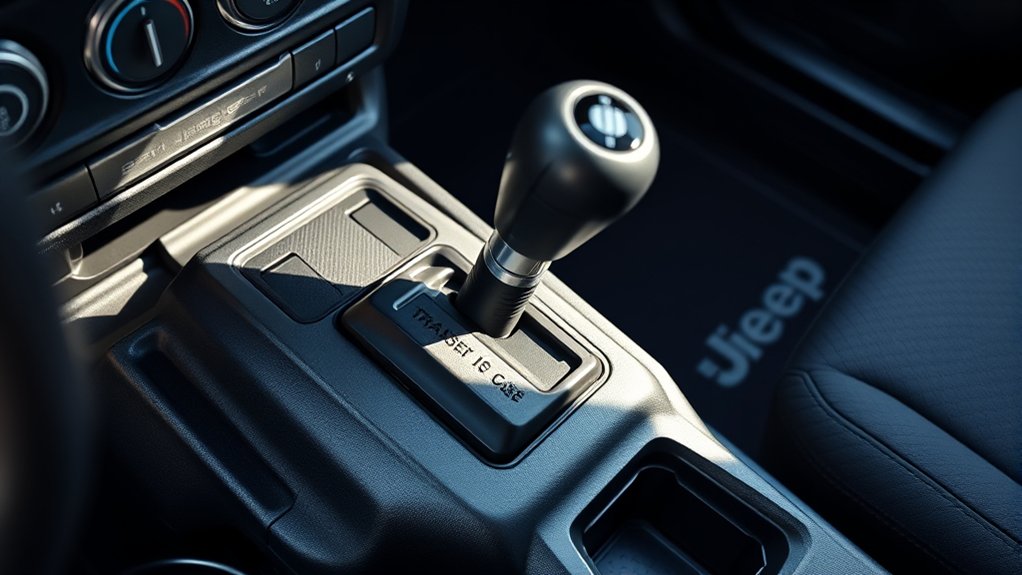
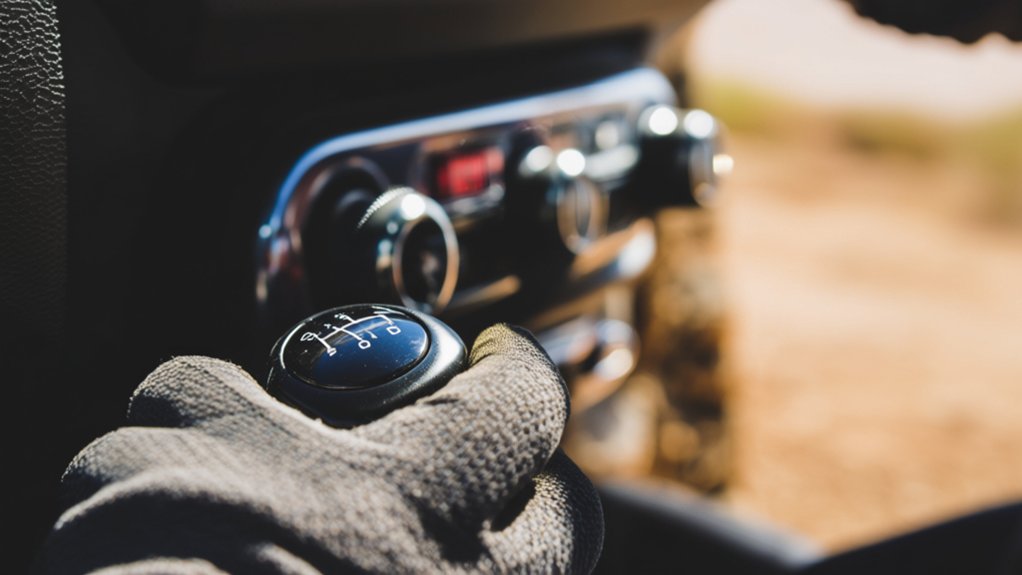
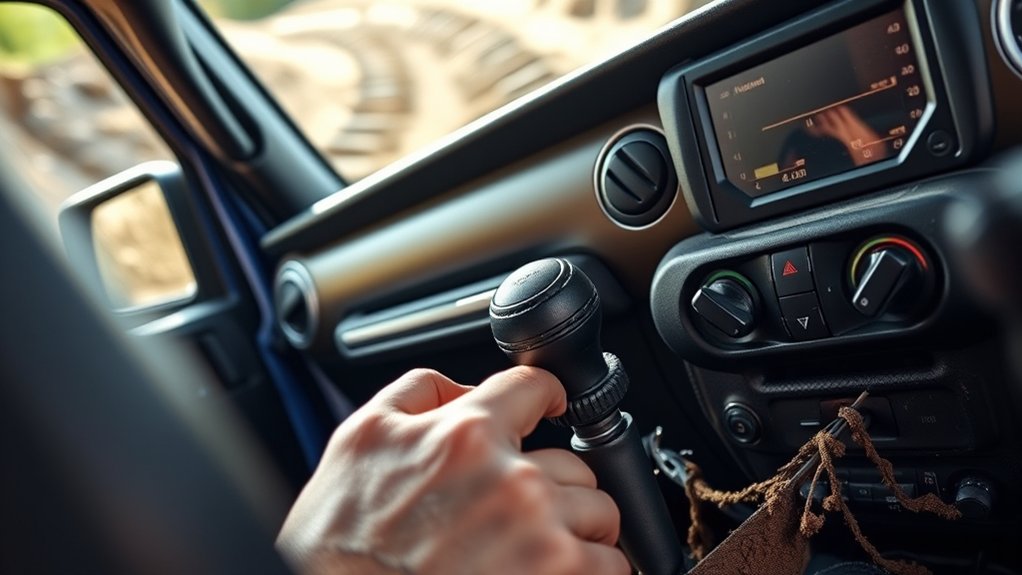
Where exactly is the transfer case lever located in your Jeep Wrangler? You’ll find it right next to your gear shift, typically on the floor between the driver and passenger seats.
This lever controls the four-wheel-drive system, allowing you to switch between 2H, 4H, and 4L modes. To locate it easily:
- Look for a smaller, sturdy lever separate from your main gear shifter.
- Check for a knob or handle labeled with drive modes like 2H, 4H, and 4L.
- Ensure it’s within easy reach of the driver’s seat for quick shifting.
Knowing this lever’s position is essential before you start shifting into 4H, so take a moment to identify it clearly.
How to Shift Into 4H on Your Jeep Wrangler
To shift into 4H on your Jeep Wrangler, you first need to understand how this mode improves traction on slippery surfaces.
Make sure your vehicle is at a suitable speed and prepared for the change.
Then, engage the 4H mode by moving the transfer case lever to the correct position.
Understanding 4H Function
How exactly does 4H improve your Jeep Wrangler’s performance? It engages the four-wheel drive system, distributing power evenly to all wheels. This enhances traction and control, especially on slippery or uneven surfaces. When you shift into 4H, your Jeep becomes more capable in various off-road and poor weather conditions.
Here’s what 4H does for you:
- Increases traction by powering both front and rear wheels simultaneously.
- Allows you to maintain higher speeds compared to 4L, perfect for moderate off-road or slippery pavement.
- Provides better handling on snow, mud, sand, or gravel without sacrificing drivability on normal roads.
Understanding 4H helps you choose the right setting for safer, more confident driving.
Preparing Your Jeep
Now that you understand the benefits of 4H, getting your Jeep Wrangler ready for the shift is the next step.
First, verify your vehicle is at a complete stop or moving slowly—around 3 to 5 mph—to avoid drivetrain damage.
Check your dashboard for any warning lights, especially related to the 4WD system.
Make sure you’re driving on a surface that requires 4H, like slippery or uneven terrain.
Keep your hands firmly on the steering wheel and your foot on the brake.
Also, confirm your transfer case lever or dial is in the 2H position before you begin.
Finally, review your owner’s manual for any model-specific instructions to prepare your Jeep correctly for engaging 4H.
Engaging 4H Mode
Once you’ve confirmed your Jeep is ready, you can engage 4H mode smoothly without risking damage. Shifting into 4H provides better traction on slippery or uneven surfaces, so it’s essential to do it correctly.
Follow these steps:
- Bring your Jeep to a stop or slow down to under 55 mph. You can shift into 4H while moving slowly, but stopping is safer.
- Locate the transfer case lever or switch. For manual levers, pull it straight back into the 4H position. For electronic controls, press the 4H button.
- Confirm engagement. You’ll often hear a click or see a dashboard light indicating 4H is active.
Now you’re set for improved off-road or low-traction driving conditions.
How to Confirm 4H Engagement
After shifting into 4H, you’ll want to verify that the transfer case has properly engaged. Start by feeling the Jeep’s response—when 4H is active, you should notice improved traction and more controlled handling, especially on slippery or uneven surfaces.
Listen for a subtle click or shift sound from the transfer case when you engage 4H. Next, check the 4WD indicator light on the dashboard; it should illuminate, confirming the system is active.
To be certain, gently accelerate and turn the steering wheel; the vehicle should feel stable and responsive without any unusual noises or resistance. If you sense any hesitation or the light doesn’t come on, double-check your shift lever position and try engaging 4H again.
Common Mistakes to Avoid When Using 4H
Although 4H is designed to enhance your Jeep Wrangler’s traction and control, using it incorrectly can lead to unnecessary wear or even damage. To get the most out of 4H without harming your vehicle, avoid these common mistakes:
- Using 4H on dry pavement: It can cause drivetrain binding and increase tire wear since 4H is meant for slippery or off-road conditions.
- Shifting into 4H at high speeds: Always shift at recommended speeds to prevent transmission or transfer case strain.
- Ignoring the engagement confirmation: Don’t assume 4H is engaged without checking — improper engagement can reduce traction and cause component stress.
Safe Driving Tips for 4H on Your Jeep Wrangler
To keep your Jeep Wrangler safe in 4H, always check your tire pressure before hitting the road.
Stick to recommended speed limits to maintain control on tricky terrain.
Pay close attention to the surface you’re driving on and adjust your driving accordingly.
Maintaining Proper Tire Pressure
When you engage 4H on your Jeep Wrangler, maintaining proper tire pressure becomes essential for safe and effective driving. Proper tire pressure ensures better traction, prevents uneven wear, and enhances fuel efficiency. Here’s what you should focus on:
- Check tire pressure regularly – Use a reliable gauge to measure pressure before every off-road trip or whenever you switch to 4H.
- Adjust pressure based on terrain – Lower pressure slightly on loose or rocky surfaces for improved grip, but avoid going too low to prevent tire damage.
- Follow manufacturer recommendations – Stick to the Jeep’s specified tire pressure ranges to maintain balance between performance and tire longevity.
Speed Limits in 4H
How fast can you safely drive your Jeep Wrangler in 4H? Generally, you should keep your speed below 55 mph to maintain control and avoid drivetrain damage. 4H is designed for moderate speeds on slippery or loose surfaces, not for high-speed highway driving.
Driving too fast while in 4H can cause excessive wear on your transfer case and tires. When you need to accelerate or cruise at higher speeds on dry pavement, shift back to 2H.
Also, avoid sudden acceleration or sharp turns in 4H, as these actions can compromise stability. Staying within recommended speed limits helps ensure your Jeep performs optimally and keeps you safe on varying road conditions.
Always check your owner’s manual for specific guidelines.
Terrain Awareness and Adjustment
Maintaining the right speed in 4H sets the stage for handling various terrains confidently. When you drive your Jeep Wrangler, stay alert to the surface conditions and adjust accordingly. Here’s how you can do it effectively:
- Assess the Terrain: Before driving, scan the path for mud, rocks, or sand. Slower speeds help maintain control on slippery or uneven surfaces.
- Adjust Tire Pressure: Lowering tire pressure can improve traction on soft terrain. Just remember to reinflate when back on the road.
- Use Smooth Inputs: Avoid sudden acceleration or sharp turns. Gentle throttle and steering inputs prevent loss of traction and keep your Wrangler stable.
Frequently Asked Questions
Can I Shift Into 4H While Driving at High Speeds?
You shouldn’t shift into 4H at high speeds because it can damage your transfer case. Instead, slow down to around 50 mph or less, then engage 4H smoothly to protect your Jeep’s drivetrain.
Does Using 4H Affect Fuel Efficiency?
Using 4H can drain your fuel like a bottomless pit! You’ll notice reduced fuel efficiency because your Jeep’s drivetrain works harder, so don’t use 4H on dry pavement if you want to save gas and avoid wear.
Can I Use 4H on Dry Pavement?
You can use 4H on dry pavement briefly, but it’s not recommended because it can cause drivetrain binding and tire wear. Save 4H for slippery or off-road conditions to keep your Jeep running smoothly.
How Does 4H Impact Tire Wear?
If you drive on dry pavement with 4H engaged, your tires wear unevenly and faster. For example, a driver noticed premature tire tread loss after frequent 4H use on streets, causing costly replacements sooner than expected.
Is 4H Suitable for Towing Heavy Loads?
4H isn’t ideal for towing heavy loads because it’s designed for improved traction on slippery surfaces, not maximum power or stability. You should use 2H or 4L, depending on your Jeep’s towing recommendations, for safer towing.
Conclusion
So, you’ve mastered shifting into 4H on your Jeep Wrangler—easy, right? Who knew that something designed to help you conquer mud, snow, or rocky trails could be so straightforward? Just remember, 4H isn’t your ticket to reckless off-roading or street racing; it’s there to keep you safe when the road gets rough. Use it wisely, or you might find yourself stuck in a situation even 4H can’t fix.