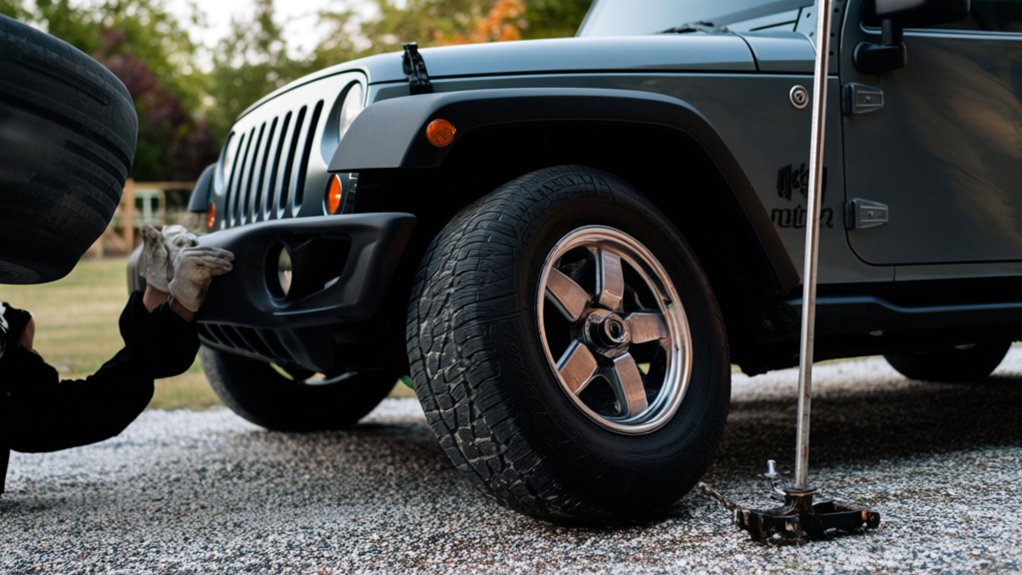
How to Rotate Jeep Wrangler Tires in 5 Simple Steps
To rotate your Jeep Wrangler tires, first gather tools like a jack, lug wrench, and torque wrench, then park on a flat surface with the parking brake on and use wheel chocks. Next, identify the correct tire rotation pattern—often the “X-pattern” for even wear. Safely lift the Jeep using a jack and jack stands, remove the tires, and swap them accordingly. Finally, check tire pressure and tighten lug nuts properly. Following these basics guarantees your tires last longer—there’s more to explore for perfect tire care.
Gather Tools and Prepare Your Jeep Wrangler for Tire Rotation
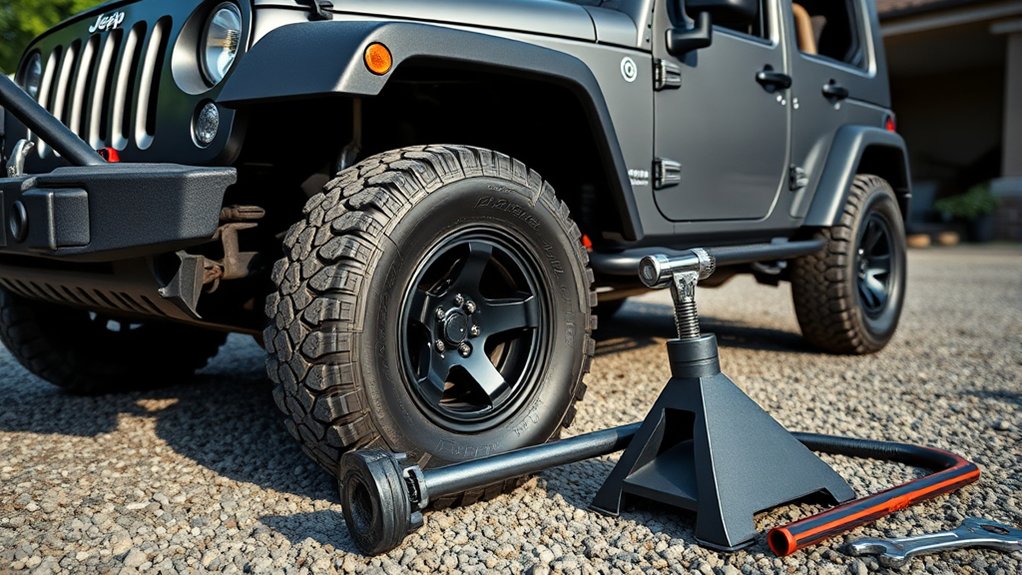
Before you begin rotating your Jeep Wrangler’s tires, make sure you have all the necessary tools on hand. You’ll need a lug wrench to loosen and tighten the lug nuts, a jack capable of lifting your Jeep, and jack stands to securely support the vehicle while you work.
It’s a good idea to have gloves and a torque wrench to guarantee the lug nuts are tightened to the manufacturer’s specifications.
Park your Jeep on a flat, stable surface and engage the parking brake.
Place wheel chocks behind the tires that won’t be lifted to prevent any movement.
Double-check that your tools are within reach before starting to make the process smoother and safer.
Preparing properly is key to a successful tire rotation.
Find the Right Jeep Wrangler Tire Rotation Pattern
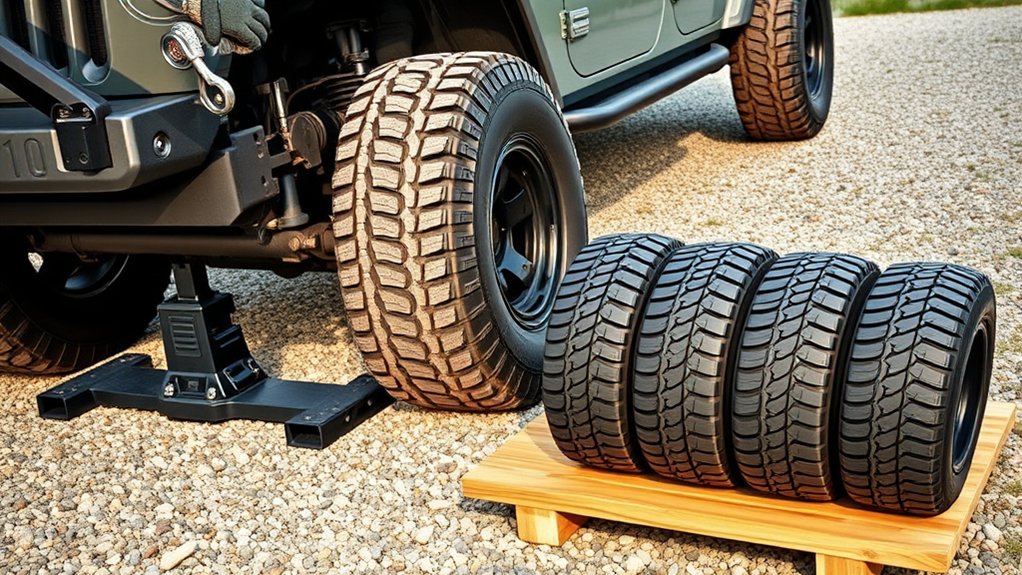
When rotating your Jeep Wrangler’s tires, choosing the correct rotation pattern is vital to guarantee even tire wear and maintain ideal handling.
For most Jeep Wranglers, the recommended pattern is the “X-pattern” or “rearward cross.” This means you’ll move the front tires straight back to the rear, while the rear tires cross to the opposite front positions. This approach balances wear because the front tires handle steering and braking forces differently than the rear.
If your Wrangler has directional tires, you’ll want to keep them on the same side and simply swap front to rear.
Always check the owner’s manual for specific recommendations, as tire type and drivetrain can influence the best pattern.
Selecting the right rotation pattern helps extend tire life and keeps your Jeep performing safely.
Safely Lift Your Jeep and Remove the Tires
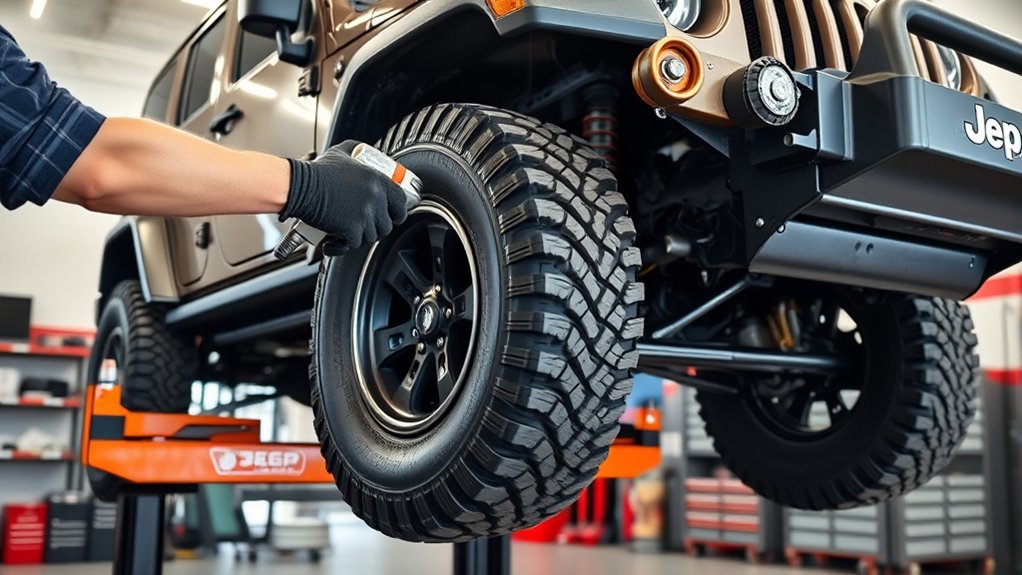
Although lifting your Jeep Wrangler might seem intimidating, using the right tools and techniques makes the process straightforward and safe.
Start by parking on a flat, stable surface and engage the parking brake. Place wheel chocks behind the wheels that will remain on the ground to prevent any movement.
Use a quality floor jack rated for your Jeep’s weight and position it under the manufacturer’s recommended lifting points, usually near the frame or axle. Slowly lift the vehicle until the tire is off the ground.
Then secure the Jeep with jack stands placed under sturdy frame sections. Never rely solely on the jack for support.
Once stable, use a lug wrench to loosen and remove the lug nuts, then carefully take off the tire. Repeat for each tire you plan to rotate.
Rotate Tires According to the Correct Pattern
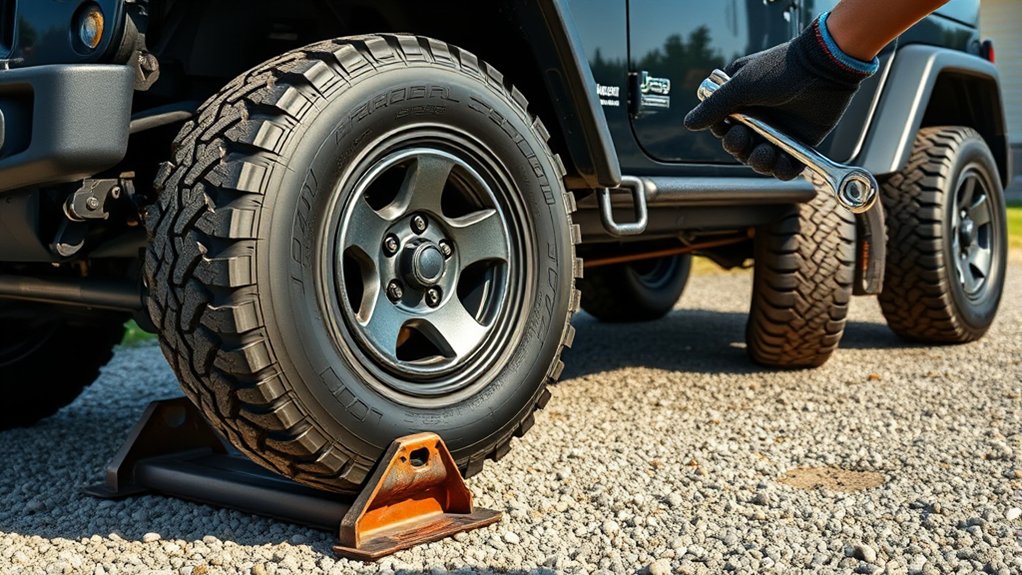
Since rotating your Jeep Wrangler’s tires correctly extends their lifespan and improves handling, you’ll want to follow the recommended tire rotation pattern carefully. For most Jeep Wranglers with non-directional tires, the “X” or crisscross pattern works best. This means moving the front left tire to the rear right, the front right to the rear left, and switching the rear tires straight to the front.
Here’s a simple rotation pattern:
| Current Position | New Position | Notes |
|---|---|---|
| Front Left | Rear Right | Cross to opposite |
| Front Right | Rear Left | Cross to opposite |
| Rear Left | Front Left | Straight forward |
| Rear Right | Front Right | Straight forward |
Follow this pattern every 6,000 to 8,000 miles for even wear.
Check Tire Pressure and Tighten Lug Nuts Securely
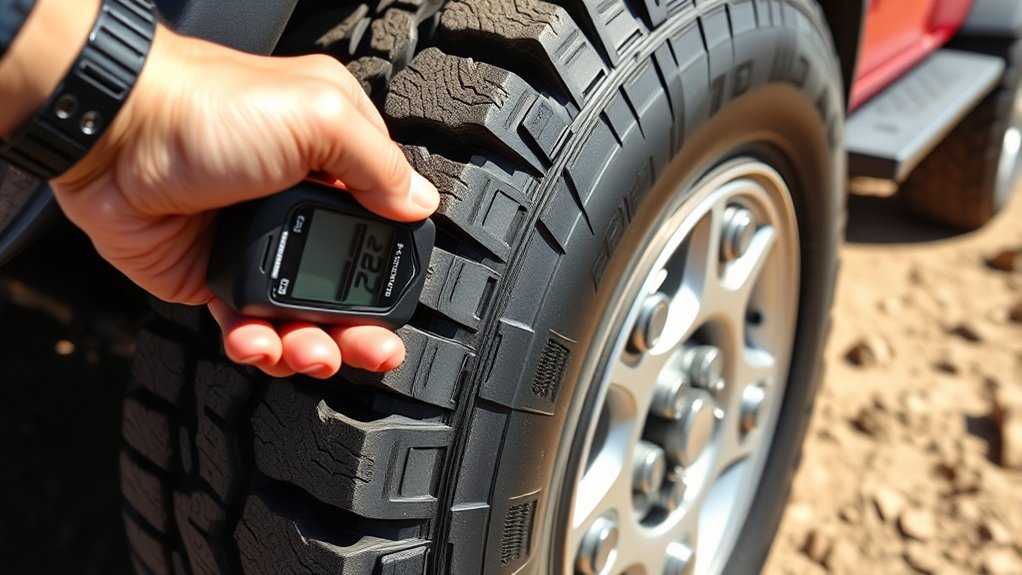
After rotating your Jeep Wrangler’s tires following the correct pattern, you need to check the tire pressure and tighten the lug nuts securely.
First, use a reliable tire pressure gauge to measure each tire’s pressure. Compare the readings to your Jeep’s recommended PSI, usually found on the driver’s door jamb or owner’s manual. Inflate or deflate the tires as needed to maintain ideal pressure, guaranteeing even wear and better fuel efficiency.
Next, use a torque wrench to tighten the lug nuts in a star pattern, preventing uneven pressure on the wheel. Tighten them to the manufacturer’s specified torque, typically between 80-100 ft-lbs for Jeep Wranglers.
Double-check each nut to avoid loose wheels and confirm your safety on the road.
Frequently Asked Questions
How Often Should I Rotate My Jeep Wrangler Tires?
You should rotate your Jeep Wrangler tires every 5,000 to 7,000 miles to guarantee even wear. Regular rotation helps extend tire life and maintain better traction, especially if you drive on rough or uneven terrain frequently.
Can I Rotate Tires Myself or Should a Professional Do It?
You can definitely rotate your tires yourself if you have the right tools and a bit of mechanical know-how. Just follow proper steps carefully. Otherwise, a professional guarantees it’s done safely and correctly.
What Are the Signs That My Tires Need Rotation?
Oh, you’ll never notice uneven tread wear or vibrations, right? But seriously, if your Jeep’s handling feels off, tread looks patchy, or you hear unusual noises, it’s definitely time to rotate those tires before trouble rolls in.
Does Tire Rotation Improve Fuel Efficiency?
Yes, rotating your tires regularly helps improve fuel efficiency by ensuring even tire wear. When your tires wear evenly, your Jeep Wrangler rolls smoother, reducing resistance and helping you save gas over time.
Can I Rotate Tires if They Have Different Tread Depths?
You can rotate tires with different tread depths, but it’s not ideal. Uneven wear might cause handling issues or uneven traction. It’s best to match tires or replace the most worn ones for safety and performance.
Conclusion
Now that you’ve rotated your Jeep Wrangler’s tires, picture hitting the open road with confidence, each tire gripping the terrain evenly. You’ve taken care of your ride, ensuring smoother drives and longer tire life. With your Jeep ready, feel the thrill of adventure under you, knowing every turn is safer and every mile more reliable. Keep this simple routine, and your Wrangler will always be ready to conquer the next trail.