7 Easy Steps to Put Your Jeep Wrangler in 4-Wheel Drive
To put your Jeep Wrangler in 4-wheel drive, first make certain your vehicle is stopped or moving very slowly. Shift the transmission into neutral or park if needed. Locate the transfer case lever or electronic switch, then pull the lever back to 4WD High or 4WD Low until it clicks, or wait for the indicator light. Proceed carefully based on your terrain needs. Following these steps guarantees smooth engagement and control. You can explore more tips for different road conditions and safe disengagement.
Key Takeaways
- Ensure your Jeep is stopped or moving below 3-5 mph before engaging 4WD.
- Shift the transmission into neutral or park for manual transmissions before switching.
- Pull the transfer case lever straight back to 4WD High or 4WD Low until it clicks.
- Wait for the 4WD indicator light if using an electronic switch to confirm engagement.
- Shift transmission into drive after engaging 4WD to prevent drivetrain binding.
How to Put Your Jeep Wrangler Into 4WD
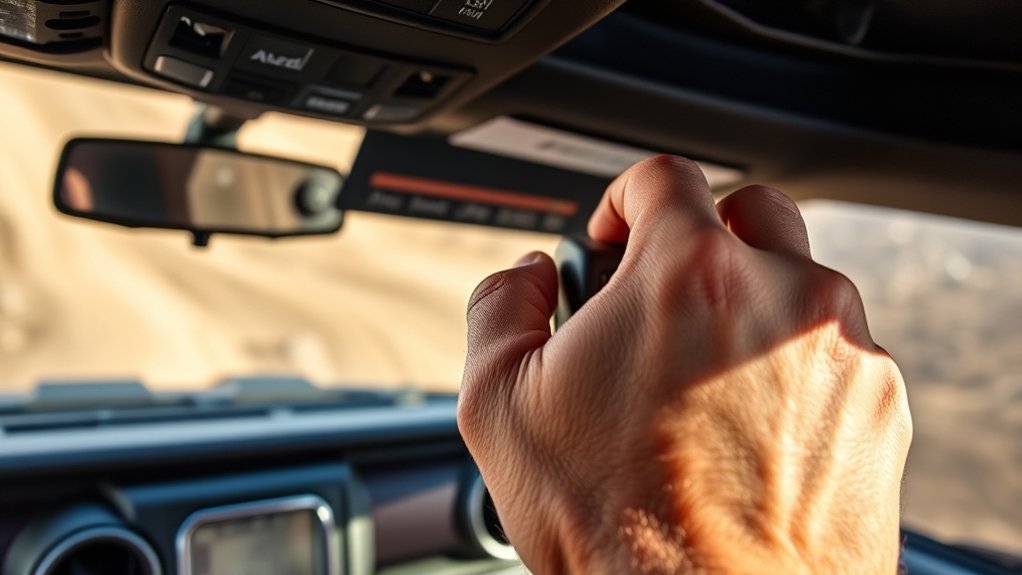
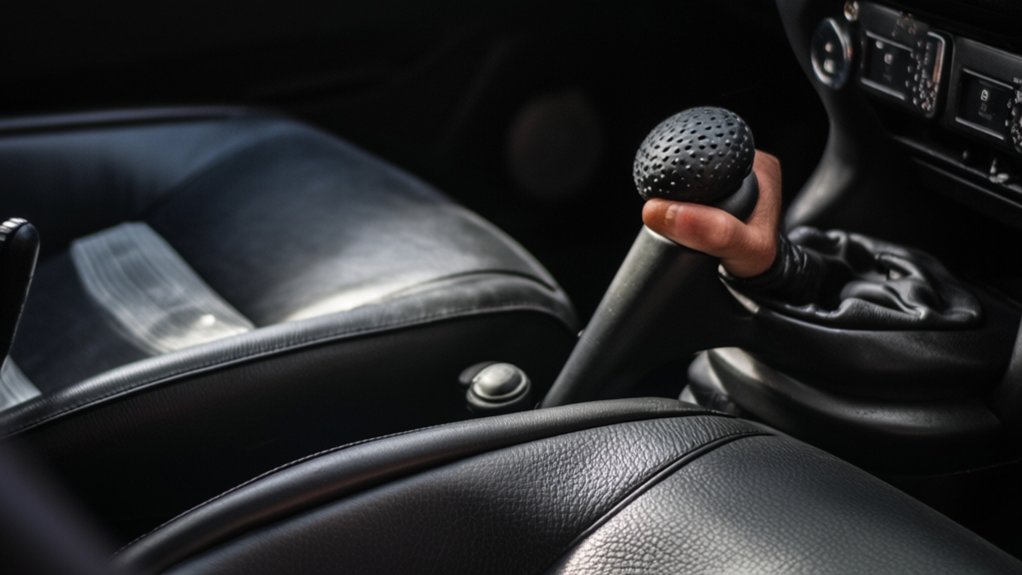
Wondering how to engage 4-wheel drive on your Jeep Wrangler? Start by locating the transfer case lever, usually found between the front seats. If your Jeep has a manual transmission, make sure your vehicle is in neutral or park before shifting. For automatic transmissions, simply stop or drive slowly—below 3-5 mph—before switching. To engage 4WD, pull the transfer case lever straight back to the desired setting: 4WD High or 4WD Low. You’ll feel it click into place. Some models have an electronic switch instead; just press the 4WD button and wait for the indicator light. Always consult your owner’s manual to confirm your Jeep’s specific method. Now you’re ready to tackle tougher terrain with confidence.
When to Use 4WD High vs. 4WD Low
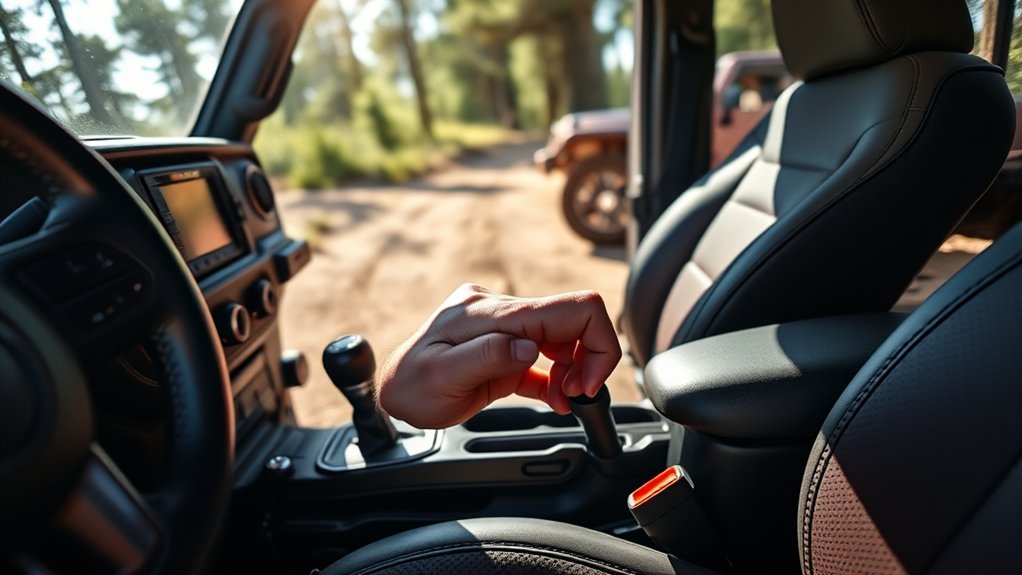
Although both 4WD High and 4WD Low provide better traction, you’ll use them in different situations depending on the terrain and speed. 4WD High is ideal for driving at regular speeds on slippery surfaces like snow, mud, or gravel, while 4WD Low delivers maximum torque and control at low speeds for challenging off-road conditions such as steep hills, deep sand, or rocky trails. Use 4WD High when you need steady traction without sacrificing speed. Switch to 4WD Low when navigating tough terrain that demands extra power and precision.
| Feature | 4WD High |
|---|---|
| Speed | Higher |
| Terrain | Snow, mud, gravel |
| Torque | Moderate |
| Control | Good |
| Use Case | Slippery roads at normal speed |
| Feature | 4WD Low |
| Speed | Lower |
| Terrain | Steep hills, rocks, deep sand |
| Torque | Maximum |
| Control | Excellent |
| Use Case | Difficult off-road conditions |
Preparing Your Jeep Before Engaging 4WD

Before engaging 4WD, you should guarantee your Jeep is properly prepared to avoid mechanical issues and maximize performance. Start by checking that your tires are properly inflated and have adequate tread for the terrain. Confirm that your wheels and axles are free from debris or damage. Make sure your vehicle is at a complete stop or moving very slowly, as sudden shifts can strain the drivetrain. Also, shift your transmission into neutral or park if your Jeep’s system requires it before switching modes. Double-check that your 4WD selector switch or lever is functioning smoothly without resistance. Taking these steps ensures a seamless changeover into 4WD, protects your Jeep’s components, and readies you for any driving condition ahead.
Switching to 4WD Low for Tough Terrain
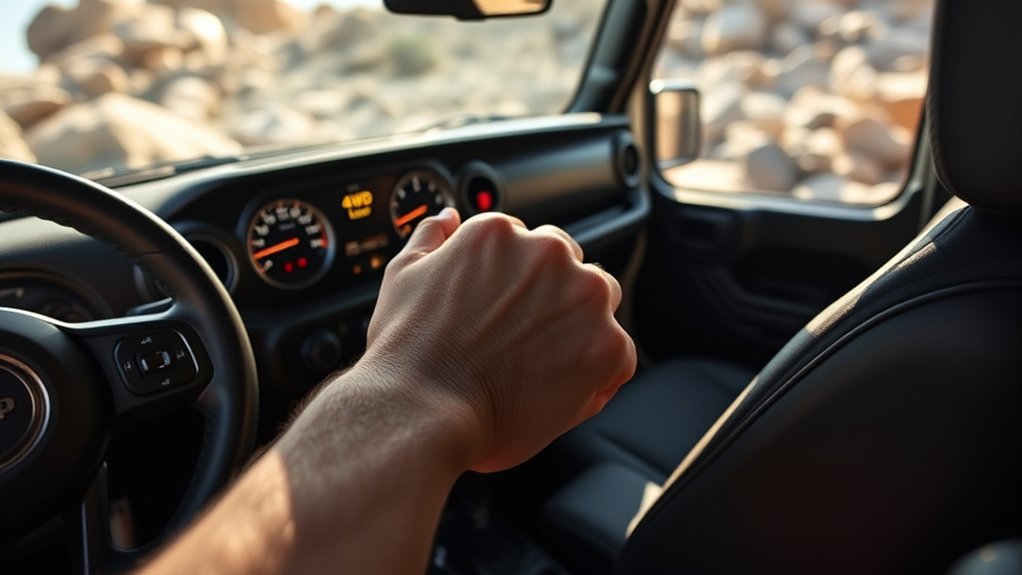
When you face particularly rough terrain, switching to 4WD Low gives your Jeep Wrangler the extra torque and control it needs. First, bring your vehicle to a complete stop and shift the transmission into neutral. Then, firmly pull the 4WD selector lever from 4H (4WD High) into 4L (4WD Low). You’ll feel it engage as the transfer case switches to a lower gear ratio, providing maximum power at slower speeds. This setting is perfect for steep inclines, deep mud, or rocky paths where precision and traction matter most. Remember, 4WD Low isn’t for regular driving—use it only when necessary to avoid drivetrain stress. Once engaged, proceed slowly and steadily, letting your Wrangler tackle tough terrain with confidence and control.
How to Safely Disengage 4WD After Driving
Once you’ve finished driving in 4WD, you’ll want to disengage it properly to protect your Jeep’s drivetrain and guarantee smooth operation. Start by bringing your Jeep to a complete stop. Then, shift the transmission into neutral. For part-time 4WD systems, switch the transfer case back to 2WD by turning the dial or moving the lever, depending on your model. If you used 4WD Low, be sure to shift out of it before switching to 2WD. After selecting 2WD, shift the transmission back into drive. This process prevents binding in the drivetrain and reduces wear on components. Disengaging 4WD on dry pavement avoids unnecessary strain, so always double-check your transfer case setting before driving on normal roads again.
Troubleshooting 4WD Shifting Issues
If your Jeep Wrangler’s 4WD isn’t shifting smoothly, you’re not alone—common problems like stuck hubs or low fluid levels can cause issues. You can often fix these quickly by checking the transfer case fluid or gently rocking the vehicle to free stuck parts. Let’s look at how to identify and solve these common 4WD shifting problems.
Common 4WD Shift Problems
Why won’t your Jeep Wrangler shift smoothly into 4-wheel drive? Common issues include low transfer case fluid, worn shift linkage, or a faulty actuator. If the transfer case fluid is dirty or low, it can cause grinding or resistance when shifting. Check the fluid level and condition regularly. Worn or misaligned shift linkage can prevent proper engagement, making it hard to shift or causing the lever to feel loose. Inspect linkage for damage or looseness and adjust as needed. The actuator, which controls the engagement of 4WD, can fail electrically or mechanically, resulting in incomplete shifts or clicking noises. Diagnosing these problems early helps you avoid bigger repairs and keeps your Jeep ready for any terrain.
Quick Fixes for Stuck
When your Jeep Wrangler’s 4WD won’t engage smoothly, you don’t have to wait for a mechanic to fix it. First, check if your vehicle is fully stopped or moving slowly; some models require a complete stop or low speed to shift. Next, try gently rocking the transfer case shifter back and forth to free any stuck parts. Inspect the linkage and cables for damage or looseness—they might need tightening or minor adjustment. Also, check your 4WD hub locks; if they’re frozen or dirty, clean and lubricate them. Finally, verify that the battery voltage is adequate, as low power can affect electronic shift systems. These quick fixes often get your 4WD working without hassle.
Tips for Using 4WD on Everyday Roads and Trails
Although 4WD provides extra traction and control, you’ll want to use it wisely on everyday roads and trails to avoid unnecessary wear and tear. Engage 4WD only when conditions demand it, like on slippery or uneven surfaces. Using 4WD on dry pavement can strain your drivetrain and reduce fuel efficiency. When driving on trails, keep your speed moderate and avoid sudden turns to maintain traction and protect your Jeep’s components. Remember to switch back to 2WD once you’re on smooth, dry roads to prevent damage. Regularly check your tires and drivetrain for any signs of wear, especially after off-road adventures. By using 4WD thoughtfully, you’ll extend your Jeep Wrangler’s life and enjoy safer, more efficient driving every time.
Frequently Asked Questions
What Maintenance Is Required for My Jeep’s 4WD System?
You should regularly check and change the transfer case fluid, inspect the drive shafts and CV joints, grease the U-joints, and make sure the differential fluid is topped off. Don’t forget to test the 4WD system’s engagement often.
Can I Modify My Jeep Wrangler’s 4WD System for Better Performance?
Absolutely, you can modify your Jeep’s 4WD for better performance—because who doesn’t want to turn their daily driver into a monster truck? Just make sure you know what you’re doing or you’ll be stuck in the mud!
How Does 4WD Affect Fuel Efficiency on My Jeep Wrangler?
Using 4WD on your Jeep Wrangler generally lowers fuel efficiency because it engages more drivetrain components, increasing resistance and power demand. You’ll want to switch back to 2WD whenever you don’t need extra traction to save fuel.
Are There Any Warranty Concerns With Using 4WD Frequently?
Using 4WD frequently won’t void your warranty, but think of it like a dance—if you don’t maintain your Jeep properly, wear and tear could cause issues. Stick to regular service to keep it covered and running smooth.
What Are Common Signs of 4WD System Failure in a Jeep Wrangler?
You’ll notice grinding noises, difficulty shifting gears, or your 4WD indicator won’t light up. Sometimes, your Jeep might pull to one side or experience a loss of power, signaling 4WD system failure.
Conclusion
Think of your Jeep’s 4WD like a trusty compass guiding you through wild, uncharted lands. When you engage it right, you’re revealing new paths and conquering challenges with confidence. Just like a skilled explorer knows when to switch routes, you’ll master when to use 4WD High or Low, preparing your Jeep for every adventure. Keep these steps in mind, and your Jeep will lead you safely through every trail, no matter how tough the terrain.