How to Jump Start a Jeep Grand Cherokee in 10 Easy Steps
To jump start your Jeep Grand Cherokee, first inspect the battery for damage and wear safety gear. Gather jumper cables and position a helper vehicle close without touching yours, both engines off. Connect cables positive to positive, negative clamp to an unpainted metal surface on your Jeep, then start the donor vehicle. After a few minutes, try your Jeep’s engine. Disconnect cables in reverse order, keep your Jeep running to recharge. If issues persist, there’s more to explore for a reliable start.
Inspect Your Jeep’s Battery and Follow Safety Precautions
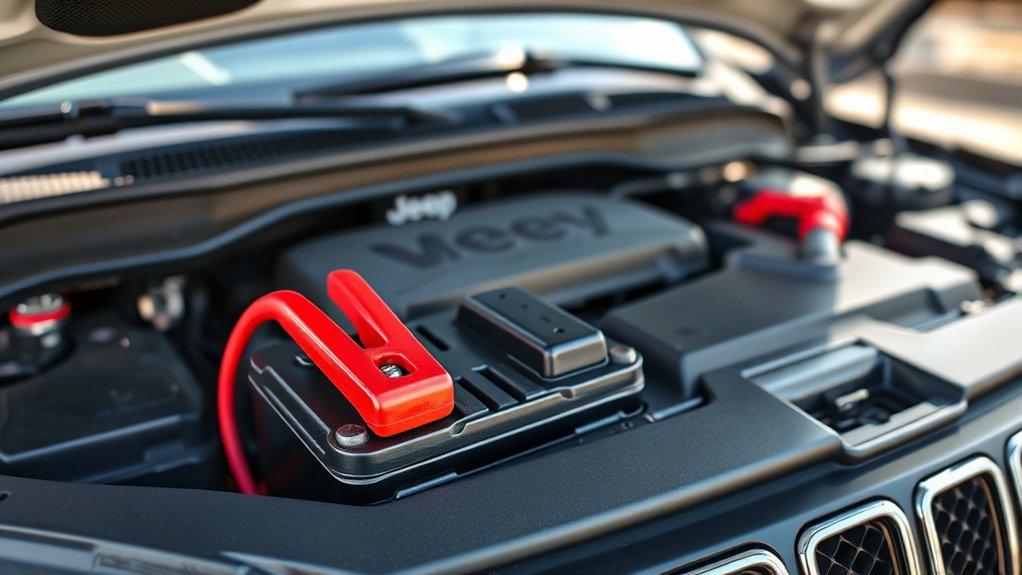
Before you attempt to jump start your Jeep Grand Cherokee, inspect the battery carefully to verify it’s safe to proceed. Check for any visible damage, like cracks or leaks, which can be dangerous.
If you spot corrosion on the terminals, clean it off with a wire brush or a mixture of baking soda and water. Make sure the battery terminals are tight and secure.
Avoid jump-starting if the battery is swollen or smells like rotten eggs, as that indicates a potential hazard.
Always wear safety goggles and gloves to protect yourself from acid splashes. Keep sparks, flames, and cigarettes away from the battery.
Ensuring these safety measures helps prevent accidents and damage, making the jump start process safer for both you and your Jeep.
Gather Tools and Jumper Cables Before You Start
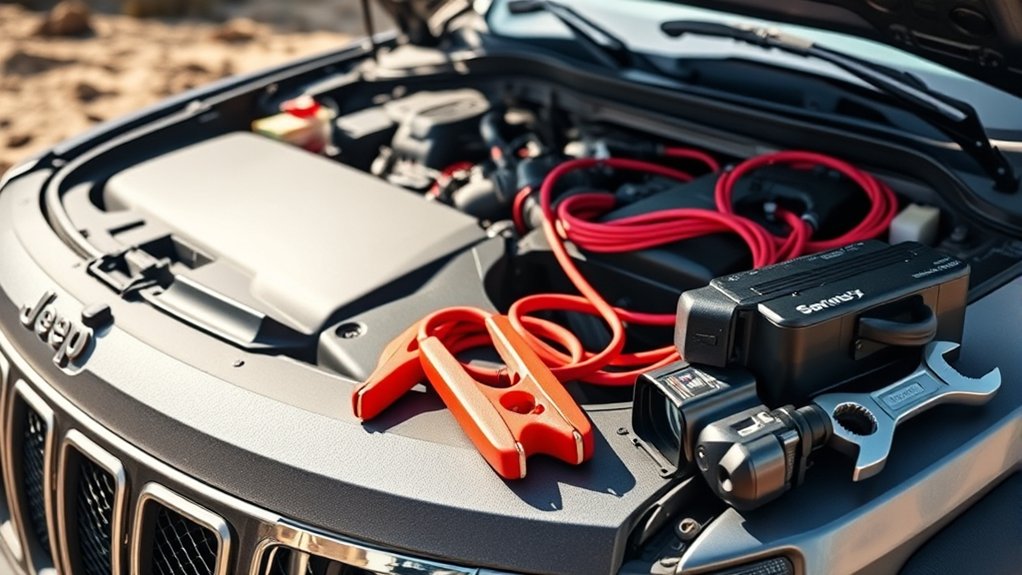
While getting ready to jump start your Jeep Grand Cherokee, make sure you have the right tools and jumper cables on hand. You’ll need a reliable set of jumper cables with thick, well-insulated clamps to guarantee a solid connection. Avoid old or damaged cables as they mightn’t conduct power efficiently.
Besides cables, keep safety gloves and eye protection nearby to guard against sparks or battery acid. It’s also helpful to have a flashlight if you’re working in low light.
Double-check that your tools are within reach before you begin—this saves time and prevents unnecessary distractions during the jump-start process. Having everything ready upfront helps you focus on the task safely and efficiently, setting you up for a smooth jump-start experience.
Position the Helper Vehicle for Safe Jump-Starting
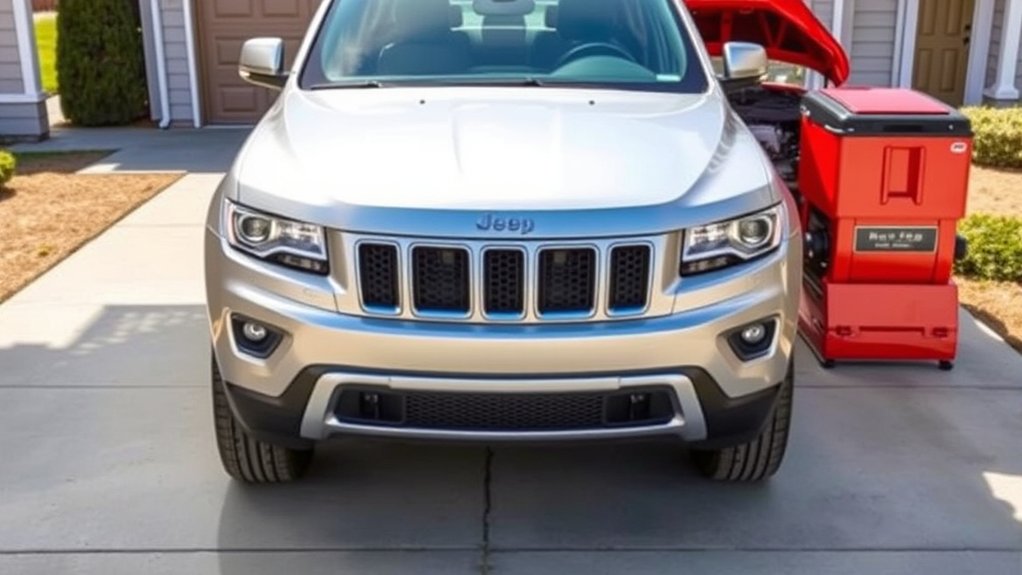
Once you have your tools ready, position the helper vehicle so its battery is as close as possible to your Jeep Grand Cherokee’s battery without the vehicles touching. This guarantees the jumper cables can reach both batteries safely and securely. Follow these steps for proper positioning:
- Park the helper vehicle facing your Jeep or side by side, depending on battery location.
- Engage both parking brakes to prevent any movement.
- Turn off both vehicles completely, including all accessories like lights and radios.
- Ensure the helper vehicle’s engine is off but ready to start once connected.
Safely Connect Jumper Cables to Dead Battery

Before you connect the jumper cables, make certain you can clearly identify the positive and negative terminals on both batteries.
Position the vehicles close enough for the cables to reach but keep them from touching.
Always attach the cables in the correct order to avoid sparks and guarantee safety.
Identify Positive And Negative Terminals
To safely connect jumper cables, you need to clearly identify the positive and negative terminals on both batteries. Correctly recognizing these terminals prevents sparks and damage.
Here’s how to do it:
- Look for the plus (+) sign or the word “POS” on the battery—this marks the positive terminal.
- Find the minus (−) sign or “NEG” label—that’s the negative terminal.
- Notice the cable colors: red usually indicates positive, and black is negative.
- Check for any corrosion or damage around the terminals; clean if necessary before connecting.
Position Vehicles For Safety
Although jump-starting your Jeep Grand Cherokee is straightforward, positioning the vehicles correctly is essential for safety and effectiveness.
Park the functioning vehicle close enough to the Jeep so the jumper cables can reach both batteries without stretching. Make certain both vehicles are turned off, with parking brakes engaged to prevent any movement.
Keep the vehicles facing each other or side by side, but avoid letting them touch to eliminate risk of electrical shorts. Turn off any accessories like radios or lights in both vehicles to reduce electrical load.
Also, confirm the area is well-ventilated and away from flammable materials. Position yourself and the vehicles so you can easily access both batteries without leaning over the engines, minimizing injury risk during the jump-start process.
Attach Cables In Correct Order
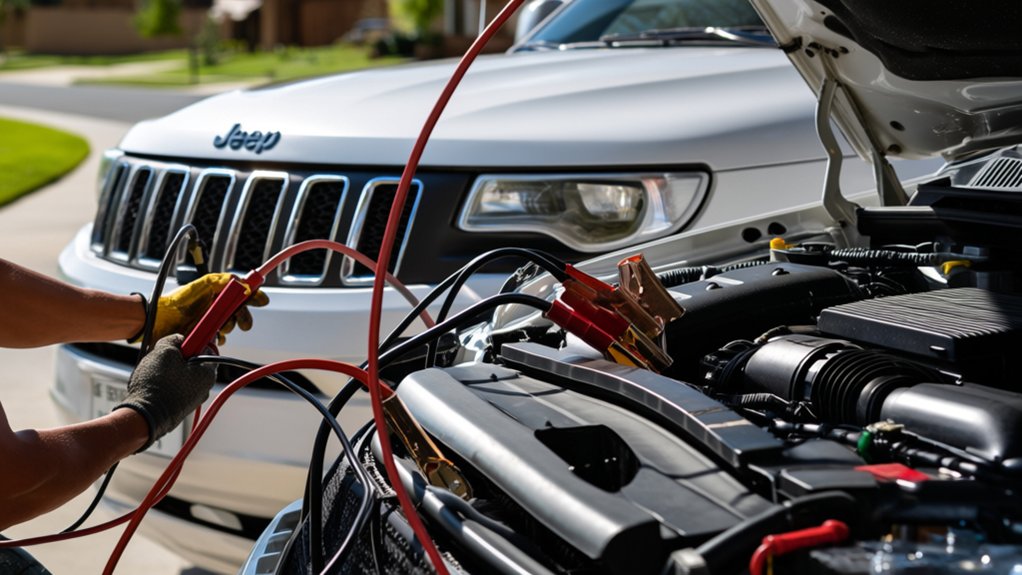
Once both vehicles are safely positioned and turned off, you can begin connecting the jumper cables. Attaching the cables in the right order is crucial to avoid sparks or damage. Follow these steps carefully:
- Connect one red clamp to the positive (+) terminal of the dead battery.
- Attach the other red clamp to the positive (+) terminal of the good battery.
- Connect one black clamp to the negative (–) terminal of the good battery.
- Attach the last black clamp to an unpainted metal surface on the Jeep’s engine block or chassis, away from the battery.
This grounding step reduces the risk of sparks near the battery. After attaching cables securely, you’re ready to start the engine and jump-start your Jeep Grand Cherokee safely.
Attach Jumper Cables to Helper Vehicle Battery

Before connecting the jumper cables, make sure the helper vehicle’s engine is turned off and the keys are removed. Locate the positive (+) and negative (-) terminals on the helper vehicle’s battery. Attach the red clamp firmly to the positive terminal. Then, attach the black clamp to the negative terminal. Confirm the clamps have a secure grip and don’t touch each other to avoid sparks.
Here’s a quick reference for attaching jumper cables safely:
| Step | Clamp Color | Terminal Type |
|---|---|---|
| 1 | Red | Positive (+) |
| 2 | Black | Negative (-) |
| 3 | Red | Positive (+) |
| 4 | Black | Negative (-) |
Following this order helps guarantee a safe and effective connection.
Start Helper Vehicle and Charge Jeep Battery for 5 Minutes
After you’ve securely connected the jumper cables, start the helper vehicle’s engine and let it run for about five minutes. This will give your Jeep’s battery enough time to build up a charge.
While waiting, make certain to:
- Keep the helper vehicle’s engine running steadily without revving it.
- Avoid turning on any electrical accessories in either vehicle.
- Double-check that the jumper cables remain firmly attached.
- Stay clear of the engine compartments to prevent injury.
Charging for five minutes helps guarantee your Jeep’s battery receives sufficient power to start. Don’t rush this step; patience here increases your chances of a successful jump start.
Once five minutes pass, you’ll be ready to try starting your Jeep Grand Cherokee.
Start Your Jeep Grand Cherokee After Charging
Now that you’ve charged the battery, check its charge level to guarantee it’s sufficient.
Make sure all charging equipment is connected properly before you try starting your Jeep.
Keep an eye on the process to avoid any issues as you power up your vehicle.
Verify Battery Charge Level
Once you’ve charged your Jeep Grand Cherokee’s battery, you’ll want to check its charge level to make certain it has enough power to start the engine. Verifying the battery’s status guarantees you won’t run into further issues when trying to start your vehicle.
Here’s how to verify the charge level:
- Use a digital multimeter set to DC voltage.
- Place the red probe on the positive battery terminal and the black probe on the negative terminal.
- Read the voltage on the multimeter display; a healthy battery should show around 12.6 volts or higher.
- If the voltage reads below 12.4 volts, consider charging the battery further or inspecting it for faults before attempting to start your Jeep.
Connect Charging Equipment Correctly
Although charging the battery is essential, you need to connect the charging equipment correctly to guarantee your Jeep Grand Cherokee starts safely and efficiently.
First, make sure your charger or jumper cables are in good condition.
Attach the positive (red) clamp to the positive terminal on your battery.
Then, connect the negative (black) clamp to a solid, unpainted metal surface on the engine block or frame—avoid the battery’s negative terminal to prevent sparks.
Double-check that the clamps are secure and won’t slip during charging.
If you’re using a portable charger, follow its instructions carefully to set the right charging mode.
Taking these steps ensures you avoid damage and electrical hazards while preparing your Jeep for a safe start.
Monitor Charging Progress Carefully
After connecting the charging equipment correctly, you’ll want to keep a close eye on the charging progress to guarantee your Jeep Grand Cherokee gets enough power to start. Monitoring ensures you don’t overcharge or undercharge the battery, which can cause issues.
Here’s what to do:
- Check the charging indicator on your charger or jumper cables regularly.
- Watch for steady increases in voltage or charge levels.
- Avoid leaving the charger connected for too long to prevent battery damage.
- Once the battery reaches a sufficient charge (usually indicated by a green light or full meter), disconnect the equipment safely.
Disconnect Jumper Cables in the Correct Order
Before you disconnect the jumper cables, make sure the Jeep Grand Cherokee’s engine is running smoothly. Removing the cables in the correct order prevents sparks and protects both vehicles. Start by disconnecting the black (negative) clamp from the grounded metal surface on the Jeep. Then, remove the black clamp from the donor vehicle’s battery. Next, take off the red (positive) clamp from the donor battery, followed by the red clamp from the Jeep’s battery.
Here’s a quick reference table:
| Step | Cable Color | Location |
|---|---|---|
| 1 | Black | Jeep’s grounded metal |
| 2 | Black | Donor battery |
| 3 | Red | Donor battery |
Following this order keeps you safe and your Jeep ready to go.
Keep Your Jeep Running to Fully Recharge Battery
After disconnecting the jumper cables, keep your Jeep running for at least 20 minutes to recharge the battery fully.
Avoid turning off the engine or using high-power accessories during this time to prevent draining the battery again.
This helps guarantee your battery regains enough charge to start the vehicle on its own next time.
Ideal Driving Duration
While keeping your Jeep Grand Cherokee running, you’ll want to give the battery enough time to recharge fully. Simply idling won’t do; driving your vehicle is the most effective way to restore battery power.
Here’s how to manage the ideal driving duration:
- Drive continuously for at least 20 to 30 minutes after jump-starting.
- Avoid short trips, as they won’t provide enough time for a full recharge.
- Maintain a steady speed on highways or open roads to optimize alternator output.
- Turn off unnecessary electrical accessories like the radio or air conditioning to allow more power to charge the battery.
Following these steps helps guarantee your battery regains sufficient charge, reducing the risk of needing another jump start soon.
Battery Recharge Tips
Though jump-starting your Jeep Grand Cherokee gets it running again, you’ll need to keep the engine on and drive for a sufficient time to fully recharge the battery. Aim to drive at least 20 to 30 minutes, ideally on the highway, to allow the alternator to restore a good charge.
Avoid turning off the engine too soon, or the battery may not regain enough power. If you only make short trips, consider using a portable battery charger later to maintain the battery’s health.
Also, check that all electrical components like lights and radio are off while driving to maximize charging efficiency. Keeping these steps in mind helps guarantee your Jeep starts reliably the next time you need it.
Avoiding Power Drain
Keeping your Jeep Grand Cherokee running after jump-starting is key to preventing power drain and fully recharging the battery. Once your engine is on, avoid turning off the vehicle immediately. This lets the alternator restore battery power efficiently.
To keep your battery healthy, follow these steps:
- Drive continuously for at least 20-30 minutes to allow a full recharge.
- Turn off unnecessary electrical accessories like headlights, radio, and AC to reduce power consumption.
- Avoid short trips right after jump-starting; they don’t provide enough time to recharge the battery.
- Check your battery and charging system regularly for any issues that could cause repeated power drain.
Troubleshoot Common Issues When Jeep Won’t Start After Jump-Start
If your Jeep Grand Cherokee still won’t start after a jump-start, you’ll need to check a few common issues that could be causing the problem.
First, confirm the battery terminals are clean and securely connected; corrosion or loose cables can prevent power flow.
Next, verify the battery itself isn’t dead—sometimes a jump-start won’t work if the battery is completely drained or faulty.
Also, check the fuses related to the ignition and starter systems.
If these look fine, inspect the starter motor and ignition switch for signs of wear or damage.
Finally, if your Jeep has an immobilizer or security system, make sure it’s not activated, as this can block starting.
Addressing these points should help you identify why your Jeep won’t start after a jump.
Frequently Asked Questions
How Often Should I Replace My Jeep Grand Cherokee Battery?
You should replace your Jeep Grand Cherokee battery every 3 to 5 years. However, if you notice slow engine cranks or electrical issues, get it tested sooner to avoid unexpected failures and keep your vehicle running smoothly.
Can Jump-Starting Damage My Jeep’s Electrical System?
Jump-starting your Jeep can save the day or cause harm if done carelessly. You won’t damage the electrical system if you follow proper steps, but careless connections or wrong voltage can lead to costly issues.
What Type of Jumper Cables Is Best for a Jeep Grand Cherokee?
You’ll want heavy-duty jumper cables with at least 4-gauge thickness and solid copper clamps. These handle your Jeep Grand Cherokee’s battery power efficiently, ensuring a safe, reliable jump without risking damage to the electrical system.
How Do I Know if My Battery Is Completely Dead?
You’ll know your battery is completely dead if your Jeep won’t start, there’s no dashboard lights, and the headlights are dim or off. Using a multimeter showing less than 12 volts also confirms it’s dead.
Can I Jump-Start My Jeep Grand Cherokee in Cold Weather?
Absolutely, you can jump-start your Jeep Grand Cherokee in cold weather—like a hero braving a winter storm. Just make sure your cables are connected correctly and your donor battery is strong enough to conquer the chill.
Conclusion
Jump-starting your Jeep Grand Cherokee is like reigniting a fading flame—by carefully connecting each cable, you spark life back into your engine. With patience and safety as your guiding stars, you’ll watch the battery’s glow grow stronger, ready to power your journey again. Remember, every successful jump is a small victory over stillness, turning the silent engine into a roaring symbol of adventure waiting just beyond the horizon. Keep that spark alive.