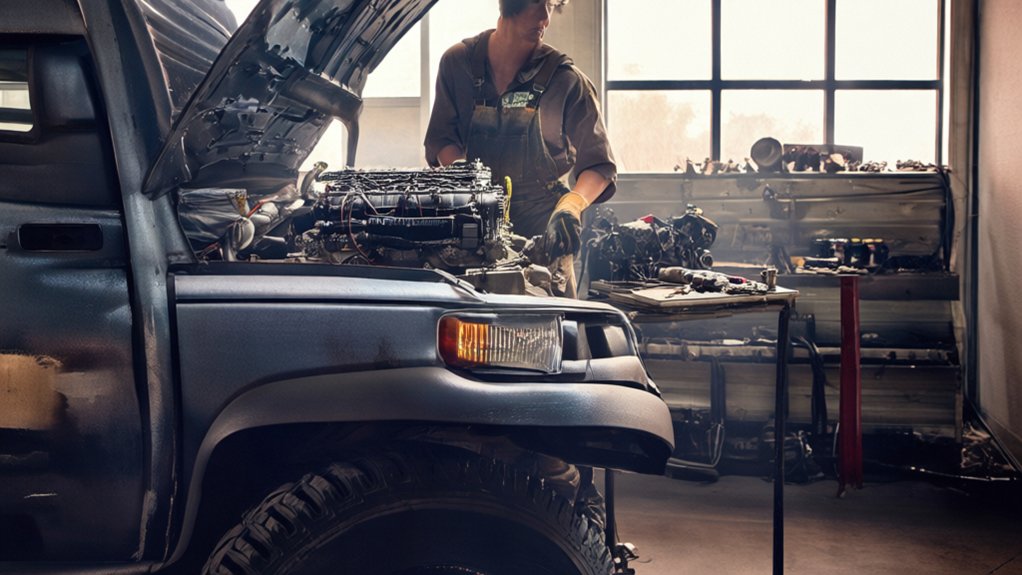
How Do You Put a Diesel Engine in a Jeep Wrangler?
To put a diesel engine in your Jeep Wrangler, start by carefully removing the gasoline engine and confirming the diesel fits your model with compatible mounts and drivetrain parts. You’ll need to upgrade fuel lines, electrical wiring, and install a diesel-friendly cooling system. Reprogram or replace the ECU for proper diesel function, then securely install the new engine. Fine-tune everything for reliable performance and efficiency. Following these steps sets you up for a powerful, durable swap—more details can help you perfect the process.
Key Takeaways
- Remove the existing gasoline engine by disconnecting all electrical, fuel, and cooling lines, then unbolt and lift it out safely.
- Verify diesel engine compatibility with your Wrangler’s mounts, transmission, and drivetrain, making necessary adapters or modifications.
- Upgrade fuel, exhaust, and cooling systems to accommodate diesel requirements, including high-pressure pumps, larger exhaust, and heavy-duty radiators.
- Modify the electrical system by installing glow plug relays, upgrading wiring harnesses, and reprogramming or replacing the ECU for diesel operation.
- Securely install the diesel engine, connect all systems, and perform ECU tuning to optimize performance, fuel efficiency, and drivability.
Reasons to Choose Diesel for Your Jeep Wrangler
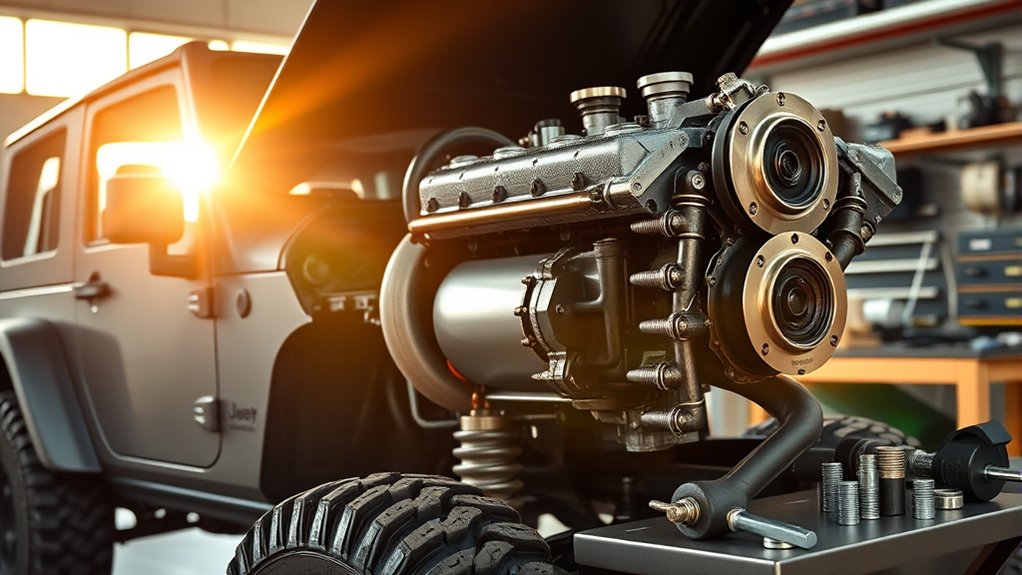
While gas engines have their perks, choosing a diesel for your Jeep Wrangler offers distinct advantages that can elevate your driving experience.
Diesel engines deliver more torque at lower RPMs, giving you better off-road capability and towing power. You’ll notice improved fuel efficiency, meaning fewer stops at the pump and longer adventures without worry.
Diesel engines boost torque at low RPMs for superior towing and enhanced fuel efficiency on every journey.
Diesel engines also tend to last longer due to their robust construction, saving you money over time. Plus, their fuel burns cooler, which often translates to less engine wear.
If you frequently tackle rugged terrain or haul heavy loads, diesel can handle the strain better.
Which Diesel Engines Fit a Jeep Wrangler Best?
When choosing a diesel engine for your Jeep Wrangler, you’ll want to focus on popular options that match your model’s compatibility.
Consider how each engine performs and how fuel-efficient it is for your driving needs.
Knowing these factors helps you pick the best fit for your Wrangler.
Popular Diesel Engine Options
Which diesel engine fits your Jeep Wrangler best depends on your goals and budget.
If you want a balance of power and reliability, the 3.0L EcoDiesel V6 from Ram trucks is a popular choice, offering impressive torque and fuel efficiency.
For more rugged off-road use, the Cummins 4BT 3.9L inline-4 is a classic swap option, known for its durability and simplicity.
Those seeking a budget-friendly, compact option often consider the Mercedes OM617 5-cylinder diesel, praised for its longevity.
Each engine has its own installation challenges, but these options stand out for Wrangler swaps.
Compatibility With Wrangler Models
Picking the right diesel engine for your Jeep Wrangler means also considering how well it fits your specific Wrangler model. Different Wrangler generations have varied engine bays, mounts, and electronics, so not every diesel engine will fit seamlessly.
For example, the JK models (2007-2018) often accommodate the 3.0L EcoDiesel with fewer modifications, while TJ and YJ models usually require more extensive adjustments.
The newer JL Wranglers (2018 and later) have advanced computer systems, so integrating a diesel engine demands compatible wiring and ECU tuning.
You’ll want to check engine mounts, transmission compatibility, and space constraints before committing. Doing this guarantees your diesel swap works reliably and avoids frustrating fitment issues down the line.
Performance and Fuel Efficiency
How do you balance power and fuel economy in a diesel engine swap for your Jeep Wrangler? Choosing the right diesel engine means weighing performance needs against fuel efficiency.
The 3.0L EcoDiesel from the Ram offers excellent torque and solid mileage, making it a popular choice. It delivers strong low-end power, perfect for off-roading, while maintaining decent highway fuel economy.
Alternatively, the Cummins 4BT—though less common—packs a punch in torque and is known for durability, but it may sacrifice some efficiency.
You’ll want to evaluate your driving style: if you prioritize towing and rugged terrain, lean toward higher torque options; for daily driving with better MPG, the EcoDiesel suits well.
Ultimately, matching engine specs to your Jeep’s use guarantees you get the best balance of power and economy.
Preparing Your Jeep Wrangler for a Diesel Engine Swap
Before you plunge into the engine swap, you’ll need to thoroughly prepare your Jeep Wrangler to guarantee a smooth installation. Start by draining all fluids—oil, coolant, and fuel—to avoid spills and contamination.
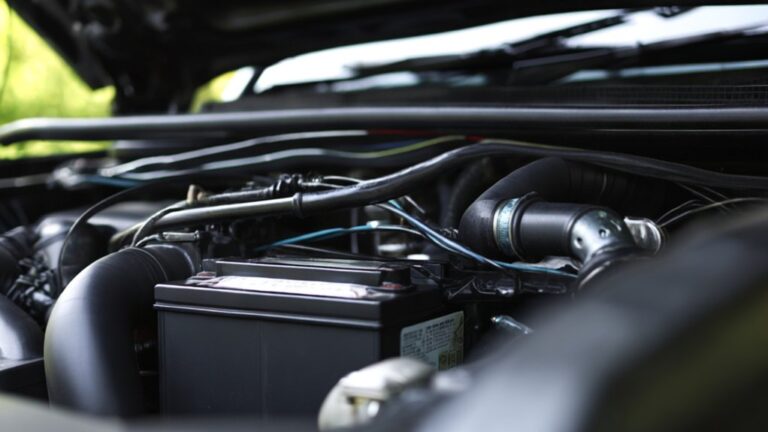
Next, disconnect the battery to assure safety while working on electrical components. Remove the existing gasoline engine carefully, labeling wires and hoses to keep track of connections.
Inspect the engine bay for rust or damage, repairing any issues to create a solid foundation. You’ll also want to clear space by removing unnecessary brackets or parts that won’t fit the diesel setup.
Finally, check your suspension and cooling system to confirm they can handle the diesel engine’s weight and heat output. Proper prep saves time and headaches later on.
Essential Tools and Parts for a Diesel Swap
With your Jeep prepped and the old engine out, it’s time to gather the right tools and parts to make the diesel swap successful. You’ll need a quality engine hoist to safely lift the diesel engine into place.
A full socket set, wrenches, and screwdrivers are essential for handling bolts and connectors. Don’t forget a torque wrench to guarantee proper tightening.
For parts, you’ll want a compatible diesel engine, a matching transmission, and an upgraded fuel system designed for diesel.
New engine mounts are necessary to fit the diesel engine’s size and weight. Also, pick up a diesel-specific cooling system, wiring harnesses, and a fuel pump.
Finally, have replacement gaskets and seals ready for a smooth installation. These tools and components keep your swap efficient and reliable.
Removing Your Jeep’s Gasoline Engine for a Diesel Swap
Start by carefully disconnecting all electrical components linked to your Jeep’s gasoline engine to avoid any damage.
Next, unbolt the engine mounts that secure the engine to the frame.
Once these steps are done, you’ll be ready to lift the old engine out for the diesel swap.
Disconnecting Electrical Components
Although disconnecting electrical components may seem intimidating, you’ll find it’s a straightforward process that’s essential for safely removing your Jeep’s gasoline engine.
Start by disconnecting the negative battery cable to prevent any electrical shorts.
Next, carefully unplug all engine wiring harness connectors, including sensors, fuel injectors, and ignition coils. Label each connection as you go to simplify reassembly later.
Don’t forget to disconnect the alternator wiring and throttle position sensor cables.
Be gentle with the connectors to avoid damaging pins or clips.
Also, remove the ground wires attached to the engine block.
Taking your time during this step helps prevent electrical issues when you install the diesel engine.
Once all electrical connections are safely detached, you’re ready to move on without risking damage or injury.
Removing Engine Mounts
Before you can lift out your Jeep’s gasoline engine, you’ll need to remove the engine mounts that secure it to the frame. Start by supporting the engine with a jack to prevent any sudden drops. Then, loosen and remove the bolts holding the mounts in place. Keep track of each mount’s position, as the diesel engine mounts may differ.
Here’s a quick reference to guide you:
| Mount Location | Bolt Size |
|---|---|
| Front Driver Side | 14mm |
| Rear Passenger Side | 17mm |
| Transmission Mount | 15mm |
After removing the mounts, double-check that all bolts are out before attempting to lift the engine. This step guarantees a smooth, safe removal and prepares you for installing the diesel engine.
Upgrading Your Jeep’s Transmission for Diesel Power
When you upgrade your Jeep Wrangler with a diesel engine, you’ll also need to reinforce the transmission to handle the increased torque and power. Diesel engines deliver more low-end torque, which can overwhelm a stock transmission, leading to premature wear or failure.
To guarantee reliability, focus on these key upgrades:
To ensure durability, prioritize essential transmission upgrades for handling increased diesel engine power.
- Heavy-duty clutch or torque converter – Choose components rated for higher torque to prevent slipping and damage.
- Upgraded transmission gears and shafts – Stronger internals help manage the increased stress from diesel’s power curve.
- Enhanced cooling system – Diesel engines generate more heat, so install a transmission cooler to maintain ideal operating temperatures.
Making these upgrades assures your transmission can handle the diesel engine’s demands, giving you a smoother, more durable driving experience.
Installing the Diesel Engine in Your Jeep Wrangler
Since the diesel engine is heavier and larger than the stock gasoline engine, you’ll need to carefully prepare your Jeep Wrangler’s engine bay for installation.
Begin by removing the old engine along with any components that won’t fit or connect properly with the diesel setup.
Inspect and reinforce engine mounts to handle the extra weight and torque.
Position the diesel engine with a hoist, aligning it carefully to avoid damaging surrounding parts.
Secure the engine mounts tightly, ensuring the engine sits level and stable.
Double-check all connections like motor mounts and linkages before moving on.
Taking your time during this phase prevents costly mistakes and guarantees the diesel engine fits snugly, setting the stage for a reliable, powerful upgrade.
Modifying Fuel, Exhaust, and Cooling Systems for Diesel
You’ll need to upgrade your fuel delivery system to handle diesel’s different requirements.
Improving exhaust flow is also essential to maximize engine performance and efficiency.
Finally, enhancing your cooling system helps prevent overheating under heavier diesel loads.
Upgrading Fuel Delivery
How do you guarantee your Jeep Wrangler’s new diesel engine runs smoothly and efficiently? Upgrading your fuel delivery system is essential. Diesel engines require precise fuel flow and pressure, so your stock gas fuel system won’t cut it. Focus on these three key upgrades:
- High-pressure fuel pump: Diesel engines need a pump that delivers consistent, high pressure to the injectors, ensuring proper atomization and combustion.
- Fuel lines and filters: Replace them with diesel-compatible components to handle higher pressures and prevent contamination.
- Fuel injectors: Upgrade to injectors designed for diesel to manage the different spray patterns and fuel volumes required.
Enhancing Exhaust Flow
Although upgrading your fuel delivery is essential, enhancing your Jeep Wrangler’s exhaust flow plays an equally important role in optimizing diesel engine performance. You’ll want to replace the stock exhaust system with a high-flow setup, reducing backpressure and improving exhaust scavenging. Upgrading to a larger diameter exhaust pipe and a free-flowing muffler boosts power and efficiency. Additionally, installing a turbo-back exhaust system can maximize the turbocharger’s potential, helping your diesel breathe better.
| Component | Purpose | Benefit |
|---|---|---|
| Larger Exhaust Pipe | Reduce backpressure | Improved power output |
| Free-flow Muffler | Enhance exhaust flow | Quieter, efficient exhaust |
| Turbo-back System | Optimize turbo function | Increased torque and boost |
| Exhaust Manifold | Direct gases efficiently | Enhanced turbo response |
Improving Cooling Efficiency
Why does cooling efficiency matter so much when installing a diesel engine in your Jeep Wrangler? Diesel engines generate more heat than gas engines, so keeping your engine cool is essential to avoid overheating and maintain performance.
You’ll need to upgrade the cooling system to handle this extra heat effectively.
Here are three key ways to improve cooling efficiency:
- Install a heavy-duty radiator: A high-capacity radiator helps dissipate heat faster.
- Upgrade to an electric fan: Electric fans provide better airflow and can be controlled for ideal cooling.
- Use high-quality coolant: Diesel engines require specific coolant formulations to protect against corrosion and improve heat transfer.
Reprogramming or Replacing Your Jeep’s ECU
Since the diesel engine operates differently from the original gasoline setup, you’ll need to reprogram or replace your Jeep’s ECU to guarantee compatibility. The ECU controls fuel delivery, timing, and emissions, all of which vary between diesel and gasoline engines.
Reprogram or replace your Jeep’s ECU to ensure diesel engine compatibility and optimal performance.
You can either get a standalone diesel ECU or have your existing ECU reflashed with diesel-specific software. Reflashing is often cheaper but may not unlock all diesel functions.
A standalone ECU gives you full control and better tuning options but requires proper installation and programming. Whichever route you choose, ensure the ECU supports your engine’s sensors and injection system.
Proper ECU management prevents drivability issues and protects your engine. Don’t skip this step—it’s crucial for a smooth, reliable diesel swap in your Jeep Wrangler.
Electrical Changes Needed for a Diesel Swap
When you swap in a diesel engine, you’ll need to update your Jeep’s electrical system to handle the new components and guarantee everything runs smoothly. Diesel engines rely on different sensors, fuel injectors, and glow plugs, all requiring proper wiring and control.
Focus on these key electrical changes:
- Wiring Harness Upgrade – Replace or modify your wiring harness to connect diesel-specific sensors and actuators accurately.
- Glow Plug Circuit Installation – Install a dedicated glow plug relay and timer to ensure the engine starts efficiently in cold conditions.
- Battery and Alternator Adjustment – Upgrade your battery and alternator if necessary, as diesel engines often demand more electrical power.
Tackling these changes carefully ensures your Jeep’s electrical system supports your new diesel engine without issues.
Testing and Troubleshooting Your Jeep Wrangler Diesel Setup
Although installing your diesel engine is a major milestone, you’ll need to thoroughly test and troubleshoot your Jeep Wrangler’s new setup to guarantee everything runs reliably.
Start by checking all fluid levels—oil, coolant, and diesel fuel—to avoid leaks or shortages. Next, crank the engine and listen for unusual noises; rough idling or knocking signals potential issues.
Monitor your gauges closely, especially oil pressure and temperature. Use a diagnostic scanner to read error codes from the ECU, helping pinpoint electrical or sensor problems.
Test the fuel system by verifying injector operation and fuel pressure. Pay attention to exhaust smoke color; excessive black or white smoke can indicate tuning or combustion problems.
If you encounter issues, systematically isolate and address each one before hitting the road.
Maximizing Performance and Reliability After Your Diesel Swap
To get the most out of your diesel swap, you’ll want to focus on both performance enhancements and ensuring long-term reliability. Start by upgrading your cooling system to handle the extra heat diesel engines generate.
Maximize your diesel swap by upgrading cooling to manage extra engine heat and boost reliability.
Next, install a high-quality fuel filtration system to protect your engine from contaminants and avoid premature wear.
Finally, invest in a performance tuner or programmer tailored for your diesel setup; this will maximize fuel delivery and boost power without sacrificing reliability.
- Upgrade cooling to prevent overheating and maintain efficiency.
- Use advanced fuel filters to safeguard the engine and fuel system.
- Tune the engine for maximum power and fuel economy post-swap.
These steps help you enjoy enhanced performance while keeping your Jeep dependable for miles ahead.
Frequently Asked Questions
What Is the Average Cost of a Diesel Engine Swap for a Jeep Wrangler?
You’re looking at an average cost between $7,000 and $15,000 for a diesel engine swap in your Jeep Wrangler, depending on parts, labor, and any additional modifications you’ll need to get everything running smoothly.
How Long Does a Diesel Engine Swap Usually Take?
Swapping a diesel engine usually takes about 20 to 40 hours, like weaving a complex tapestry. You’ll need patience, skill, and the right tools to transform your Jeep into a powerful diesel beast.
Are Diesel Engines More Fuel-Efficient Than Gasoline Engines in Jeep Wranglers?
Yes, diesel engines are generally more fuel-efficient than gasoline engines in Jeep Wranglers. You’ll get better mileage and torque, especially off-road, but expect a bit more noise and higher initial costs when you choose diesel.
Will a Diesel Engine Swap Affect My Jeep’s Warranty?
Swapping your Jeep’s engine is like rewriting its DNA; you’ll likely void the warranty since manufacturers rarely cover modified parts. You can still enjoy your ride, but be ready to handle repairs on your own.
Can I Still Off-Road Effectively With a Diesel Engine in My Jeep?
Yes, you can still off-road effectively with a diesel engine in your Jeep. Diesel engines offer better torque at low RPMs, improving crawling ability and fuel efficiency, which helps you tackle tough trails with confidence and power.
Conclusion
Swapping a diesel engine into your Jeep Wrangler might seem intimidating, but it’s totally doable with the right prep and tools. You might worry about complexity or cost, but choosing compatible engines and following each step carefully makes the process smoother than you’d expect. Plus, the fuel efficiency and torque gains are worth it. With patience and attention to detail, you’ll enjoy a tougher, more reliable Jeep ready for any adventure.