How to Pull an Airstream With a Jeep Wrangler
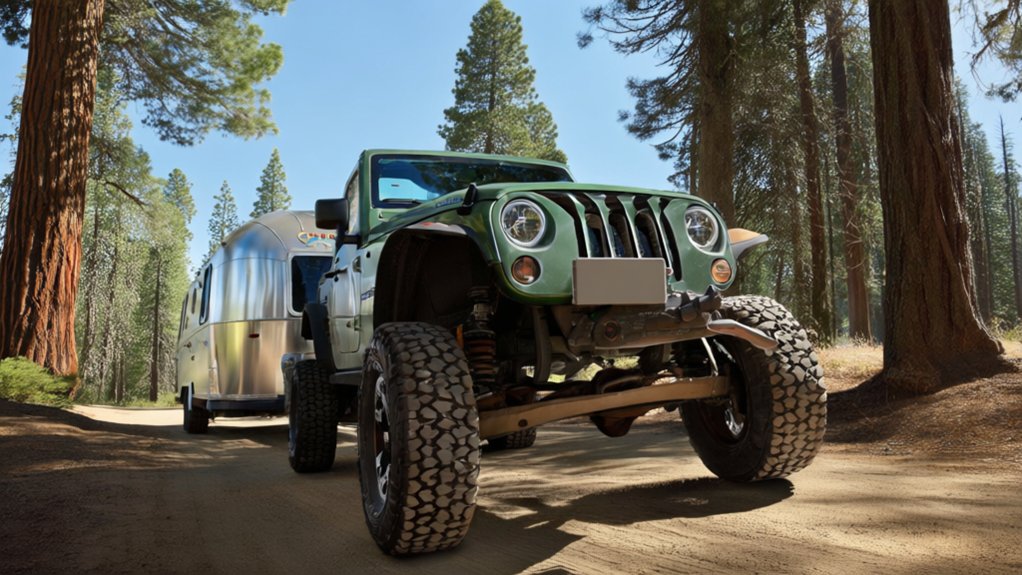
To pull an Airstream with your Jeep Wrangler, start by choosing a 4-door Unlimited model like the Rubicon or Sahara for better towing capacity and stability. Match your Airstream’s weight to your Jeep’s limits, and install a Class III or IV hitch with proper wiring and a brake controller. Upgrade your brakes and suspension for safer handling, balance your load, and plan routes carefully. Following these steps sets you up for a smooth trip, with helpful tips available to guide you further.
Key Takeaways
- Select a Jeep Wrangler Unlimited Rubicon or Sahara with at least 3,500 lbs towing capacity for safely pulling an Airstream trailer.
- Use a Class III or IV hitch rated for your trailer’s tongue weight and ensure it’s securely fastened to the Jeep.
- Install compatible wiring and a brake controller to synchronize trailer brakes with the Jeep’s braking system for safer stops.
- Evenly distribute the Airstream load, keeping tongue weight between 10-15% of trailer weight and securing all cargo tightly.
- Perform pre-tow checks on hitch security, safety chains, trailer lights, and tire pressure before every trip.
Best Jeep Wrangler Models for Towing an Airstream

When choosing a Jeep Wrangler to tow your Airstream, you’ll want a model that balances power and towing capacity without sacrificing off-road capability. The Jeep Wrangler Unlimited models, especially the Rubicon and Sahara trims, stand out for this purpose.
They offer robust engines like the 3.6L V6, providing enough grunt to handle heavier trailers. The four-door Unlimited versions also give you extra stability and weight distribution, which is vital when towing.
You’ll appreciate the advanced suspension systems and reinforced frames that maintain Jeep’s legendary off-road performance while towing.
Avoid the two-door variants if you want maximum towing ease, as they offer less stability.
Ultimately, picking a Wrangler Unlimited Rubicon or Sahara sets you up for a confident, capable towing experience with your Airstream.
Check Your Jeep’s Towing Capacity and Weight Limits
Before hooking up your Airstream, you need to know your Jeep Wrangler’s towing capacity and weight limits.
Confirm the trailer’s weight doesn’t exceed what your Jeep can safely handle, including passengers and gear.
Staying within these limits keeps you legal and ensures a safe trip.
Jeep Wrangler Towing Specs
Although Jeep Wranglers are known for their rugged off-road capabilities, you’ll need to know their specific towing limits to safely pull an Airstream. Each Wrangler model has different towing capacities based on engine type, transmission, and axle ratio. Exceeding these limits can put you and your trailer at risk.
Here’s a quick look at Jeep Wrangler towing specs to help you stay within safe limits:
| Wrangler Model | Max Towing Capacity | Recommended Trailer Weight |
|---|---|---|
| 2-Door Sport | 2,000 lbs | 1,500 lbs |
| 4-Door Sport | 3,500 lbs | 3,000 lbs |
| Rubicon | 3,500 lbs | 3,000 lbs |
| Sahara | 3,500 lbs | 3,000 lbs |
Airstream Weight Considerations
How much does your Airstream weigh, and does it fit within your Jeep Wrangler’s towing limits? Knowing this is essential before hitching up. Your Jeep’s towing capacity varies by model and year, so check your owner’s manual.
Remember, the weight you consider includes the Airstream’s dry weight plus any cargo, water, and passengers inside.
Keep these weight considerations in mind:
- Gross Vehicle Weight Rating (GVWR): Maximum weight of your Airstream fully loaded.
- Tongue Weight: The downward force your trailer exerts on the hitch.
- Jeep’s Maximum Towing Capacity: The highest weight your Wrangler can safely tow.
- Payload Capacity: Total weight your Jeep can carry including passengers and cargo.
Staying within these limits guarantees your Jeep performs safely and efficiently while towing.
Safety and Legal Limits
When you tow your Airstream with a Jeep Wrangler, you need to strictly follow safety and legal limits to protect yourself and others on the road. First, check your Jeep’s towing capacity in the owner’s manual—never exceed it. This includes the Gross Vehicle Weight Rating (GVWR) and the tongue weight limit.
Overloading your Jeep can cause brake failure, tire blowouts, and loss of control. Also, ensure your trailer’s weight doesn’t surpass your Jeep’s hitch rating. Stay aware of local laws regarding towing speed limits and trailer brake requirements.
Properly distribute the load inside the Airstream to maintain stability. By respecting these limits, you’ll tow safely, avoid fines, and keep your Jeep and Airstream in good condition for many adventures ahead.
Choose the Right Airstream Size for Your Jeep
What size Airstream can your Jeep Wrangler handle without straining? To avoid overloading your vehicle, you need to match your Airstream’s weight with your Jeep’s towing capacity. Start by checking your Jeep’s exact tow rating in the owner’s manual or manufacturer specs.
Then, consider these key factors:
- Gross Vehicle Weight Rating (GVWR): Don’t exceed this limit for safe towing.
- Tongue Weight: Keep it within 10-15% of the trailer’s total weight.
- Jeep Model and Engine: Different trims have varying towing capabilities.
- Additional Load: Factor in cargo, passengers, and gear inside both Jeep and trailer.
Choosing the right size ensures smooth handling, better fuel efficiency, and safer stops. Keep your setup balanced and within limits for the best towing experience.
Select the Best Hitch for Jeep Wrangler Towing
Where should you start when selecting the best hitch for your Jeep Wrangler towing setup? First, consider your Jeep’s towing capacity and the weight of your Airstream. You want a hitch that matches or exceeds this rating to ensure safety and performance.
A Class III or IV receiver hitch is usually ideal for towing an Airstream, offering the right balance of strength and compatibility. Look for a hitch specifically designed for Jeep Wranglers to guarantee a proper fit without modifications.
Also, pay attention to the hitch’s tongue weight rating—it needs to support the downward force your trailer applies. By choosing a quality hitch that fits your Jeep and trailer weight, you’ll create a secure connection, making your towing experience smoother and safer.
How to Install Trailer Wiring and Brake Controllers
You’ll need the right wiring harness to connect your Jeep Wrangler to the Airstream’s electrical system.
Installing a brake controller is essential for safe stopping, so make sure it’s properly mounted and wired.
Finally, test all electrical connections to confirm your setup works smoothly before hitting the road.
Wiring Harness Selection
Before hooking up your Airstream, selecting the right wiring harness guarantees your Jeep Wrangler’s electrical system communicates seamlessly with the trailer. Choosing the wrong harness can lead to faulty lights or brakes, risking safety and legality.
Focus on these key points:
- Verify compatibility with your Jeep’s model year and trim.
- Opt for a harness with a dedicated power wire for trailer brakes.
- Ensure the connector matches your Airstream’s trailer plug (usually 4- or 7-pin).
- Choose a plug-and-play harness for easier installation and fewer modifications.
A high-quality wiring harness prevents electrical issues and streamlines your setup. By investing time in selecting the correct harness, you avoid troubleshooting later and ensure your Airstream’s lighting and signals always function properly on the road.
Brake Controller Installation
Because proper brake control is essential for safe towing, installing a brake controller in your Jeep Wrangler guarantees your Airstream’s trailer brakes respond effectively.
Start by locating the brake controller port under the dash or use a wiring harness kit designed for your Wrangler model. Connect the controller’s wiring to the vehicle’s brake light switch, power source, ground, and trailer output.
Secure the controller within easy reach, typically near the steering column, so you can adjust settings on the fly. Use zip ties or clamps to keep wiring neat and prevent interference with pedals or steering.
Finally, double-check all connections are tight and insulated to avoid shorts or disconnections. With the controller installed correctly, you’ll enhance towing safety and maintain better control over your Airstream on the road.
Electrical Connection Testing
Once you’ve installed the brake controller and trailer wiring, it’s crucial to test all electrical connections to guarantee everything functions properly.
Start by connecting your Jeep Wrangler to the Airstream’s trailer plug. Then, check each electrical function individually to ensure safety and compliance.
- Use a multimeter or trailer light tester to verify power at each pin.
- Test brake lights by applying the brake pedal and observing trailer lights.
- Activate turn signals and hazard lights, confirming the trailer mirrors your Wrangler’s signals.
- Check the brake controller’s response by gently applying the brakes and feeling for proper engagement.
Balance Your Airstream Load for Safe Towing
Even if your Jeep Wrangler is built for rugged adventures, an unbalanced Airstream load can make towing unstable and unsafe. You need to distribute weight evenly, placing about 60% of it over the trailer’s front half.
Keep heavy items low and centered, avoiding placing too much weight on either side. Secure all cargo to prevent shifting while on the road, which can affect handling.
Also, make sure your tongue weight is between 10-15% of the total trailer weight; too little or too much can cause sway or reduced control.
Before hitting the road, double-check your load balance by visually inspecting and, if possible, using a scale to measure tongue weight.
Proper load balance helps guarantee a smooth, safe towing experience with your Jeep Wrangler.
Proper Hitching Techniques to Connect Jeep and Airstream
You’ll want to start by choosing the right hitch that matches your Jeep Wrangler and Airstream’s weight.
Next, make sure the hitch is securely fastened to prevent any movement while driving.
Don’t forget to connect and properly secure the safety chains for an extra layer of protection.
Selecting The Right Hitch
How do you guarantee a safe and secure connection between your Jeep Wrangler and Airstream? Choosing the right hitch is crucial. You want a system that matches your tow vehicle and trailer’s weight and design.
Start by considering these key points:
- Ensure the hitch’s weight rating meets or exceeds your Airstream’s loaded trailer weight.
- Opt for a Class III or IV hitch receiver, which suits most Jeep Wranglers and Airstreams.
- Select a ball mount with the correct ball size, typically 2 inches for Airstream trailers.
- Look for adjustable drop or rise options to keep the trailer level when hitched.
Securing Safety Chains
After selecting the right hitch, securing safety chains is the next step to guarantee your Jeep Wrangler and Airstream stay connected during your journey.
Cross the chains beneath the trailer tongue, forming an “X” shape. This configuration catches the tongue if it detaches, preventing it from hitting the ground.
Attach each chain to the Jeep’s designated safety chain loops, never to the hitch ball or any other parts. Make sure the chains have enough slack for turning but aren’t dragging on the ground, which could cause wear or breakage.
Double-check all connections before hitting the road, ensuring hooks are properly latched and chains aren’t twisted.
Properly secured safety chains provide a critical backup, enhancing your towing safety every mile you travel.
Pre-Tow Safety Checks for Every Trip
Before hitting the road, conduct a thorough pre-tow safety check to guarantee your Jeep Wrangler and Airstream are ready for the journey. Start by inspecting the hitch connection to ensure it’s secure and locked.
Check that the safety chains are properly crossed and attached.
Test all trailer lights—brake, turn signals, and running lights—to confirm they’re functioning correctly.
Finally, verify tire pressure and condition on both the Jeep and Airstream to avoid blowouts or uneven wear during the trip.
These steps will keep you safe and help prevent roadside issues.
- Secure hitch lock and connection
- Properly crossed and attached safety chains
- Fully operational trailer lighting system
- Correct tire pressure and good tire condition
Driving Techniques for Towing an Airstream With Your Jeep
While towing an Airstream with your Jeep Wrangler, you’ll need to adjust your driving habits to maintain control and guarantee safety. Drive slower than usual, allow extra stopping distance, and make wider turns. Avoid sudden maneuvers to prevent sway. Use lower gears when descending to control speed without overheating brakes. Always check mirrors frequently to monitor the trailer.
| Situation | Driving Tip |
|---|---|
| Starting | Accelerate gently to avoid jerk |
| Turning | Take wider turns to clear tires |
| Stopping | Brake early and smoothly |
| Reversing | Use a spotter or mirrors carefully |
| Highway driving | Maintain steady speed, increase following distance |
Handle Common Road Challenges Like Hills and Wind When Towing
When towing your Airstream, you’ll face challenges like steep hills and strong crosswinds that demand careful control.
You’ll need to adjust your speed and use lower gears to manage inclines safely.
Staying alert and steering steadily will help you navigate windy conditions without losing stability.
Managing Steep Inclines
How do you maintain control and safety while towing your Airstream up steep inclines? First, you need to approach the hill with enough momentum but without speeding. Shift to a lower gear to keep your Jeep’s engine power steady and prevent overheating. Here’s what to focus on:
- Maintain a consistent speed; avoid sudden acceleration or braking.
- Use engine braking by downshifting instead of riding your brakes.
- Keep a safe distance from vehicles ahead to allow for smooth adjustments.
- Watch your temperature gauges closely to avoid strain on your engine and transmission.
Navigating Strong Crosswinds
Although strong crosswinds can catch you off guard, you can stay in control by anticipating their impact on your Jeep and Airstream.
Crosswinds push against your trailer, which can cause swaying or pull your vehicle off course. To counter this, reduce your speed and grip the steering wheel firmly but smoothly. Avoid sudden movements, as these can worsen sway.
Keep both hands on the wheel and steer gently into the wind to maintain stability. If the wind intensifies, look for a safe place to pull over and wait it out.
Maintain Your Jeep and Airstream for Long-Term Reliability
To keep your Jeep Wrangler and Airstream running smoothly over time, you’ll need to stay on top of regular maintenance tasks. Consistent care prevents breakdowns and ensures safety on the road. Focus on these key areas:
Regular maintenance is essential to keep your Jeep Wrangler and Airstream safe and running smoothly.
- Check tire pressure and tread on both vehicles to avoid blowouts and improve fuel efficiency.
- Inspect hitch connections frequently to ensure they’re secure and free from rust or damage.
- Change engine oil and filters on your Jeep per manufacturer recommendations to keep the engine healthy under towing stress.
- Examine Airstream’s brakes and suspension for wear, addressing any issues promptly to maintain smooth handling.
Upgrade Your Jeep’s Suspension and Brakes for Smoother Towing
When you’re towing an Airstream with your Jeep Wrangler, upgrading the suspension and brakes becomes essential for a smoother and safer ride. Stock suspension may sag under the trailer’s weight, causing instability and uneven tire wear. Consider installing heavy-duty springs or add-a-leaf kits to improve load support and reduce body roll.
Upgraded shocks designed for towing will enhance control on rough roads. On the braking side, your Jeep’s standard brakes might struggle to stop the combined weight effectively. Upgrading to larger rotors, performance brake pads, or even a brake controller-compatible system helps maintain stopping power and reduces brake fade.
These upgrades not only improve handling but also increase your confidence behind the wheel, ensuring a safer towing experience every trip.
Tech and Accessories to Boost Towing Safety
Since towing an Airstream involves extra weight and length, adding the right tech and accessories can considerably boost your safety on the road. You want to stay in control and aware at all times, so consider these essential tools:
- Trailer brake controller: Synchronizes your Jeep’s brakes with the Airstream’s, reducing stopping distance.
- Extended side mirrors: Improve your rear visibility, helping you monitor the trailer and traffic.
- Backup camera system: Makes hitching easier and enhances safety when reversing.
- Tire pressure monitoring system (TPMS): Alerts you to potential tire issues on both your Jeep and trailer, preventing blowouts.
These additions help you maintain stability, avoid accidents, and respond quickly to road conditions, making your towing experience safer and less stressful.
When to Get Professional Help or Vehicle Modifications
Adding tech and accessories can definitely improve your towing safety, but sometimes your Jeep Wrangler might need more than just gadgets to handle an Airstream properly.
If you notice your Wrangler struggling with the weight or stability of the trailer, it’s time to think about professional help or vehicle modifications. Upgrading your suspension, brakes, or installing a weight-distributing hitch can make a significant difference.
A professional can also ensure your Wrangler’s cooling system is up to the task, preventing overheating on long hauls.
Don’t hesitate to consult a towing specialist if you experience excessive sway or reduced control; they’ll assess whether your Jeep needs enhancements or adjustments for safer towing.
Prioritizing these upgrades ensures your Airstream and Wrangler work together smoothly and securely.
Plan Routes and Campsites for Jeep Wrangler Towing Trips
Before hitting the road with your Jeep Wrangler and Airstream in tow, you’ll want to carefully plan your routes and campsites to guarantee a smooth journey. Focus on roads that accommodate towing, avoiding steep grades and tight turns whenever possible.
Choose campsites with ample space for maneuvering and secure hookups. Also, check for any towing restrictions or permits required along your route.
Finally, plan for rest stops that allow you to safely inspect your setup and adjust if needed.
- Pick routes with lower traffic and wider lanes
- Confirm campsite dimensions and accessibility
- Research towing laws and permit requirements
- Schedule regular stops to check hitch and tires
This preparation helps you enjoy a safer, stress-free towing experience.
Frequently Asked Questions
Can I Tow an Airstream With a Jeep Wrangler Manual Transmission?
Yes, you can tow an Airstream with a Jeep Wrangler manual transmission, but make sure your Wrangler’s towing capacity matches the trailer’s weight. Use proper gear shifts and brakes to maintain control and safety on the road.
How Does Towing Affect My Jeep Wrangler’s Fuel Efficiency?
Towing’s like dragging an anchor through water; it’ll definitely drop your Jeep Wrangler’s fuel efficiency. You’ll see more frequent stops at the pump since your engine works harder hauling extra weight and fighting increased wind resistance.
What Insurance Considerations Are There for Towing an Airstream?
You’ll need to check if your policy covers towing, including liability and all-encompassing coverage for both vehicles. Consider adding a trailer endorsement or separate insurance for the Airstream to protect against damage or accidents while towing.
Can I Tow an Airstream in Extreme Weather Conditions Safely?
Towing in extreme weather is like dancing with a storm—you can, but you must stay sharp. You’ll want to check your brakes, slow down, secure your load, and avoid sudden moves to keep safe on wild roads.
Are There Specific Jeep Wrangler Maintenance Schedules When Towing Regularly?
Yes, you should follow a more frequent maintenance schedule when towing regularly with your Jeep Wrangler. Check the transmission, brakes, tires, and cooling system often to prevent wear and guarantee safe towing performance.
Conclusion
You might worry your Jeep Wrangler can’t handle towing an Airstream, but with the right model, hitch, and upgrades, you’ll be set for smooth adventures. Just check your Wrangler’s towing capacity and pick an Airstream that fits. Installing proper wiring and brake controllers guarantees safety, and planning your routes makes the trip stress-free. With these steps, you’ll confidently enjoy hitting the road, making memories without worrying about your Jeep’s limits.