A Step-by-Step Guide to Jeep Gladiator Pulling a Camper
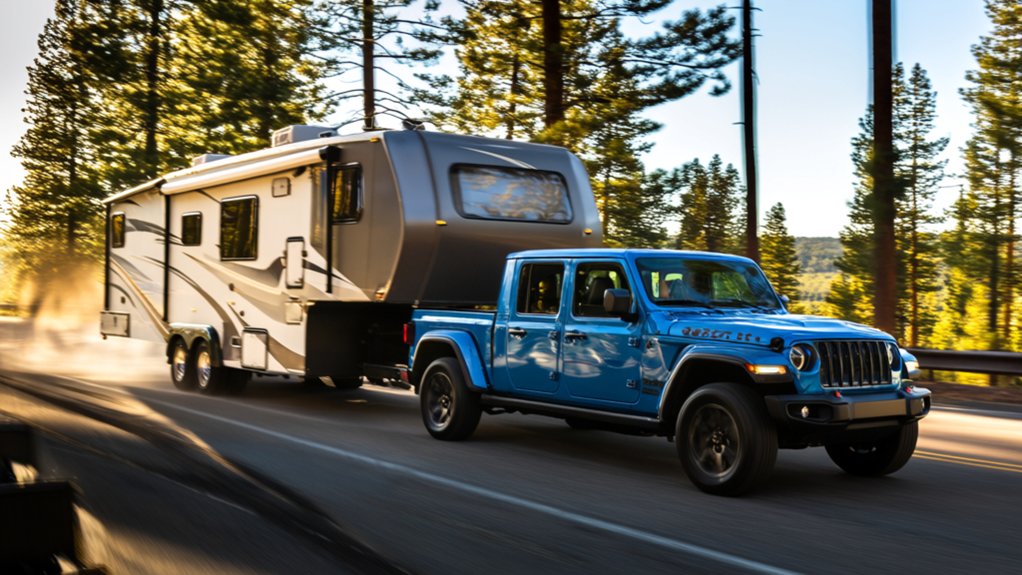
To tow a camper with your Jeep Gladiator, first confirm your model’s towing capacity and pick a camper that matches its limits. Use the right hitch and gear, inspect your vehicle and camper for safety, and properly load and secure your gear. Drive smoothly with adjusted techniques, plan your route carefully, and watch for weather changes. After your trip, inspect everything to keep your setup safe. Follow these steps, and you’ll be ready for confident, hassle-free towing adventures ahead.
Know Your Jeep Gladiator’s Towing Capacity

Before hooking up your camper, you need to know your Jeep Gladiator’s towing capacity. This number tells you the maximum weight your vehicle can safely tow, ensuring you don’t overload it.
For most Gladiator models, towing capacity ranges between 7,650 and 7,700 pounds, but you should check your specific year and trim. You can find this info in your owner’s manual or on the manufacturer’s website.
Remember, towing beyond this limit risks damage to your engine, transmission, and brakes, and it compromises safety.
Also, keep in mind that payload, passengers, and gear add weight, reducing your available towing capacity.
Knowing your Gladiator’s limits helps you tow confidently and avoid costly mistakes on the road.
Choose the Right Camper for Your Gladiator’s Limits
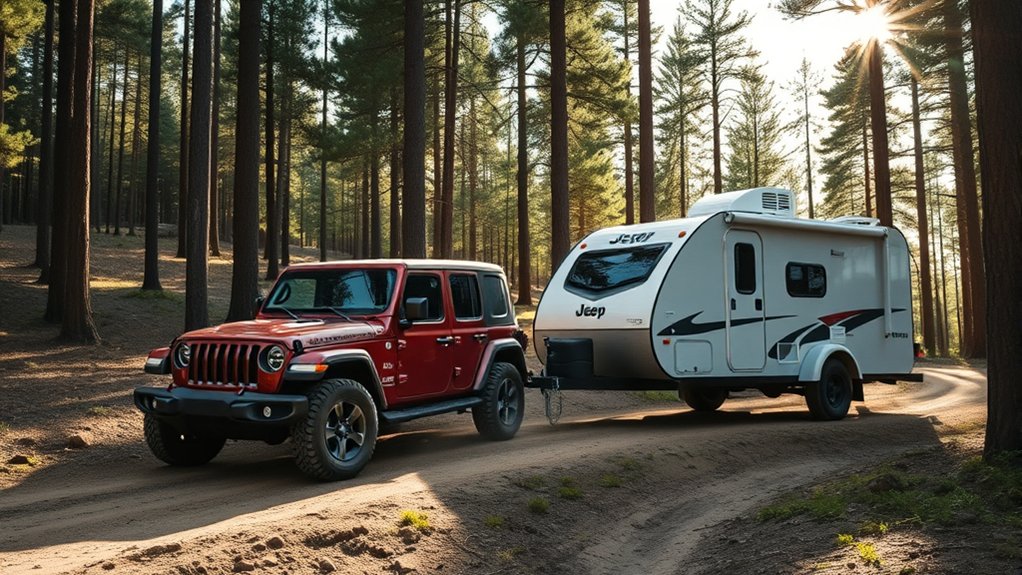
You’ll want to pick a camper that fits within your Gladiator’s towing capacity to stay safe on the road.
Pay close attention to the camper’s weight and size to avoid overloading your vehicle.
Matching these limits guarantees a smooth and controlled towing experience every time.
Towing Capacity Considerations
Although the Jeep Gladiator boasts impressive towing capabilities, it’s crucial to match your camper’s weight to its limits to guarantee safe and efficient hauling. Start by checking your Gladiator’s maximum towing capacity, which varies by model and configuration.
Don’t forget to factor in the Gross Vehicle Weight Rating (GVWR) and the Gross Combined Weight Rating (GCWR). Exceeding these limits can strain your vehicle’s engine, brakes, and suspension, risking safety and causing damage.
Also, consider the tongue weight—the downward force your camper exerts on the hitch—to maintain stability. Using a weight distribution hitch can help manage this load.
Staying within these towing capacity guidelines ensures your Gladiator handles the camper confidently, providing a safer, smoother ride on every adventure.
Camper Weight and Size
How do you pick a camper that fits your Jeep Gladiator’s towing abilities? Start by checking your Gladiator’s maximum towing capacity, usually around 7,650 pounds. You’ll want a camper whose weight, including cargo and fluids, stays well within that limit to guarantee safety and performance.
Consider both the camper’s dry weight and its fully loaded weight—don’t overlook essentials like water, propane, and gear. Size matters too; a compact camper improves maneuverability and reduces strain on your vehicle.
Opt for lightweight models, such as teardrop or pop-up campers, if you plan on off-road adventures. Staying within your Gladiator’s limits helps maintain control, fuel efficiency, and reduces wear on the drivetrain.
Always prioritize a balance between comfort and capability for your trips.
Pick the Right Hitch and Towing Gear for Your Gladiator
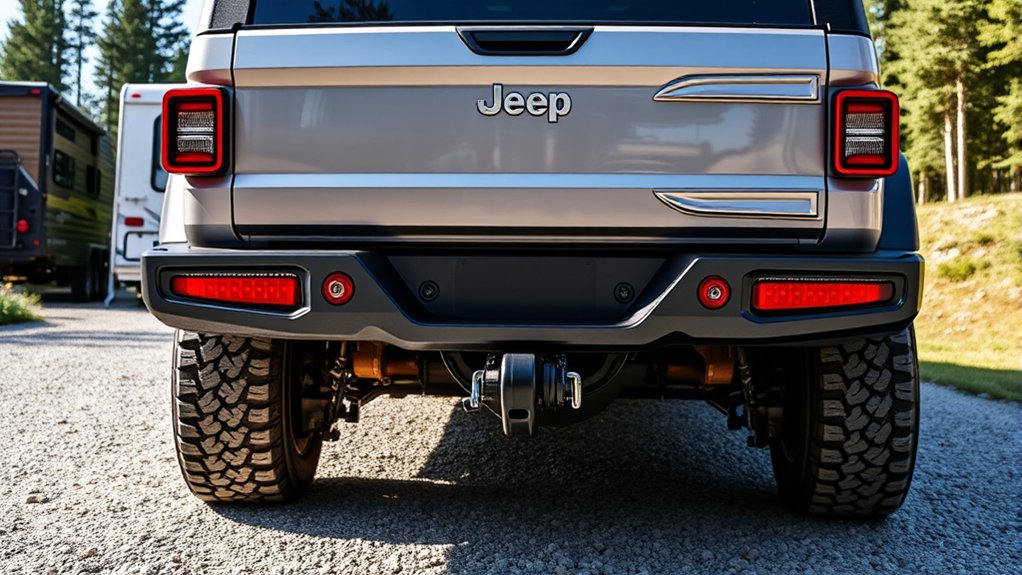
When preparing your Jeep Gladiator to tow a camper, selecting the right hitch and towing gear is essential for safety and performance. The proper equipment guarantees a secure connection and smooth towing experience.
Focus on these four key items:
- Hitch Class: Choose a Class III or IV hitch to handle the camper’s weight.
- Ball Mount: Match the ball size to your camper’s coupler (commonly 2 inches).
- Weight Distribution System: Use weight distribution bars if your camper’s tongue weight exceeds 10-15% of its total weight.
- Safety Chains and Wiring Harness: Ensure chains are crossed and wiring harness is compatible with your Gladiator’s lighting system.
Picking the right gear prevents accidents and protects both your vehicle and camper during your adventures.
Prepare Your Jeep Gladiator for Safe Towing
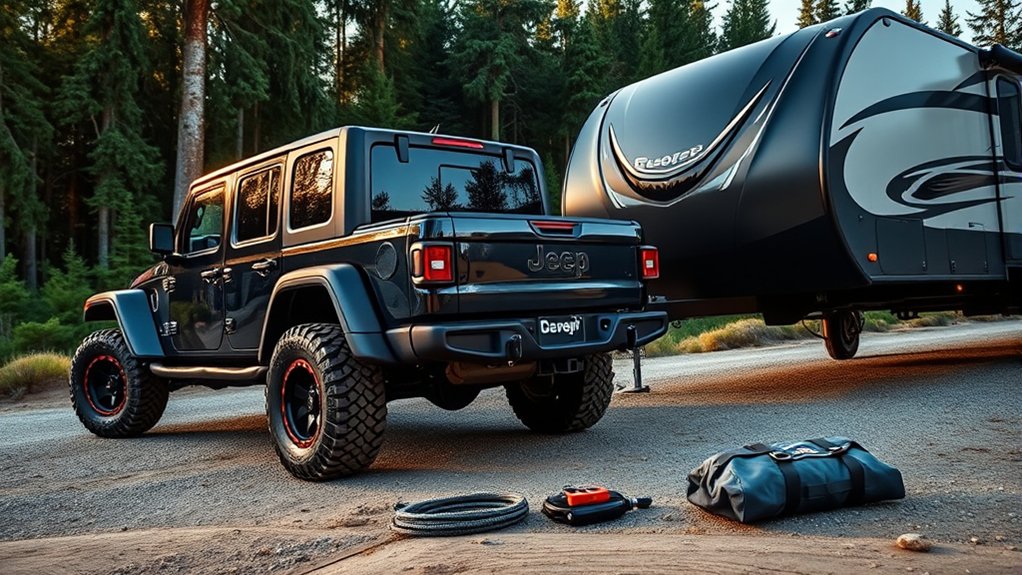
Before hooking up your camper, you’ll want to make certain your Jeep Gladiator is properly prepared for towing. Start by checking the vehicle’s towing capacity in your owner’s manual to confirm it can handle your camper’s weight.
Inspect the hitch, wiring harness, and brake controller; everything should be securely connected and functioning.
Verify tire pressure and condition, as underinflated or worn tires affect stability.
Don’t forget to top off fluids—especially engine oil and coolant—to keep your Gladiator running smoothly under load.
Test your brakes and signals to guarantee safety on the road.
Finally, adjust your mirrors for better visibility.
Taking these steps will help you tow confidently and safely, reducing risks and protecting both your Jeep and camper.
Load and Distribute Weight Properly for Towing
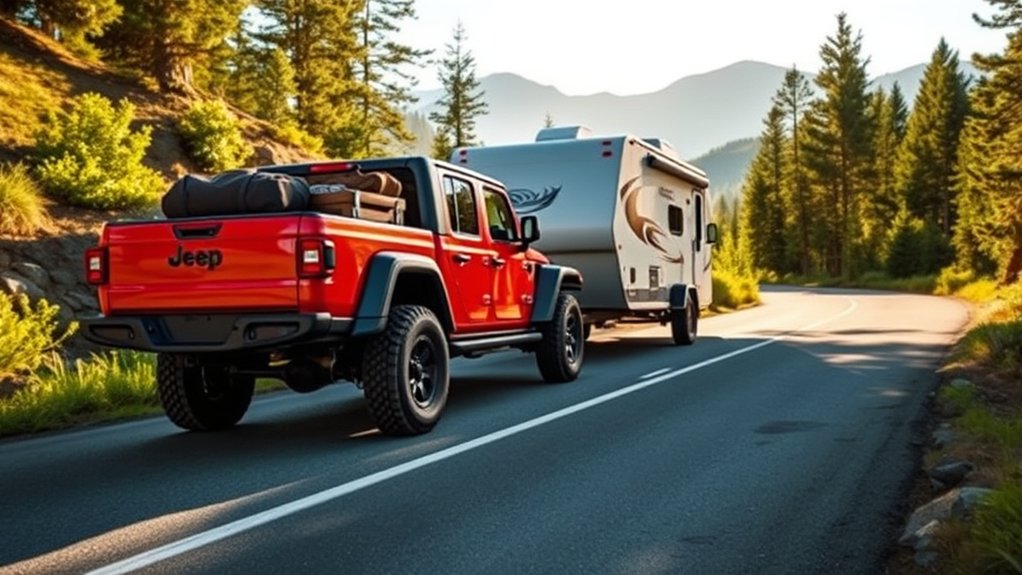
To tow safely with your Jeep Gladiator, you need to focus on keeping the camper’s center of gravity low and balanced.
Make sure the weight is spread evenly from side to side to avoid sway and improve handling. Proper loading helps you maintain control and protects both your vehicle and the camper.
Center of Gravity
Although towing a camper might seem straightforward, you’ll need to pay close attention to the center of gravity to guarantee safe handling. A high or uneven center of gravity can cause instability, swaying, or even tipping during your drive.
To keep your Jeep Gladiator steady, focus on how weight sits vertically and horizontally within the camper.
Follow these steps to manage the center of gravity effectively:
- Position heavy items as low as possible to lower the center of gravity.
- Secure loads tightly to prevent shifting while driving.
- Avoid placing too much weight toward the rear or top of the camper.
- Regularly check and adjust your load before hitting the road.
Proper center of gravity management ensures safer, smoother towing every time.
Even Weight Distribution
When you tow a camper with your Jeep Gladiator, distributing the weight evenly is crucial for maintaining control and preventing excessive strain on your vehicle. You want to load heavier items low and centered over the axle, avoiding too much weight at the front or rear. This balance improves stability, reduces sway, and enhances braking. Use the table below to check your load distribution for safer towing:
| Area | Weight Placement | Tips |
|---|---|---|
| Front of camper | Light to moderate weight | Avoid overloading to prevent nose dive |
| Center (axle) | Heaviest items | Keep center of gravity low and balanced |
| Rear of camper | Light weight only | Prevent trailer sway and fishtailing |
| Inside camper | Evenly spaced | Distribute gear and supplies evenly |
| Roof rack | Minimal weight | Avoid raising center of gravity |
Connect Your Camper to Your Jeep Gladiator Safely
Before you start towing, make certain your Jeep Gladiator and camper are properly aligned and securely connected. This step ensures stability and safety during your trip. Follow these key actions:
- Lower the camper hitch onto the Gladiator’s ball mount, making sure it seats fully.
- Lock the coupler latch and insert a safety pin to prevent accidental detachment.
- Attach safety chains in a crisscross pattern beneath the hitch for backup security.
- Connect the electrical wiring harness to enable brake lights, turn signals, and running lights.
Double-check each connection before moving. Properly linking your camper to the Gladiator not only protects your gear but also keeps you and other drivers safe on the road.
This foundation sets you up for a smooth towing experience.
Test Lights, Brakes, and Safety Features Before You Go
Since safety is your top priority, test all lights, brakes, and safety features on your Jeep Gladiator and camper before hitting the road. Check every signal and brake light to guarantee they sync and function correctly. Test the camper’s electric brakes and confirm your Jeep’s brake controller is responsive. Don’t forget to inspect safety chains, hitch locks, and tire pressure. Here’s a quick checklist to guide you:
| Component | What to Check | Action if Faulty |
|---|---|---|
| Tail/Brake Lights | All lights illuminate timely | Replace bulbs or wiring |
| Electric Brakes | Responsive brake controller | Adjust or repair controller |
| Safety Chains | Secure and undamaged | Reattach or replace chains |
| Tire Pressure | Within recommended PSI | Inflate or deflate tires |
This ensures your towing setup is safe and reliable for your trip.
Master Driving Techniques for Towing With Your Gladiator
Although towing a camper may seem intimidating at first, mastering the right driving techniques with your Jeep Gladiator will make the experience much smoother and safer. You’ll want to focus on control, awareness, and patience behind the wheel.
Here are four key driving techniques to keep in mind:
- Accelerate and brake gradually to avoid jerking and maintain stability.
- Increase your following distance to give yourself extra stopping time.
- Make wider turns to accommodate the camper’s length and avoid clipping curbs.
- Use lower gears on hills to maintain power without overworking your engine or brakes.
Plan Your Route and Watch Road Conditions
Before you hit the road, pick a route that suits your Jeep Gladiator and camper’s size and weight.
Keep an eye on weather updates to avoid unexpected hazards like storms or strong winds.
Staying informed helps you adjust your plans and stay safe throughout your trip.
Route Selection Tips
When planning your route for towing a camper with your Jeep Gladiator, you’ll want to prioritize roads that accommodate your vehicle’s size and weight. Avoid narrow, winding roads or routes with steep grades that could challenge your towing ability. Instead, focus on well-maintained highways and main roads.
Here are four key tips for route selection:
- Check for low bridges and overpasses to ensure clearance for your camper.
- Avoid roads with weight restrictions that your combined vehicle might exceed.
- Plan for frequent stops on longer routes to rest and inspect your rig.
- Use GPS or apps designed for RVs and towing vehicles to find the safest, most suitable roads.
Monitor Weather Updates
How often do you check the weather before hitting the road with your Jeep Gladiator and camper? Staying updated on weather conditions is critical for a safe trip. Use reliable apps or websites to monitor forecasts along your route, paying close attention to sudden changes or severe weather alerts.
Rain, wind, or snow can affect your vehicle’s handling and camper stability, so adjust your driving accordingly. Don’t forget to check conditions not just at your starting point, but also at your destination and any stops along the way.
If forecasts predict dangerous weather, consider delaying your trip or choosing an alternate route. By staying proactive and informed, you’ll ensure a smoother, safer journey while towing your camper.
Check Your Jeep and Camper After Your Trip
Although the trip is over, you shouldn’t overlook inspecting your Jeep Gladiator and camper right away. This step makes sure everything remains in good condition and ready for your next adventure.
Start by carefully examining both vehicles to catch any damage or wear caused during the trip.
Here’s what to focus on:
- Check the tires for cuts, punctures, or uneven wear.
- Inspect the hitch and towing connections for looseness or damage.
- Look for leaks or fluid drips under your Jeep and camper.
- Assess the camper’s interior for any signs of water damage or structural issues.
Taking these actions helps you maintain safety, avoid costly repairs, and prolong the lifespan of your gear.
Frequently Asked Questions
How Often Should I Perform Maintenance on My Jeep Gladiator’s Towing Equipment?
You should check and maintain your Jeep Gladiator’s towing equipment before every trip and perform a thorough inspection every six months. This keeps everything safe, reliable, and ready for towing whenever you hit the road.
Can I Install a Winch on My Jeep Gladiator for Camper Recovery?
Yes, you can install a winch on your Jeep Gladiator for camper recovery. Just make certain to choose a compatible winch, follow installation instructions carefully, and verify your vehicle’s electrical system can handle the added load.
What Are the Best Tire Options for Towing With a Jeep Gladiator?
You’ll want all-terrain or highway-terrain tires with strong sidewalls for towing. Brands like BF Goodrich and Goodyear offer durable options that handle weight well while providing traction and comfort during long hauls with your Jeep Gladiator.
How Does Weather Affect Towing Performance With the Jeep Gladiator?
Weather affects your towing by reducing traction in rain, snow, or ice, making handling tricky. Wind can push your Jeep off course, so you’ll want to slow down and stay extra cautious to maintain control.
Are There Specific Insurance Requirements for Towing a Camper With My Jeep Gladiator?
Yes, you’ll need insurance covering both your Jeep Gladiator and the camper. Check if your policy includes towing liability and all-encompassing coverage. Some states require additional endorsements, so confirm local regulations and update your policy accordingly.
Conclusion
Towing with your Jeep Gladiator is all about preparation and care. Did you know the Gladiator can tow up to 7,650 pounds when properly equipped? That’s like hauling nearly three average-sized cars! By knowing your limits, choosing the right gear, and mastering safe driving techniques, you’ll enjoy a smooth trip with your camper. Always check your setup before and after travel to keep both your Jeep and camper in top shape. Safe travels!