7 Essential Tips to Drive a Jeep Wrangler in Snow
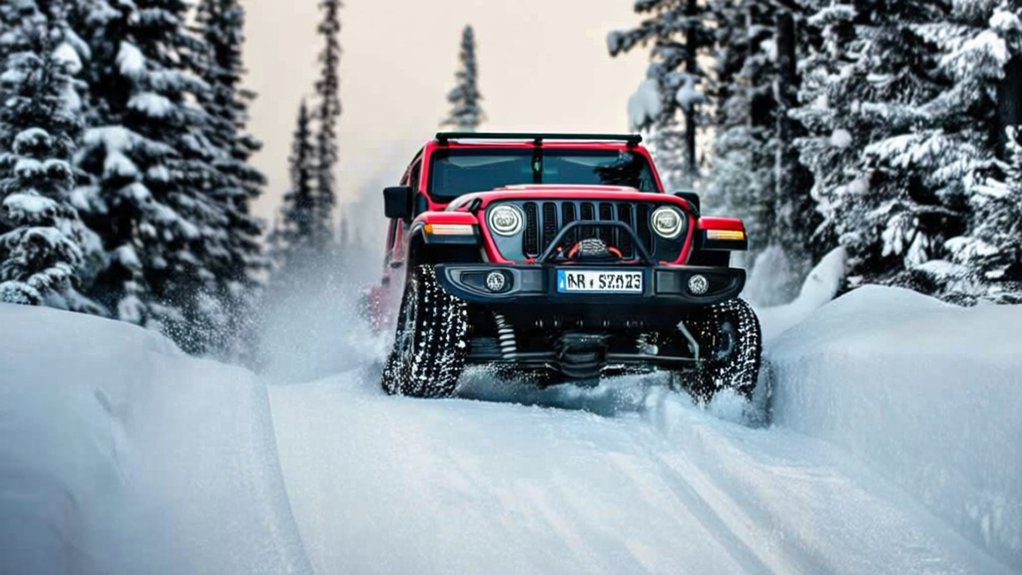
To drive your Jeep Wrangler safely in snow, start by prepping your vehicle—check the battery, fluids, brakes, and keep your gas tank half full. Use winter tires with good tread and choose 4WD modes wisely: 4H for light snow and 4L for deep snow or hills. Drive gently—ease off the accelerator, make slow turns, and increase following distances. Keep lights clear and pack emergency gear. Stick with these basics, and you’ll be ready for whatever winter throws your way.
Prepare Your Jeep Wrangler for Winter Driving
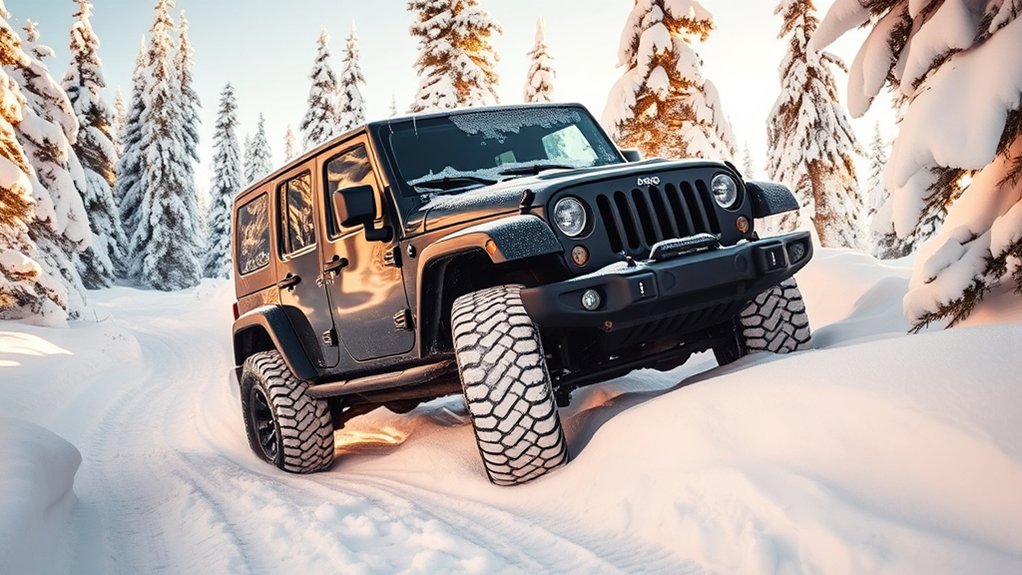
Before you hit the snowy trails, make sure your Jeep Wrangler is ready for winter conditions. Start by checking the battery; cold weather drains power quickly, so verify it’s fully charged and in good shape.
Top off all fluids, especially antifreeze and windshield washer fluid, to avoid freezing. Inspect your wipers and replace them if they’re worn to maintain clear visibility.
Don’t forget to examine your brakes—they’re essential on slippery surfaces. Keep your gas tank at least half full to prevent fuel line freeze-up.
Pack an emergency kit with essentials like a shovel, warm blankets, and extra gloves.
Finally, test your 4WD system to confirm it engages smoothly, so you’re ready for any snowy challenge ahead.
Choose the Right Tires for Your Jeep Wrangler in Snow
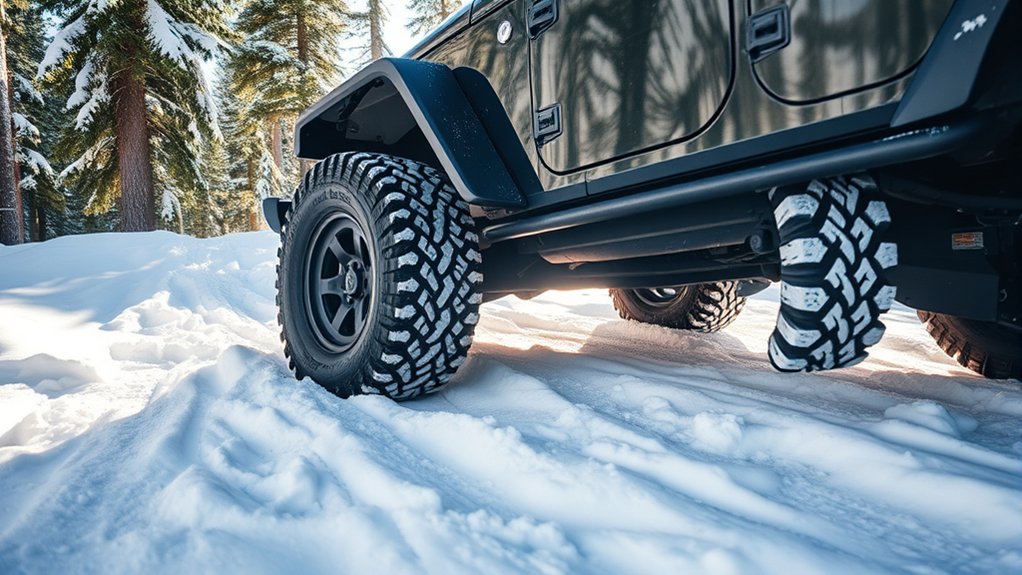
Getting your Jeep Wrangler ready for winter means more than just maintenance—it also means equipping it with the right tires to handle snow and ice.
You’ll want tires designed specifically for winter conditions, such as snow or all-terrain tires with a snowflake symbol. These provide better traction on slippery surfaces by using special rubber compounds that stay flexible in cold weather.
Avoid using summer or worn tires, as they harden and lose grip when temperatures drop.
Make sure your tires have sufficient tread depth—at least 6/32 inches—for maximum performance in snow.
Also, consider tire size: wider tires can float on top of snow, while narrower ones cut through better.
Investing in proper winter tires is essential for your safety and control when driving your Wrangler in snowy conditions.
Master Jeep Wrangler 4WD Settings for Snowy Roads
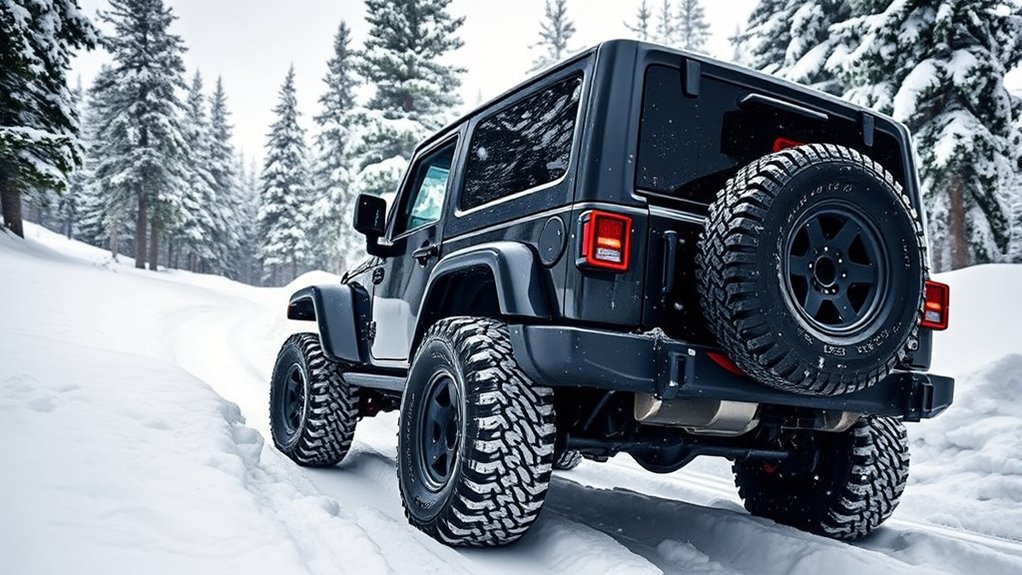
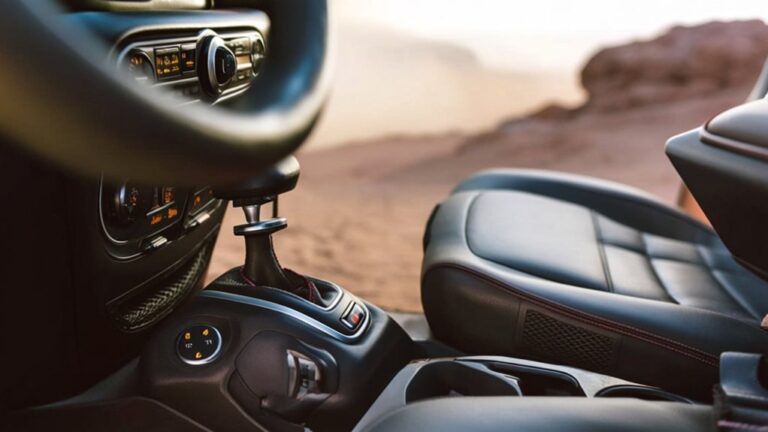
Although the Jeep Wrangler’s four-wheel drive system is built for rugged terrain, mastering its settings is key to maintaining control on snowy roads. You’ll want to know when and how to switch between modes for maximum traction.
Here’s how to use your 4WD settings effectively:
- 2H (Two-Wheel High) – Use on clear roads; avoid in snow to prevent slipping.
- 4H (Four-Wheel High) – Ideal for light to moderate snow; provides better traction while maintaining speed.
- 4L (Four-Wheel Low) – Use in deep snow or steep inclines; gives maximum torque and control at low speeds.
- Locking Differentials – Engage when stuck or on uneven snowy surfaces to evenly distribute power and reduce wheel spin.
Master these settings to confidently tackle snowy terrain.
Adjust Your Jeep Wrangler Driving for Slippery Conditions
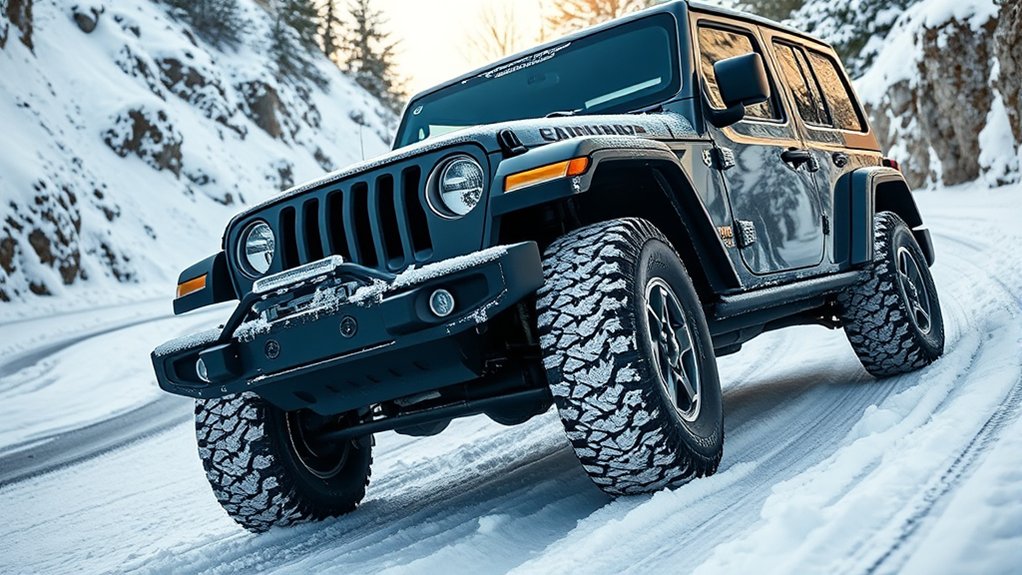
When driving your Jeep Wrangler on slippery snow or ice, you’ll need to adjust your habits to maintain control and avoid accidents. First, ease off the accelerator to prevent wheel spin and keep your movements smooth. Avoid sudden steering inputs—make gentle, deliberate turns to help your tires maintain traction.
Keep a wider distance from other vehicles since stopping distances increase on slick surfaces. Stay alert for patches of black ice, especially on bridges and shaded areas. Use lower gears when climbing or descending hills to keep your speed steady without relying heavily on brakes.
Handle Momentum and Braking Safely on Snowy Roads
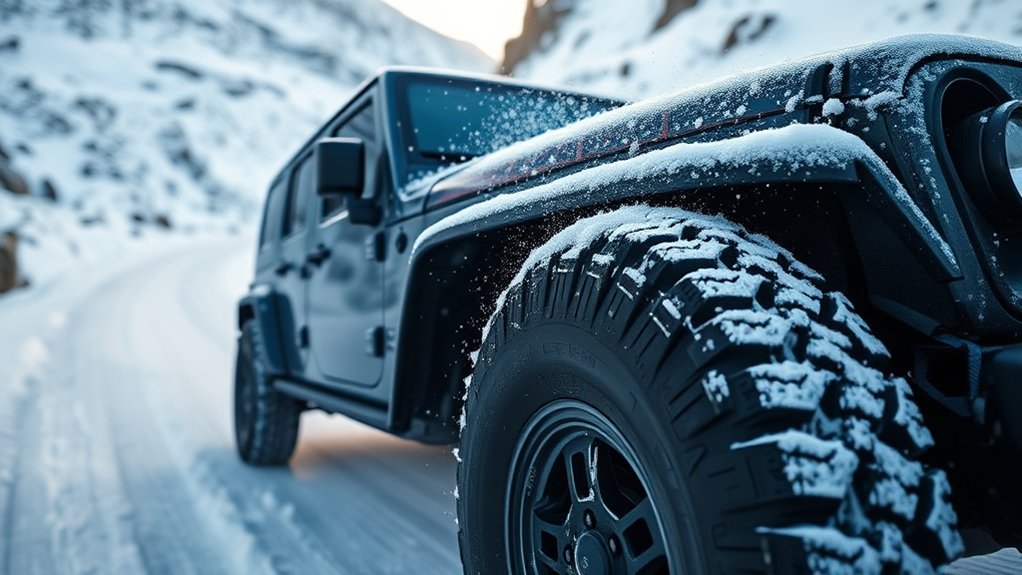
Because snow reduces traction, you’ll need to manage your momentum carefully and brake well in advance to maintain control. Sudden stops or sharp turns can cause your Jeep Wrangler to skid.
Instead, anticipate stops and slow down gradually. Here’s how to handle momentum and braking safely on snowy roads:
- Ease off the accelerator early to let your Jeep slow naturally.
- Apply brakes gently with steady pressure; avoid slamming them.
- Use engine braking by downshifting to lower gears on descents.
- Maintain a longer following distance to give yourself more time to brake.
Keep Visible and Communicate Clearly in Winter Weather
How can you guarantee other drivers see you clearly during heavy snow or fog?
First, keep your headlights and taillights on, even during the day. Use low beams to reduce glare and avoid blinding others. Clear snow and ice off all lights before driving to maximize visibility.
Activate your Jeep’s hazard lights if conditions worsen and you need to slow down or stop unexpectedly. Signal your intentions early and clearly—use turn signals well in advance and avoid sudden lane changes.
Maintain a steady speed to prevent confusing drivers behind you. Remember, communication through your vehicle’s lights is essential in reduced visibility. Staying visible and predictable helps everyone stay safe when winter weather hits hard.
Pack Essential Gear for Jeep Wrangler Snow Emergencies
Having the right gear in your Jeep Wrangler can make all the difference during a snow emergency. You never know when you might get stuck or face harsh conditions, so being prepared is key. Always pack items that help you stay safe, warm, and mobile until help arrives or you get back on the road.
Here are 4 essential items you should carry:
- Shovel – to dig out snow around tires.
- Traction mats or sand – to improve grip on slippery surfaces.
- Warm blankets and extra clothing – to prevent hypothermia if stranded.
- Portable phone charger – to keep your communication devices powered.
With these essentials on hand, you’ll tackle snowy challenges with confidence.
Frequently Asked Questions
Can I Use Chains on My Jeep Wrangler Tires in Snow?
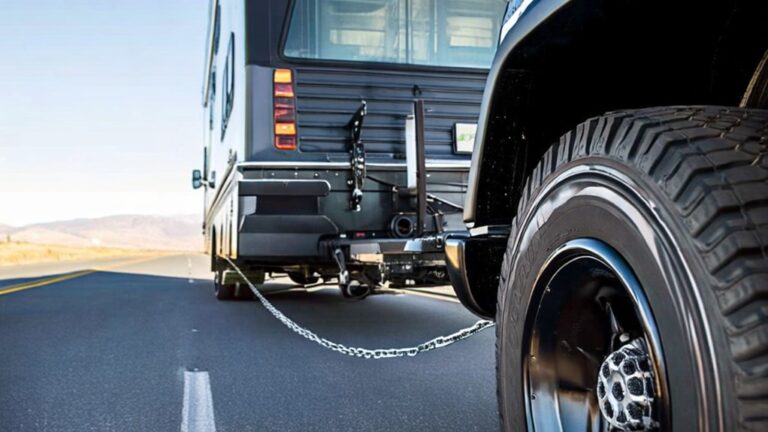
Yes, you can use chains on your Jeep Wrangler tires in snow, but check your owner’s manual first. Chains improve traction but might not fit all tire sizes or work well with certain suspension setups.
How Does Cold Weather Affect Jeep Wrangler Battery Performance?
Cold weather can turn your Jeep Wrangler’s battery into a sluggish zombie, cutting its power drastically. You’ll notice slower starts and weaker performance because the cold thickens battery fluids, reducing its ability to hold and deliver charge.
What Is the Best Way to Defrost Jeep Wrangler Windows Quickly?
The best way to defrost your Jeep Wrangler windows quickly is to start the engine, turn on the defroster with heat and fan on high, and use a plastic scraper gently to remove ice without damaging the glass.
Are Electric Winches Effective for Snow Recovery?
Electric winches are definitely effective for snow recovery, even if you worry about battery drain. They provide reliable pulling power, and with proper use, they won’t overwork your Jeep’s electrical system during tough snow rescues.
Can I Use Cruise Control on Snowy or Icy Roads?
You shouldn’t use cruise control on snowy or icy roads because it reduces your control and can cause your Jeep to slide. Stay attentive, control your speed manually, and react quickly to changing road conditions for safety.
Conclusion
By preparing your Jeep Wrangler properly, picking perfect tires, and practicing precise 4WD control, you’ll confidently conquer cold, slippery conditions. Adjust your acceleration, anticipate abrupt stops, and always keep clear communication to stay safe. Packing practical gear guarantees you’re ready for any roadside surprises. With these seven essential tips, you’ll master the mountains and muddle through the messiest snow with skill and safety, steering smoothly through winter’s wildest weather.