How to Turn On 4 Wheel Drive Jeep Wrangler in 10 Easy Steps
To turn on 4WD in your Jeep Wrangler, first make sure your vehicle is on a safe, low-traction surface. Locate the 4WD controls near the center console, then check tire pressure and engage the parking brake. Shift from 2WD to 4WD High by moving the lever or dial below about 25 mph, and engage 4WD Low by stopping, shifting to neutral, then selecting 4L. Confirm activation via dashboard lights, drive cautiously, and switch back to 2WD when conditions improve. Here’s how you can master each step smoothly.
When and Why to Use 4WD on Your Jeep Wrangler
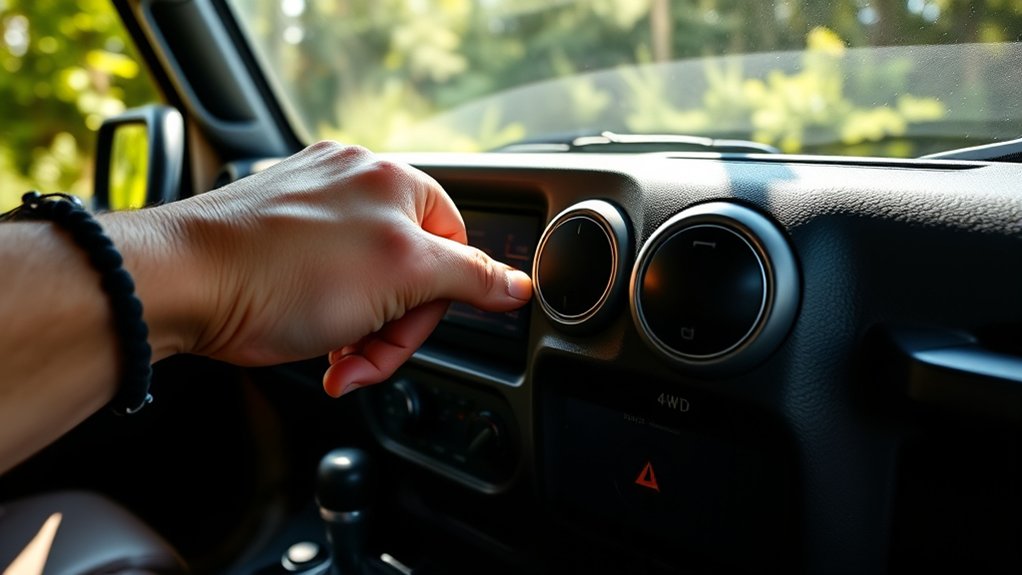
Although your Jeep Wrangler can handle many conditions in 2WD, you should engage 4WD when driving on slippery, uneven, or off-road surfaces to improve traction and control.
You’ll want to switch to 4WD when you encounter mud, snow, sand, or loose gravel to prevent your wheels from slipping. Using 4WD helps distribute power evenly to all four wheels, giving you better grip and stability.
It’s also essential when climbing steep hills or crossing rocky terrain, as it reduces the risk of getting stuck or losing control.
However, avoid using 4WD on dry, paved roads since it can cause drivetrain binding and unnecessary wear.
Knowing when to engage 4WD keeps your Jeep performing safely and efficiently in challenging conditions.
Find the 4WD Controls in Your Jeep Wrangler
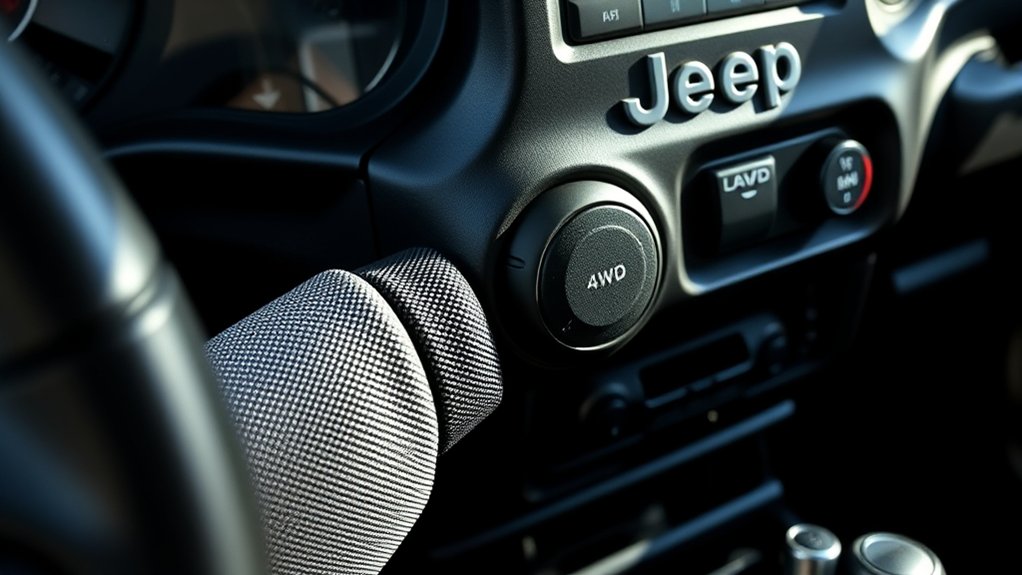
Where exactly are the 4WD controls located in your Jeep Wrangler? Typically, you’ll find them near the center console, within easy reach of the driver.
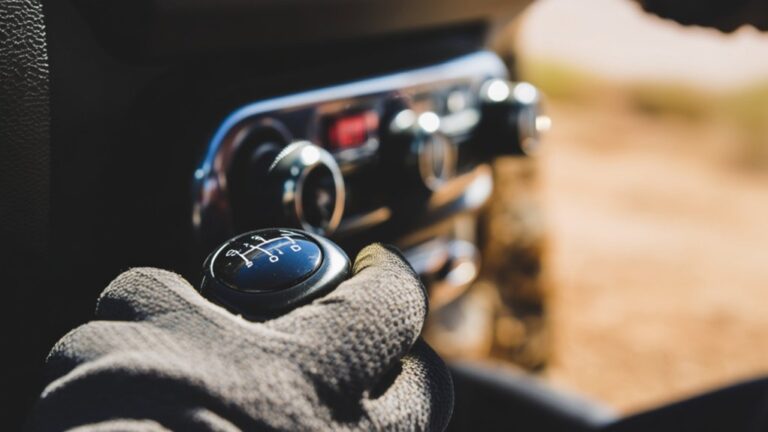
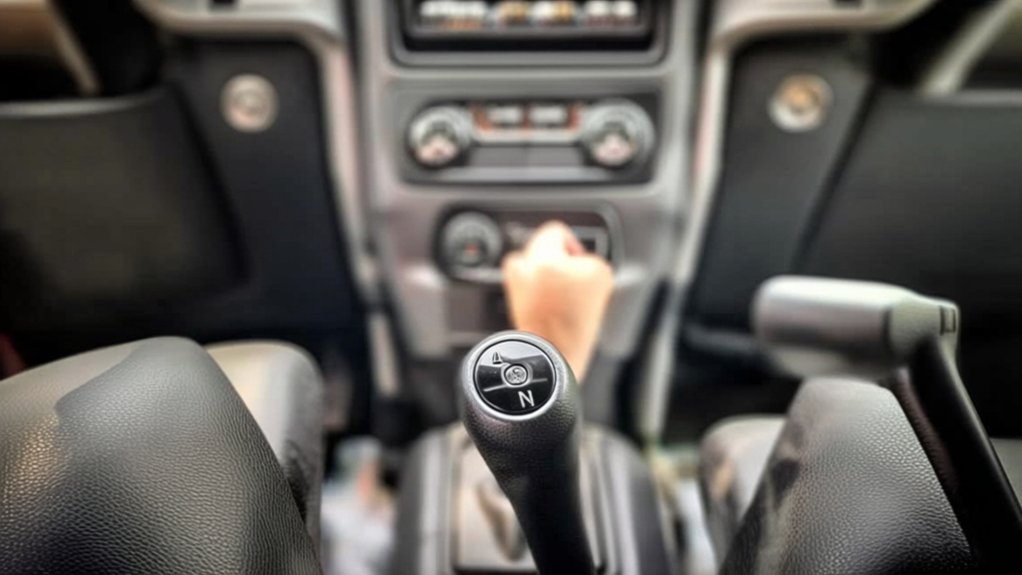
Depending on your model and year, the controls might be a lever, a rotary dial, or push-button switches. Most older Wranglers have a manual transfer case lever between the gear shifter and the passenger seat.
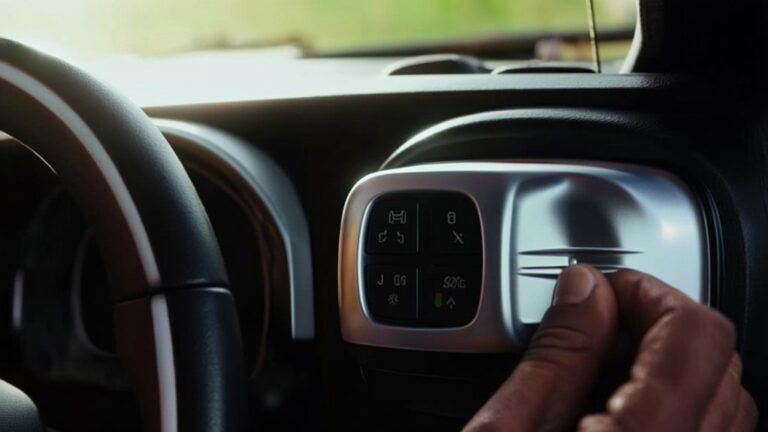
Newer models often feature an electronic 4WD selector on the dashboard or center stack. Look for labels like “2H,” “4H,” “4L,” or “Auto,” which indicate different drive modes.
Familiarize yourself with these controls before hitting the road, so you can quickly switch modes when conditions demand it.
Knowing where your 4WD controls are is the first step to confidently using your Jeep’s capabilities.
Prepare Your Jeep for Safe 4WD Activation
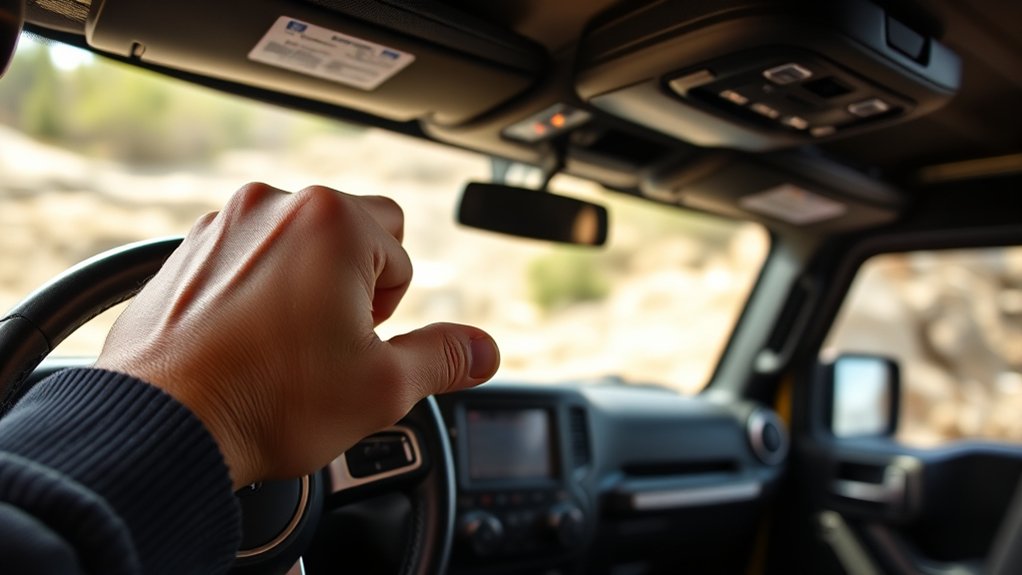
Before switching to 4WD, make certain your Jeep is in good condition and on a stable surface.
Always engage the parking brake to prevent any unwanted movement.
Taking these steps guarantees a safe and smooth 4WD activation.
Check Vehicle Conditions
To guarantee a smooth and safe shift into 4-wheel drive, you need to inspect your Jeep’s current condition carefully. Start by checking your tire pressure; uneven or low pressure can affect traction and drivetrain performance.
Next, make sure your tires have adequate tread depth, as worn tires reduce grip, especially off-road.
Examine the vehicle’s undercarriage for any visible damage or leaks that might interfere with 4WD operation.
Confirm your fuel level is sufficient since 4WD driving often demands more power.
Finally, verify that your transmission and transfer case fluid levels are within recommended ranges to prevent mechanical issues.
Taking these steps prepares your Jeep for reliable 4WD engagement and helps avoid potential problems during your drive.
Engage Parking Brake
After confirming your Jeep is in good condition, the next step is to activate the parking brake. This essential action stabilizes your vehicle, preventing any unwanted movement while you switch to 4-wheel drive.
To activate the parking brake, firmly pull the handbrake lever located between the front seats until you feel resistance. If your Jeep has a foot-operated parking brake, press it down firmly until it locks in place.
Double-check that the parking brake indicator light on your dashboard is illuminated, confirming it’s engaged.
Engaging the parking brake not only keeps your Jeep stationary but also protects the drivetrain during the 4WD activation.
Never skip this step; it guarantees your safety and helps your Jeep smoothly transition into 4-wheel drive mode without strain or risk.
How to Shift From 2WD to 4WD High on Your Jeep Wrangler
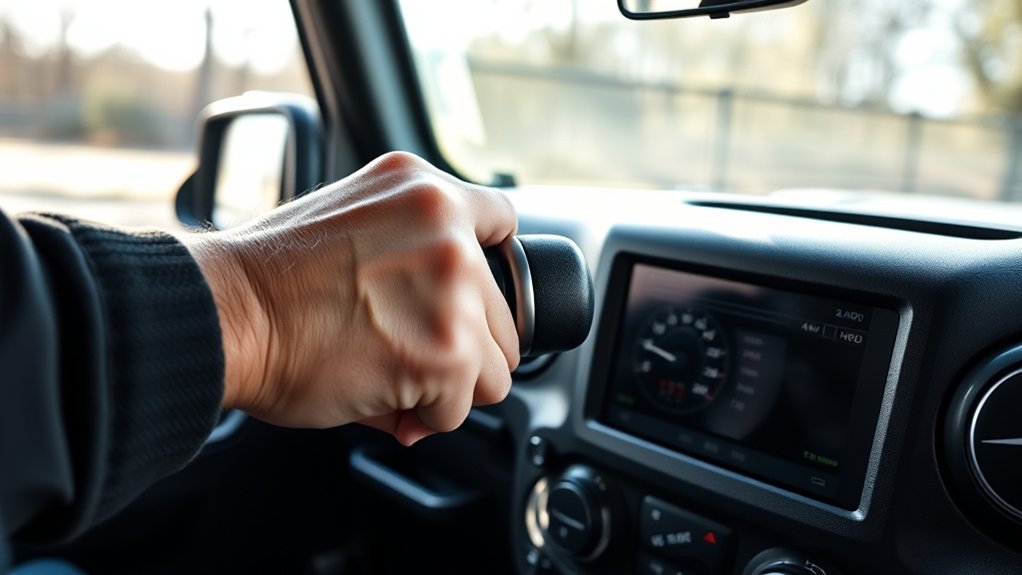
You’ll want to shift from 2WD to 4WD High when you need better traction on slippery or uneven surfaces.
To engage 4WD High, simply move the transfer case lever or turn the dial while driving at low speeds.
Remember to follow driving tips and precautions to keep your Jeep running smoothly and safely.
When To Shift
Although shifting from 2WD to 4WD High on your Jeep Wrangler is straightforward, knowing the right moment to do it makes all the difference. You should switch when you encounter slippery surfaces like wet pavement, snow, or loose gravel where extra traction is necessary.
It’s best to shift at speeds under 55 mph to ensure smooth engagement. Avoid shifting on dry pavement, as it can cause drivetrain binding and wear.
If you feel your wheels slipping or losing grip, that’s a clear sign to shift into 4WD High. Also, shifting while moving is possible, but only if you’re driving at a moderate speed and the terrain demands it.
Timing your shift correctly helps maintain control and protects your Jeep’s components.
Engaging 4WD High
Knowing when to shift sets you up for a smooth switch from 2WD to 4WD High on your Jeep Wrangler.
To engage 4WD High, you’ll typically start by slowing down to about 25 mph or less. Keep your vehicle moving steadily—no need to stop completely.
Locate the 4WD shift lever, usually near your gear shifter. Firmly but smoothly, pull the lever straight back from 2WD into the 4H position. You’ll feel it click into place.
Once engaged, your Jeep’s front wheels will start receiving power, improving traction on slippery or uneven surfaces.
You can shift back to 2WD just as easily when conditions improve. This straightforward process helps you adapt quickly to changing terrain without hassle.
Driving Tips and Precautions
When shifting from 2WD to 4WD High on your Jeep Wrangler, it’s important to maintain a steady speed and avoid sudden movements to guarantee a smooth transition. Avoid harsh braking or sharp turns during the shift. Make sure your tires have good traction and the road surface is suitable for 4WD. Engaging 4WD High on dry pavement can cause drivetrain binding, so use it mainly on slippery or uneven terrain.
| Tip | Reason |
|---|---|
| Keep steady speed | Ensures smooth gear engagement |
| Avoid sudden steering | Prevents drivetrain stress |
| Engage on low traction | Maximizes 4WD benefits |
| Disengage on dry roads | Avoids drivetrain damage |
Follow these tips to drive safely and protect your Jeep’s 4WD system.
How to Engage 4WD Low for Tough Off-Road Conditions
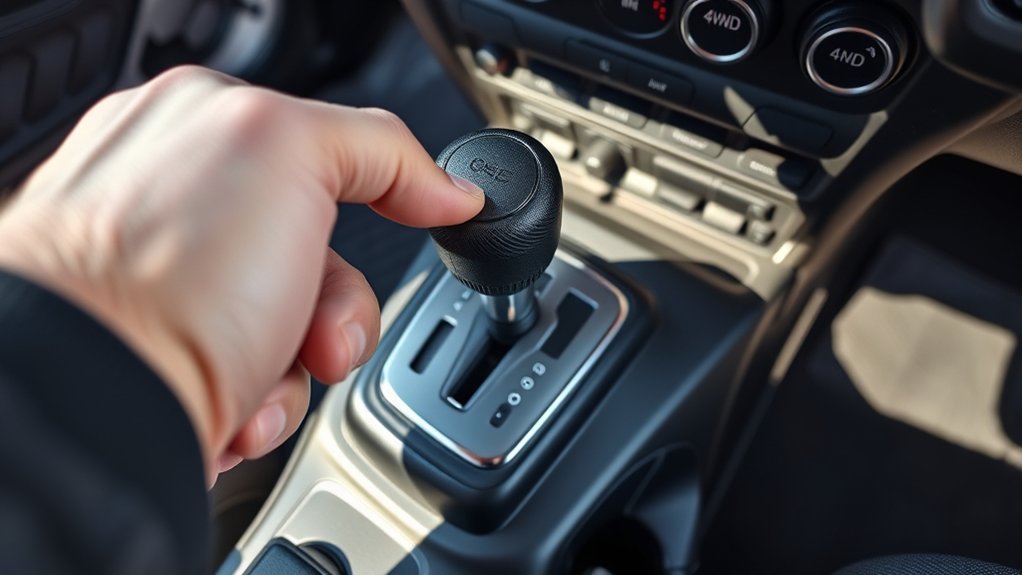
How do you engage 4WD Low on your Jeep Wrangler for those challenging off-road moments? First, bring your vehicle to a complete stop. Next, shift the transmission into neutral.
Then, locate the 4WD selector lever—usually next to the gear shifter—and move it from 2H or 4H to 4L. You might feel some resistance; apply steady pressure until it clicks into place. Avoid forcing the lever, as this can damage the drivetrain.
Once engaged, shift the transmission back into drive (or first gear if manual). 4WD Low provides maximum torque and control at low speeds, perfect for steep climbs, deep mud, or rocky terrain.
Confirm 4WD Engagement Using Dashboard Indicators
Once you shift into 4WD, check your dashboard for specific indicator lights that confirm the system is active.
These lights signal whether you’re in 4WD High or 4WD Low mode. Verify the correct light is on before driving to ensure proper engagement.
Dashboard Light Meanings
Understanding the dashboard lights is essential for confirming your Jeep Wrangler’s 4WD engagement. When you switch to 4WD, look for the 4WD indicator light, usually a small icon showing a vehicle with all four wheels highlighted or labeled “4WD.” This light confirms the system is active.
If you see the “4WD LOCK” or “4WD LOW” symbols, it means you’ve engaged specific 4WD modes suitable for tougher terrains. Keep an eye out for any warning lights related to the drivetrain or traction control, as they may signal issues with the 4WD system.
Familiarizing yourself with these dashboard symbols helps you quickly verify that your Jeep’s 4WD is functioning properly and ready for the conditions ahead.
Confirming 4WD Activation
Before you hit the road, you’ll want to verify that your Jeep Wrangler’s 4WD system is fully engaged. Start by checking the dashboard indicators—look for the 4WD icon, which typically lights up when the system activates. This light confirms that power is being sent to all four wheels.
Depending on your model, you might see different symbols for 4H (four-wheel drive high) or 4L (four-wheel drive low). If the indicator doesn’t illuminate after shifting into 4WD, double-check your engagement steps or try shifting again.
Avoid driving long distances without the light confirming engagement, as this could lead to drivetrain damage. Verifying 4WD activation ensures you’re ready for off-road conditions or slippery surfaces safely and effectively.
Safe Driving Tips When Using 4WD on Your Jeep Wrangler
When you engage 4WD on your Jeep Wrangler, you’ll gain better traction and control on rough or slippery terrain, but you still need to drive carefully. Avoid sudden acceleration, braking, or sharp turns, as these can cause loss of control even with 4WD engaged. Keep your speed moderate to maintain stability and respond quickly to obstacles.
Remember, 4WD improves traction but doesn’t make your Jeep invincible—always stay alert to road conditions. Use 4WD only when necessary, like on snow, mud, or uneven surfaces, because driving on dry pavement can strain the drivetrain.
Also, maintain proper tire pressure and inspect your tires regularly to guarantee optimal grip. By following these tips, you’ll maximize safety while enjoying your Jeep’s off-road capabilities.
How to Shift Back to 2WD on Your Jeep Wrangler
While 4WD improves traction on slippery or uneven terrain, switching back to 2WD on your Jeep Wrangler is important once you return to regular road conditions. Doing so prevents unnecessary wear on your drivetrain and improves fuel efficiency.
To shift back to 2WD, follow these steps:
- Ensure your Jeep is moving at a low speed or is stopped, depending on your model’s requirements.
- Shift the transfer case lever or use the electronic 4WD switch to select 2WD mode.
- Confirm that the 4WD indicator light on the dashboard turns off, signaling you’ve successfully shifted.
- Drive normally on paved roads to maintain smooth performance and reduce mechanical strain.
Troubleshooting Common 4WD Problems on Your Jeep Wrangler
If your Jeep Wrangler’s 4WD system isn’t engaging properly, you’ll want to diagnose the issue quickly to avoid getting stuck or causing further damage.
Start by checking the 4WD indicator light; if it doesn’t turn on, the problem could be electrical, like a blown fuse or faulty switch.
Listen for unusual noises when shifting into 4WD—grinding or clunking might signal worn or damaged drivetrain components.
Also, inspect the transfer case and front differential for leaks or low fluid levels, as these can hinder engagement.
If you have a manual shift, ensure the lever moves smoothly without resistance.
Finally, test the system on a safe, low-traction surface to confirm it functions correctly before hitting tougher terrain.
If problems persist, consult a professional mechanic.
Maintaining Your Jeep’s 4WD System for Reliable Performance
To keep your Jeep Wrangler’s 4WD system running smoothly, you need to perform regular maintenance that targets key components like the transfer case, differentials, and drivetrain. Neglecting these can lead to costly repairs and unreliable performance when you need 4WD most.
Here’s what you should focus on:
- Check and change the transfer case fluid according to your owner’s manual to prevent wear and overheating.
- Inspect and replace differential fluids regularly to ensure smooth gear operation.
- Grease the drivetrain components to reduce friction and avoid premature failure.
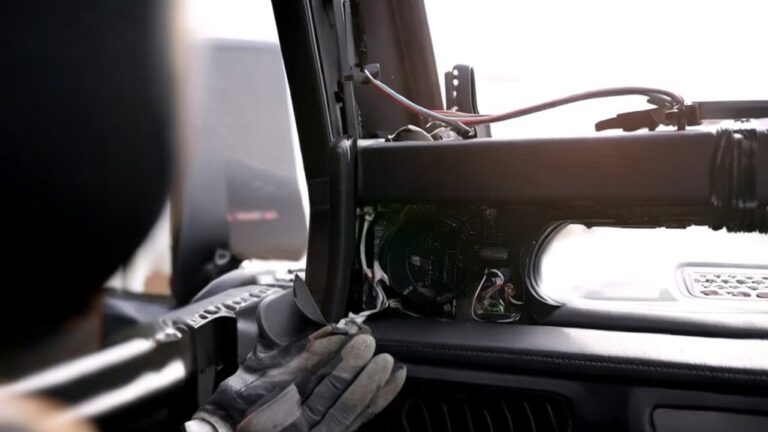
- Examine the 4WD linkage and electrical connections for damage or corrosion, fixing issues promptly.
Frequently Asked Questions
Can I Use 4WD on Dry Pavement Without Damaging My Jeep?
You shouldn’t use 4WD on dry pavement because it can cause drivetrain binding and damage. Save 4WD for slippery or off-road conditions where your Jeep needs extra traction to perform safely and efficiently.
How Does 4WD Affect My Jeep’s Fuel Efficiency?
You’ll notice 4WD can reduce your Jeep’s fuel efficiency by up to 15%. It puts extra strain on the engine and drivetrain, so using it only when necessary helps you save gas and avoid unnecessary wear.
Is It Necessary to Use 4WD in Snowy Conditions Only?
You don’t have to use 4WD only in snowy conditions. It’s helpful on slippery or rough terrain, like mud or sand, too. Just remember to switch back to 2WD on dry roads to save fuel and avoid wear.
Can I Switch to 4WD While My Jeep Is Moving?
Imagine shifting gears like smoothly changing lanes on a highway—you can switch to 4WD while moving, but only under 25 mph. Doing it faster risks damaging your Jeep’s drivetrain, so take it slow and steady.
What Are the Differences Between Part-Time and Full-Time 4WD Systems?
Part-time 4WD you switch manually, usually for off-road or slippery conditions. Full-time 4WD runs constantly, letting you drive on any surface without changing modes. You’ll get better traction but slightly lower fuel efficiency.
Conclusion
Turning on 4WD in your Jeep Wrangler is like revealing a secret path through a dense forest—suddenly, new trails and adventures open up. By mastering these 10 easy steps, you’re not just shifting gears; you’re embracing the power to conquer rugged terrain with confidence. Keep your Jeep prepared and drive smart, and your 4WD system will be your steadfast companion, guiding you safely through every twist and turn on the road less traveled.