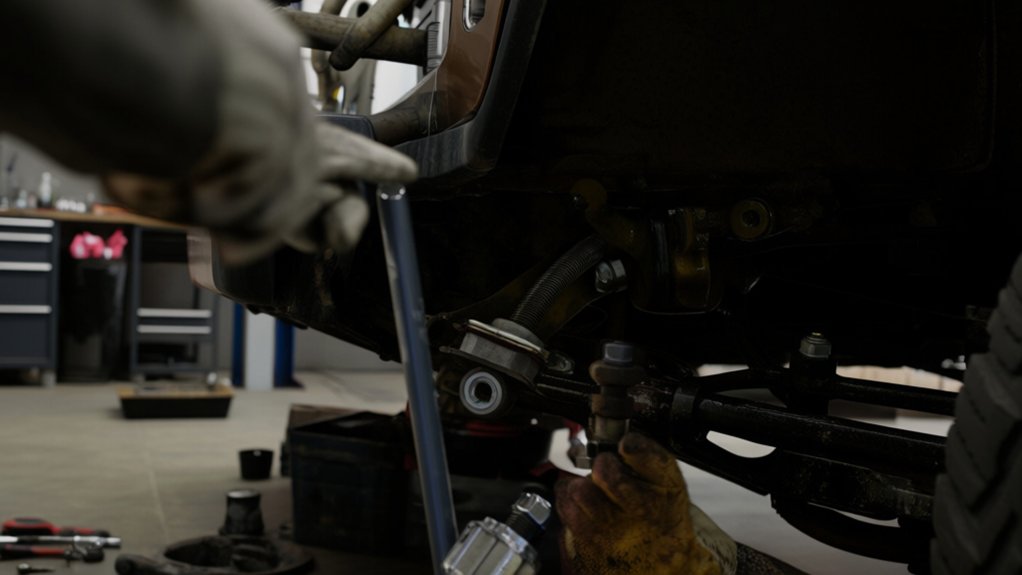
How to Fix Death Wobble in Jeep Wrangler Step by Step
To fix death wobble in your Jeep Wrangler, start by inspecting and tightening the track bar and tie rod ends to manufacturer specs. Check ball joints, control arms, and bushings for wear or looseness, replacing any damaged parts. Upgrading to heavy-duty steering stabilizers helps prevent future wobble. After repairs, perform a test drive to guarantee stability. Maintaining proper tire balance and alignment also reduces wobble. Keep following along to uncover thorough steps and tips for a smooth ride.
Key Takeaways
- Inspect and tighten front suspension and steering components, especially the track bar, tie rod ends, and ball joints, to manufacturer torque specs.
- Replace worn or damaged parts such as bushings, control arms, tie rod ends, and ball joints with quality OEM or reputable aftermarket components.
- Upgrade to heavy-duty or dual steering stabilizers designed for Jeep Wranglers to improve vibration dampening and control.
- Perform wheel and suspension checks including bearing inspection, hub assembly condition, tire balance, and proper alignment to prevent wobble.
- Conduct controlled test drives at increasing speeds to verify wobble elimination and re-inspect components if symptoms persist.
What Causes Death Wobble in Jeep Wranglers
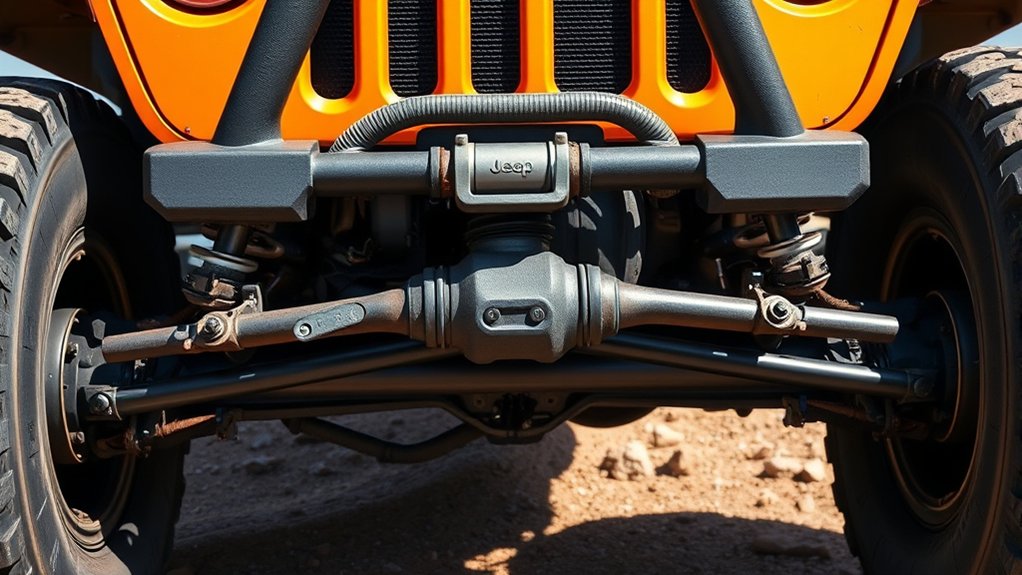
Although it can be unsettling, death wobble in Jeep Wranglers usually happens when your vehicle’s front suspension or steering components are loose or damaged. You’ll want to check parts like the track bar, tie rod ends, ball joints, and control arm bushings. Worn or loose components in these areas cause vibrations that quickly escalate into violent shaking at certain speeds. Uneven or unbalanced tires can also contribute, but the core issue lies with the suspension and steering system’s integrity. Even a slightly bent or damaged part can trigger this dangerous feedback loop. If your Jeep’s front end feels unstable, it’s a sign these components need immediate attention to keep your driving safe and smooth.
How to Diagnose Death Wobble Symptoms in Your Jeep

When your Jeep Wrangler starts shaking violently, pinpointing the symptoms of death wobble quickly can help you address the problem before it worsens. You’ll notice a rapid, uncontrollable shaking of the front end, usually triggered by hitting a bump or driving at certain speeds. This vibration often affects the steering wheel, making it hard to maintain control. You might also feel a noticeable clunking or knocking sound coming from the front suspension area. The wobble typically occurs when you accelerate or brake, and it may worsen if you steer slightly. If you experience these symptoms, it’s a clear sign that your Jeep is suffering from death wobble, and you should take action promptly to guarantee your safety on the road.
Inspect Jeep Wrangler Steering Components for Wear
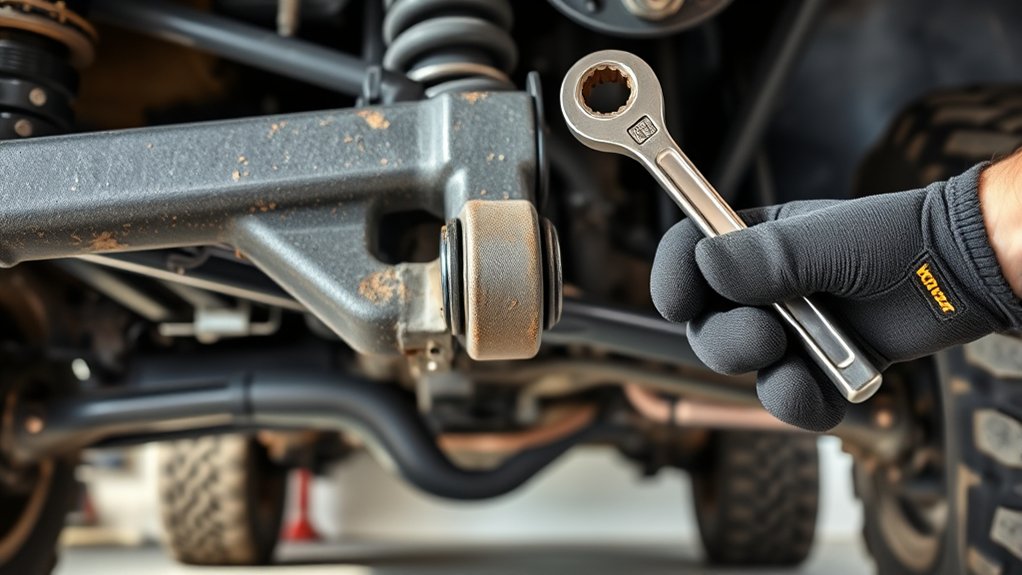
Since death wobble often stems from worn or damaged steering components, you should carefully examine parts like the tie rod ends, drag link, and track bar for signs of wear or looseness. Start by visually inspecting these parts for cracks, bends, or rust that could compromise their integrity. Next, grab the tie rod ends and drag link—try to wiggle them by hand to check for play. Any movement beyond a slight, firm feel indicates wear. Don’t forget to inspect the ball joints and steering stabilizer mounts; loose or damaged mounts can contribute to instability. Finally, look at the bushings on the track bar and control arms, as deteriorated bushings can cause excess movement. Catching these issues early helps guarantee a smoother, safer drive.
Tighten Track Bar and Tie Rod Ends to Fix Death Wobble
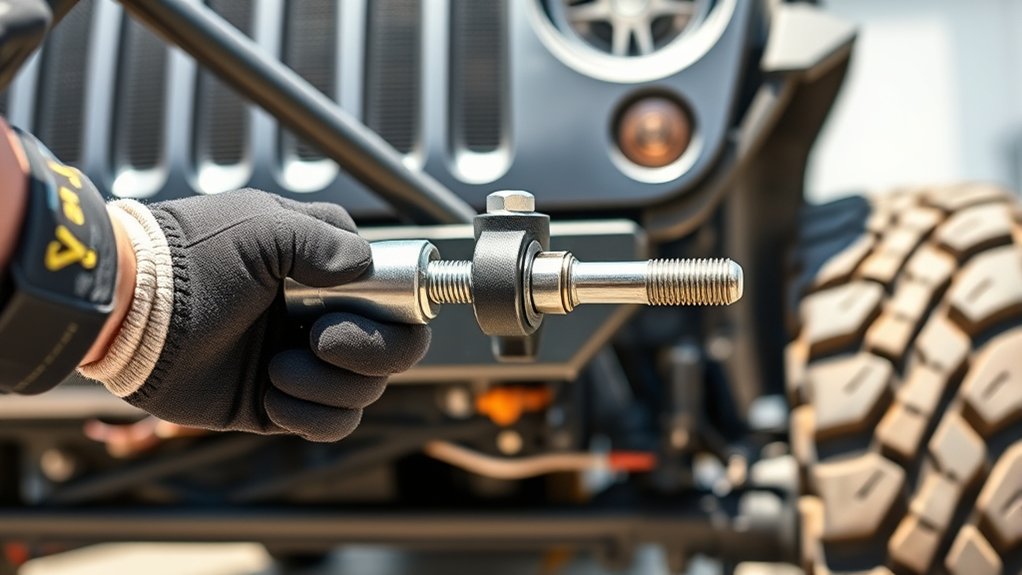
If your Jeep Wrangler’s track bar and tie rod ends feel loose or show signs of wear, tightening them can considerably reduce death wobble. Start by safely lifting your Jeep and securing it with jack stands. Locate the track bar and tie rod ends, then use a wrench to check their mounting bolts and nuts for looseness. Tighten these fasteners to the manufacturer’s torque specifications using a torque wrench to guarantee proper tension without over-tightening. Don’t forget to inspect the tie rod ends for play; if they’re excessively worn, tightening won’t solve the issue. After tightening, lower your Jeep and take it for a cautious test drive to see if the death wobble has diminished. This simple step often stabilizes your steering and improves control.
Check Ball Joints and Control Arms for Play
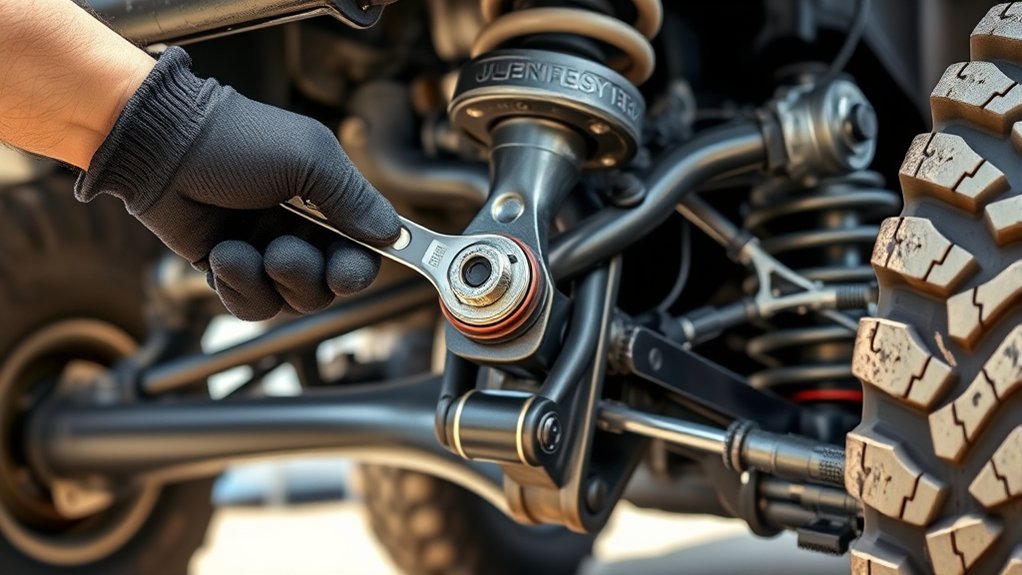
After tightening your track bar and tie rod ends, the next step is to check the ball joints and control arms for any play. Jack up the front of your Jeep so the tires are off the ground. Grab the tire at the 12 and 6 o’clock positions and rock it back and forth. If you feel movement that’s not in the wheel bearings, it could indicate worn ball joints or loose control arms. Next, inspect the control arms by trying to move them by hand; any noticeable looseness or clicking suggests worn bushings or ball joints. If you detect play, replacing worn ball joints or tightening control arm bolts is essential to eliminate death wobble. Addressing these components guarantees stable steering and a safer ride.
Inspect Wheel Bearings and Hub Assemblies
When you inspect wheel bearings and hub assemblies, you’re checking critical components that directly affect your Jeep’s stability and steering response. Start by lifting the wheel and spinning it by hand—listen for grinding noises or roughness that indicate worn bearings. Next, grab the tire at the 12 and 6 o’clock positions and rock it; any play suggests bearing or hub issues that need addressing. Remove the hub assembly if necessary, then clean and inspect it for corrosion, cracks, or damage. Replace any worn or damaged bearings and repack them with fresh grease to guarantee smooth operation. Properly tightened hub nuts are essential, so torque them to manufacturer specifications. This careful inspection helps prevent death wobble caused by failing wheel components.
Verify Wheel Alignment and Balance
You’ll want to check that your Jeep’s wheels are properly aligned to prevent uneven tire wear and steering issues. Watch for signs of wheel imbalance, like vibrations at higher speeds, which can trigger death wobble. Getting a professional alignment and balance done guarantees your wheels spin smoothly and safely.
Importance Of Proper Alignment
Because your Jeep’s wheel alignment and balance directly affect handling, guaranteeing they’re correct is essential to fixing death wobble. Misaligned wheels can cause uneven tire wear and make your Wrangler pull to one side, increasing the risk of death wobble. Proper alignment keeps your wheels pointed straight and your suspension components working smoothly, reducing vibrations. When your wheels are balanced correctly, weight is evenly distributed, preventing oscillations at higher speeds. After any suspension work or tire changes, you should always check alignment to maintain stability. Skipping this step means you might still experience death wobble despite other repairs. So, get your Jeep aligned by a professional or use precise tools yourself to confirm every component works harmoniously, improving safety and driving comfort.
Signs Of Wheel Imbalance
A telltale sign of wheel imbalance is a noticeable vibration in your Jeep’s steering wheel or floorboard, especially at higher speeds. You might feel the steering wheel shake intensely around 45 to 55 mph, which often worsens as you accelerate. Uneven tire wear is another clue—check for bald spots or cupping on your tires. If your Jeep pulls slightly to one side, it could indicate imbalance issues affecting handling. You may also hear unusual noises from the tires, like humming or buzzing sounds. These signs suggest your wheels aren’t spinning smoothly, which can contribute to the death wobble. Catching these symptoms early helps you address wheel problems before they escalate into more serious steering or suspension issues.
Alignment And Balance Procedures
When diagnosing death wobble, start by verifying your Jeep’s wheel alignment and balance to guarantee everything spins smoothly and evenly. Misaligned wheels or unbalanced tires cause uneven tire wear and vibrations that trigger the wobble. Take your Wrangler to a trusted shop or use an alignment rack if available. Confirm the camber, toe, and caster angles match Jeep’s factory specs. After alignment, have your tires balanced properly to eliminate any heavy spots. Don’t forget to check tire pressure and tread for uneven wear patterns. Rebalancing your wheels can notably reduce vibrations and improve steering stability. Once alignment and balance are confirmed, test drive your Jeep at various speeds to see if the death wobble subsides or disappears. This step is vital before moving on to suspension or steering fixes.
Replace Worn Jeep Wrangler Suspension and Steering Parts
You’ll want to start by identifying any worn suspension and steering parts that could cause the death wobble. Choosing high-quality replacement components guarantees your Jeep handles smoothly and safely. Make sure to install everything properly to restore stability and prevent future issues.
Identifying Worn Suspension Components
Since worn suspension components often cause death wobble, you should carefully inspect your Jeep Wrangler’s steering and suspension parts to pinpoint the issue. Start by checking the track bar and its bushings for cracks, tears, or excessive play. Examine the control arms and their bushings for any signs of wear or damage. Don’t forget to inspect the ball joints and tie rod ends—looseness here can trigger wobble. Look over the shocks and springs for leaks, dents, or sagging. Also, check the steering stabilizer for proper function and any visible damage. Use a pry bar to test for play in joints, and listen for unusual noises during movement. Identifying these worn components early helps you focus your repair efforts effectively and prevents further damage.
Selecting Quality Replacement Parts
Although identifying worn suspension and steering parts is essential, selecting quality replacements guarantees your Jeep Wrangler performs smoothly and safely. When choosing parts, prioritize OEM or reputable aftermarket brands known for durability and fitment. Inferior components can worsen death wobble or cause premature wear. Focus on key elements like track bars, control arms, tie rods, and ball joints, ensuring they meet or exceed factory specifications. Check reviews and verify warranty coverage to avoid costly mistakes. Buying parts designed specifically for your Jeep model year ensures proper compatibility. Remember, investing in quality parts now saves you from repeated repairs and unsafe driving conditions later. Your Wrangler’s stability and your safety depend on the parts you install. Choose wisely to restore reliable performance.
Proper Steering Component Installation
When replacing worn suspension and steering parts on your Jeep Wrangler, proper installation is crucial to prevent death wobble and guarantee safe handling. Begin by thoroughly cleaning mounting surfaces and inspecting all components for damage or defects before installation. Use a torque wrench to tighten bolts to manufacturer specifications—over-tightening or under-tightening can cause premature wear or failure. Install new bushings, ball joints, and tie rod ends carefully, ensuring they fit snugly without forcing parts into place. Double-check alignment settings after installation, as misalignment can trigger death wobble. Finally, test drive your Jeep at various speeds to confirm the steering feels stable and responsive. Taking your time during installation ensures your Wrangler stays safe and wobble-free on the road.
Upgrade Jeep Wrangler Steering Stabilizers to Prevent Death Wobble
If you want to reduce or eliminate death wobble, upgrading your Jeep Wrangler’s steering stabilizers is a smart move. Factory stabilizers often aren’t robust enough for rough terrain or heavier wheels, which makes your steering prone to vibration and wobbling. Installing heavy-duty or dual steering stabilizers improves dampening, absorbing shocks and vibrations more effectively. This upgrade tightens your steering feel and enhances control, especially on rough roads. When choosing stabilizers, pick ones designed specifically for your Wrangler model and consider aftermarket options with adjustable damping for a custom fit. Make sure to mount them securely, following the manufacturer’s instructions to avoid premature wear. Upgrading your stabilizers won’t fix all issues, but it’s a critical step toward smoother, safer steering and minimizing death wobble.
Test Drive to Confirm Death Wobble Fix
Before you hit the road, double-check that all components are properly installed and tightened. Now, take your Jeep for a controlled test drive to confirm the death wobble fix. Start at low speeds, gradually increasing while paying close attention to steering feedback and vibrations. If the wobble persists, re-inspect your work.
Use this checklist during your test drive:
| Test Drive Step | What to Observe |
|---|---|
| 1. Start at low speed | No vibrations or shaking |
| 2. Increase speed | Steering remains stable |
| 3. Turn sharply | No sudden wobble or pull |
| 4. Drive on rough roads | Smooth handling without shake |
| 5. Emergency maneuvers | Steering responsiveness intact |
Following these steps ensures your Jeep’s death wobble is truly fixed before hitting busy roads.
Prevent Death Wobble With Regular Maintenance
To keep death wobble at bay, you need to regularly inspect your suspension components for wear or damage. Don’t forget to check your tires and wheels for proper alignment, balance, and tightness. Staying on top of these maintenance tasks helps you avoid bigger problems down the road.
Suspension Component Inspection
Regularly inspecting your Jeep Wrangler’s suspension components plays a crucial role in preventing death wobble. Start by checking the control arms, track bar, and ball joints for any signs of wear, cracks, or looseness. Don’t overlook the tie rod ends and drag link; these parts must be tight and free of play. Pay special attention to the bushings, as worn or cracked bushings can cause instability. Use a pry bar to test for excessive movement in these joints. Also, examine the shocks and springs for damage or leaks. Catching issues early allows you to replace or repair parts before they worsen. Staying proactive with suspension inspections keeps your Jeep stable and helps you avoid the dangerous and unsettling death wobble on the road.
Tire and Wheel Care
A well-maintained set of tires and wheels plays an essential role in preventing death wobble in your Jeep Wrangler. Start by regularly checking your tire pressure and keeping it at the manufacturer’s recommended level. Uneven or low pressure can cause imbalance and vibrations that contribute to wobble. Rotate your tires every 5,000 to 7,000 miles to guarantee even wear, which helps maintain balanced handling. Inspect your wheels for bends, cracks, or damage, and replace or repair any compromised parts immediately. Also, have your wheels balanced and aligned regularly. Misaligned or unbalanced wheels can trigger or worsen death wobble. By staying consistent with tire and wheel maintenance, you’ll reduce the chances of experiencing this dangerous issue and keep your Wrangler driving smoothly and safely.
Frequently Asked Questions
Can Tire Pressure Cause Death Wobble in Jeep Wranglers?
Yes, uneven or incorrect tire pressure can contribute to death wobble in your Jeep Wrangler. You should regularly check and maintain proper tire pressure to improve stability and reduce the chance of experiencing that dangerous vibration.
Is Death Wobble Dangerous to Drive Through?
Death wobble is like a storm shaking your steering wheel—dangerous and unpredictable. You shouldn’t drive through it because it can cause loss of control, risking accidents. Pull over, fix the issue, then safely continue.
How Long Does It Take to Fix Death Wobble?
It usually takes you a few hours to a full day to fix death wobble, depending on your experience and tools. Some repairs are quick, but thorough inspection and replacement take time to guarantee safety.
Can Aftermarket Wheels Trigger Death Wobble?
Yes, aftermarket wheels can trigger death wobble, especially if 70% of them aren’t properly balanced or aligned. You’ll want to confirm your wheels are compatible and balanced to avoid that dangerous shaking while driving.
Does Lifting a Jeep Increase Death Wobble Risk?
Yes, lifting your Jeep can increase death wobble risk because it changes suspension angles and adds stress to components. You’ll need quality parts and proper alignment to reduce that risk and keep your ride stable.
Conclusion
Fixing death wobble in your Jeep Wrangler is like steadying a wild stallion—it takes patience and the right touch. By inspecting, tightening, and replacing worn parts, you regain control and smooth out the ride. Upgrading your steering stabilizers is the final rein that keeps the shake at bay. With regular maintenance, your Jeep won’t just survive the road; it’ll dance confidently on it, every mile feeling like a victory lap.