7 Tips to Make Your Jeep Wrangler Fast
You can make your Jeep Wrangler faster by upgrading its engine with a V8 or turbo, adding a cold air intake for better airflow, and tuning the ECU to boost power. Improve your transmission with a performance torque converter and short-throw shifter for quicker shifts. Swap to high-performance tires and regularly maintain proper tire pressure. Don’t forget to cut weight by removing unnecessary gear. Keep going to discover how these changes work together for speed and control.
Key Takeaways
- Upgrade the engine with a V8 swap, turbocharger, or cold air intake to significantly boost horsepower and torque.
- Improve transmission response by installing a performance torque converter, shift kit, and short-throw shifter.
- Replace the stock exhaust with a Cat-Back system and performance headers for better airflow and increased power.
- Use high-performance tires suited for your terrain and maintain correct tire pressure to maximize grip and acceleration.
- Remap the ECU for optimized fuel delivery and ignition timing, ensuring safer and more efficient power gains.
Upgrade Your Jeep Wrangler’s Engine for Power
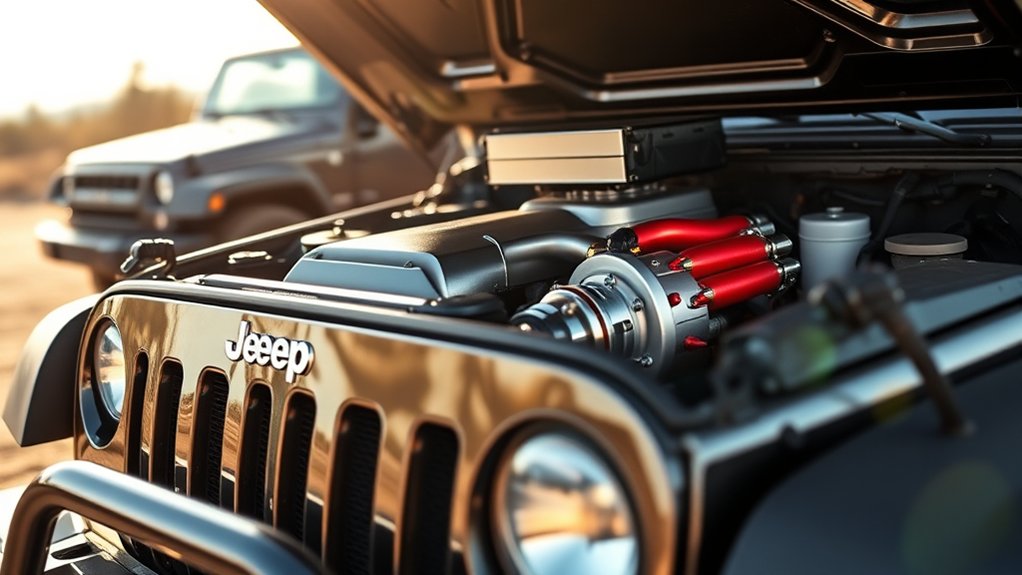
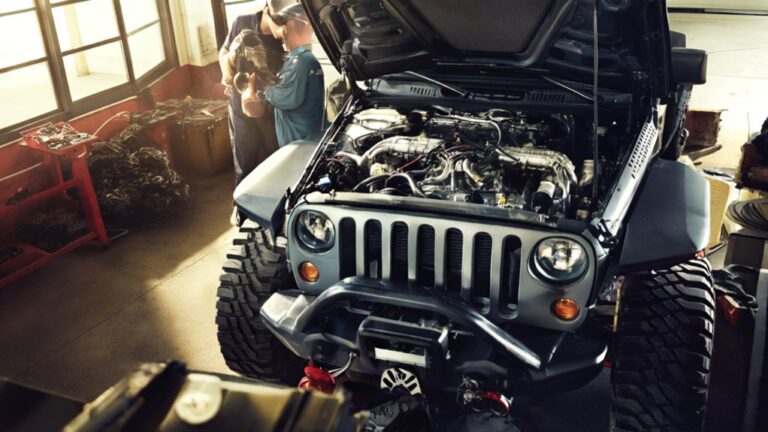
Although the Jeep Wrangler is built for rugged performance, upgrading its engine is key to releasing serious power and speed. You can start by swapping your stock engine for a more powerful V8 or turbocharged option, which offers a significant boost in horsepower and torque.
Installing a cold air intake helps your engine breathe better, increasing efficiency and power output. Consider upgrading your fuel injectors and ECU tuning to optimize fuel delivery and ignition timing. These tweaks allow you to maximize engine performance without sacrificing reliability.
Don’t overlook adding a performance camshaft or high-flow cylinder heads to improve airflow inside the engine. By focusing on these engine upgrades, you’ll transform your Wrangler into a faster, more responsive machine ready for any adventure.
Upgrade Your Jeep Wrangler’s Exhaust for Speed and Sound
When you upgrade your Jeep Wrangler’s exhaust system, you’ll not only boost its speed but also enhance its aggressive sound. A performance exhaust reduces backpressure, allowing your engine to breathe easier and produce more power. Here’s how to get started:
Upgrade your Jeep’s exhaust to boost power and unleash a fierce, aggressive sound.
- Choose a Cat-Back Exhaust: Replaces the system from the catalytic converter back for better flow and sound.
- Opt for High-Flow Catalytic Converters: Increases exhaust efficiency while remaining street-legal.
- Install Performance Headers: Improves exhaust scavenging for increased horsepower.
- Select Lightweight Materials: Stainless steel or titanium reduce weight and resist corrosion.
These upgrades improve throttle response, horsepower, and provide that signature growl your Jeep deserves. Keep your Wrangler fast and loud with the right exhaust!
Install a Cold Air Intake to Boost Engine Breathing
You can boost your Jeep Wrangler’s performance by installing a cold air intake, which helps your engine breathe cooler, denser air for better combustion.
This upgrade not only improves horsepower but also enhances throttle response. Make sure to follow the installation steps carefully to avoid any leaks or fitment issues.
Benefits of Cold Air
Since cooler air contains more oxygen, installing a cold air intake can considerably improve your Jeep Wrangler’s engine performance. You’ll notice your engine breathes better, which means more efficient combustion and increased power.
Here’s how cold air benefits you:
- Enhanced horsepower: More oxygen means stronger combustion, giving your Wrangler a noticeable power boost.
- Improved throttle response: Your engine reacts faster when it gets cooler, denser air.
- Better fuel efficiency: Efficient combustion uses less fuel for the same power output.
- Reduced engine heat: Cooler air intake lowers engine temperatures, helping prevent overheating during tough drives.
Installation Tips
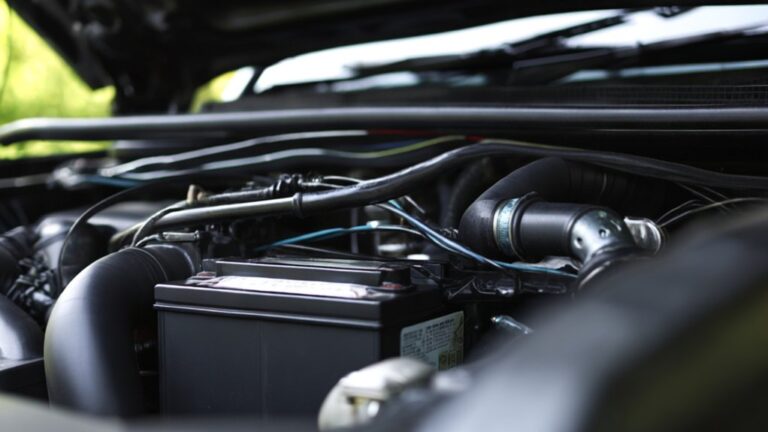
Although installing a cold air intake may seem straightforward, following the right steps guarantees peak performance and prevents damage. First, make sure your engine is cool before starting. Disconnect the battery to avoid electrical issues.
Remove the stock air intake carefully, noting any screws or clips you’ll need later. Clean the mounting area to verify a proper seal.
When fitting the new intake, align it precisely and tighten all clamps securely but avoid overtightening, which can crack parts. Connect the mass airflow sensor if applicable, handling it gently.
Double-check all connections for leaks or loose fittings. Finally, reconnect the battery and start the engine to confirm everything runs smoothly.
Taking your time during installation assures your Wrangler breathes better and performs faster without complications.
Upgrade Your Jeep Wrangler’s Transmission for Quicker Shifts
When aiming for faster acceleration and smoother gear changes, upgrading your Jeep Wrangler’s transmission is a smart move. A more responsive transmission reduces lag between shifts, letting you harness your engine’s power efficiently.
Here are four key upgrades to contemplate:
- Performance Torque Converter – Improves throttle response and shift timing.
- Shift Kit – Firms up shifts, reduces slippage, and speeds up gear changes.
- Transmission Cooler – Keeps transmission temperatures down, preventing power loss.
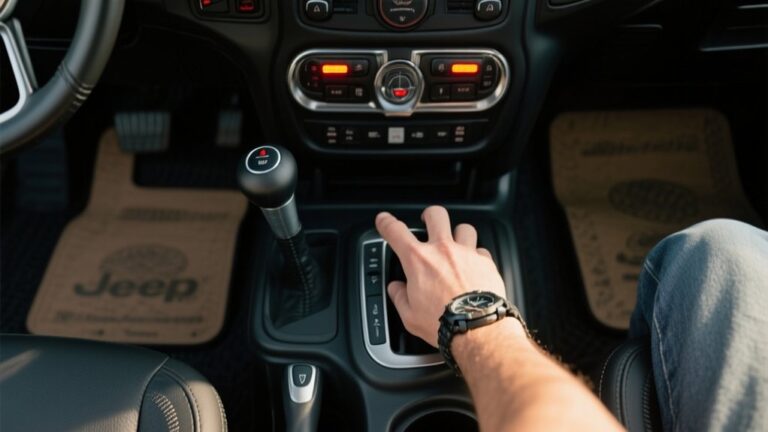
- Short-Throw Shifter – Cuts down shift travel for quicker, more precise gear changes.
Each upgrade enhances your Wrangler’s drivability and responsiveness, helping you accelerate faster and enjoy a smoother ride every time you hit the gas.
Remap Your Jeep Wrangler’s ECU to Maximize Power
If you want to unlock your Jeep Wrangler’s full potential, remapping the ECU is one of the most effective ways to do it. By adjusting the engine control unit’s software, you can optimize fuel delivery, ignition timing, and boost pressure for increased horsepower and torque.
This recalibration lets your engine breathe and perform more efficiently without hardware changes. You’ll notice quicker throttle response and better overall power output.
Just make sure to use a reputable tuner or professional service to avoid damaging your engine. Also, keep in mind that remapping may affect your warranty or emissions compliance, so check local regulations.
With the right ECU tune, your Wrangler will deliver the extra power you’re after, making it noticeably faster on and off-road.
Cut Weight to Help Your Jeep Accelerate Faster
Because every pound counts, cutting weight can considerably boost your Jeep Wrangler’s acceleration. When you reduce unnecessary mass, your engine doesn’t have to work as hard to move the vehicle, resulting in quicker response times and better fuel efficiency.
Here’s how you can trim the fat:
- Remove heavy roof racks or carriers when not in use.
- Swap out stock seats for lighter aftermarket options.
- Replace steel bumpers with aluminum or composite materials.
- Clear out any non-essential cargo or gear from the interior and trunk.
Upgrade to High-Performance Tires for Better Traction
You’ll want to pick tire tread types that match your driving conditions to maximize grip.
Adjusting your tire pressure can also improve traction and handling.
These simple upgrades help your Wrangler stick to the road and boost overall performance.
Choosing Tire Tread Types
How do you guarantee your Jeep Wrangler grips the road or trail with maximum efficiency? Choosing the right tire tread type is key. Different treads excel in various conditions, so pick one that matches your driving style and terrain.
- All-Terrain Treads – Balanced for on-road comfort and off-road traction, great for mixed use.
- Mud-Terrain Treads – Aggressive lugs that dig into mud and loose dirt, perfect for off-road challenges.
- Highway Treads – Smooth, designed for speed and fuel efficiency on paved roads.
- Snow/Winter Treads – Specialized patterns that provide grip on icy and snowy surfaces.
Tire Pressure Optimization
Selecting the right tire tread sets the foundation for traction, but adjusting tire pressure fine-tunes your Jeep Wrangler’s grip on varying surfaces. Lowering tire pressure increases the contact patch, improving traction on loose or rocky terrain. However, too low pressure risks tire damage and poor handling on hard surfaces.
On the other hand, higher pressure reduces rolling resistance and improves fuel efficiency on paved roads, helping you gain speed. To optimize performance, monitor and modify tire pressure based on your driving conditions.
Pairing this with high-performance tires designed for your terrain maximizes grip and durability. Regularly check pressure with a reliable gauge, especially before off-roading or highway drives. This simple step ensures your Wrangler stays fast, safe, and capable wherever you go.
Frequently Asked Questions
How Does Suspension Tuning Affect Jeep Wrangler Speed?
Suspension tuning improves your Jeep Wrangler’s handling and stability, letting you maintain higher speeds safely. By adjusting stiffness and ride height, you’ll reduce body roll and drag, which helps you accelerate and corner more efficiently.
Can Aerodynamics Improvements Make My Jeep Faster?
Yes, improving your Jeep’s aerodynamics can make it faster by reducing drag. Adding features like a roof rack fairing or smoothing body panels helps air flow better, boosting speed and fuel efficiency on highways and open roads.
What Role Does Fuel Quality Play in Performance?
Fuel quality acts like the lifeblood fueling your Jeep’s heart; using high-octane fuel prevents knocking, boosts combustion efficiency, and releases smoother power, so you’ll feel your Wrangler roar with every twist and turn on the road.
Are There Specific Driving Techniques to Increase Speed?
Yes, you can increase speed by accelerating smoothly, shifting gears at higher RPMs, and maintaining momentum through corners. Avoid sudden braking and practice throttle control to keep your Jeep Wrangler responsive and fast on the road.
How Often Should I Maintain My Jeep for Optimal Performance?
You should maintain your Jeep Wrangler every 5,000 to 7,500 miles to keep it running smoothly. Regular check-ups boost performance by up to 30%, so don’t skip oil changes, tire rotations, and brake inspections.
Conclusion
If you want your Jeep Wrangler to go faster, upgrading the engine and exhaust will give you power and an aggressive roar—perfect for the open road. Coincidentally, adding a cold air intake and remapping the ECU work together to boost performance like a well-tuned team. Plus, cutting weight and choosing high-performance tires means you’ll not only speed up but also stick to the road better. It’s all about making every part count for one thrilling ride.