How to Tow 4000 Lbs With a Jeep Wrangler
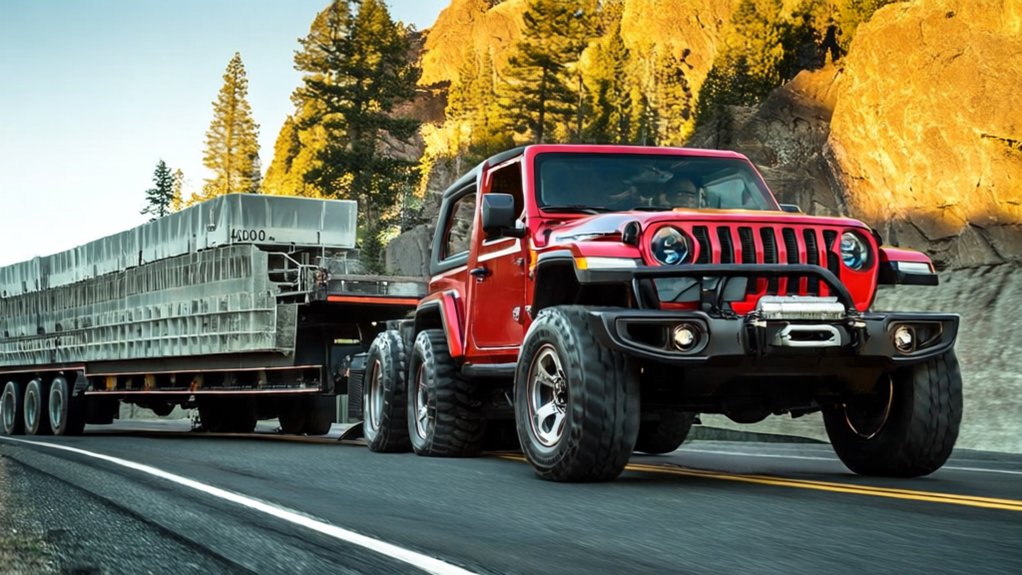
To tow 4,000 lbs with your Jeep Wrangler, first confirm your model’s towing capacity and make sure your suspension and tires are in top shape. Choose a Class III or IV hitch rated for at least 4,000 lbs, and connect trailer brakes and safety chains properly. Load the trailer with balanced weight and inflate tires to recommended pressure. Drive cautiously, monitor engine temps, and plan routes to avoid steep hills. Keep these basics in check, and you’ll find towing safer and smoother.
Key Takeaways
- Confirm your Jeep Wrangler’s towing capacity and never exceed the manufacturer’s recommended 4,000 lbs limit for safe towing.
- Install a Class III or IV hitch with a 2-inch ball mount and ensure proper trailer brake and wiring connections.
- Distribute trailer load with 60% weight toward the front, secure cargo tightly, and maintain recommended tire pressure for stability.
- Drive cautiously by accelerating slowly, increasing following distance, braking gently, and avoiding sharp turns or steep hills.
- Monitor engine and transmission temperatures during towing and perform a post-tow inspection of fluids, brakes, tires, and suspension.
Know Your Jeep Wrangler’s Towing Capacity
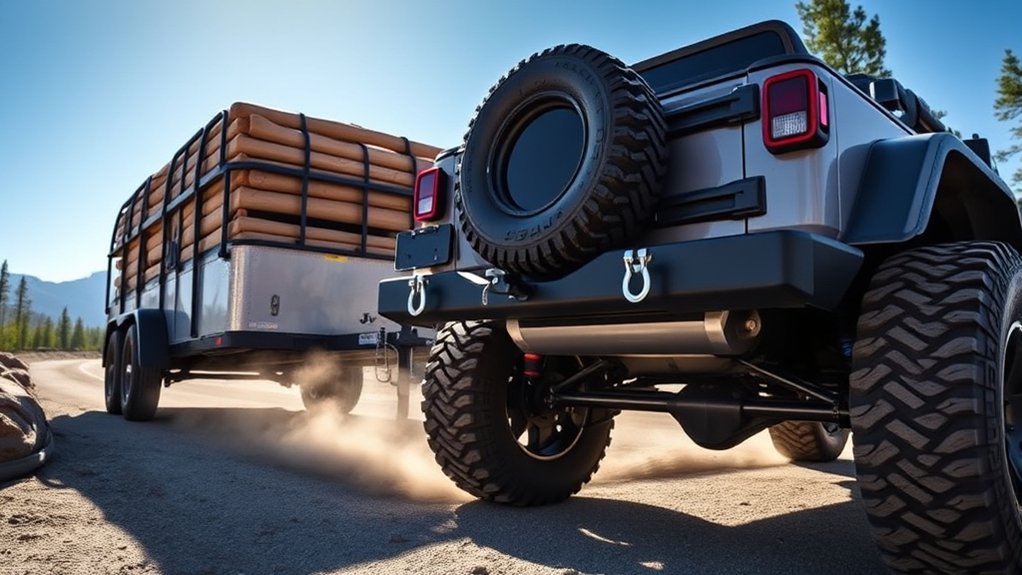
Before you hitch up your trailer, you need to know your Jeep Wrangler’s towing capacity to guarantee safe and efficient towing. Each model and year has specific limits, typically ranging from 2,000 to 3,500 pounds.
Know your Jeep Wrangler’s towing capacity before hitching for safe and efficient towing.
If you want to tow 4,000 lbs, you must confirm that your specific Wrangler variant is rated for that load or higher. Check your owner’s manual or the manufacturer’s website for exact figures.
Ignoring these limits can strain your engine, transmission, and brakes, risking damage or accidents. Also, consider the weight of your cargo, trailer, and any additional gear.
Knowing your Jeep’s towing capacity helps you avoid overloading, maintain control, and protect your vehicle’s longevity. Always stick to the recommended limits for safe towing.
Choose the Right Hitch and Towing Setup
Even if your Jeep Wrangler can handle 4,000 lbs, choosing the right hitch and towing setup is essential for safe towing.
Start by selecting a Class III or IV hitch rated for at least 4,000 lbs to match your trailer’s weight. Make certain the hitch receiver size fits your ball mount properly.
Use a ball mount with the correct ball size—commonly 2 inches for trailers in this weight range—to prevent coupling issues.
Don’t forget safety chains; they should be crossed under the hitch for backup security.
Also, install a trailer wiring harness compatible with your Jeep to connect brake lights and turn signals.
Properly setting up these components helps maintain control and stability, making your towing experience safer and more reliable.
Inspect and Upgrade Jeep Suspension for Towing
Before towing heavy loads, you need to inspect your Jeep’s suspension components for wear and damage.
Upgrading parts like springs and shocks can help handle the extra weight more safely.
Let’s look at the key areas to check and the best upgrade options for towing.
Suspension Components Inspection
While towing 4000 lbs with your Jeep Wrangler, you’ll need to carefully inspect the suspension components to make certain they can handle the extra weight. Start by checking the condition of the leaf springs or coil springs for cracks, sagging, or corrosion.
Examine the shock absorbers for leaks or loss of damping ability, as worn shocks reduce stability under load. Inspect all bushings and mounts for wear or damage, ensuring nothing’s loose or deteriorated.
Don’t forget to check the control arms and ball joints for play or excessive wear, which can compromise handling. Finally, verify the torque on all suspension bolts and fasteners—they must be tight to maintain structural integrity.
Regular inspection helps prevent suspension failure and keeps your Jeep safe while towing.
Suspension Upgrades Options
Since your Jeep Wrangler’s suspension must support extra weight when towing 4000 lbs, upgrading key components can improve safety and performance. Start by installing heavy-duty springs or add a helper spring kit to better handle the load and reduce sagging.
Consider upgrading your shocks to high-performance or monotube shocks for improved stability and control. A sway bar upgrade or adjustable sway bar end links can also help minimize body roll during turns.
Don’t overlook reinforced control arms or trailing arms, which enhance suspension strength and alignment under stress. Finally, check your bushings and replace them with polyurethane ones for better durability.
These upgrades will make sure your Jeep maintains proper ride height, handling, and braking ability while towing safely and confidently.
Set Up Trailer Brakes and Safety Chains for Jeep Wrangler
Before hitting the road, make sure you connect your trailer brake controller to your Jeep Wrangler for safe stopping power.
You’ll also need to attach the safety chains correctly, crossing them under the hitch to catch the trailer if it slips loose.
These steps are key to keeping your rig secure and in control.
Connecting Trailer Brake Controller
How do you guarantee your trailer brakes work seamlessly with your Jeep Wrangler? Start by locating your Jeep’s factory brake controller port, usually under the dash. Plug in your trailer brake controller adapter, matching the connector type.
If your Wrangler lacks a factory port, you’ll need to hardwire an aftermarket brake controller following its manual. Next, connect the controller to your trailer’s brake wiring harness through the 7-way trailer connector.
Double-check all connections for secure, corrosion-free contacts. Power on your Jeep and test the brake controller by manually activating it—your trailer brakes should respond immediately.
Adjust the brake controller’s gain settings to balance braking power smoothly between your Wrangler and trailer. Proper connection prevents brake lag and ensures safe stopping every time you tow.
Attaching Safety Chains Properly
After setting up your trailer’s brake controller, the next step is to secure your trailer with safety chains. Attach the chains in a crisscross pattern beneath the hitch to catch the trailer tongue if it disconnects. Make sure the chains have enough slack for turning but aren’t dragging on the ground. Use hooks or connectors rated for your trailer’s weight to guarantee safety.
| Step | Tip |
|---|---|
| 1. Cross Chains | Prevents trailer tongue from hitting ground |
| 2. Check Length | Enough slack for turns, no dragging |
| 3. Use Proper Hooks | Rated for 4000 lbs or more |
| 4. Inspect Regularly | Look for wear, rust, or damage |
Properly attached safety chains give you peace of mind while towing your Jeep Wrangler.
Load Your Trailer for Safe and Balanced Towing
When you load your trailer, you need to distribute the weight evenly to maintain control and prevent swaying. Place about 60% of the load toward the front half of the trailer to ensure proper tongue weight on your Jeep Wrangler’s hitch.
Avoid putting too much weight at the rear, which can cause fishtailing. Secure all items tightly to prevent shifting during transit, which could destabilize your trailer.
Keep heavy items low and centered over the axles to balance the load. Double-check that the cargo is balanced side to side as well as front to back.
Proper loading not only improves handling but also reduces stress on your vehicle’s suspension and braking systems, making your towing experience safer and more comfortable.
Check Tire Pressure and Condition Before Towing
Before you hit the road, make certain your Jeep’s tires are properly inflated to the ideal pressure for towing.
Check the tread depth carefully to guarantee good traction and avoid blowouts.
Taking these steps helps keep your vehicle stable and safe while hauling heavy loads.
Optimal Tire Pressure Levels
How do you guarantee your Jeep Wrangler handles the extra weight safely? Start by setting your tire pressure to the ideal levels recommended for towing. Underinflated tires can overheat and wear prematurely, while overinflated tires reduce traction and can lead to a harsh ride.
Check your owner’s manual or the sticker inside the driver’s door for the exact pressure specs when towing heavy loads. Generally, you’ll need to increase the tire pressure above your normal daily driving settings to handle the added weight effectively.
Use a reliable tire pressure gauge to check and adjust all four tires before you hit the road. This simple step ensures better stability, improved handling, and safer braking while towing your 4000-pound load.
Inspect Tire Tread Depth
Maintaining the right tire pressure sets a solid foundation, but checking your tire tread depth is just as important for safe towing. Tread depth affects traction, especially on wet or uneven surfaces. Before hooking up your trailer, measure your tire tread with a gauge or use the penny test: insert a penny into the tread with Lincoln’s head upside down. If you see the top of his head, it’s time to replace your tires.
| Tread Depth (32nds inch) | Condition |
|---|---|
| 8-10 | Excellent |
| 5-7 | Good |
| 3-4 | Worn – Replace Soon |
| 1-2 | Unsafe – Replace Immediately |
Keep your tires in top shape to guarantee your Jeep handles the heavy load safely.
Drive Safely With Heavy Loads: Key Tips
When towing heavy loads like 4000 lbs with your Jeep Wrangler, you’ll need to adjust your driving habits to guarantee safety. First, accelerate slowly to prevent strain on your engine and maintain control. Keep a greater following distance; heavy loads increase your stopping distance considerably. Brake early and gently to avoid sudden stops that could cause trailer sway.
Stay within speed limits and avoid sharp turns to maintain stability. Use your mirrors frequently to stay aware of your surroundings. If your Wrangler has a tow/haul mode, engage it to optimize transmission performance.
Ultimately, stay alert and avoid distractions—towing demands your full attention to respond quickly to road changes and traffic conditions. Drive cautiously and confidently for a safe journey.
Plan Your Route to Avoid Steep Hills and Rough Roads
Because towing 4000 lbs puts extra strain on your Jeep Wrangler, you’ll want to carefully plan your route to steer clear of steep hills and rough roads. Avoiding steep inclines helps prevent overheating and reduces stress on your brakes, transmission, and engine.
Use GPS or mapping apps to find flatter, well-paved roads, even if it means a slightly longer trip. Look for highways or main roads with gradual slopes and avoid unpaved or uneven surfaces that can cause instability or damage to your trailer and vehicle.
Planning ahead also lets you identify safe spots to pull over if needed. By choosing a smoother route, you’ll maintain better control, enhance safety, and protect your Jeep’s mechanical components during the tow.
Monitor Engine and Transmission Temperature While Towing
As you tow 4000 lbs with your Jeep Wrangler, keep a close eye on your engine and transmission temperatures to prevent overheating. Both components work harder under heavy loads, risking damage if they get too hot. Use your dashboard gauges regularly, and if your Jeep doesn’t have temperature gauges, consider installing aftermarket ones.
If you notice temperatures rising beyond normal levels, pull over safely and let your vehicle cool down. Avoid pushing your Jeep too hard on steep inclines or in stop-and-go traffic when hot.
Keeping an eye on these temperatures helps you catch issues early, ensuring your Jeep handles the tow without costly repairs. Staying proactive with temperature monitoring protects your engine and transmission’s longevity while towing heavy loads.
Maintain Your Jeep After Heavy Towing
Keeping a close watch on your engine and transmission temperatures during towing is just one part of caring for your Jeep. After towing heavy loads, you should give your Jeep a thorough inspection. Check your transmission fluid and engine oil levels, topping them off or changing them if needed.
Inspect your brakes and tires for wear, as towing adds extra stress. Don’t forget to examine suspension components and steering linkage for any damage.
Clean your Jeep to remove dirt and debris that could cause corrosion. Finally, if you notice any unusual noises or performance issues, get a professional mechanic to assess it.
Frequently Asked Questions
Can I Tow a 4000 Lbs Trailer With a Manual Transmission Jeep Wrangler?
Yes, you can tow a 4000 lbs trailer with your manual transmission Jeep Wrangler, but you’ll need to make sure your specific model’s towing capacity supports it and use the right hitch, brakes, and driving techniques for safety.
What Type of Fuel Is Best for Towing Heavy Loads With a Jeep?
Fuel quality is your trusty compass when towing heavy loads. You’ll want to use premium gasoline to keep your engine running smoothly and efficiently, preventing strain and releasing the power needed to conquer tough trails with confidence.
How Does Altitude Affect My Jeep Wrangler’s Towing Performance?
Higher altitude reduces your Jeep Wrangler’s engine power because thinner air means less oxygen for combustion. You’ll notice decreased towing performance, so you might need to downshift, reduce speed, or lighten your load to stay safe.
Are There Specific Jeep Wrangler Models Better Suited for Heavy Towing?
Yes, you’ll find Jeep Wrangler models like the Rubicon and Sahara better suited for heavy towing due to stronger engines and upgraded cooling systems. Choosing one with the V6 engine boosts your towing capacity considerably.
Can I Tow 4000 Lbs Off-Road With My Jeep Wrangler Safely?
You can tow 4000 lbs off-road with your Jeep Wrangler safely, but you’ve got to keep your eyes on the prize—manage speed, use proper equipment, and maintain control to avoid turning your adventure into a wild goose chase.
Conclusion
Now that you know how to tow 4,000 lbs with your Jeep Wrangler, you’re ready to hit the road confidently. Like a trusty stagecoach steering through dusty trails, your Jeep needs proper care and preparation to handle heavy loads safely. Keep your setup solid, drive cautiously, and monitor your vehicle’s health. With these steps, you’ll tow smoothly, whether it’s today or in a time when horsepower meant something else entirely. Safe travels ahead!