How to Identify the Lug Pattern on a Jeep Gladiator
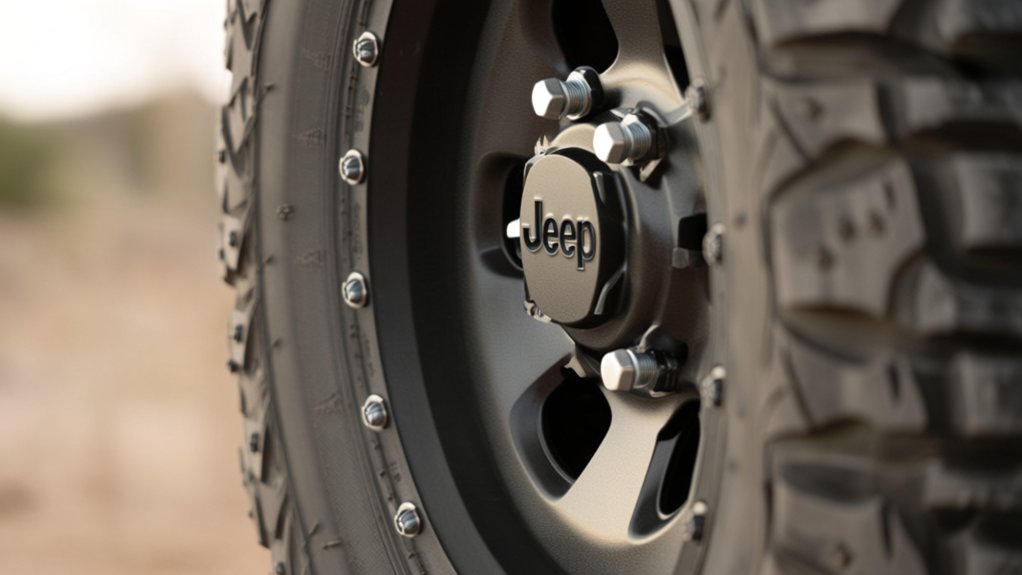
To identify the lug pattern on your Jeep Gladiator, first count the number of lug nuts—usually five or six. Then, measure the bolt circle diameter from the center of one lug nut to the center of the opposite one; for most Gladiators, it’s 5×5 inches. Use a caliper or rigid ruler for accuracy, and double-check your measurements to avoid mistakes. Matching this pattern guarantees safe wheel fitment and performance. Keep exploring to discover precise steps and upgrade tips.
What’s a Lug Pattern: And Why It Matters for Your Jeep Gladiator
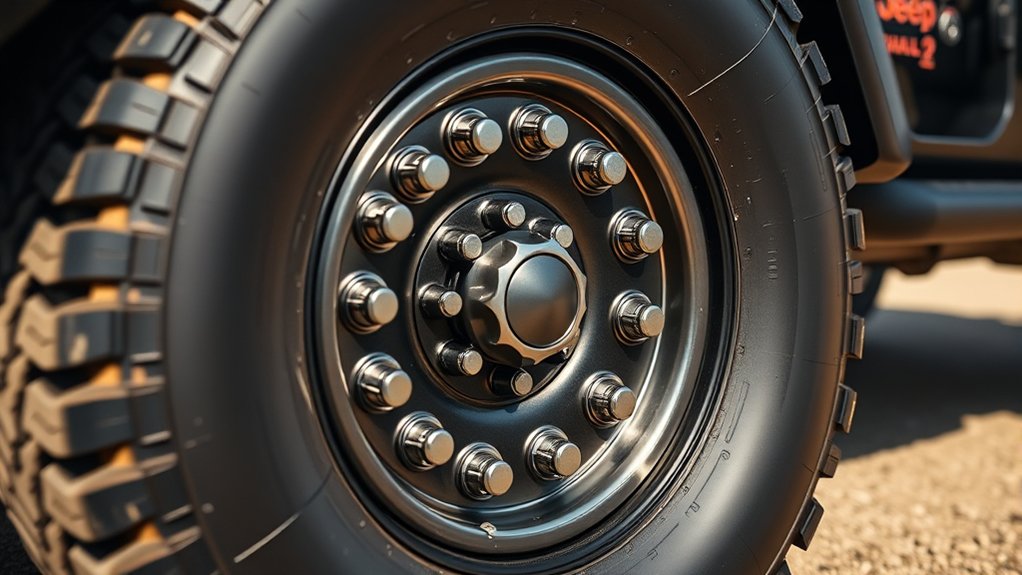
Before you pick out new wheels or tires for your Jeep Gladiator, you need to understand its lug pattern. The lug pattern refers to the number of lug holes and the distance between them on your wheel hub. It’s crucial because it ensures that your wheels fit securely and safely onto your vehicle.
If you choose wheels with the wrong lug pattern, they won’t mount properly, which can lead to dangerous driving conditions or damage to your Jeep. Knowing the lug pattern helps you avoid compatibility issues and saves you time and money.
It also guarantees optimal performance and stability, especially if you’re tackling off-road adventures. So, getting this detail right is a key step when upgrading or replacing your Gladiator’s wheels.
Jeep Gladiator Lug Pattern Specs by Model Year
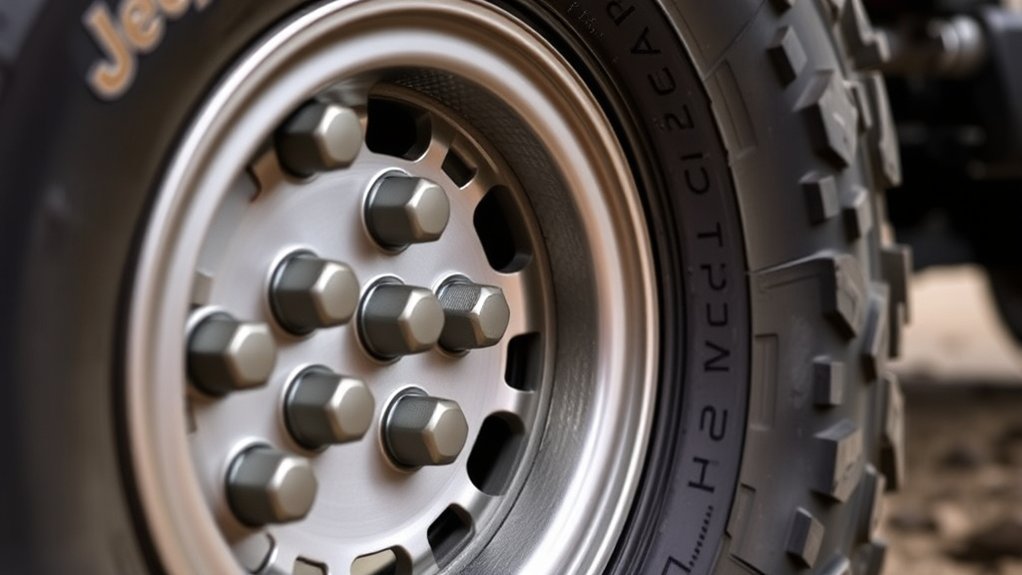
You’ll find that Jeep Gladiator lug patterns can vary depending on the model year, so it’s important to know what fits your truck.
Common lug sizes are often consistent but may shift slightly with different trims or updates.
Let’s look at the specific specs by year to make sure you get the right fit.
Yearly Pattern Variations
Although the Jeep Gladiator has maintained a consistent lug pattern across many model years, subtle variations can affect compatibility with wheels and accessories. If you’re upgrading or replacing parts, it’s important to note these yearly differences to avoid fitment issues.
For example:
- Early models (2019-2020) primarily use a 5×5-inch (127mm) lug pattern with standard bolt size.
- From 2021 onward, some trims introduced slight changes in lug nut seat design, impacting wheel compatibility.
- Limited editions may feature unique wheel designs requiring specific lug nut types or torque specs.
Common Lug Sizes
Several lug sizes have been used across different Jeep Gladiator model years, each affecting wheel fitment and performance. Most commonly, you’ll encounter the 5×5-inch (5×127 mm) lug pattern, which is standard for Gladiators from 2019 onward.
This size offers a solid balance of strength and compatibility with a wide range of aftermarket wheels.
Earlier models, like the 2005 to 2018 Jeep Gladiator concept or similar Jeep platforms, sometimes featured different lug sizes. However, the 5×5-inch pattern remains the consistent norm for production Gladiators.
Knowing the exact lug size helps you choose wheels that fit securely without risking damage or safety issues.
Always verify your Gladiator’s specific lug size before purchasing new wheels or tires to guarantee performance and safety.
Model-Specific Differences
Three key model years define the lug pattern differences in Jeep Gladiators. If you want to identify the right lug pattern, focus on these specific years:
- 2019-2020: These early Gladiators use a 5×5-inch (5x127mm) lug pattern, common among Jeep’s midsize trucks.
- 2021: Jeep introduced slight variations in wheel and brake designs, but the lug pattern stayed the same at 5×5 inches.
- 2022 and later: Some trims started offering upgraded wheel options, but the lug pattern remained consistent with previous years.
Knowing these distinctions helps you pick wheels or replacements that fit perfectly. Always double-check your model year before buying to avoid compatibility issues with lug patterns.
Tools You Need to Measure Your Gladiator’s Lug Pattern
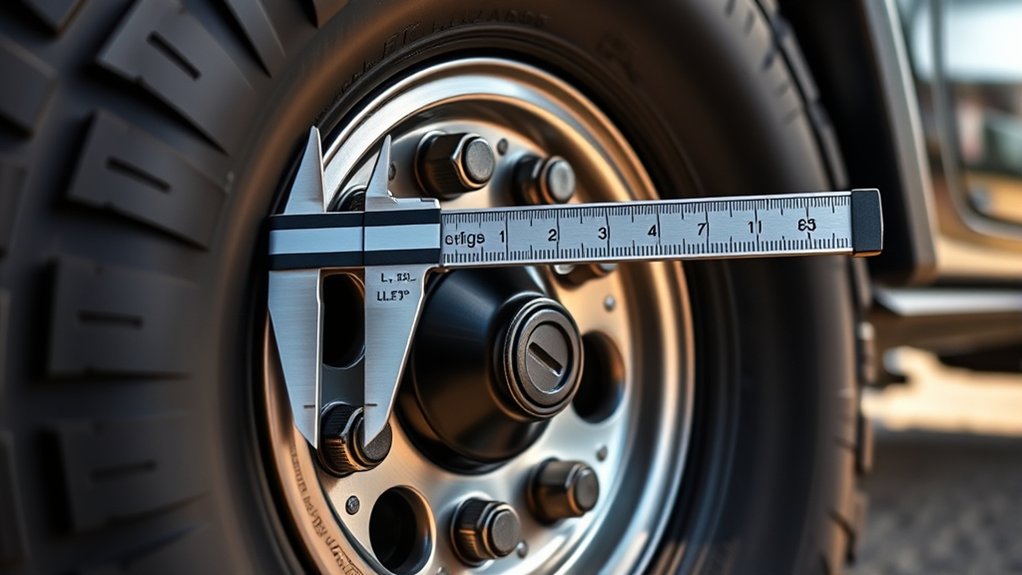
Before you start measuring your Gladiator’s lug pattern, gather the right tools to guarantee accuracy and ease. You’ll need a reliable tape measure or caliper to get precise distances between lug holes. A caliper is ideal if you have one, as it offers exact measurements without guesswork.
Also, have a notepad or your phone ready to jot down numbers. A flashlight can help if you’re working in low light or want to see lug holes clearly.
Finally, a clean rag is handy to wipe off dirt or debris from the wheel surface before measuring.
Having these tools on hand ensures you’ll get accurate measurements, making the identification process smoother and more reliable.
How to Measure Your Jeep Gladiator’s Lug Pattern Step-by-Step
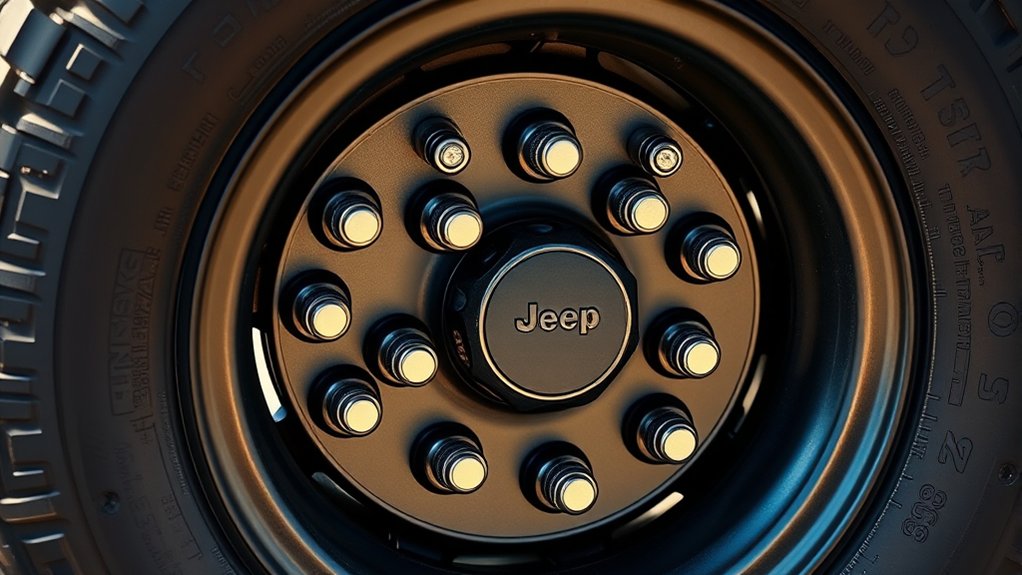
First, gather the tools you’ll need to get an accurate measurement.
Next, find the lug nut positions on your Jeep Gladiator’s wheel.
Finally, measure the diameter carefully to determine the correct lug pattern.
Gather Necessary Tools
Although measuring your Jeep Gladiator’s lug pattern might seem straightforward, having the right tools on hand makes the process much easier and more accurate. Before you start, gather everything you’ll need to guarantee precise measurements and avoid unnecessary trips.
Here’s what you should have ready:
- A ruler or tape measure: Preferably one with millimeter markings for accuracy.
- A caliper: Useful for measuring the distance between lug holes, especially on multi-lug wheels.
- A notebook and pen: To jot down your measurements and notes for reference.
With these tools, you’ll be well-equipped to measure your lug pattern correctly, setting you up for a smooth identification process.
Avoid skipping this step—it saves time and prevents errors later on.
Locate Lug Nut Positions
Where exactly do you start when measuring your Jeep Gladiator’s lug pattern? First, you need to locate the lug nut positions on your wheel. Count the number of lug nuts evenly spaced around the hub—this number is essential for identifying the pattern. Most Jeep Gladiators have either 5 or 6 lug nuts. Once counted, note their positions relative to each other.
Here’s a quick reference table to help you spot common lug nut configurations:
| Lug Nut Count | Common Patterns | Notes |
|---|---|---|
| 4 | 4×4, 4×100 | Less common on Gladiators |
| 5 | 5×5, 5×127 | Popular for many models |
| 6 | 6×5.5, 6×139.7 | Used on heavy-duty variants |
| 8 | 8×6.5 | Rare for Gladiators |
Knowing the lug nut count sets you up for the next measurement step.
Measure Diameter Accurately
To measure your Jeep Gladiator’s lug pattern diameter accurately, you’ll need a ruler or caliper and a steady hand.
First, identify the correct points to measure between lug holes, as the diameter is the distance across the circle formed by the centers of the lug nuts.
Here’s how to do it:
- For an even number of lug nuts, measure from the center of one lug hole directly across to the center of the opposite lug hole.
- For an odd number of lug nuts, measure from the center of one lug hole to the outer edge of the lug hole directly across.
- Use a caliper for the most precise measurement, especially when the diameter is close to standard sizes.
This guarantees you get the exact lug pattern diameter needed for replacements or upgrades.
Counting Lug Nuts on Your Jeep Gladiator Wheels
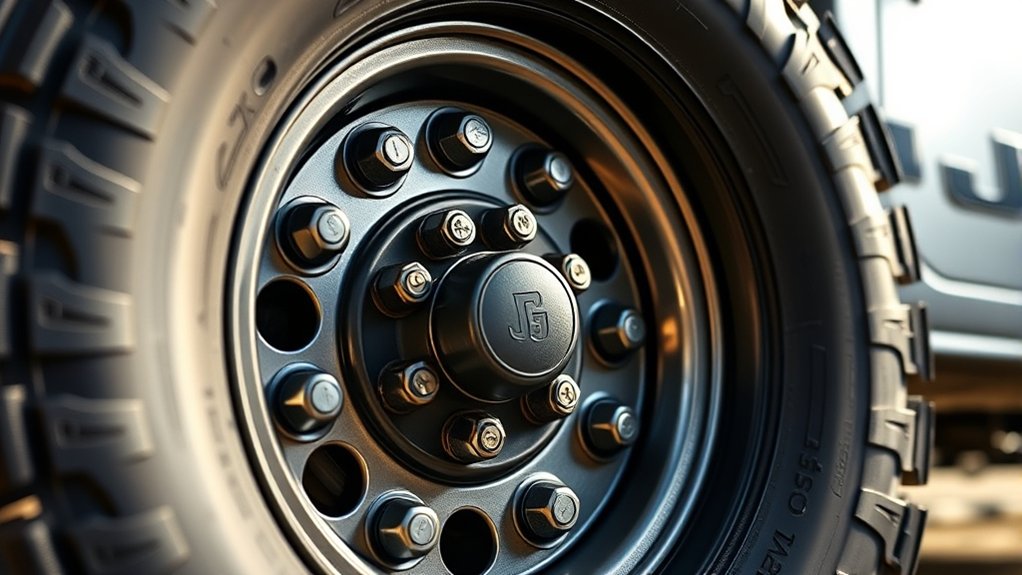
Counting the lug nuts on your Jeep Gladiator wheels is a simple yet essential step in identifying the correct lug pattern. You’ll want to carefully count each lug nut around the wheel hub. Most Jeep Gladiators have either 5 or 6 lug nuts, but confirming this helps guarantee you get the right fit for replacements or upgrades. Missing or extra lug nuts can lead to improper fitting and safety issues.
Here’s a quick guide to what you might find:
| Lug Nut Count | Feeling |
|---|---|
| 4 | Uncommon, cautious |
| 5 | Standard, reliable |
| 6 | Heavy-duty, strong |
| 7 | Rare, surprising |
| 8 | Off-road beast |
Knowing this detail keeps your Gladiator safe and ready to roll.
Measuring the Bolt Circle Diameter on Your Jeep Gladiator
Once you’ve confirmed the number of lug nuts, the next step is measuring the bolt circle diameter (BCD) on your Jeep Gladiator. The BCD is the distance across the wheel center, passing through the lug nut holes.
To measure it accurately, follow these steps:
- For an even number of lugs, measure from the center of one lug nut straight across to the center of the opposite lug nut.
- For an odd number of lugs, measure from the center of one lug nut to the outer edge of the lug nut directly across.
- Use a ruler or caliper for the most precise measurement, recording the distance in millimeters or inches.
This measurement helps you identify the exact lug pattern, ensuring you select compatible wheels or accessories.
Common Jeep Gladiator Lug Patterns and What They Mean
Although Jeep Gladiators come with various lug patterns, the most common ones you’ll encounter are 5×5 and 6×5.5 inches. The 5×5 pattern means there are five lug nuts spaced evenly around a 5-inch diameter circle. This pattern typically appears on earlier or more basic Gladiator models, offering a solid balance between strength and weight.
The 6×5.5 pattern, with six lug nuts on a 5.5-inch diameter circle, is usually found on heavier-duty or upgraded versions. It provides extra support for off-road use and heavier loads.
Knowing these patterns helps you pick the right wheels and tires, ensuring safety and performance. Identifying your Gladiator’s lug pattern accurately prevents fitment issues and makes upgrading simpler.
Spotting Differences Between Front and Rear Lug Patterns
You’ll notice the front lug pattern often has a slightly different size or bolt count compared to the rear. These differences can affect wheel fit and performance, so it’s important to spot them early.
Let’s look at what sets the front and rear lug patterns apart on your Jeep Gladiator.
Front Lug Pattern Features
When examining the lug patterns on your Jeep Gladiator, pay close attention to the front wheels, as they often differ from the rear in size and spacing. The front lug pattern is designed to handle steering forces and suspension stresses, which can affect the bolt size and spacing.
Here are key features to look for:
- Bolt Count: Typically 5 bolts arranged in a specific pattern, but confirm as some trims may vary.
- Bolt Circle Diameter (BCD): Measure the distance across the center of the lug holes; the front may have a slightly different BCD than the rear.
- Bolt Size and Thread Pitch: Front lug nuts might use a distinct thread size to ensure secure fitment under steering load.
Focusing on these details helps you identify the front lug pattern accurately.
Rear Lug Pattern Differences
Since the rear lug pattern on your Jeep Gladiator often differs from the front, it’s important to learn how to spot these differences. Typically, the rear lug pattern may have a different bolt circle diameter or number of lug nuts.
For example, while the front might use a 5-lug pattern with a 5×5-inch bolt circle, the rear could feature a stronger 6-lug pattern or a larger bolt circle to support heavier loads.
You can compare the number of lug nuts and measure the distance between them using a lug pattern gauge or ruler.
Pay close attention to these details when replacing or upgrading wheels to guarantee proper fitment, safety, and performance.
Knowing these distinctions helps you avoid costly mistakes and keeps your Gladiator ready for any adventure.
What to Do If Your Gladiator Has an Unusual Lug Pattern
If your Gladiator has an unusual lug pattern, don’t panic—it often means you’ll need to look beyond standard wheels to find the right fit.
Start by confirming the exact lug pattern with precise measurements.
Next, explore specialty wheel manufacturers who cater to unique or less common patterns.
You can also consult Jeep forums where owners share solutions for uncommon lug configurations.
Here are three steps to take:
- Measure the lug pattern carefully using a reliable tool.
- Search for aftermarket wheels designed for your specific pattern.
- Reach out to Jeep Gladiator communities or local off-road shops for advice.
How to Check Wheel Compatibility Beyond Lug Pattern
Although the lug pattern is essential, you’ll need to take into account other factors to guarantee your wheels fit and perform properly on your Jeep Gladiator.
First, check the wheel’s center bore size—it must match your hub to ensure a secure fit without vibrations.
Next, consider the wheel offset, which affects how far your wheels sit inward or outward. Incorrect offset can impact handling and cause clearance issues with brakes or suspension components.
Also, verify the wheel diameter and width to ensure they’re compatible with your tires and won’t rub against the fenders.
Finally, confirm the load rating of the wheels matches or exceeds your Gladiator’s requirements for safety and durability.
Paying attention to these details helps you avoid costly mistakes when upgrading your wheels.
Comparing Lug Patterns When Shopping for New Jeep Gladiator Wheels
When shopping for new Jeep Gladiator wheels, you’ll want to understand the specific lug sizes that fit your model. Matching your wheels to the correct lug pattern guarantees safety and proper fitment.
Let’s look at how different lug patterns affect your wheel choices.
Understanding Jeep Lug Sizes
Because lug size directly affects wheel compatibility and safety, understanding the different Jeep Gladiator lug patterns is essential before shopping for new wheels. Jeep Gladiators typically use a 5-lug pattern, but the exact lug size can vary.
Knowing these details helps you avoid mismatched wheels that could cause handling issues or damage.
Here are key points to take into account:
- Lug Nut Diameter: The thickness of the lug nut affects fit and torque specifications.
- Thread Pitch: This measures the distance between threads; using the wrong pitch risks stripping or loosening.
- Lug Seat Type: Jeep Gladiators often use conical seats, which ensure a secure fit when tightened.
Matching Wheels To Patterns
Knowing the specific lug size and type on your Jeep Gladiator sets the foundation for selecting compatible wheels. When shopping, you’ll want to compare lug patterns carefully to guarantee a perfect fit.
Don’t assume all wheels labeled for Jeep vehicles will match your Gladiator’s lug pattern. Check the bolt circle diameter and the number of lug holes—your Gladiator typically uses a 5-lug pattern, but verifying exact measurements is essential.
Using wheels with mismatched lug patterns can lead to unsafe driving conditions or damage. Always consult wheel specifications and, if possible, physically test fit the wheels before purchase.
Tips for Choosing Aftermarket Wheels That Fit Your Jeep Gladiator
Although selecting aftermarket wheels might seem straightforward, guarantee they fit your Jeep Gladiator requires careful attention to specific details. You want wheels that not only look great but also perform well and maintain safety.
Start by verifying the bolt pattern matches your Gladiator’s lug pattern. Next, consider the wheel size—diameter and width should align with your tires and suspension setup to avoid rubbing or handling issues.
Finally, check the wheel offset; it affects how the wheel sits in relation to the fender and suspension components.
Keep these tips in mind:
- Confirm bolt pattern compatibility
- Match wheel size with tire and suspension specs
- Choose the right offset for proper fit and clearance
Following these steps ensures your aftermarket wheels fit perfectly and function safely.
Why Matching Lug Patterns Is Critical for Safety and Performance
When you install wheels with the wrong lug pattern on your Jeep Gladiator, you risk compromising both safety and performance. The lug pattern ensures the wheel fits securely to the hub, maintaining proper alignment and balance.
If the pattern doesn’t match, the wheel may not seat correctly, leading to vibrations, uneven tire wear, or even wheel detachment while driving. This jeopardizes your control over the vehicle and increases the chances of accidents.
Additionally, incorrect lug patterns can strain suspension components and cause premature damage. By matching lug patterns precisely, you maintain peak handling, ride quality, and durability.
How to Avoid Common Mistakes When Measuring Lug Patterns
Because measuring lug patterns inaccurately can lead to costly mistakes, you need to be precise from the start. One common error is measuring the wrong distance between lug holes—always measure from the center of one lug hole to the center of the opposite lug hole, not edge to edge.
Another mistake is confusing the number of lug holes, so count carefully before you measure. Also, avoid using flexible tape measures that can bend and give false readings; a rigid ruler or caliper works best.
To avoid mistakes:
- Double-check how many lug holes your Jeep Gladiator has
- Measure center-to-center, never edge-to-edge
- Use a rigid measuring tool for accuracy
Following these tips ensures you identify the correct lug pattern every time.
Using Online Tools to Verify Your Gladiator’s Lug Pattern
If you want to double-check your measurements, online tools can quickly confirm your Jeep Gladiator’s lug pattern. Websites dedicated to wheel and tire specs often have searchable databases where you enter your Gladiator’s year and model.
These tools then display the exact lug pattern, bolt circle diameter, and other relevant details. Using these resources guarantees you avoid costly errors when purchasing wheels or tires.
Some sites even offer visual guides to help you compare your measurements with their data. You just need to input accurate information, and the tool does the rest, saving you time and guesswork.
These online verifications act as a reliable backup, making sure your Gladiator’s lug pattern matches what you measured physically.
Upgrading Your Jeep Gladiator Wheels With the Right Lug Pattern
Upgrading your Jeep Gladiator wheels requires selecting the right lug pattern to guarantee a secure fit and peak performance. Choosing wheels without matching the lug pattern can lead to unsafe driving conditions and damage.
To upgrade effectively, you should:
- Verify your Gladiator’s specific lug pattern using reliable sources or your vehicle manual.
- Select wheels designed to fit that exact pattern, ensuring compatibility with your brake system and suspension.
- Consider aftermarket options that offer both style and durability without compromising safety.
Frequently Asked Questions
What Materials Are Jeep Gladiator Wheels Typically Made From?
Jeep Gladiator wheels are typically made from aluminum alloy or steel. You’ll find aluminum alloy wheels offer better strength and lighter weight, while steel wheels tend to be more durable and budget-friendly, perfect for off-road adventures.
How Often Should I Rotate the Wheels on My Jeep Gladiator?
You should rotate your Jeep Gladiator’s wheels every 6,000 to 8,000 miles to guarantee even tire wear. Regular rotation helps maintain traction, extends tire life, and improves your vehicle’s overall performance and safety.
Can I Use Jeep Gladiator Wheels on Other Jeep Models?
Think of Jeep Gladiator wheels as puzzle pieces—they might fit other Jeep models if their lug patterns and sizes match. You’ll want to double-check compatibility to avoid any wrenching surprises down the road.
What Is the Recommended Tire Pressure for a Jeep Gladiator?
You should keep your Jeep Gladiator’s tire pressure around 35 PSI for most driving conditions. Check the driver’s side door jamb for exact specs, and adjust pressure based on load or off-road needs to stay safe.
How Do I Know When It’s Time to Replace My Jeep Gladiator Tires?
You’ll know it’s time to replace your Jeep Gladiator tires when the tread looks as worn out as old boots, or you feel vibrations and hear unusual noises while driving. Don’t wait—check them regularly!
Conclusion
Knowing your Jeep Gladiator’s lug pattern is key to keeping your ride reliable and ready. By carefully counting, measuring, and matching those lug nuts, you’ll avoid costly mistakes and guarantee smooth, safe journeys. Don’t forget to double-check with online tools for added accuracy. Whether upgrading or maintaining, mastering your lug pattern means making smart, safe, and seamless selections for your Gladiator’s wheels. Stay sharp, stay safe, and keep conquering those trails confidently!