How to Fix Code P0128 on a Jeep Wrangler
To fix code P0128 on your Jeep Wrangler, start by checking the coolant level and condition, ensuring it’s clean and topped off. Inspect the thermostat—it often causes this code by sticking open, preventing the engine from reaching ideal temperature. Test or replace the coolant temperature sensor and verify radiator and hoses are in good shape with no leaks. After repairs, clear the code and confirm the engine heats properly. Keep going to learn about proper maintenance and signs you shouldn’t ignore.
What Does Code P0128 Mean on a Jeep Wrangler
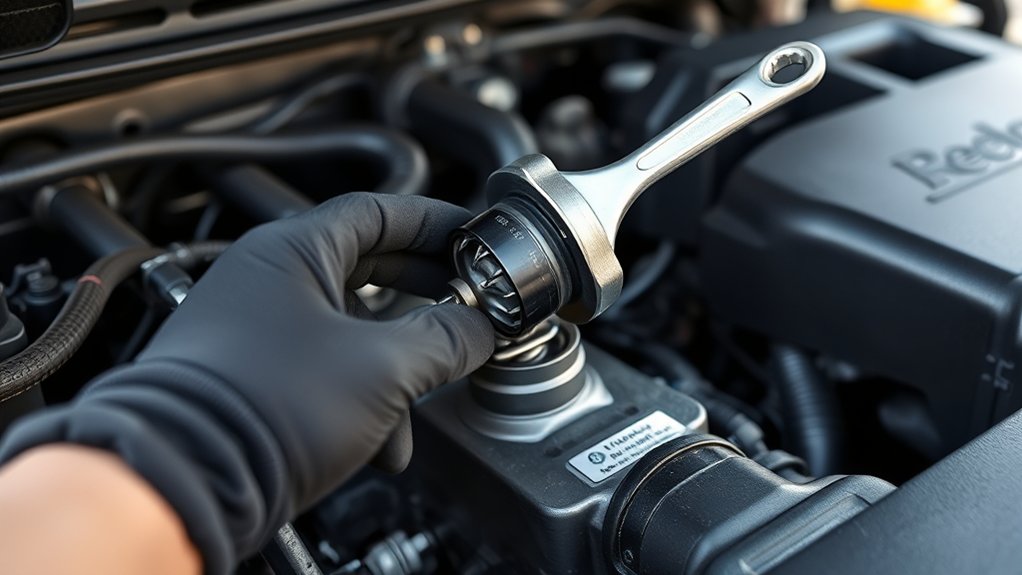
Although it might seem technical, code P0128 on your Jeep Wrangler simply means the engine isn’t reaching its ideal operating temperature quickly enough.
Your vehicle’s engine has a thermostat that controls coolant flow, helping it warm up efficiently. When the thermostat sticks open or malfunctions, coolant circulates continuously, preventing the engine from heating properly. This triggers the P0128 code.
When this happens, your Jeep’s computer notices the lower temperature and sets off the warning light to alert you.
Running the engine below its best temperature can affect fuel efficiency and emissions. Understanding this code helps you identify that the issue lies with the engine’s temperature regulation, not something more severe like transmission or ignition problems.
You can then focus on fixing the thermostat or related components to resolve the issue.
Common Reasons Coolant Temperature Fails to Rise on a Jeep Wrangler
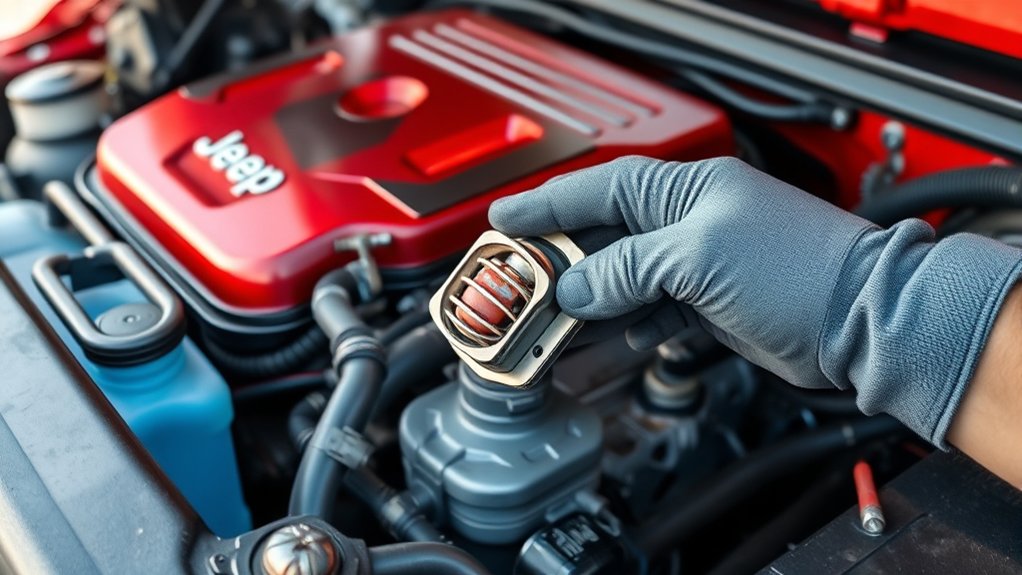
When your Jeep Wrangler’s coolant temperature fails to rise, several common issues might be at play. One possibility is a faulty coolant temperature sensor giving inaccurate readings, causing the engine control unit to think the engine is cooler than it actually is.
Another reason could be low coolant levels due to leaks or evaporation, preventing the engine from warming up properly. Air trapped in the cooling system can also stop coolant from circulating effectively, leading to false temperature readings.
Additionally, a malfunctioning radiator fan might run continuously, cooling the engine more than necessary.
Faulty Thermostat’s Role in P0128 Code
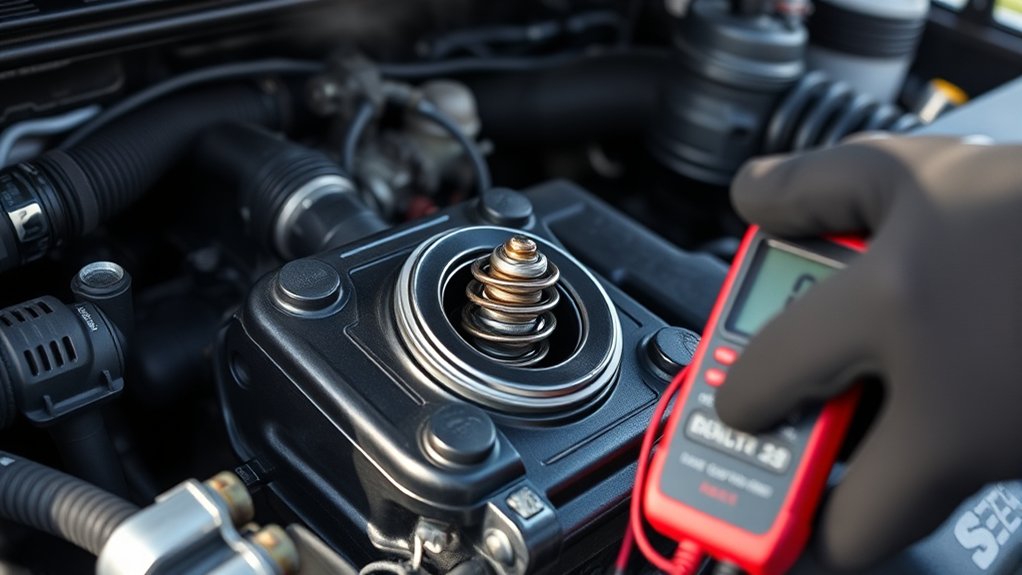
Since your Jeep Wrangler relies on the thermostat to regulate engine temperature, a faulty thermostat can directly trigger the P0128 code.
If the thermostat gets stuck open, coolant flows continuously, preventing the engine from reaching its ideal operating temperature. This causes the engine control unit (ECU) to detect a lower-than-expected temperature for too long, setting off the P0128 code.
You’ll likely notice poor heater performance and decreased fuel efficiency as well.
To fix this, you’ll need to inspect the thermostat for proper operation and replace it if it’s malfunctioning.
Addressing a faulty thermostat promptly helps your Jeep warm up correctly and avoids further complications linked to engine temperature regulation, keeping your vehicle running smoothly and efficiently.
Checking Jeep Wrangler Coolant Level and Condition
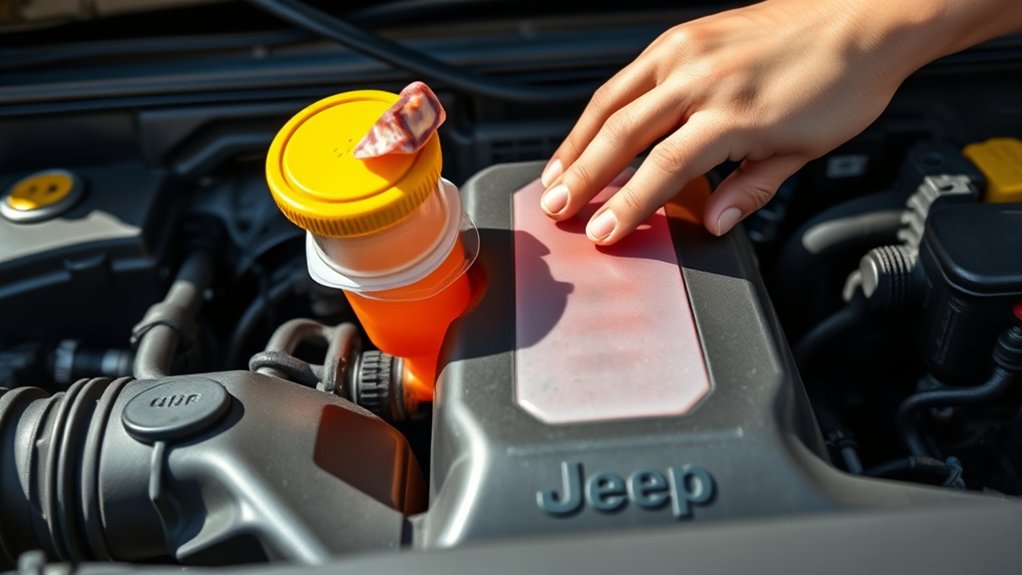
A faulty thermostat isn’t the only factor that can trigger the P0128 code on your Jeep Wrangler. You should also check the coolant level and its condition.
Low coolant can prevent your engine from reaching the proper operating temperature, causing this error. First, verify the engine is cool, then open the coolant reservoir cap and inspect the fluid level. It should be between the “MIN” and “MAX” marks.
If it’s low, top it off with the recommended coolant type. Also, examine the coolant’s color and clarity—fresh coolant is usually bright green, orange, or yellow, depending on the type.
If you see rust, debris, or it looks milky, it’s time to flush and replace the coolant to keep your cooling system running efficiently.
Inspecting Radiator and Cooling Fans for P0128 Issues
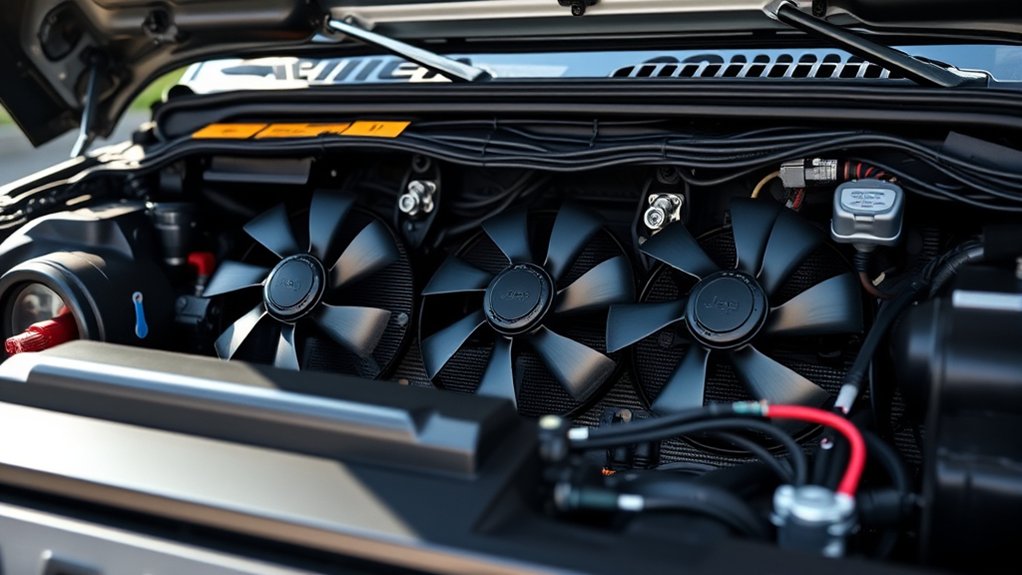
Now, check your radiator for any damage or blockages that could affect cooling.
Make certain your cooling fans turn on properly when the engine heats up.
Also, inspect the thermostat and temperature sensor to ensure they’re working right.
Radiator Condition Check
Before diving deeper into fixing the P0128 code, you should inspect the radiator and cooling fans to guarantee they’re operating properly.
Start by checking the radiator for any visible damage like cracks, leaks, or corrosion that could prevent proper coolant flow. Confirm the radiator fins aren’t bent or clogged with debris, as this restricts airflow and reduces cooling efficiency.
Next, look for any coolant residue around the radiator, which might indicate a leak. Also, confirm the radiator cap seals tightly, as a faulty cap can lower system pressure and temperature.
Finally, examine the hoses connected to the radiator for cracks or swelling.
A well-maintained radiator ensures your Jeep’s engine reaches and maintains the correct operating temperature, helping to resolve the P0128 code effectively.
Cooling Fan Operation
After ensuring the radiator and its components are in good shape, turn your attention to the cooling fans. These fans play an essential role in maintaining proper engine temperature. Here’s what you should do:
- Check if the fans spin freely by hand when the engine is off.
- Inspect the fan motor for any signs of damage or burning smell.
- Test the fan operation by running the engine and observing if fans activate when the temperature rises.
- Verify the electrical connections and fuses related to the cooling fans are secure and functional.
If the fans don’t operate as expected, they could cause the engine to run cooler than normal, triggering code P0128. Fixing or replacing faulty fans can restore proper cooling and help resolve the issue.
Thermostat and Sensor Inspection
Although the radiator and cooling fans are essential, the thermostat and temperature sensor play an equally important role in regulating engine temperature. When diagnosing P0128, you should inspect these components carefully. A stuck thermostat can prevent the engine from reaching ideal temperature, and a faulty sensor might send incorrect signals to the ECU, triggering the code.
Here’s a quick checklist to guide your inspection:
| Component | Symptoms | What to Do |
|---|---|---|
| Thermostat | Engine stays cool | Test or replace if stuck |
| Temperature Sensor | Erratic temperature readings | Clean or replace sensor |
| Wiring | Corrosion or damage | Inspect and repair as needed |
| Connectors | Loose or dirty connections | Clean and secure connections |
| Coolant Level | Low coolant | Top off to proper level |
Check these to fix P0128 effectively.
How to Test Your Jeep’s Coolant Temperature Sensor
To test your Jeep’s coolant temperature sensor, you first need to locate it near the thermostat housing or engine block.
Once you find the sensor, use a multimeter to check its resistance and compare the readings to the manufacturer’s specifications.
This simple test helps determine if the sensor is working correctly or needs replacement.
Locating The Sensor
Where exactly is your Jeep Wrangler’s coolant temperature sensor located? You’ll find it near the engine block, usually screwed into the cylinder head or intake manifold. It measures coolant temperature and sends this data to the engine control unit.
To locate it quickly, check these spots:
- Near the thermostat housing
- On the engine block, close to the radiator hose
- Around the intake manifold area
- Close to the coolant passages or coolant outlet
Before testing, ensure the engine is cool to avoid burns. Disconnect the wiring harness attached to the sensor carefully.
Knowing its exact location helps you inspect for damage or corrosion and prepares you for accurate testing or replacement.
Using A Multimeter
Before you start testing, make sure your multimeter is set to the correct resistance (ohms) setting, as this will help you accurately measure the coolant temperature sensor’s resistance and determine if it’s functioning properly.
First, disconnect the sensor’s electrical connector.
Then, place the multimeter probes on the sensor terminals.
Check the resistance reading and compare it to the specifications in your Jeep’s service manual.
Typically, resistance decreases as temperature rises.
To test at different temperatures, you can gently warm the sensor with hot water while monitoring the multimeter.
If the readings don’t change or fall outside the recommended range, the sensor is likely faulty and needs replacement.
Using a multimeter lets you pinpoint sensor issues before replacing parts unnecessarily.
Diagnosing Wiring and Connector Issues for P0128
Although the P0128 code often points to thermostat problems, wiring and connector issues can also trigger it. You should inspect these components carefully to rule out electrical faults.
Start by checking the wiring harness for any frays, breaks, or corrosion. Examine the connectors for loose pins or signs of moisture, which can cause poor connections.
Use a multimeter to test continuity in the wires leading to the coolant temperature sensor. Also, make certain the ground connections are secure and free of rust or dirt.
- Look for damaged or exposed wires
- Check connectors for corrosion or looseness
- Test wiring continuity with a multimeter
- Verify clean, tight ground connections
These steps help you pinpoint electrical problems causing the P0128 code.
When to Replace the Coolant Temperature Sensor
How do you know when it’s time to replace the coolant temperature sensor on your Jeep Wrangler? If your engine temperature gauge behaves erratically or the check engine light stays on with a P0128 code, the sensor might be failing.
Also, if your Jeep struggles to reach operating temperature or runs hotter than usual, the sensor could be sending inaccurate readings to the ECU. You might notice poor fuel economy or rough idling as well.
Before replacing it, ensure wiring and connectors are intact, as damage there can mimic sensor failure. If your tests confirm the sensor isn’t providing correct temperature data, replacing it is the next step.
Doing so helps restore proper engine temperature regulation and clears the P0128 code effectively.
Replacing a Stuck Thermostat Step-by-Step
If your Jeep’s thermostat is stuck, it can cause code P0128 to appear. You’ll need to diagnose the issue, remove the old thermostat, and install a new one to fix it.
Let’s walk through these steps so you can get your Wrangler running smoothly again.
Diagnosing Thermostat Issues
When your Jeep Wrangler displays the P0128 code, a stuck thermostat often causes the engine to run cooler than it should. To diagnose thermostat issues, start by checking the engine temperature gauge for signs of slow warming.
Next, inspect the coolant level and quality, as low or dirty coolant can affect thermostat function.
You can also test the thermostat directly by feeling the upper radiator hose; it should get hot as the engine warms up.
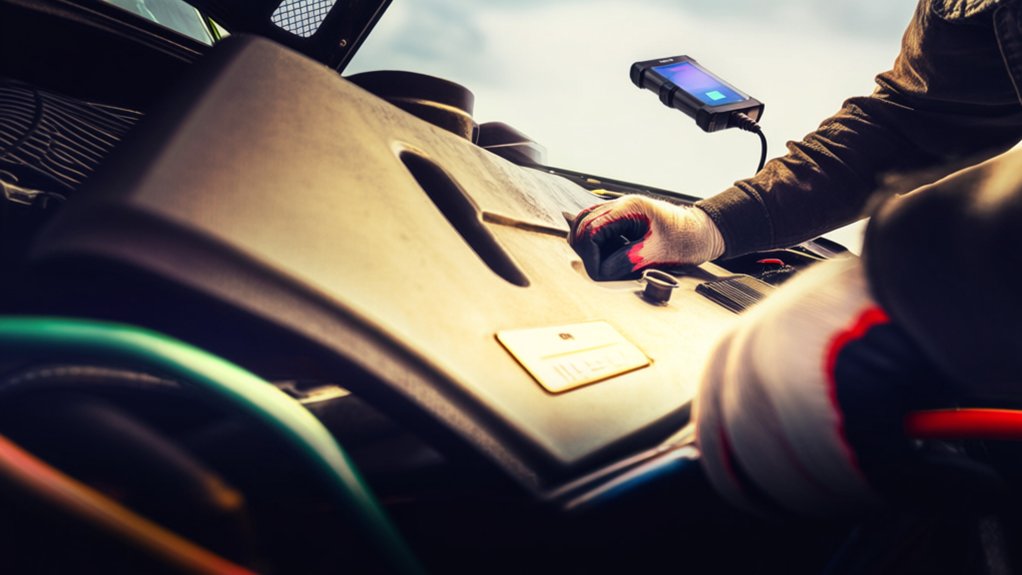
Finally, use an OBD-II scanner to monitor coolant temperature readings for inconsistencies.
- Observe engine temperature behavior during warm-up
- Verify coolant level and condition
- Feel radiator hose temperature changes
- Scan for real-time coolant temperature data
This approach helps confirm if the thermostat is the root cause before replacing it.
Removing Old Thermostat
Wondering where to start with removing the old thermostat on your Jeep Wrangler? First, make sure the engine is cool to avoid burns. Drain some coolant to prevent spills when you detach the thermostat housing. Then, loosen the bolts holding the housing and carefully lift it off to expose the thermostat.
Here’s a quick checklist to guide you:
| Step | Tool Needed | Tip |
|---|---|---|
| Drain coolant | Drain pan | Catch coolant to reuse or dispose |
| Remove bolts | Ratchet & socket | Keep bolts organized |
| Lift housing | Flathead screw driver | Pry gently to avoid damage |
| Remove old thermostat | Gloves | Note orientation for reinstall |
Handle the thermostat with care to avoid damaging the gasket or housing before you proceed to install the new one.
Installing New Thermostat
How do you guarantee a smooth installation of your new thermostat? Start by ensuring the engine is cool to avoid burns. Then, follow these key steps:
- Align the thermostat properly, with the spring side facing the engine.
- Place a new gasket or seal to prevent leaks.
- Secure the thermostat housing bolts evenly to avoid warping.
- Reconnect hoses and refill the cooling system with coolant.
Make sure you double-check for leaks once everything is tightened. After refilling, run the engine and watch the temperature gauge. If it rises steadily to normal, you’ve installed the thermostat correctly.
This step-by-step approach keeps your Jeep Wrangler’s cooling system functioning properly and helps clear the P0128 code caused by a stuck thermostat.
Flushing and Refilling Jeep Wrangler Cooling System for P0128
Before flushing and refilling the cooling system, you’ll need to guarantee the engine is completely cool to prevent injury. Start by locating the radiator drain plug and place a container underneath to catch the old coolant. Open the drain plug and let all the fluid drain out.
Next, close the plug and fill the radiator with a radiator flush solution and water. Run the engine for about 10 minutes with the heater on full to circulate the cleaner.
Afterward, drain the system again to remove the flush solution.
Finally, refill the radiator with a 50/50 mix of fresh antifreeze and distilled water. Make sure to bleed any air pockets by running the engine and topping off the coolant as needed to keep the system sealed and efficient.
How to Clear the P0128 Code After Repairs
Once you’ve completed all necessary repairs, you’ll need to clear the P0128 code to make sure your Jeep Wrangler’s system resets and runs smoothly. Clearing the code is essential to confirm the issue is fixed and prevent the check engine light from staying on.
Here’s how you can clear the code:
- Use an OBD-II scanner to read and erase the code.
- Disconnect the negative battery cable for about 15 minutes to reset the ECU.
- Start the engine and let it run until it reaches normal operating temperature.
- Drive your Jeep normally for a few trips to allow the ECU to re-learn and verify the repair.
After this, the P0128 code should be cleared, and your Jeep will operate without warning lights.
Maintenance Tips to Prevent P0128 Recurrence
To keep the P0128 code from coming back, you’ll want to check your coolant regularly and make sure it’s at the right level and in good condition.
Setting up a thermostat inspection schedule helps catch issues early before they cause bigger problems.
Don’t forget to maintain your radiator by cleaning it and checking for leaks to guarantee your engine stays at the right temperature.
Regular Coolant Checks
How often do you check your Jeep Wrangler’s coolant level? Regular checks help prevent the P0128 code by ensuring your engine stays at the right temperature.
Low or dirty coolant can cause your engine to run cooler than it should, triggering the error. Make it a habit to:
- Inspect coolant levels when the engine is cold
- Look for discoloration or debris in the coolant
- Check for leaks around hoses and the radiator
- Top off with the manufacturer-recommended coolant mix
Thermostat Inspection Schedule
Although your Jeep Wrangler’s thermostat often goes unnoticed, regularly inspecting it plays a crucial role in preventing the P0128 code from returning. You should check the thermostat at least once a year or every 15,000 miles, whichever comes first.
Look for signs of wear, corrosion, or sticking that could disrupt proper temperature regulation. When you inspect, pay attention to how quickly your engine reaches operating temperature—slow warming can indicate thermostat issues.
If you notice any irregularities, replace the thermostat promptly to avoid overheating or inefficient engine performance. Staying consistent with this inspection schedule ensures your cooling system works efficiently and helps you catch problems before they trigger the P0128 code again, saving you time and costly repairs down the road.
Radiator Maintenance Tips
Since your radiator plays a vital role in regulating your Jeep Wrangler’s engine temperature, keeping it well-maintained helps prevent the P0128 code from popping up again. Regular maintenance ensures efficient cooling and avoids overheating issues that trigger this code.
To keep your radiator in top shape, focus on these key tips:
- Check coolant levels frequently and top off with the recommended mixture
- Inspect radiator hoses for cracks, leaks, or softness and replace them if needed
- Flush the radiator every 30,000 miles or as specified in your owner’s manual
- Clean the radiator fins gently to remove debris and improve airflow
Signs You Should See a Mechanic for P0128 Issues
When your Jeep Wrangler’s engine temperature stays below the ideal range for too long, you’ll notice performance issues that shouldn’t be ignored. You might experience poor fuel efficiency or sluggish acceleration. The check engine light often comes on, signaling a P0128 trouble code.
If your heater isn’t warming up properly or the engine takes longer to reach operating temperature, these are clear signs something’s wrong. Don’t wait for the problem to worsen—persistent low engine temperature can cause increased emissions and damage over time.
If you notice any of these symptoms, it’s time to see a mechanic. A professional can accurately diagnose the cause and prevent further issues, ensuring your Jeep runs safely and reliably.
How Fixing P0128 Improves Jeep Wrangler Performance and Fuel Economy
If you fix the P0128 code on your Jeep Wrangler, you’ll notice immediate improvements in both performance and fuel economy. The engine reaches its ideal operating temperature faster, which means better combustion efficiency and reduced emissions. You’ll also experience smoother acceleration and more reliable throttle response.
Addressing this issue helps your engine run as designed, preventing unnecessary fuel waste.
Here’s how fixing P0128 benefits your Jeep Wrangler:
- Ensures the engine warms up properly for peak performance
- Improves fuel efficiency by preventing excessive fuel consumption
- Reduces engine wear caused by running too cool
- Enhances overall drivability with smoother throttle operation
Taking care of this code keeps your Jeep running efficiently and saves you money at the pump.
Frequently Asked Questions
Can P0128 Cause My Jeep Wrangler to Overheat?
No, P0128 itself usually won’t cause your Jeep Wrangler to overheat. It indicates the engine isn’t reaching ideal temperature quickly, but persistent cooling issues could lead to overheating, so you should still check your cooling system.
Is It Safe to Drive With a P0128 Code?
You can drive with a P0128 code, but you shouldn’t ignore it. It means your engine isn’t reaching ideal temperature, which can reduce fuel efficiency and increase emissions. Get it checked to avoid bigger problems.
How Long Does It Take to Fix a P0128 Code?
Fixing a P0128 code usually takes about 1 to 3 hours, depending on the cause. You’ll delve into coolant checks, thermostat swaps, or sensor replacements—each step bringing you closer to a happy, healthy engine.
Will Fixing P0128 Affect My Jeep’s Warranty?
Fixing code P0128 typically won’t void your Jeep’s warranty, especially if you use authorized service centers or genuine parts. Just keep all repair records and guarantee the fix complies with your warranty’s terms to stay protected.
Can P0128 Cause Other Engine Codes to Appear?
Yes, P0128 can trigger other engine codes because it indicates your engine isn’t reaching ideal temperature, which may cause sensors to misread or systems to compensate, leading to additional trouble codes showing up.
Conclusion
Fixing the P0128 code on your Jeep Wrangler isn’t just about clearing a warning light—it’s about keeping your engine running smoothly and efficiently. By checking your thermostat, coolant levels, and cooling system, you’ll nip problems in the bud before they snowball. Remember, a little maintenance goes a long way in preventing issues. If things feel out of your league, don’t hesitate to call a pro and keep your Jeep in tip-top shape.