How Do You Put a Roof Rack on a Jeep Wrangler?
To put a roof rack on your Jeep Wrangler, start by selecting a compatible rack that suits your storage needs. Clean and inspect your roof, then safely remove any factory parts using the right tools. Attach the mounting brackets securely at reinforced points, tightening bolts evenly with a torque wrench to avoid damage. Make sure the rack is aligned and stable before loading gear. Keep following along to discover how to manage loads, maintain your rack, and enhance its functionality.
Key Takeaways
- Select a compatible roof rack kit designed specifically for your Jeep Wrangler model and intended use.
- Clean and inspect the roof, addressing any scratches or rust before installation.
- Attach mounting brackets securely to reinforced points using provided hardware and a torque wrench.
- Align the rack evenly on the roof and tighten bolts in a crisscross pattern to ensure stability.
- Test the rack for wobble or looseness, adjusting mounting points until the rack sits firmly and balanced.
Tools and Materials Needed for Roof Rack Installation
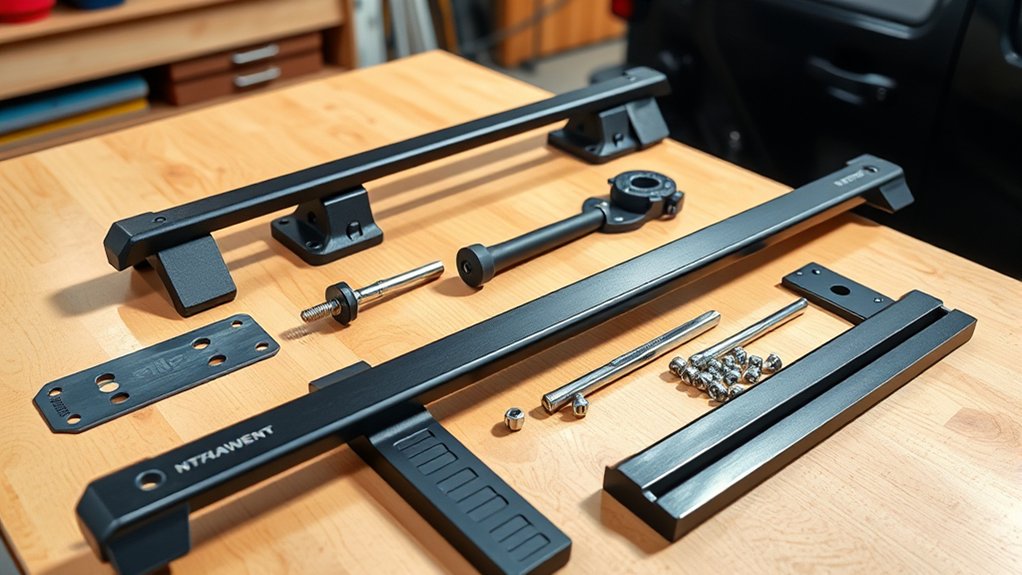
Before you begin installing a roof rack on your Jeep Wrangler, gather all the necessary tools and materials to guarantee a smooth process.
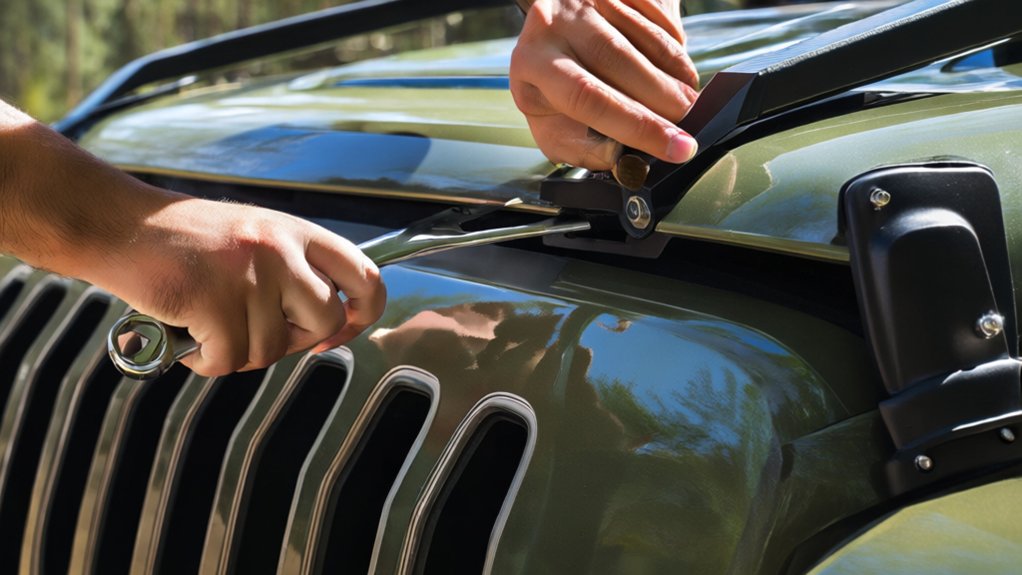
You’ll need a compatible roof rack kit designed for your Wrangler model. Have a socket wrench set handy, along with screwdrivers—both Phillips and flathead. A torque wrench is essential to tighten bolts to the right specification without overdoing it.
Don’t forget measuring tape and a marker to ensure precise placement. You might also want some thread locker to keep bolts secure against vibrations.
If your rack requires drilling, a power drill with the correct drill bits is vital. Finally, keep a clean cloth nearby to wipe down surfaces before installation.
Having everything ready saves time and prevents interruptions during the process.
How to Choose the Right Roof Rack for Your Jeep Wrangler
When selecting a roof rack for your Jeep Wrangler, you’ll want to think about how you plan to use it and the specific features that match your needs. Consider the weight capacity to guarantee it can handle your gear without compromising safety.
Look for a rack built from durable materials like aluminum or steel to withstand off-road conditions. Think about the rack’s design—whether you want a full-length rack for maximum storage or a smaller, streamlined option for occasional use.
Choose durable materials like aluminum or steel and consider a full-length or streamlined design for your Jeep roof rack.
Compatibility with your Jeep’s model and year is vital to avoid fitment issues. Also, factor in ease of installation and whether you need a rack that supports accessories like bike mounts or cargo boxes.
Choosing wisely ensures your roof rack performs well and lasts long.
Removing Factory Roof Components Safely
Although removing factory roof components might seem straightforward, you’ll need to handle each part carefully to avoid damage to your Jeep Wrangler. Start by gathering the necessary tools like screwdrivers, wrenches, and a trim removal tool.
Work slowly, loosening bolts and screws without forcing them. Keep track of all hardware you remove, storing it in a labeled container for easy reassembly if needed. Be gentle with plastic trim pieces to prevent cracking or warping.
If you encounter resistance, double-check for hidden fasteners or clips rather than applying extra force. Disconnect any electrical connections, such as for lights, cautiously to avoid wiring damage.
Taking your time and working methodically guarantees your Jeep’s roof stays in great shape while you prepare for the new rack installation.
Preparing Your Jeep Roof for Rack Installation
Since you’ve removed the factory roof components, you’ll need to thoroughly clean and inspect the roof surface to guarantee a secure rack installation. Start by washing off dirt, grease, and debris with soap and water, then dry the area completely. Check for any scratches, dents, or rust spots that could affect the rack’s stability. Address these issues before moving forward. Confirm the roof’s surface is smooth and free of obstacles where the rack will mount.
| Task | Tools Needed | Tips |
|---|---|---|
| Clean Roof | Soap, Water, Cloth | Use mild soap to avoid damage |
| Inspect Surface | Flashlight, Magnifier | Look closely for imperfections |
| Prepare Surface | Sandpaper, Rust Remover | Smooth rough spots and treat rust |
Taking these steps sets a solid foundation for your roof rack installation.
How to Attach Roof Rack Mounting Brackets
Start by identifying the exact mounting locations on your Jeep’s roof to guarantee a secure fit.
Next, firmly attach the brackets using the provided hardware, making sure they’re tight.
Finally, double-check the alignment to avoid any issues when installing the rest of the roof rack.
Identify Mounting Locations
Before attaching your roof rack mounting brackets, you need to locate the exact spots on your Jeep Wrangler where they’ll fit securely. Check for the predefined mounting points, usually found along the roof rails or the door frames. These spots are reinforced to handle weight and stress. Use the manufacturer’s guide or inspect your Jeep for visible holes or brackets. Confirm that these locations align with your roof rack’s mounting system for a snug fit.
| Location Type | Common Spot | Notes |
|---|---|---|
| Factory Roof Rails | Along the roof edges | Reinforced, easy access |
| Door Frame | Near window seals | Hidden mounting points |
| Windshield Frame | Front corners | Supports front bracket |
| Rear Roll Bar | Behind rear seats | Adds extra stability |
Identifying these spots guarantees your roof rack sits firm and safe.
Secure Brackets Firmly
Once you’ve identified the mounting locations, you’ll need to secure the brackets firmly to guarantee your roof rack stays stable during use.
Start by positioning each bracket over the mounting points, making sure they sit flush against the roof. Use the provided bolts or screws to attach them, tightening each one by hand first.
Then, grab a wrench or ratchet to fully tighten the fasteners, ensuring they’re snug but not over-tightened to avoid damaging the Jeep’s surface.
Double-check that the brackets don’t shift or wiggle once tightened.
If your rack uses rubber seals or pads, make sure they’re properly aligned to prevent water leaks and protect the paint.
Taking these steps assures a solid foundation for your roof rack.
Check Alignment Accuracy
Although securing the brackets firmly is essential, you’ll want to double-check their alignment before fully tightening them. Misaligned brackets can cause uneven weight distribution and stress on your roof rack.
Use a measuring tape or ruler to verify both brackets sit at the same distance from the windshield and side edges. Check that the brackets are parallel to each other and aligned with the roof rails or mounting points.
A level tool can help confirm they’re perfectly horizontal. Adjust the brackets slightly if needed to avoid any tilt or skew.
Once you’re confident the alignment is accurate, go ahead and tighten the bolts completely. Taking this extra step guarantees your roof rack will be stable, secure, and ready for your next adventure.
Securing Crossbars to Your Jeep Wrangler Roof Rack
While attaching the crossbars to your Jeep Wrangler roof rack might seem straightforward, ensuring they’re securely fastened is essential for safety and stability.
Start by positioning each crossbar onto the mounting brackets, making sure they sit flush with the roof rails. Align the crossbar ends carefully, so they’re evenly spaced and parallel.
Position each crossbar onto the brackets, ensuring they sit flush and the ends are evenly spaced and parallel.
Once in place, press down firmly to engage any locking mechanisms or clips designed to hold the bars steady. Check that the crossbars don’t shift when you apply gentle pressure.
If your rack includes adjustable clamps or hooks, make sure they fully grip the roof rails without gaps.
Taking these steps prevents unwanted movement, ensuring your load stays secure while you’re on the road. Properly secured crossbars also help reduce wind noise and wear.
Tightening Bolts and Fasteners Correctly
After positioning and securing the crossbars on your Jeep Wrangler roof rack, the next step is to tighten all bolts and fasteners properly. Use a torque wrench to guarantee each bolt reaches the manufacturer’s recommended tightness. Avoid over-tightening, which can strip threads or damage components, and under-tightening, which risks loosening during use. Tighten in a crisscross pattern to distribute pressure evenly. Check each fastener twice for safety.
| Bolt Location | Torque Spec (ft-lbs) | Tightening Sequence |
|---|---|---|
| Front Left | 25 | 1 |
| Front Right | 25 | 2 |
| Rear Left | 25 | 3 |
| Rear Right | 25 | 4 |
| Center Crossbar | 30 | 5 |
Checking Roof Rack Alignment and Stability
Now that your bolts are tight, make sure the roof rack sits properly aligned on your Jeep. Check that it’s centered and straight to avoid any shifting while driving.
Give each mounting point a firm shake to confirm everything’s secure and stable.
Ensuring Proper Rack Position
Because a misaligned roof rack can compromise safety and performance, you’ll want to carefully check its position before fully tightening any bolts. Start by visually inspecting the rack to guarantee it sits evenly across your Jeep’s roof. Use a level or straight edge to confirm it’s perfectly horizontal. Next, gently shake the rack to test for any wobble or looseness. If you find any misalignment, adjust the mounting points until the rack feels stable and balanced.
| Feeling | Cause | Fix |
|---|---|---|
| Uneasy | Rack tilting | Reposition mounting points |
| Frustrated | Wobbling rack | Tighten bolts partially |
| Confident | Stable and aligned rack | Proceed to final tightening |
Testing Mounting Tightness
Although you’ve positioned the roof rack correctly, you still need to test the mounting tightness to make sure it won’t shift during use. Start by pressing down firmly on the rack and gently rocking it side to side. If you feel any movement, tighten the mounting bolts or clamps incrementally.
Use a torque wrench if possible to apply the manufacturer’s recommended tightness—this guarantees you don’t overtighten and risk damaging the Jeep or rack.
Next, visually inspect the alignment to confirm the rack sits evenly without tilting.
Finally, take a short drive and listen for any rattling or unusual noises. Afterward, recheck all fasteners.
Making sure your roof rack is securely mounted keeps your gear safe and prevents damage while you’re on the road.
Jeep Wrangler Roof Rack Weight Limits to Follow
When installing a roof rack on your Jeep Wrangler, you’ll need to pay close attention to its weight limits to guarantee safety and performance.
Typically, the roof rack itself has a maximum load capacity, often around 150 to 200 pounds, but this can vary by model and manufacturer.
Additionally, your Jeep’s roof structure has its own weight limit, which you shouldn’t exceed to avoid damage or compromised handling.
Always check your owner’s manual and the rack’s specifications before loading.
Overloading can lead to roof damage, reduced fuel efficiency, and unsafe driving conditions.
By respecting these weight limits, you’ll ensure your gear stays secure and your Jeep handles well on the road or trails.
Don’t guess—measure and stay within the recommended limits.
How to Load Gear Safely for Balanced Driving
To keep your Jeep Wrangler stable and responsive, you need to load your gear on the roof rack thoughtfully. Start by placing heavier items closest to the center of the roof to maintain balance and lower the center of gravity.
Distribute the weight evenly from side to side to avoid leaning during turns. Secure your gear tightly with straps or bungee cords to prevent shifting while driving.
Avoid stacking items too high, which can increase wind resistance and affect handling. Make certain to check the total weight against your roof rack’s limits to prevent overloading.
Fixing Roof Rack Noise and Vibration Issues
If your roof rack starts making noise or causing vibrations while driving, it’s important to address these issues promptly. First, check all mounting points and bolts to ensure they’re tight; loose hardware is a common culprit.
Next, inspect the rack’s crossbars and attachments for any worn or missing rubber pads, which help dampen vibrations. Replacing or adding these pads can notably reduce noise.
You should also look for any metal-on-metal contact and apply weather-resistant lubricant if needed to prevent squeaks.
If wind noise persists, consider adding aerodynamic fairings designed for your Jeep Wrangler’s roof rack.
Finally, double-check your load’s balance and secure it properly, as uneven weight distribution can cause vibrations.
Taking these steps will keep your ride quieter and more comfortable.
How to Remove or Adjust Your Roof Rack When Not in Use
Although roof racks provide great utility, you might want to remove or adjust them when not in use to reduce wind resistance and improve fuel efficiency. Start by clearing any cargo and loosening the mounting bolts or clamps securing the rack to your Jeep.
Carefully lift the rack off the mounting points, ensuring you don’t damage the paint or roof seals. If you prefer to keep the rack installed but want to minimize drag, adjust any adjustable crossbars or side rails to a lower profile.
Regularly inspect the mounting hardware for wear and tighten everything before reinstalling. Storing the rack in a dry, safe place will prevent rust and damage.
Taking these steps helps maintain your Jeep’s performance and prolongs the roof rack’s lifespan.
Adding Accessories to Your Jeep Wrangler Roof Rack
Now that your roof rack is set up, it’s time to choose accessories that fit both your Jeep Wrangler and your adventure needs. You’ll want to pick gear that secures tightly and helps you stay organized on the road.
Let’s look at options that make loading and hauling easier and safer.
Choosing Compatible Accessories
When selecting accessories for your Jeep Wrangler roof rack, you’ll want to prioritize compatibility to guarantee secure attachment and peak performance. First, check the manufacturer’s guidelines to verify accessories match your roof rack’s make and model.
Look for mounting systems designed specifically for your rack’s crossbars or side rails, as universal fits mightn’t provide the stability you need. Consider the weight capacity of both the rack and the accessories; overloading can cause damage or unsafe driving conditions.
Choose accessories like cargo boxes, bike mounts, or kayak carriers that feature sturdy clamps or brackets compatible with your rack’s design. By focusing on compatibility, you’ll avoid unnecessary adjustments and make your gear easier and safer to transport on your Jeep Wrangler.
Securing and Organizing Gear
Since your roof rack and accessories are compatible, you can focus on securing and organizing your gear efficiently. Start by distributing weight evenly to maintain balance and prevent shifting while driving.
Use durable straps or bungee cords to fasten items tightly, avoiding loose ends that could flap in the wind. Consider waterproof bags or containers to protect your gear from the elements.
Finally, label and arrange your gear for easy access during your trip.
- Secure heavy items closest to the roof for stability
- Use cargo nets to keep smaller items in place
- Attach accessory mounts for tools and recovery gear
- Organize by frequency of use for quick retrieval
Following these tips guarantees your gear stays safe and your ride remains smooth.
Maintaining Your Jeep Wrangler Roof Rack Over Time
Although installing your Jeep Wrangler roof rack is an essential step, maintaining it over time guarantees it stays secure and functional. Regular checks prevent rust and loose bolts, ensuring safety on every trip. Clean the rack to avoid buildup that could damage the finish or weaken attachments.
| Task | Frequency |
|---|---|
| Inspect bolts | Every month |
| Clean rack | After every trip |
| Lubricate locks | Every 3 months |
| Check for rust | Every 6 months |
Use mild soap and water for cleaning, and avoid harsh chemicals. Tighten bolts with the right tools, and apply lubricant to moving parts to prevent wear. Keeping up with these simple tasks will extend your rack’s life and keep it ready for any adventure.
Best Upgrades and Add-Ons for Jeep Wrangler Roof Racks
Looking to maximize your Jeep Wrangler roof rack’s potential? You’ve got plenty of options to enhance functionality and style. Adding the right upgrades lets you tailor your setup for every adventure.
Consider these top add-ons:
- Cargo baskets for extra storage that keeps gear secure and organized.
- LED light bars to improve visibility during nighttime drives or off-road trips.
- Tie-down anchors that provide strong, adjustable points to fasten your cargo safely.
- Awning attachments offering quick shade and shelter wherever you stop.
These upgrades don’t just boost capacity—they make loading, securing, and accessing your gear easier.
Choose what fits your lifestyle and hit the road with confidence.
Frequently Asked Questions
Can I Install a Roof Rack on a Soft Top Jeep Wrangler?
Yes, you can install a roof rack on a soft top Jeep Wrangler. You’ll need a rack designed specifically for soft tops, ensuring it fits securely without damaging the fabric or frame while providing sturdy support for your gear.
Will a Roof Rack Affect My Jeep Wrangler’s Fuel Efficiency?
Yes, a roof rack will slightly reduce your Jeep Wrangler’s fuel efficiency because it adds weight and increases wind resistance. You’ll notice more drag, especially at higher speeds, which means your engine works harder and uses more fuel.
Are There Any Legal Restrictions for Roof Rack Use on Public Roads?
Yes, you’ll want to check local laws since some places limit roof rack height or load weight. Make sure your setup doesn’t block lights or license plates, and always secure your cargo to avoid fines or accidents on public roads.
How Does a Roof Rack Impact My Jeep Wrangler’s Resale Value?
Oh, nothing says “I’m ready for adventure” like a roof rack! You’ll actually boost your Jeep Wrangler’s resale value if it’s high-quality and well-installed, showing buyers you cared about utility and style—just don’t overload it!
Can Roof Racks Be Used in Extreme Weather Conditions?
Yes, you can use roof racks in extreme weather conditions if you choose high-quality, weather-resistant materials. Just make sure to regularly check for rust or damage, and tighten bolts to keep it secure during harsh weather.
Conclusion
Installing a roof rack on your Jeep Wrangler is a straightforward step that markedly strengthens storage solutions. By selecting sturdy supplies, securing strong supports, and staying steady during setup, you’ll swiftly see the satisfying success of a safe, stylish rack. Remember, regular maintenance maximizes your rack’s resilience and readiness for rugged roads. So, stay smart, stay steady, and savor the seamless storage space that your Jeep’s roof rack provides on every adventure.