Can a Jeep Wrangler Hard Top Go Through a Carwash?
You can take your Jeep Wrangler hard top through most automatic carwashes if it’s securely fastened and fits within the clearance limits. Touchless carwashes are safer since they avoid brush-related scratches, but rotating brushes can cause abrasions or seal damage. High-pressure water usually won’t cause leaks if seals are in good shape. Regularly inspect your hard top and accessories before and after washing to avoid damage. Keep following for tips on protecting and maintaining your Jeep’s hard top.
Key Takeaways
- Jeep Wrangler hard tops can generally go through carwashes if securely fastened and within height and width clearance limits.
- Touchless carwashes are safer as they avoid abrasive brushes that may cause scratches or seal damage.
- Automatic carwashes with rotating brushes pose higher risks of abrasions, paint fading, and seal weakening.
- Remove or secure loose accessories like antennas and roof racks before entering a carwash to prevent damage.
- Regular inspection of seals and finishes after carwashes helps detect leaks, scratches, or hardware issues early.
Can a Jeep Wrangler Hard Top Safely Go Through an Automatic Carwash?
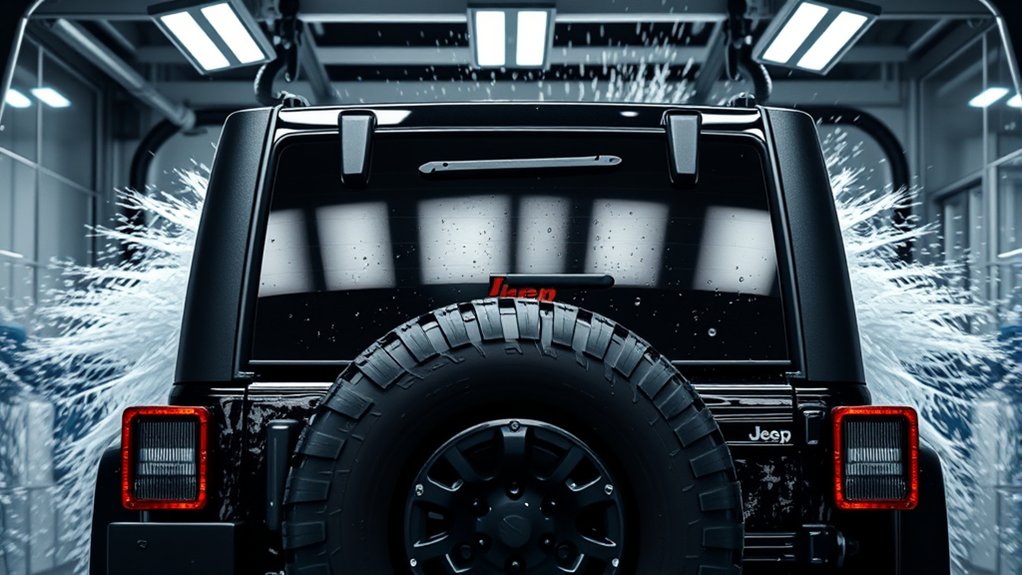
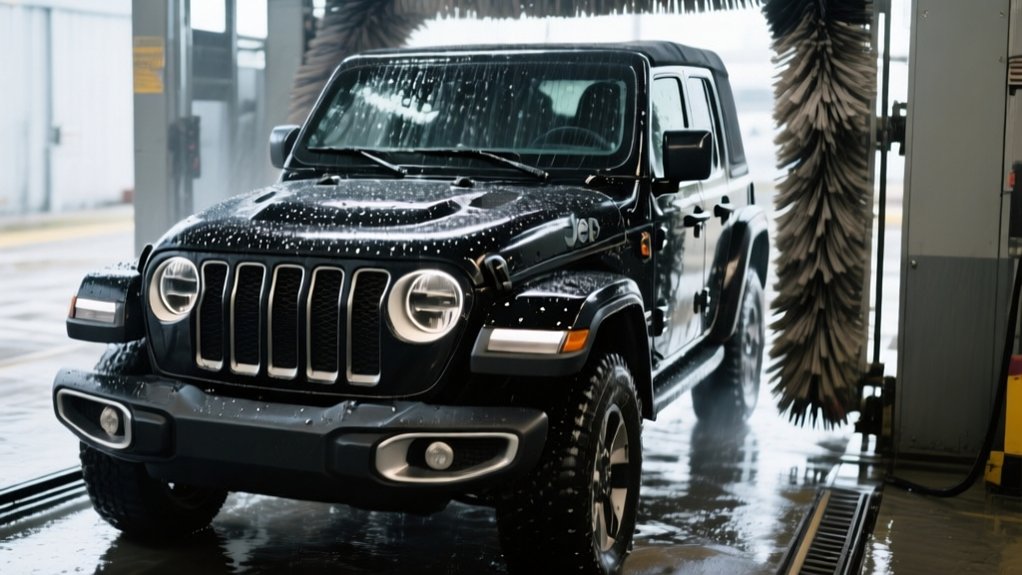
Wondering if your Jeep Wrangler hard top can safely go through an automatic carwash? The good news is that most Jeep Wrangler hard tops are designed to withstand everyday wear, including carwash brushes and water pressure.
You can generally drive through an automatic carwash without worrying about damaging the hard top itself. However, you should verify the hard top is securely fastened before entering to avoid any movement during the wash cycle.
Also, check your Jeep’s height and width against the carwash’s clearance limits to prevent any scraping or collisions. Using a touchless carwash system can further reduce the risk of scratches or damage since it doesn’t rely on brushes.
What Risks Does a Carwash Pose to Your Jeep Hard Top?
Although carwashes offer convenience, they can expose your Jeep Wrangler hard top to certain risks. The brushes and harsh chemicals might cause damage if you’re not careful. Here’s what you should watch out for:
- Scratches and abrasions: Rough brushes can leave marks on the hard top’s surface.
- Seal damage: High-pressure water might weaken or loosen seals, leading to leaks.
- Paint fading: Harsh detergents can dull your hard top’s finish over time.
- Loose parts: Automatic systems might jar or dislodge accessories like antennas or roof racks.
Knowing these risks helps you decide if a carwash is worth it or if you should opt for hand washing to protect your Jeep’s hard top.
How Do Different Types of Carwashes Affect Jeep Hard Tops?
Since not all carwashes operate the same way, understanding how each type affects your Jeep Wrangler’s hard top can help you choose the safest option.
Touchless carwashes use high-pressure water and detergents without brushes, minimizing the risk of scratches or damage to the hard top’s finish.
Touchless carwashes clean gently with high-pressure water and detergents, reducing scratches and protecting your hard top’s finish.
On the other hand, automatic carwashes with rotating brushes can be harsher, potentially causing abrasions or loosening seals.
Hand washes offer the most control, letting you avoid harsh chemicals or rough materials, but they require time and care.
Some specialty carwashes even use softer cloth or foam brushes designed to protect sensitive surfaces like hard tops.
Knowing these differences lets you pick a method that cleans effectively while preserving your Jeep’s hard top condition.
Why Scratches and Swirls Matter for Your Jeep Hard Top’s Finish
You want your Jeep hard top to stay looking sharp and last longer, so avoiding scratches and swirls is key. These surface imperfections can weaken the finish and make it more vulnerable to damage.
Taking care of your hard top helps maintain its durable finish and keeps it protected against the elements.
Impact Of Surface Imperfections
When scratches and swirls mar your Jeep Wrangler hard top, they don’t just affect its appearance—they compromise the protective finish that shields it from the elements. These surface imperfections create tiny openings where dirt, moisture, and UV rays can penetrate, accelerating wear and fading. Ignoring them can lead to corrosion and a dull, uneven look that’s tough to reverse.
Here’s why you should care about surface imperfections:
- They reduce the effectiveness of waterproof coatings.
- Dirt and grime lodge in scratches, making cleaning harder.
- UV exposure through swirls speeds up paint oxidation.
- Small damages can grow into larger, costly repairs over time.
Taking these impacts seriously helps you keep your hard top looking great and durable longer.
Maintaining Durable Finish
Although scratches and swirls might seem minor, they play a big role in how well your Jeep Wrangler hard top holds up over time. These imperfections can trap dirt and moisture, accelerating wear and dulling the finish. To keep your hard top looking its best, you need to address these issues promptly and use gentle cleaning methods.
| Issue | Cause | Effect on Finish |
|---|---|---|
| Scratches | Carwash brushes, debris | Paint damage, dullness |
| Swirls | Improper washing | Light scattering, haze |
| Dirt build-up | Surface imperfections | Corrosion risk |
| UV exposure | Lack of protection | Fading, cracking |
| Neglect | Infrequent cleaning | Accelerated aging |
Caring for your hard top by minimizing scratches and swirls helps maintain a durable, glossy finish.
Can Carwash Water Pressure Cause Leaks in Jeep Wrangler Hard Tops?
You’ll want to check the integrity of your Jeep Wrangler hard top’s seals before hitting a carwash. High water pressure can challenge these seals and potentially cause leaks if they’re worn or damaged.
Understanding how pressure affects your hard top helps you protect it from unwanted water intrusion.
Hard Top Seal Integrity
A Jeep Wrangler’s hard top relies on tight seals to keep water out, but many wonder if the high pressure from carwash jets can compromise these seals. Fortunately, if your seals are in good shape, they’re designed to handle water and minor pressure fluctuations without leaking.
You should still regularly inspect the seals because:
- Dirt buildup can degrade sealing surfaces
- Aging rubber can crack or harden
- Improper installation may cause gaps
- Wear from frequent removal weakens seal integrity
Water Pressure Impact
The water pressure in most automatic carwashes isn’t strong enough to force water past the hard top seals of your Jeep Wrangler. These seals are designed to keep out rain and moisture, so they can typically handle the spray from carwash jets without issue.
However, if your seals are worn or damaged, even moderate pressure might cause leaks. You should inspect your seals regularly to assure they’re intact and properly seated.
High-pressure washers, like those used in some touchless carwashes or DIY setups, can pose a greater risk, especially if held too close or applied directly to seams. To avoid leaks, consider hand washing or using gentle carwash options.
Keeping your seals in good shape is key to preventing water intrusion during any wash.
How to Inspect Your Jeep Hard Top Before Using a Carwash
Before driving your Jeep Wrangler hard top through a carwash, make sure you carefully check its condition to avoid damage. Start by inspecting the seals around the hard top to verify they’re intact and not cracked or loose.
Next, examine the top itself for any dents, cracks, or weak spots that could worsen under high-pressure water or brushes. Don’t forget to check the latches and locks—make sure they’re secure to prevent the top from shifting during the wash.
Finally, clear off any loose dirt or debris that might scratch the surface.
- Inspect rubber seals for damage or wear
- Look for cracks or dents on the hard top
- Ensure latches and locks are properly secured
- Remove loose dirt or debris before washing
Taking these steps helps protect your hard top during a carwash.
Jeep Manufacturer Guidance on Washing Hard Tops
Once you’ve inspected your Jeep Wrangler hard top and guaranteed everything’s secure, it’s important to follow manufacturer guidelines for washing. Jeep recommends using gentle cleaning methods to avoid damage and maintain the top’s finish. Avoid harsh chemicals or abrasive tools that can scratch or degrade the surface.
Here’s a quick reference to Jeep’s washing advice:
| Recommendation | Detail |
|---|---|
| Use Mild Soap | Non-abrasive, automotive-safe soap |
| Avoid Pressure Washers | Use low-pressure water to prevent damage |
| Rinse Thoroughly | Remove all soap residues |
| Dry with Soft Cloth | Use microfiber towels to avoid scratches |
| Regular Cleaning | Wash every few weeks to preserve finish |
Following these tips helps keep your hard top looking great and lasting longer.
How to Protect Seals and Weatherstripping in the Carwash
How can you guarantee your Jeep Wrangler’s seals and weatherstripping stay intact during a carwash? Protecting these components is crucial to prevent leaks and premature wear. Before you enter the carwash, take a few simple steps to safeguard your Jeep.
- Inspect seals and weatherstripping for damage or dirt buildup; clean them gently with a mild detergent.
- Apply a silicone-based lubricant or protectant to keep rubber flexible and prevent drying out.
- Avoid high-pressure water jets aimed directly at seals, as they can cause peeling or displacement.
- Choose touchless or soft-cloth carwashes to minimize abrasion and stress on your Jeep’s seals.
Following these tips helps maintain the integrity of your hard top’s seals, ensuring they stay weatherproof and durable for years to come.
Should You Remove or Secure Accessories Before a Carwash?
Although carwashes are designed to clean your vehicle efficiently, you should always remove or securely fasten any loose accessories on your Jeep Wrangler hard top to prevent damage.
Items like roof racks, antennas, or light mounts can catch on brushes or sprays, causing scratches or even detachment. If removing an accessory isn’t practical, make sure it’s tightly secured to minimize movement.
Loose parts risk not only damaging your Jeep but also the carwash equipment. Additionally, small items like side mirrors or decals may be vulnerable, so check those as well.
Taking these precautions saves you from costly repairs and ensures a smooth wash experience. Always inspect your hard top and accessories before heading into the carwash to avoid unexpected issues.
How to Spot Damage on Your Jeep Hard Top After a Carwash
After your carwash, take a close look at your Jeep hard top for any scratches, cracks, or loose seals.
Check for common damage signs like chipped paint or dents that might’ve been missed.
Don’t forget to inspect the interior for any leaks or moisture that could indicate a compromised seal.
Visual Inspection Checklist
Since your Jeep Wrangler hard top endures water, soap, and brushes during a carwash, you should carefully inspect it afterward to catch any damage early. A thorough visual check helps you spot issues before they worsen.
Here’s a quick checklist to guide you:
- Examine the seals around windows and doors for looseness or cracks.
- Look for chipped paint or scratches on the hard top surface.
- Check for any dents or warping caused by pressure from brushes.
- Inspect the mounting points and latches to make sure they’re secure and undamaged.
Common Damage Signs
Once you finish your visual inspection, knowing what common damage signs look like will help you identify any problems quickly. Check for scratches or scuff marks on the hard top’s surface—these often result from abrasive brushes or debris in the carwash.
Look closely at the seals around the doors and windows; cracked or compressed seals can cause future leaks. Pay attention to any dents or chips, especially near edges and corners, which are vulnerable during automated wash cycles.
Also, inspect the mounting hardware for looseness or rust, as vibrations in the carwash might affect them. Spotting these issues early lets you take action before they worsen, keeping your Jeep’s hard top in good shape after every rinse.
Interior Leak Detection
Detecting interior leaks in your Jeep Wrangler hard top is essential to prevent water damage and mold growth. After a carwash, you should thoroughly check your hard top for any signs of leaks.
Start by inspecting the following:
- Look for damp spots or water stains on the ceiling and side panels.
- Check the seals around windows and doors for cracks or gaps.
- Feel for any unusual moisture on the floor mats or seats.
- Smell for musty odors, which often indicate hidden mold or mildew.
If you spot any of these signs, address the issue promptly by resealing or repairing the damaged areas.
Staying proactive guarantees your Jeep’s interior stays dry and comfortable, keeping your adventures worry-free.
Safe Alternatives to Automatic Carwashes for Jeep Hard Tops
Although automatic carwashes may seem convenient, they often pose risks to Jeep Wrangler hard tops due to harsh brushes and tight clearances. Instead, consider using touchless carwashes, which rely on high-pressure water and detergents without physical contact, reducing the chance of scratches or damage.
Another safe option is rinsing your Jeep with a hose and using a microfiber mitt to gently clean the hard top. You can also use waterless car cleaning sprays designed for automotive surfaces, which help remove dirt without water or harsh chemicals.
If you want professional help, look for detailers specializing in off-road vehicles—they know how to handle hard tops carefully. These alternatives help maintain your Jeep’s appearance while minimizing the risks automatic carwashes pose.
How Hand Washing Protects Your Jeep Hard Top’s Finish
When you hand wash your Jeep Wrangler hard top, you control the pressure and materials used, avoiding harsh brushes that can damage the finish.
Using gentle cleaning techniques helps maintain the paint’s integrity over time. This careful approach keeps your hard top looking sharp and protects its value.
Gentle Cleaning Techniques
Because your Jeep Wrangler hard top has a delicate finish, hand washing lets you control the pressure and avoid harsh brushes that can cause scratches. When you wash by hand, you gently remove dirt and grime without risking damage.
Here are some gentle cleaning techniques to protect your hard top:
- Use a soft microfiber cloth or sponge to prevent abrasion.
- Rinse thoroughly before washing to remove loose debris.
- Apply a mild car wash soap diluted with water to avoid harsh chemicals.
- Dry with a clean, soft towel to prevent water spots and streaks.
Preserving Paint Integrity
If you want to keep your Jeep Wrangler hard top looking sharp, hand washing is your best bet for preserving its paint integrity. Automatic car washes can use harsh brushes and strong chemicals that may cause scratches or dull the finish.
When you wash by hand, you control the pressure and choose gentle, pH-balanced soaps designed for automotive paint. Using a soft microfiber cloth or sponge prevents abrasion, while rinsing thoroughly removes dirt without grinding it into the surface.
Taking your time also helps you spot and address any imperfections early, preventing long-term damage. By hand washing regularly, you maintain the hard top’s glossy finish and protect it from premature fading, ensuring your Jeep looks great for years to come.
Best Cleaning Products for Jeep Wrangler Hard Tops
Choosing the right cleaning products makes a huge difference in maintaining your Jeep Wrangler hard top‘s appearance and durability. You want products that effectively remove dirt without causing damage or fading.
Here are some of the best options to keep your hard top looking great:
- Mild automotive soap: Designed for vehicle surfaces, it cleans gently without stripping wax or sealants.
- Non-abrasive microfiber cloths: These prevent scratches while wiping down the top.
- Vinyl and plastic protectant: Restores shine and protects against UV damage.
- Waterless car wash sprays: Ideal for quick touch-ups without water or harsh chemicals.
Using these products regularly ensures your hard top stays clean, vibrant, and protected against the elements.
Avoid harsh detergents or abrasive tools that could cause unnecessary wear.
How Often Should You Clean Your Jeep Hard Top?
While your Jeep hard top may not get as dirty as other parts of your vehicle, regular cleaning is essential to maintain its condition and appearance. You should aim to clean the hard top at least once a month, especially if you use your Jeep frequently or drive in dusty, muddy, or salty conditions.
If you live near the ocean or in an area with heavy pollution, cleaning more often helps prevent damage from salt and grime buildup. Conversely, if your Jeep spends most of its time in a garage and sees minimal exposure to harsh elements, you can clean it every two months.
Staying consistent with cleaning guarantees your hard top stays looking great and helps extend its lifespan.
Tips to Maintain and Protect Your Jeep Hard Top Between Washes
To keep your Jeep hard top in top shape between washes, you should regularly inspect it for dirt, debris, and any signs of damage. This helps prevent buildup and catches small issues early.
Here are some tips to maintain and protect your hard top:
- Use a soft brush or microfiber cloth to remove loose dirt gently.
- Apply a UV protectant spray to prevent fading and cracking.
- Check seals and weather stripping for wear and replace if necessary.
- Avoid parking under trees to minimize sap and bird droppings.
Frequently Asked Questions
Can I Use a Pressure Washer on My Jeep Wrangler Hard Top?
You can use a pressure washer on your Jeep Wrangler hard top, but keep the pressure moderate and avoid holding the nozzle too close. This prevents damage to seals and paint, keeping your hard top in great shape.
What Is the Average Lifespan of a Jeep Wrangler Hard Top?
You can expect your Jeep Wrangler hard top to last around 10 to 15 years with proper care. Regular cleaning, avoiding harsh chemicals, and protecting it from extreme weather will help you get the most out of it.
Are There Special Covers Available for Jeep Wrangler Hard Tops?
Like a glove fits a hand, special covers fit Jeep Wrangler hard tops perfectly. You’ll find weatherproof, padded options that protect against scratches, UV rays, and dust, keeping your hard top looking sharp and lasting longer.
How Do Temperature Changes Affect My Jeep Hard Top Material?
Temperature changes can cause your Jeep hard top material to expand and contract, possibly leading to warping or cracking over time. You’ll want to monitor for damage and use protective treatments to maintain its durability in varying climates.
Can I Install Additional Insulation on My Jeep Hard Top?
Yes, you can install additional insulation on your Jeep hard top. It helps improve temperature control and reduce noise. Just make sure to use materials compatible with the hard top to avoid damage or moisture buildup.
Conclusion
You might think a quick automatic carwash is a time-saver, but your Jeep Wrangler hard top deserves better. Like a delicate dance, hand washing protects its finish from scratches and water pressure damage. Treat your Jeep with care, using the right products and regular cleaning to keep it looking sharp. After all, your hard top isn’t just a roof—it’s a statement. Don’t let a careless wash steal its shine!