Jeep Compass Vs Cherokee: 10 Key Differences
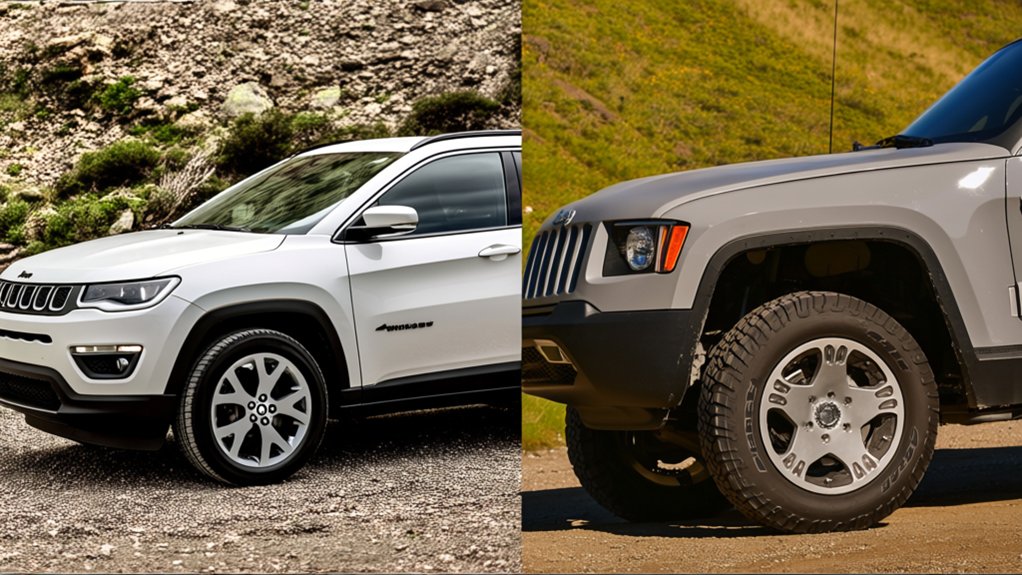
If you’re deciding between the Jeep Compass and Cherokee, know that the Cherokee is bigger with more power, better off-road capability, and a roomier, upscale interior. The Compass is smaller, more fuel-efficient, and easier on your budget, making it perfect for city driving. Cherokee also boasts advanced safety tech and higher towing capacity. Depending on your lifestyle, one will suit you better. Keep exploring to uncover even more key differences that matter.
Jeep Compass Vs Cherokee: Size And Dimensions
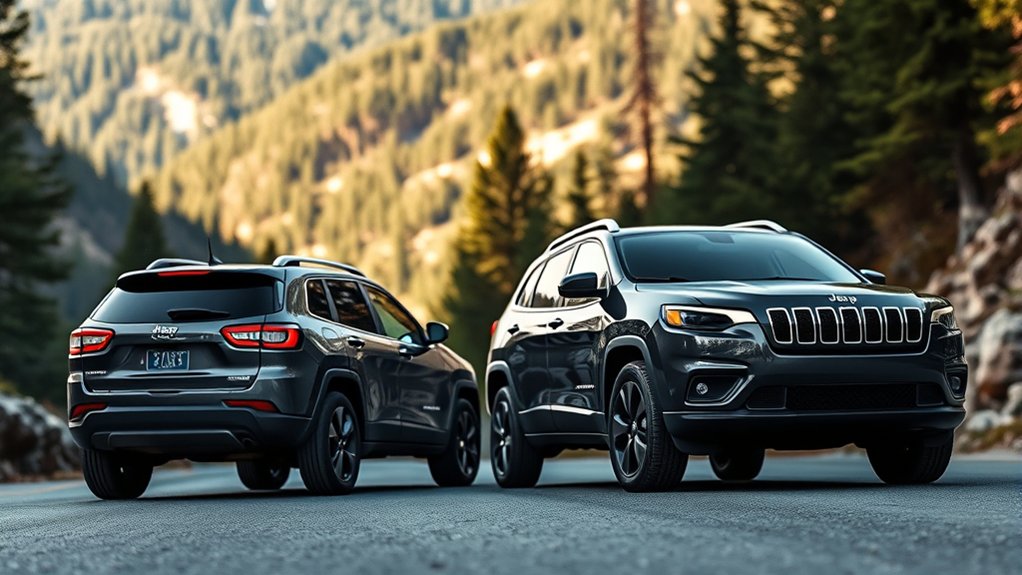
Comparing size and dimensions, you’ll find that the Jeep Cherokee is noticeably larger than the Compass. The Cherokee stretches about 182 inches in length, giving you more room inside and a stronger road presence.
Meanwhile, the Compass measures roughly 173 inches, making it easier to maneuver in tight city streets.
When it comes to width, the Cherokee is wider too, so you get a more spacious cabin and extra shoulder room.
The Cherokee also sits higher with greater ground clearance, which benefits off-road adventures and rough terrain.
If you need more cargo space, the Cherokee offers a bigger trunk area compared to the Compass.
Engine Options And Performance Comparison
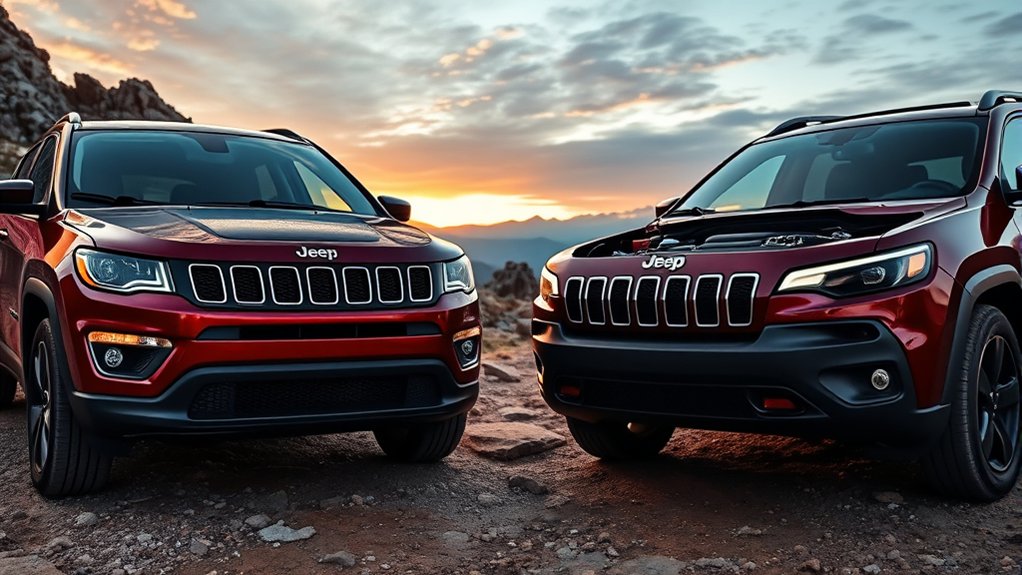
You’ll want to check out the different engine types each Jeep offers to see which fits your needs. Comparing power, torque, and fuel efficiency will help you decide which model performs best for your driving style.
Let’s break down how the Compass and Cherokee stack up in these key areas.
Engine Types Overview
How do the Jeep Compass and Cherokee stack up when it comes to engine options and performance? The Compass offers a single turbocharged 2.4-liter four-cylinder engine, designed for efficiency and everyday driving. It’s a solid choice if you want decent fuel economy without sacrificing capability.
On the other hand, the Cherokee gives you more variety with multiple engine types: a base 2.4-liter four-cylinder, a more powerful 3.2-liter V6, and an optional turbocharged 2.0-liter four-cylinder. This variety means you can tailor performance to your needs, whether you want better fuel efficiency or more power for tougher terrain.
Both vehicles use modern engine technology, but the Cherokee’s broader range gives you more flexibility depending on what you prioritize.
Power and Torque Specs
While both the Jeep Compass and Cherokee offer capable engines, their power and torque figures highlight distinct strengths. You’ll notice the Cherokee delivers more robust performance, especially if you prioritize power.
- The Compass features a 2.4L inline-4 engine producing 180 horsepower and 175 lb-ft of torque, ideal for everyday driving.
- The Cherokee offers a standard 2.4L engine with 180 horsepower but boosts torque to 171 lb-ft, balancing power and efficiency.
- Upgrading, the Cherokee’s available 3.2L V6 engine pumps out 271 horsepower and 239 lb-ft of torque, giving you a significant performance edge.
- The Compass doesn’t offer a V6, so the Cherokee’s stronger engine options make it better for towing and off-road demands.
Choosing depends on whether you want efficiency or extra muscle.
Fuel Efficiency Comparison
Wondering which Jeep model stretches your fuel dollars further? The Compass generally delivers better fuel efficiency, making it a solid choice if you prioritize saving at the pump. It offers a 2.4L inline-4 engine that balances power and mileage well. The Cherokee, with its larger engine options, focuses more on performance but tends to consume more fuel. Here’s a quick fuel efficiency comparison to help you decide:
| Model | MPG (City/Highway) |
|---|---|
| Compass | 22 / 31 |
| Cherokee 2.4L | 19 / 27 |
| Cherokee 3.2L V6 | 18 / 27 |
| Compass Hybrid | 25 / 30 |
| Cherokee Diesel | 22 / 32 |
If fuel economy is your priority, the Compass or Cherokee Diesel might suit you best.
Jeep Compass Vs Cherokee Off-Road Capability
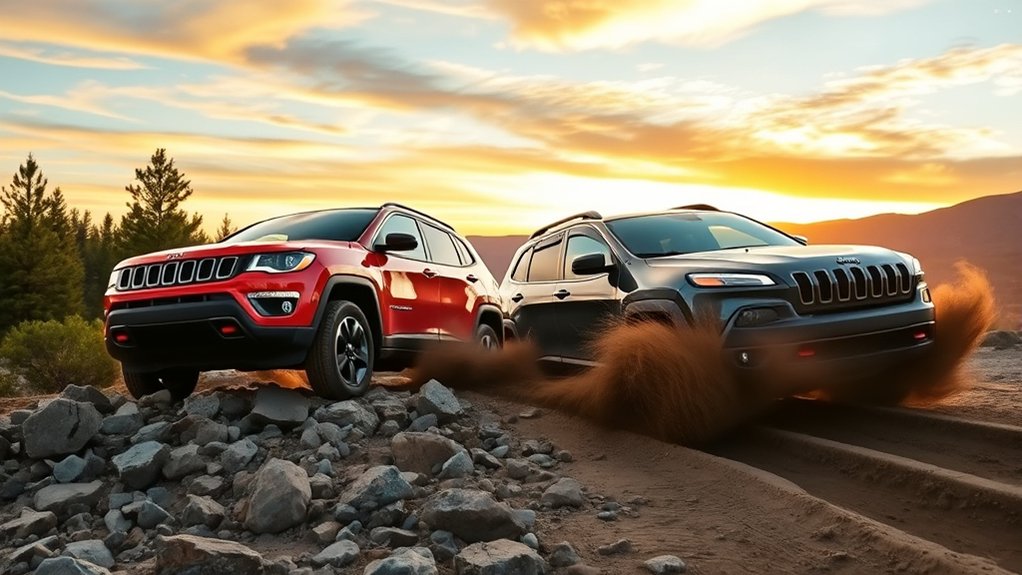
Though both the Jeep Compass and Cherokee are built to handle rugged terrains, you’ll find distinct differences in their off-road capabilities. The Cherokee typically offers more advanced features designed for tougher trails, but the Compass still holds its own for moderate adventures. Consider these points:
- 4×4 Systems: Cherokee provides more sophisticated 4×4 options like Active Drive Lock, enhancing traction on tricky surfaces.
- Ground Clearance: Cherokee generally has higher ground clearance, letting you tackle rougher paths without scraping.
- Approach and Departure Angles: Cherokee’s design supports steeper angles, so you can navigate obstacles more confidently.
- Off-Road Packages: Both offer off-road trims, but Cherokee’s Trailhawk version is more robust, perfect for serious off-roading.
If you plan regular, challenging off-road trips, Cherokee edges out the Compass.
Choosing Between The Jeep Compass And Cherokee For Your Lifestyle?
You’ll want to weigh how each Jeep performs and handles the road or trail.
Consider which interior features and comfort levels suit your daily routine best.
Finally, think about your budget and the value each model offers before making a choice.
Performance And Capability
When deciding between the Jeep Compass and Cherokee, understanding their performance and capability is essential to matching the right vehicle to your lifestyle. Both SUVs offer distinct strengths:
- Engine Options: The Cherokee provides more powerful engines, including a V6, while the Compass sticks to four-cylinder choices.
- Towing Capacity: Cherokee can tow up to 4,500 pounds, ideal for trailers or boats. Compass maxes out around 2,000 pounds.
- Off-Road Ability: Cherokee’s Trailhawk trim offers superior off-road features compared to Compass, which is more suited for light off-roading.
- Fuel Efficiency: Compass generally delivers better gas mileage, making it economical for daily commuting.
Consider these factors to pick the vehicle that fits your driving demands and adventure goals best.
Interior Comfort And Features
Since you spend a lot of time inside your vehicle, the interior comfort and features of the Jeep Compass and Cherokee play a big role in your daily experience.
The Cherokee offers a more spacious cabin with higher-quality materials, giving you a slightly more upscale feel. It also provides advanced tech like an available 8.4-inch touchscreen and premium audio, enhancing your drive.
On the other hand, the Compass is cozy and practical, with user-friendly controls and a standard 7-inch touchscreen. It fits well if you want comfort without extra bulk.
Both offer comfortable seating and modern conveniences, but if you prioritize roominess and luxury touches, the Cherokee stands out.
If you prefer a compact, efficient interior with essential features, the Compass suits your lifestyle better.
Price And Value
How much are you willing to invest in your next SUV? When choosing between the Jeep Compass and Cherokee, price and value play a big role. The Compass offers a lower starting price, making it appealing if you want a budget-friendly option without sacrificing style.
On the other hand, the Cherokee comes with a higher price tag but adds more power and advanced features.
Consider these points to decide what fits your lifestyle:
- Compass base price suits tighter budgets.
- Cherokee offers more tech and performance upgrades.
- Both maintain strong resale values.
- Maintenance costs are comparable but factor into long-term value.
Weighing upfront cost against features helps you pick the SUV that suits your priorities best.
Interior Features And Comfort Differences
Although both the Jeep Compass and Cherokee offer comfortable interiors, you’ll notice distinct differences in their features and overall space.
The Cherokee provides more generous legroom and headroom, making it a better choice if you often travel with passengers or need extra cargo space. You’ll find higher-quality materials and more soft-touch surfaces in the Cherokee, enhancing the upscale feel.
The Compass, while cozy, has a slightly tighter cabin and uses more hard plastics. Both models offer supportive seating, but the Cherokee’s seats tend to be more adjustable and cushioned for longer drives.
Additionally, the Cherokee often includes more standard comfort features like dual-zone climate control, whereas some of these come as options on the Compass.
Your choice depends on whether you prioritize space and luxury or a compact, efficient interior.
Technology And Infotainment: Compass Vs Cherokee
When you compare the Jeep Compass and Cherokee, technology plays a big role in your experience. You’ll want to look at their infotainment systems, connectivity options, and how easy the controls are to use.
Let’s see which one keeps you better connected and entertained on the road.
Infotainment System Features
While both the Jeep Compass and Cherokee offer advanced infotainment systems, you’ll find distinct differences that could influence your driving experience. The Compass features a user-friendly 8.4-inch touchscreen, while the Cherokee boasts a larger 9-inch display. Here’s what sets them apart:
- Screen Size & Resolution: Cherokee’s bigger screen offers sharper visuals.
- Audio System: Cherokee often comes with a premium 9-speaker system, compared to Compass’s standard 6-speaker setup.
- Interface Design: Compass’s interface is simpler, making it easier to navigate on the go.
- Voice Recognition: Cherokee’s system supports more natural voice commands for hands-free control.
These differences impact how seamlessly you interact with your vehicle’s tech, enhancing your comfort and convenience behind the wheel.
Connectivity Options Available
Beyond the screen and sound quality, connectivity options play a significant role in how you stay linked to your digital life while driving. The Jeep Compass offers Apple CarPlay and Android Auto as standard, allowing you to seamlessly integrate your smartphone for navigation, calls, and music. It also provides Bluetooth for hands-free calling and audio streaming.
The Cherokee steps it up with available 4G LTE Wi-Fi hotspot capability, which means you can keep multiple devices online on the go.
Both models support USB ports, but the Cherokee often includes more USB connections, enhancing device charging and connectivity options.
While both vehicles keep you connected efficiently, the Cherokee gives you an edge if you want more robust internet access and multiple device connectivity during your trips.
User Interface And Controls
Although both the Jeep Compass and Cherokee offer modern infotainment systems, the way you interact with their user interfaces and controls can shape your driving experience considerably. The Compass focuses on simplicity, while the Cherokee adds more advanced features.
Here’s what to think about:
- Touchscreen Size – Cherokee offers a larger display, making navigation easier.
- Physical Controls – Compass includes more tactile buttons, helping you adjust settings without distraction.
- Voice Commands – Both support voice control, but Cherokee’s system is slightly more responsive.
- Customization – Cherokee allows greater personalization of the interface, letting you tailor menus and shortcuts.
Your choice depends on whether you prefer straightforward controls or a more tech-savvy, customizable interface.
Both vehicles keep you connected, but the Cherokee leans toward a richer user experience.
Fuel Efficiency Comparison: Jeep Compass Vs Cherokee
How do the Jeep Compass and Cherokee stack up when it comes to fuel efficiency? The Compass generally offers better mileage, making it a smart choice if you want to save at the pump.
With its smaller engine options and lighter frame, the Compass achieves around 22-31 mpg combined, depending on the drivetrain you choose.
Meanwhile, the Cherokee, being larger and more powerful, usually delivers about 19-26 mpg combined.
If you’re mostly driving in the city, the Compass will stretch your fuel further. But if you need more power or off-road capability, the Cherokee’s fuel consumption might be worth it.
Ultimately, if fuel economy is a top priority, you’ll likely appreciate the Compass’s efficiency edge without sacrificing too much performance.
Safety Features And Ratings Compared
Fuel efficiency matters, but so does keeping you and your passengers safe on the road. When comparing the Jeep Compass and Cherokee, both offer solid safety features, but there are key differences you should know.
- The Cherokee boasts advanced driver-assist tech like adaptive cruise control and lane-keeping assist, which the Compass lacks in base trims.
- Both SUVs come with multiple airbags and stability control systems standard.
- In crash tests, the Cherokee generally scores higher in frontal and side-impact ratings.
- The Compass offers blind-spot monitoring and rear cross-traffic alert, but these are often optional, depending on the trim.
Knowing these distinctions helps you pick the model that best protects your loved ones every time you drive.
Jeep Compass Vs Cherokee Pricing And Value
When comparing the Jeep Compass and Cherokee, understanding their pricing and overall value can help you make a smart investment. The Compass generally comes at a lower starting price, making it appealing if you want a capable SUV without breaking the bank. The Cherokee, however, offers more power and premium features, which can justify its higher cost. Your choice depends on what you prioritize: affordability or enhanced capability and comfort.
| Model | Starting Price (USD) | Key Value Points |
|---|---|---|
| Jeep Compass | $27,000 | Affordable, efficient, stylish |
| Jeep Cherokee | $35,000 | More power, advanced features |
| Mid-range Trim | Compass: $30,000 | Cherokee: $38,000 |
| Top Trim | Compass: $35,000 | Cherokee: $43,000 |
Cargo Space And Practicality Comparison
Although both the Jeep Compass and Cherokee offer practical cargo space, you’ll find noticeable differences that could influence your choice. The Cherokee generally provides more room, making it better for hauling larger loads or gear. Here’s what to weigh:
- Cherokee’s cargo space measures around 54.9 cubic feet with rear seats folded, compared to Compass’s 59.8 cubic feet—Compass actually offers slightly more maximum cargo volume.
- Both SUVs have split-folding rear seats, but Cherokee’s flat load floor makes loading easier.
- Compass’s smaller size means tighter maneuvering but less cargo flexibility.
- Cherokee features more practical storage compartments inside the cabin for everyday items.
If you prioritize maximum cargo space and versatility, Cherokee edges out. For compact practicality with decent cargo room, Compass holds its own.
Frequently Asked Questions
What Are the Color Options Available for Jeep Compass and Cherokee?
You can choose from vibrant colors like Jazz Blue, Red Metallic, and Slate Blue for the Jeep Compass, while the Cherokee offers options like Billet Silver, Velvet Red, and Olive Green, giving you plenty of stylish choices.
How Do Jeep Compass and Cherokee Handle in Snowy Conditions?
Snowy streets? You’ll find the Cherokee’s commanding clearance conquers challenging conditions, while the Compass’s compact control copes cleverly. Both boast capable 4×4 systems, so you’ll confidently cruise through cold, slippery surfaces without slipping.
What Is the Warranty Coverage for Each Model?
You’ll get a 5-year/60,000-mile basic warranty and 7-year/70,000-mile powertrain warranty on both models. They also include roadside assistance, so you’re covered for most repairs and emergencies during those periods.
Are There Hybrid or Electric Versions of the Jeep Compass or Cherokee?
You won’t find fully electric versions of the Jeep Compass or Cherokee yet, but Jeep offers a plug-in hybrid Cherokee 4xe. The Compass doesn’t have a hybrid variant, so the Cherokee’s 4xe is your eco-friendly choice.
How Do Maintenance Costs Compare Between the Compass and Cherokee?
You’ll find the Compass generally costs less to maintain than the Cherokee, thanks to its smaller size and simpler mechanics. However, both require regular upkeep, so budgeting for routine service is smart regardless of your choice.
Conclusion
When choosing between the Jeep Compass and Cherokee, picture your adventure’s heartbeat—whether you crave nimble city streets or rugged trails. The Compass dances with efficiency and compact charm, while the Cherokee roars with power and space. Your journey’s rhythm depends on your lifestyle’s song, blending comfort, performance, and value. So, tune into your needs, and let the Jeep that matches your spirit drive your story forward, mile after thrilling mile.