How to Put 4H on Jeep Wrangler in 3 Easy Steps
To put your Jeep Wrangler in 4H, first, slow down to under 55 mph and make sure your tires are properly inflated. Next, shift the transfer case lever from 2H to 4H or press the 4H button if equipped. Finally, confirm 4H is engaged by checking the dashboard indicator light. You’ll notice better traction and control on slippery or rough surfaces. Keep following for tips on safe use and vehicle prep to protect your Jeep’s drivetrain.
How to Put Your Jeep Wrangler in 4H
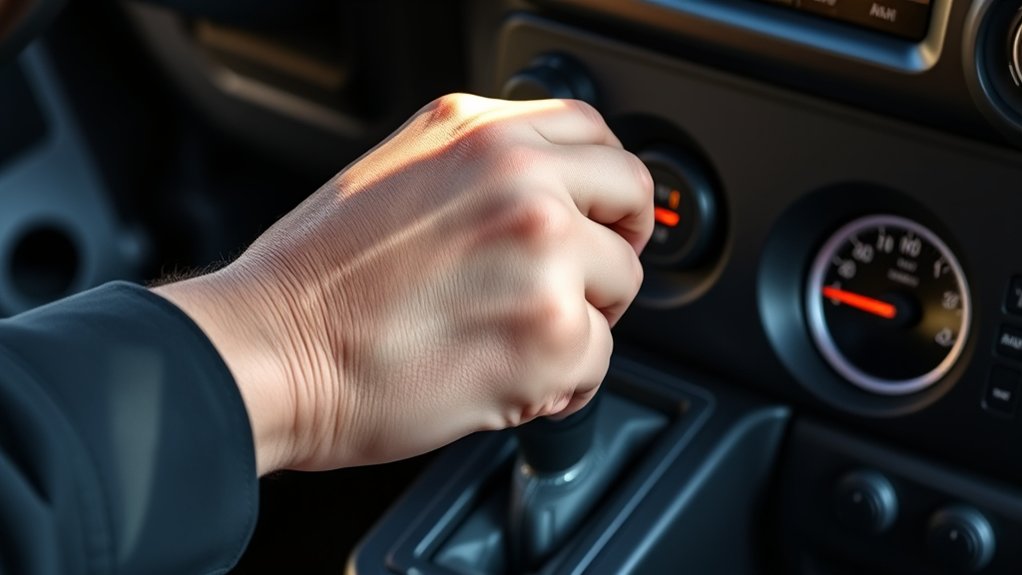
Before you hit challenging terrain, make sure your Jeep Wrangler is ready by engaging 4H. Start by bringing your vehicle to a complete stop or driving at a slow speed—usually under 55 mph.
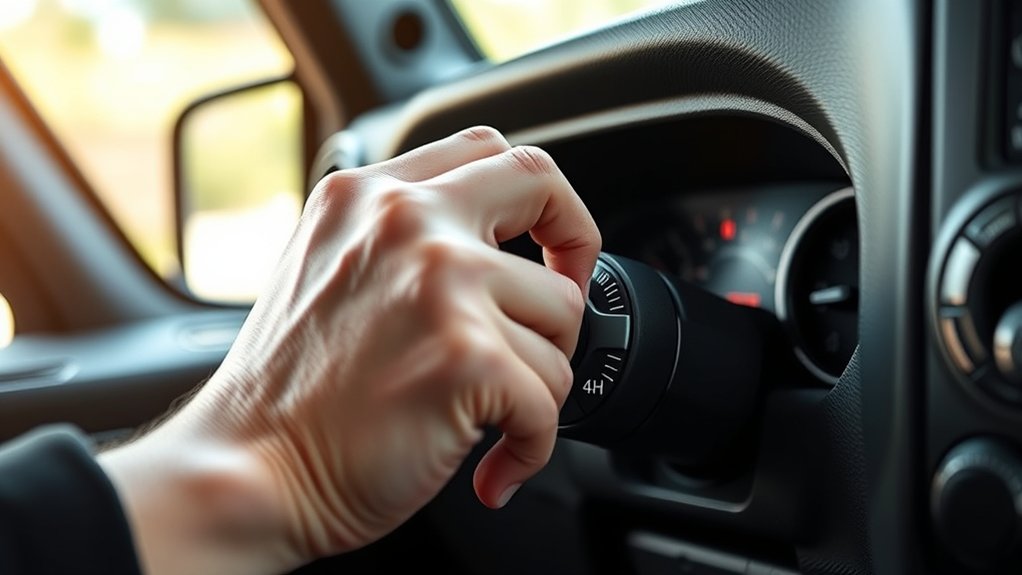
Locate the transfer case lever, usually between the front seats. To engage 4H, simply shift the lever from 2H (two-wheel drive high) to 4H (four-wheel drive high). You’ll feel it click into place.
If your Wrangler has an electronic 4WD system, press the 4H button on the dashboard instead.
Once engaged, check the indicator light on your dashboard to confirm 4H is active.
This mode provides better traction on slippery or uneven surfaces, so you’re all set for safer, more controlled driving in off-road conditions.
Preparing Your Jeep Wrangler for 4H Engagement
Although engaging 4H is straightforward, you need to prepare your Jeep Wrangler properly to guarantee smooth activation and peak performance. Taking a few simple steps before switching to 4H ensures your drivetrain handles the shift without strain.
- Check Tire Pressure: Make sure all four tires have equal pressure to prevent drivetrain binding when 4H engages.
- Slow Down: Bring your Jeep to a low speed or stop completely before engaging 4H to avoid gear damage.
- Inspect the Transfer Case: Verify that the transfer case is free of leaks and properly lubricated for smooth operation.
What to Expect After Engaging 4H and Safety Tips

Once you engage 4H on your Jeep Wrangler, you’ll notice improved traction and stability, especially on slippery or uneven surfaces. Your vehicle will handle better in mud, snow, or loose gravel, giving you more confidence off-road.
However, keep in mind that 4H is designed for low to moderate speeds; avoid exceeding 55 mph to prevent drivetrain damage.
Also, remember that 4H isn’t for dry pavement—using it on hard surfaces can cause binding and wear. Always disengage 4H when returning to normal driving conditions.
Finally, check your owner’s manual for specific guidelines and verify your tires are properly inflated for maximum performance. Staying alert and cautious will help you get the most from your 4H system safely.
Frequently Asked Questions
Can I Use 4H on Dry Pavement?
You generally shouldn’t use 4H on dry pavement because it can cause drivetrain binding and tire wear. Save 4H for slippery or off-road conditions where extra traction helps you maintain control safely.
What Is the Difference Between 4H and 4L?
4H gives you high-range four-wheel drive for better traction at normal speeds. 4L uses low-range gears for maximum torque and control at slow speeds, ideal for tough off-road conditions or steep climbs.
How Does 4H Affect Fuel Efficiency?
Using 4H usually lowers your fuel efficiency because it engages all four wheels, creating more drivetrain resistance. You’ll notice your Jeep uses more gas compared to driving in 2WD, especially on dry pavement.
Can 4H Damage My Jeep’s Drivetrain?
Think of 4H like a bike’s gears; using the wrong gear on pavement strains parts. You won’t damage your Jeep’s drivetrain if you engage 4H only on slippery or off-road surfaces, avoiding dry pavement.
When Should I Switch Back to 2WD?
You should switch back to 2WD once you’re driving on dry, paved roads to avoid unnecessary drivetrain wear. Don’t keep 4H engaged longer than needed, especially at higher speeds or on surfaces with good traction.
Conclusion
Now that you know how to put your Jeep Wrangler in 4H, you’re ready to take on tougher terrain with confidence. Remember, “slow and steady wins the race”—engage 4H carefully and always check your surroundings before driving. With practice, shifting into 4H will become second nature, helping you tackle off-road adventures safely and smoothly. Stay alert, respect your Jeep’s limits, and enjoy the ride ahead!