How Can You Increase the Towing Capacity of a Jeep Wrangler?
You can increase your Jeep Wrangler’s towing capacity by upgrading key components like suspension with heavy-duty springs and shock absorbers, installing towing-rated tires, and choosing the right hitch receiver for safe load handling. Adding weight distribution systems and upgrading your axles, differentials, and braking system also boost stability and control. Don’t forget to maintain proper tire pressure and follow local towing laws. Keep going to uncover more ways to safely enhance your Wrangler’s towing performance.
Key Takeaways
- Upgrade suspension components like heavy-duty springs and performance shocks to enhance stability and support heavier towing loads.
- Install the correct hitch class and use weight distribution systems to improve trailer stability and reduce sway.
- Enhance braking with upgraded pads, rotors, trailer brake controllers, and install a transmission cooler to prevent overheating.
- Improve engine performance using tuners, upgraded air intakes, exhausts, or forced induction for increased horsepower and towing power.
- Upgrade axles, differentials, and gear ratios to boost durability, traction, and torque for safer, more efficient towing.
Jeep Wrangler Stock Towing Limits and Local Laws
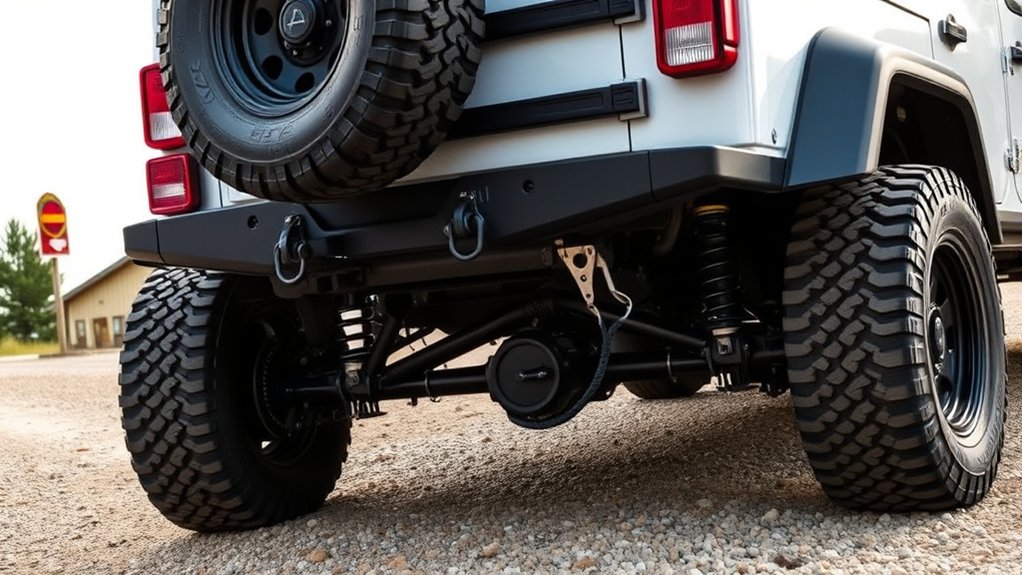
Before you consider upgrading your Jeep Wrangler’s towing capacity, you need to know its stock limits and the local laws that apply.
Depending on the model and year, your Wrangler’s factory towing capacity usually ranges between 2,000 and 3,500 pounds. Exceeding these limits can strain your vehicle and void warranties.
Your Wrangler’s towing capacity varies by model and year, typically between 2,000 and 3,500 pounds.
You also have to check local towing regulations, which vary by state or region. These laws cover trailer weight limits, braking requirements, and speed restrictions. Ignoring them can lead to fines or unsafe driving conditions.
Knowing your Wrangler’s towing specs and the legal framework guarantees you stay safe and compliant on the road.
Once you’re clear on these basics, you can explore modifications to boost your Jeep’s towing capabilities confidently.
Upgrade Suspension for Better Load Support
To handle heavier loads, you’ll want to upgrade your Jeep’s suspension with heavy-duty springs and performance shock absorbers. These upgrades help maintain stability and improve ride quality under stress.
Don’t forget to reinforce key suspension components to guarantee everything holds up when towing heavier trailers.
Choose Heavy-Duty Springs
When you upgrade your Jeep’s suspension with heavy-duty springs, you’ll considerably improve its ability to handle heavier loads without compromising stability. These springs provide extra support by absorbing more weight and reducing sagging, which keeps your Jeep balanced and safe while towing.
Choosing the right heavy-duty springs also enhances ride quality and prevents premature wear on other suspension parts.
Consider these key benefits when selecting heavy-duty springs:
- Increased load-bearing capacity for safer towing
- Improved vehicle height to prevent bottoming out
- Enhanced durability for off-road and heavy use
- Better control and reduced body roll under load
Install Performance Shock Absorbers
Although heavy-duty springs provide essential support, installing performance shock absorbers takes your Jeep’s suspension to the next level by improving load handling and ride stability. These shocks help control the movement caused by heavy loads, reducing body roll and sway when towing.
You’ll notice better traction and smoother rides over uneven terrain, which enhances safety and control. Performance shocks also dissipate heat more efficiently, preventing fade during extended towing sessions.
When selecting shocks, choose ones designed specifically for towing or heavy-duty use, as they offer the necessary damping characteristics. Properly installed, they work alongside your springs to absorb impacts and maintain tire contact with the road.
Upgrading your shock absorbers is a smart move to guarantee your Jeep handles increased towing demands confidently and safely.
Reinforce Suspension Components
Since towing heavy loads puts extra stress on your Jeep’s suspension, reinforcing key components is essential for maintaining stability and safety. You’ll want to upgrade parts that can handle extra weight without compromising your Jeep’s handling.
Focus on strengthening these areas:
- Heavy-duty springs: They support increased weight and reduce sagging.
- Upgraded control arms: Improve suspension geometry and durability under load.
- Reinforced bushings: Minimize wear and maintain proper alignment.
- Stronger sway bars: Enhance stability and reduce body roll when towing.
Use High-Quality Tires Rated for Towing
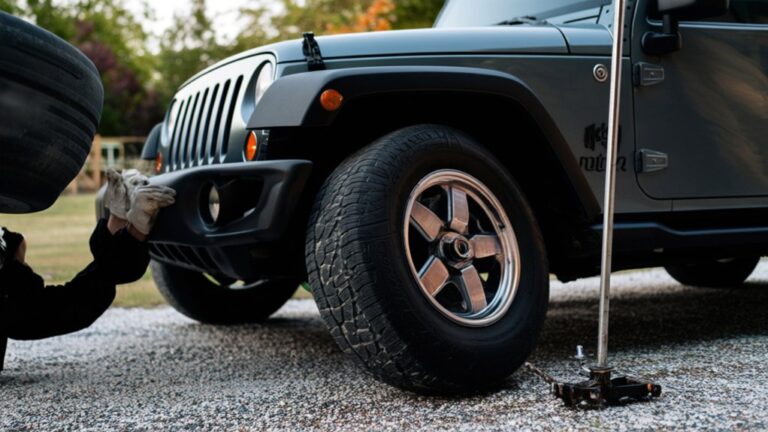
Choosing high-quality tires specifically rated for towing can substantially enhance your Jeep’s performance and safety on the road. Tires designed for towing have stronger sidewalls and higher load ratings, which help support heavier weights without compromising stability.
Towing-rated tires boost your Jeep’s stability and safety with stronger sidewalls and higher load capacity.
When you use these tires, you reduce the risk of blowouts and uneven wear, especially during long hauls or rough terrain. Make sure to check the tire’s load index and speed rating to match your Jeep’s towing demands.
Properly inflated tires also maintain optimal contact with the road, improving control and braking efficiency. Investing in towing-rated tires not only protects your vehicle but also ensures a smoother, safer towing experience every time you hit the road.
Don’t overlook this crucial upgrade when increasing your Jeep’s towing capacity.
Choose the Right Hitch Receiver for Towing
High-quality, towing-rated tires set a solid foundation, but your Jeep also needs the right hitch receiver to handle the load safely. Choosing the proper hitch receiver guarantees your towing setup can handle the weight without risking damage or accidents.
Start by matching the hitch class with your Jeep’s towing capacity and trailer weight. Consider the receiver size, usually 1.25-inch or 2-inch, to fit your towing accessories.
Look for corrosion-resistant materials to withstand weather and wear. Finally, verify the hitch comes with the correct mounting hardware and installation instructions for a secure fit.
- Match the hitch class to your Jeep’s towing limits
- Select the correct receiver tube size
- Choose durable, weather-resistant materials
- Confirm included hardware for easy installation
Add Weight Distribution Systems for Stability
When you tow heavy loads, adding a weight distribution system can dramatically improve your Jeep’s stability and handling. This system redistributes the trailer’s tongue weight across all axles, preventing excessive rear sag and front-end lift.
By maintaining proper ride height, you’ll experience better steering control, reduced trailer sway, and enhanced braking performance. Installing spring bars or lever arms connects your trailer hitch to the Jeep’s frame, allowing the system to balance the load effectively.
Make sure to choose a weight distribution system compatible with your Jeep Wrangler’s towing capacity and hitch setup. Proper setup and adjustment are essential—too little or too much tension can compromise safety.
Adding this system lets you tow heavier with confidence while keeping your Jeep stable on the road.
Upgrade Jeep Wrangler Brake Systems for Safer Towing
Because towing puts extra strain on your Jeep Wrangler’s braking system, upgrading it’s essential for maintaining control and safety. You need brakes that can handle the increased weight and heat generated during towing.
Towing increases brake strain, so upgrading ensures safety and control under heavier loads and heat.
Start by installing high-performance brake pads designed for heavy loads. Upgrading to larger rotors provides better heat dissipation and stopping power. Consider a heavy-duty brake caliper kit to improve clamping force and durability.
Finally, adding a trailer brake controller lets you synchronize your trailer’s brakes with your Jeep’s, enhancing overall braking efficiency. These upgrades help you stop confidently and prevent brake fade, especially on steep descents or emergency stops.
Prioritize your braking system to tow safely and protect both your Jeep and trailer on the road.
- High-performance brake pads
- Larger rotors
- Heavy-duty brake calipers
- Trailer brake controller
Install a Transmission Cooler to Protect Your Drivetrain
To keep your Jeep’s drivetrain in top shape while towing, you’ll want to install a transmission cooler. It helps prevent overheating, which can cause costly damage during heavy loads.
Make sure you choose the right cooler and install it properly to maximize its benefits.
Benefits Of Transmission Cooling
Although many Jeep owners focus on engine upgrades for towing, installing a transmission cooler offers essential protection for your drivetrain. When you tow heavy loads, your transmission generates extra heat, which can damage components and reduce performance.
A transmission cooler helps keep temperatures down, ensuring your Jeep runs smoothly under stress.
Here are key benefits you’ll get with a transmission cooler:
- Prevents overheating during long hauls or steep climbs
- Extends the life of transmission fluid and parts
- Maintains consistent shifting and overall transmission performance
- Reduces the risk of costly repairs caused by heat damage
Installation Tips And Considerations
Keeping your transmission cool is key to protecting your drivetrain when towing, but installing a transmission cooler requires some careful planning.
First, choose a cooler compatible with your Jeep Wrangler’s transmission type. Mount it where it gets good airflow, like in front of the radiator, to maximize cooling efficiency.
Make sure to use proper fittings and high-quality transmission fluid lines rated for heat and pressure. Avoid sharp bends or kinks in the lines to prevent leaks or restrictions.
Secure all connections tightly and check for leaks after installation.
Finally, consider routing the cooler lines away from hot engine components or moving parts to avoid damage.
Following these tips helps guarantee your transmission cooler works effectively, extending your drivetrain’s life while you tow heavier loads safely.
Boost Your Jeep’s Engine for More Towing Power
When you want to increase your Jeep’s towing capacity, boosting the engine’s performance is one of the most effective steps you can take. Enhancing power output allows your Jeep to handle heavier loads more efficiently and with less strain.
You can start by focusing on key engine improvements that directly impact towing strength:
- Install a performance chip or tuner to optimize fuel and ignition settings.
- Upgrade the air intake system for better airflow and combustion.
- Add a high-performance exhaust system to reduce backpressure and improve engine breathing.
- Consider forced induction options like a supercharger or turbocharger for significant horsepower gains.
Upgrade Axles and Differentials to Handle Heavier Loads
To tow heavier loads safely, you’ll need to upgrade your Jeep’s axles and differentials to handle the extra stress. Stock components often aren’t built for increased weight, risking premature wear or failure.
Consider installing heavy-duty axles with thicker shafts and stronger bearings to improve durability. Upgraded differentials, like limited-slip or locking types, provide better traction and control under load, which helps prevent slippage and uneven wear.
Make certain to choose axles and differentials compatible with your Jeep’s model and intended towing weight. Proper installation and maintenance are vital to maximize their lifespan and performance.
Adjust Gear Ratios to Improve Towing Efficiency
To boost your Jeep’s towing efficiency, you’ll want to understand how gear ratios affect power delivery.
Lower gear ratios can improve torque and control when hauling heavy loads.
Choosing the right gear set guarantees your Jeep handles towing demands without sacrificing performance.
Understanding Gear Ratio Basics
Although many Jeep owners focus on engine power for towing, understanding and adjusting your gear ratios can considerably boost towing efficiency. Gear ratios determine how many times the driveshaft turns for each wheel rotation, directly affecting torque and towing performance.
You’ll want to get familiar with these basics:
- Higher gear ratios multiply engine torque, helping with heavy loads.
- Lower gear ratios reduce engine RPM at cruising speed, improving fuel economy.
- Changing gear ratios affects acceleration and overall drivability.
- Matching gear ratios to your towing needs guarantees your Jeep handles weight safely and efficiently.
Benefits of Lower Ratios
Adjusting your gear ratios can make a noticeable difference in how well your Jeep handles towing tasks, especially when you opt for lower ratios. Lower gear ratios increase torque at the wheels, improving your Jeep’s ability to pull heavy loads without straining the engine. This means better acceleration, less overheating, and enhanced control on inclines or rough terrain. You’ll also find it easier to maintain steady speeds while towing, reducing wear on transmission components.
| Benefit | Explanation | Impact on Towing |
|---|---|---|
| Increased Torque | More force delivered to wheels | Better load handling |
| Reduced Engine Strain | Engine runs efficiently at low RPM | Longer engine life |
| Improved Control | Smoother power delivery | Safer towing on hills and rough roads |
Selecting Optimal Gear Sets
When you choose the right gear sets for your Jeep, you directly boost its towing efficiency and overall performance. Adjusting gear ratios helps your engine work smarter, not harder, especially when hauling heavy loads.
To select ideal gear sets, consider these key points:
- Match gear ratios to your typical towing weight for smoother power delivery.
- Opt for lower gear ratios to increase torque and improve control on inclines.
- Guarantee compatibility with your Jeep’s transmission and differential for reliability.
- Balance gear ratio changes with daily driving needs to avoid excessive RPMs.
Maintain Proper Tire Pressure and Vehicle Weight Balance
Since your Jeep’s tires directly support the load, keeping them properly inflated is essential for safe and efficient towing. Underinflated tires can overheat and wear out faster, while overinflated tires may reduce traction. Check your tire pressure regularly and inflate them to the recommended PSI for towing.
Balancing vehicle weight is just as important. Distribute the load evenly to avoid excessive strain on the rear axle or tires, which can affect handling and braking.
| Aspect | Recommendation |
|---|---|
| Tire Pressure | Inflate to towing PSI |
| Weight Distribution | Keep load balanced |
| Regular Checks | Inspect tires & load |
Safety Tips and Regulations Every Jeep Wrangler Owner Should Know
Although towing can enhance your Jeep Wrangler’s utility, you need to follow specific safety tips and regulations to protect yourself and others on the road. Always check your Wrangler’s maximum towing capacity and never surpass it. Use the right hitch and towing equipment rated for your load. Secure your trailer load properly to prevent shifting during travel.
Finally, familiarize yourself with local towing laws, including speed limits and brake requirements.
Here are some key safety tips and regulations to keep in mind:
- Verify your Jeep’s towing capacity in the owner’s manual.
- Use safety chains alongside your hitch for added security.
- Ensure trailer brake systems comply with state laws.
- Conduct a pre-trip inspection of tires, lights, and connections.
Following these guidelines helps you tow safely and confidently.
Frequently Asked Questions
Can I Tow With a Soft Top Jeep Wrangler?
Yes, you can tow with a soft top Jeep Wrangler, but you’ll need to check its specific towing capacity and verify your hitch and trailer setup are properly rated. Always follow safety guidelines to avoid damage or accidents.
Does Adding Aftermarket Lighting Affect Towing Capacity?
Back in the days of knights, adding aftermarket lighting doesn’t affect your Jeep’s towing capacity. You’ll just need to make sure your electrical system can handle the extra load without causing any wiring or battery issues.
How Does Weather Impact Towing Performance?
Weather affects your towing by reducing traction in rain, snow, or ice, making control harder. Cold temperatures can stiffen materials, and wind can push your trailer, so you’ll need to drive more cautiously and adjust your speed accordingly.
Are There Special Licenses Needed for Towing With a Jeep Wrangler?
Do you really need a special license to tow with your Jeep Wrangler? Usually, you don’t unless your trailer exceeds specific weight limits. Check your state’s regulations to be sure, and always tow safely to avoid issues.
Can I Use Electric Brake Controllers With My Jeep Wrangler?
Yes, you can use electric brake controllers with your Jeep Wrangler. They improve trailer braking performance and safety, but make certain to choose a compatible model and properly install it to guarantee it works effectively with your vehicle’s electrical system.
Conclusion
Think of your Jeep Wrangler as a trusty steed. To carry heavier loads, you need to strengthen its saddle—upgrade suspension, tires, and axles. Equip it with the right hitch and balance its weight like a skilled rider. Adjust gear ratios to keep the journey smooth. With these upgrades, your Wrangler won’t just tow—it’ll conquer every road with confidence and stability, turning every trip into a symbol of power and freedom on wheels.