How You Can Get a Jeep Wrangler With a V8 Engine
You can get a Jeep Wrangler with a V8 engine by choosing factory models like the JK 5.7L HEMI or rare TJ Rubicons with V8s. If factory options don’t fit, consider swapping in popular V8s like the Chevy LS3 or Ford Coyote with proper modifications. You can also find used Wranglers already equipped with V8s through enthusiast communities and online markets. Keep in mind, upgrades and maintenance are key for performance and reliability. Explore further to discover the best approaches and tips.
Key Takeaways
- Purchase a factory V8 Wrangler model like the 2007-2011 JK with a 5.7L HEMI engine for a direct V8 option.
- Consider swapping in popular V8 engines such as the Chevy LS3 or 5.7L HEMI with necessary modifications and upgrades.
- Verify compatibility with engine mounts, transmission, wiring harness, and exhaust before performing a V8 engine swap.
- Search used V8 Wranglers on specialty Jeep forums, online marketplaces, and local off-road communities for available vehicles.
- Consult professional shops experienced in V8 swaps to ensure proper installation, performance tuning, and long-term reliability.
Why Choose a Jeep Wrangler With a V8 Engine?
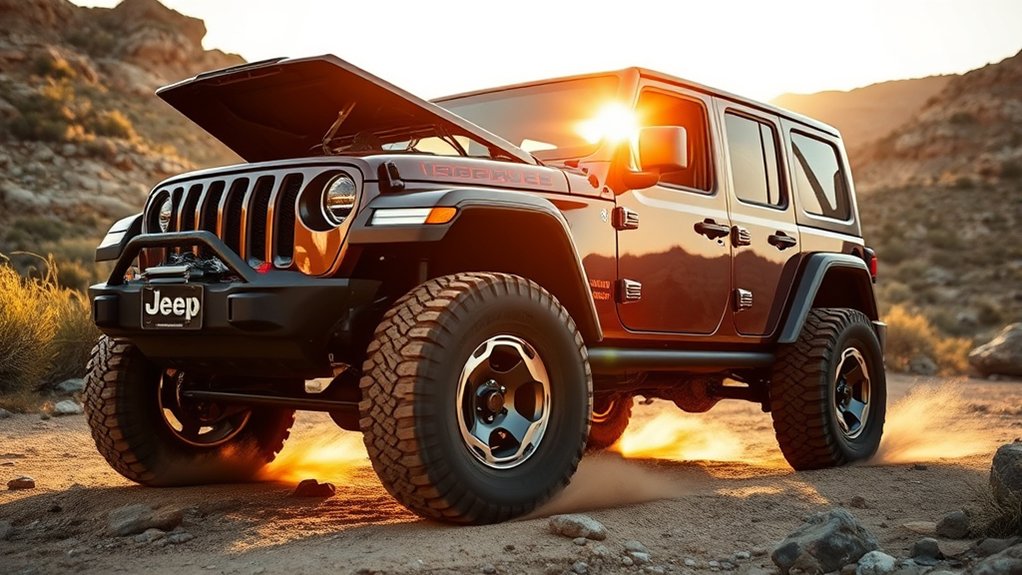
When you choose a Jeep Wrangler with a V8 engine, you’re opting for unmatched power and performance. You’ll experience stronger acceleration, making off-road climbs and highway merges smoother and more confident.
The V8’s torque gives you better towing capacity, so hauling trailers or gear doesn’t feel like a strain. You’ll also notice improved throttle response, which enhances both everyday driving and challenging terrains.
This engine option lets you enjoy the Wrangler’s rugged design without compromising on power or capability. If you crave more muscle under the hood, the V8 delivers that extra punch.
Plus, it keeps your Jeep ready for any adventure, from rocky trails to open roads. Choosing a V8 means you’re serious about performance and reliability in your Wrangler.
Which Jeep Wrangler Models Came With a Factory V8?
If you’re looking for a Jeep Wrangler with a V8 engine, it helps to know which models actually came equipped with one from the factory. Jeep has only offered V8 engines in select Wrangler editions, making these models stand out for power and performance.
Finding a factory V8 Jeep Wrangler means knowing which select models offer true power and performance.
Here are four key Wrangler models that came with factory V8s:
- Jeep Wrangler TJ Rubicon 4.0L V8 (2004-2006) – The only TJ with a V8 variant, rare but powerful.
- Jeep Wrangler JK 5.7L V8 (2007-2011) – Offered in the Wrangler Unlimited, this was Jeep’s first widespread V8 Wrangler.
- Jeep Wrangler JL 3.6L V6 with V8 option limited – Mostly V6, but select trims had V8 conversions.
- Jeep Wrangler J8 (military spec) – Heavy-duty V8 for military use, not civilian.
Knowing these models helps you target your search effectively.
Jeep’s 5.7L HEMI V8: What You Need to Know
Although the 5.7L HEMI V8 engine isn’t the most common powertrain in Jeep Wranglers, it delivers impressive performance and durability that many enthusiasts seek. This engine is known for its robust 360 horsepower and 390 lb-ft of torque, providing plenty of power for off-road adventures and daily driving.
You’ll appreciate its aluminum block design, which helps reduce weight without sacrificing strength. The 5.7L HEMI also features Multi-Displacement System (MDS) technology, allowing it to switch to four-cylinder mode under light loads, improving fuel efficiency.
Plus, it’s compatible with Jeep’s existing transmissions, making swaps or upgrades more straightforward. If you’re considering a V8 Wrangler, understanding this engine’s capabilities and benefits is essential before making your choice.
How the V8 Engine Changes Wrangler Performance
Adding a V8 engine to your Jeep Wrangler dramatically boosts its performance, delivering more power and torque that you can feel whether you’re tackling tough trails or cruising on the highway. You’ll notice quicker acceleration and improved towing capacity, making your Wrangler more versatile.
Installing a V8 engine transforms your Jeep Wrangler with noticeable power, faster acceleration, and enhanced towing ability.
The V8 also enhances throttle response, giving you better control in demanding off-road conditions. Plus, it adds a deeper, more aggressive exhaust note that many Jeep enthusiasts love.
Here’s how the V8 changes your Wrangler’s performance:
- Increases horsepower and torque for stronger off-road capability
- Improves towing and hauling potential
- Enhances throttle response and acceleration
- Adds a distinct, robust engine sound that elevates driving excitement
These changes make your Jeep more capable and fun to drive.
How to Find Used V8 Jeep Wranglers for Sale
Finding a used V8 Jeep Wrangler for sale requires knowing where to look and what to expect. Since factory V8 Wranglers are limited, you’ll want to start by checking specialty Jeep forums, enthusiast groups, and classic car marketplaces.
Online platforms like Autotrader, Cars.com, and eBay Motors often list modified or rare V8 Wranglers. Pay attention to private sellers, as they may offer well-maintained vehicles that dealerships won’t have.
When browsing listings, focus on engine condition, modification history, and service records to avoid surprises. Don’t hesitate to ask for detailed photos and a vehicle history report.
Also, consider local off-road clubs or Jeep meet-ups where owners might know someone selling a V8 Wrangler. Staying patient and thorough will help you find the right used V8 Jeep Wrangler that fits your needs.
Pros and Cons of Buying a Factory V8 Wrangler
When you choose a factory V8 Wrangler, you get impressive performance and power that can handle tough trails and towing.
However, you’ll need to take into account the impact on fuel efficiency and whether the increased maintenance costs fit your budget.
Let’s weigh these pros and cons to help you make the right decision.
Performance and Power
Although the factory V8 Wrangler delivers impressive horsepower and torque, you should weigh both its strengths and drawbacks before deciding. The increased power enhances off-road capability and towing capacity, but it also affects other aspects of the vehicle’s performance.
- You’ll notice quicker acceleration and better hill-climbing ability with the V8’s robust engine.
- The engine’s sound and feel offer a more thrilling driving experience.
- However, the added power can make the Wrangler heavier, slightly impacting agility.
- Maintenance costs might be higher due to the complexity of the V8 compared to smaller engines.
Balancing these points helps you decide if the performance benefits align with your driving needs and expectations.
Fuel Efficiency Impact
Since the V8 engine packs more power under the hood, it naturally consumes more fuel, which can affect your overall efficiency. If you prioritize raw power and off-road capability, you might accept this trade-off.
The V8 provides strong acceleration and towing capacity but at the cost of lower miles per gallon compared to four- or six-cylinder engines. You’ll likely fill up more frequently, especially if you drive aggressively or tackle tough terrain.
However, if you mostly cruise on highways or city streets, the fuel consumption might feel less impactful. Ultimately, you have to weigh whether the enhanced performance justifies the extra fuel expense.
If fuel economy is a top concern, the V8 mightn’t be the best fit, but if power is your priority, it’s a worthy compromise.
Maintenance and Costs
If you choose a factory V8 Wrangler, you’ll need to take into account the maintenance and costs that come with its larger engine. While the V8 offers impressive power, it also demands more attention and expense.
Here are some key points to consider:
- Higher fuel costs – The V8 consumes more gas, increasing your regular expenses.
- Maintenance frequency – Larger engines often require more frequent oil changes and tune-ups.
- Parts and repairs – V8 components can be pricier, especially for specialized parts.
- Insurance premiums – Insurers may charge more for a powerful V8 due to higher risk factors.
Weigh these factors carefully to decide if the V8’s performance justifies the added costs and upkeep.
How to Swap a V8 Engine Into Your Wrangler
When swapping a V8 engine into your Wrangler, you’ll need to check engine compatibility carefully to avoid major issues.
Be prepared for essential modifications like upgrading the transmission, cooling system, and wiring. These changes guarantee your new engine runs smoothly and reliably.
Engine Compatibility Considerations
Although swapping a V8 engine into your Jeep Wrangler can substantially boost its power and performance, you’ll need to carefully consider engine compatibility to guarantee a smooth installation. Not every V8 fits perfectly, so understanding key factors is vital.
Here are four compatibility considerations you should focus on:
- Engine Mounts: Check if the V8’s mounting points align with your Wrangler’s frame to avoid fabrication headaches.
- Transmission Compatibility: Ensure the V8 pairs well with your existing transmission or plan for a matching upgrade.
- Electrical Systems: Confirm your wiring harness and ECU support the new engine to prevent electrical issues.
- Exhaust Clearance: Verify exhaust routing fits under the Wrangler without interference or excessive modifications.
Addressing these will help you avoid surprises and create a reliable, powerful V8 Wrangler.
Required Modifications and Upgrades
Since swapping a V8 engine into your Wrangler involves more than just bolting it in, you’ll need to tackle several key modifications and upgrades to guarantee everything works seamlessly. You’ll have to upgrade the transmission, reinforce the suspension, and adapt the cooling system to handle the extra power and weight. Wiring and exhaust systems also require attention for compatibility. Here’s a quick overview:
| Modification | Purpose |
|---|---|
| Transmission Upgrade | Handle increased torque |
| Suspension Reinforcement | Support added engine weight |
| Cooling System Adaptation | Prevent overheating under load |
Completing these upgrades ensures your Wrangler performs reliably and safely with its new V8 heart. Don’t rush—each step is essential for a smooth, powerful ride.
Which V8 Engines Work Best for Wrangler Swaps?
Picking the right V8 engine for your Wrangler swap depends on your goals, budget, and mechanical skill. You want an engine that fits your driving style and doesn’t overwhelm your build or wallet.
Choosing the right V8 for your Wrangler swap means balancing goals, budget, and skill for a perfect fit.
Here are four popular V8 options to evaluate:
- Chevy LS3 – Known for reliability and power, it’s widely available with plenty of aftermarket support.
- Ford 5.0 Coyote – Offers modern tech and strong performance but can be pricier and complex.
- Hemi 5.7L – Provides a great balance of power and torque, commonly used in Mopar swaps.
- GM 5.3L Vortec – A budget-friendly choice that’s durable and easy to work on.
Choose an engine that matches your experience and intended use for the best results.
Essential Modifications for a V8 Engine Swap
When swapping a V8 engine into your Jeep Wrangler, you’ll need to guarantee the engine fits properly and matches your transmission.
You can’t skip upgrading your cooling system since a V8 generates much more heat than the stock engine. These modifications are key to keeping your Jeep running smoothly and reliably.
Engine Compatibility Requirements
Although swapping a V8 into your Jeep Wrangler can boost power and performance, you’ll need to address several compatibility issues first. Confirming the new engine fits and works seamlessly with your vehicle requires planning and specific modifications.
- Engine Mounts: You’ll likely need custom mounts to secure the V8 properly, as stock mounts won’t align.
- Transmission Compatibility: Confirm your transmission can handle the V8’s torque or upgrade accordingly.
- Drivetrain Adjustments: Reinforce or replace axles and driveshafts to manage increased power.
- Electrical System: Modify wiring harnesses and upgrade the ECU to support the V8’s fuel and ignition needs.
Addressing these guarantees your swap is reliable and maximizes performance without unexpected failures.
Upgraded Cooling Systems
How do you keep your Jeep Wrangler from overheating after installing a V8 engine? Upgrading the cooling system is essential because V8 engines generate considerably more heat than the original powerplants.
You’ll need a high-capacity radiator designed to handle the increased thermal load. Pair it with an electric fan or dual-fan setup to improve airflow, especially in stop-and-go traffic. Don’t overlook a heavy-duty water pump that guarantees consistent coolant circulation.
Installing an upgraded thermostat and larger coolant hoses helps maintain ideal engine temperature. You might also consider an oil cooler to reduce engine oil temperatures.
These modifications work together to prevent overheating, protect your engine, and keep your Jeep running smoothly with its new, powerful V8 heart.
Upgrading Your Transmission and Drivetrain for a V8 Swap
Since a V8 engine produces considerably more power and torque than the stock engine, you’ll need to upgrade your Jeep Wrangler’s transmission and drivetrain to handle the increased load. Neglecting these upgrades can lead to premature wear or failure. Here’s what you should consider:
- Transmission Swap: Choose a transmission rated for higher torque, like the GM 4L80E or upgraded NV4500, to match your V8’s output.
- Heavy-Duty Driveshafts: Upgrade to stronger driveshafts that can endure increased torque without twisting or breaking.
- Axle Upgrades: Reinforce or replace axles with heavy-duty versions, such as Dana 44 or Dana 60, to prevent breakage under stress.
- Clutch and Flywheel: If manual, install a high-performance clutch and flywheel to handle the V8’s power smoothly.
These upgrades guarantee reliability and maximize your V8 Wrangler’s performance.
How to Boost Your V8 Wrangler With Aftermarket Parts
You can boost your V8 Wrangler’s power with performance-enhancing upgrades like cold air intakes and exhaust systems.
Don’t forget essential suspension modifications to handle the extra muscle and improve off-road capability. These aftermarket parts will help you get the most out of your V8 swap.
Performance Enhancing Upgrades
Although the V8 engine in your Jeep Wrangler already packs a punch, adding performance-enhancing aftermarket parts can take its power and capability to the next level. You don’t have to settle for stock power when you can upgrade key components that improve horsepower, torque, and throttle response.
Here are four effective upgrades to discover:
- Cold Air Intake – Increases airflow to the engine for better combustion and power.
- Performance Exhaust System – Reduces backpressure, boosting horsepower and delivering a more aggressive sound.
- High-Flow Fuel Injectors – Provide more fuel for increased power output and efficiency.
- ECU Tune – Optimizes engine parameters to access hidden performance potential without hardware changes.
These upgrades work together to help your V8 Wrangler perform stronger on and off the road.
Essential Suspension Modifications
Upgrading your Jeep Wrangler’s V8 engine delivers impressive power, but to handle that strength effectively, your suspension needs to keep up. Start by installing heavy-duty shocks and springs designed for increased weight and torque. These parts improve stability, reduce body roll, and maintain control on rough terrain.
Consider upgrading to adjustable coilovers or a long-arm suspension kit to boost articulation and ride comfort. Don’t forget reinforced sway bars and stronger control arms to enhance durability and steering precision.
Also, upgrading bushings to polyurethane can reduce flex and improve responsiveness. With these essential suspension modifications, your V8 Wrangler won’t only perform better off-road but also offer safer, more confident handling wherever you drive.
How to Tune and Maintain Your V8-Powered Wrangler
Maintaining a V8-powered Wrangler requires regular attention to both engine performance and overall vehicle health. To keep your V8 running smoothly, you’ll want to focus on proper tuning and routine maintenance. Here’s how you can do it:
- Regular Oil Changes: Use high-quality synthetic oil and change it every 3,000 to 5,000 miles to protect your engine.
- Tune the Fuel System: Adjust the fuel injection or carburetor to optimize air-fuel mixture for better power and efficiency.
- Check and Replace Spark Plugs: Inspect spark plugs frequently and replace them to maintain ignition performance.
- Monitor Cooling System: Ensure your radiator and coolant levels are in good shape to prevent overheating.
Following these steps will help your V8-powered Wrangler perform reliably on and off the road.
Budgeting for a V8 Wrangler: Buying or Swapping
Keeping your V8 Wrangler running well means planning for the costs involved, whether you’re buying a model with a V8 already installed or swapping one into your existing Jeep. If you’re buying, expect to pay a premium since V8 Wranglers are rarer and often come with upgraded components. Research prices carefully and factor in insurance, fuel, and maintenance costs.
If you’re swapping, budget not just for the engine but also for parts like wiring harnesses, mounts, and exhaust systems. Labor, if you’re not doing the work yourself, can be significant. Don’t forget unexpected expenses—tuning and troubleshooting can add up.
Set a realistic budget that covers all these aspects to avoid surprises. Planning ahead guarantees your V8 Wrangler project stays enjoyable and financially manageable.
Where to Find Professional Help for Your V8 Conversion
Since a V8 engine swap involves complex mechanical and electrical work, finding skilled professionals can make all the difference in your project’s success. You’ll want experts who understand both Jeep Wranglers and V8 engines to avoid costly mistakes and guarantee reliability.
Here are four places to find professional help for your V8 conversion:
- Specialized Jeep or Off-Road Shops – They often have experience with engine swaps and Wrangler specifics.
- Performance Engine Builders – These shops focus on V8s and can handle custom modifications.
- Online Jeep Forums and Communities – Members often recommend trusted local mechanics.
- Certified Auto Electricians – Vital for wiring and electronic integration during the swap.
Choosing the right professionals ensures your V8 Wrangler runs smoothly and safely.
Frequently Asked Questions
Does Adding a V8 Affect Jeep Wrangler Fuel Economy Significantly?
Yes, adding a V8 markedly reduces your Jeep Wrangler’s fuel economy. You’ll notice lower miles per gallon because V8 engines consume more fuel, especially during off-roading or city driving, compared to smaller, more efficient engines.
Are There Insurance Differences for V8-Powered Jeep Wranglers?
When it comes to insurance, you’ll often pay a bit more for a V8 Jeep Wrangler since insurers see it as higher risk. Don’t bite off more than you can chew—shop around for the best rates!
How Does a V8 Engine Impact Off-Road Capability and Handling?
A V8 engine boosts your Jeep Wrangler’s power and torque, improving off-road climbing and towing. However, it adds weight, which can affect handling and fuel efficiency, so you’ll notice a trade-off in agility and ride comfort.
Can a V8 Wrangler Still Pass Emissions Testing in All States?
You can pass emissions testing with a V8 Wrangler, but it depends on your state’s regulations. Some states have stricter standards, so you’ll need to check local laws and possibly use emissions-compliant modifications.
What Is the Resale Value of a V8-Converted Jeep Wrangler?
You might be surprised—the resale value of a V8-converted Jeep Wrangler can vary widely. It often depends on build quality and buyer interest, so you’ll want to document the conversion well to maximize your return.
Conclusion
If you’ve heard that a V8 engine turns every Jeep Wrangler into a powerhouse, you’re partly right—but it’s more than just raw power. Choosing or converting to a V8 transforms your Wrangler’s performance, sound, and off-road capability. Whether you buy one factory-built or swap in a 5.7L HEMI, you’ll need proper tuning and maintenance to truly reveal its potential. Ready to feel that legendary V8 roar? It’s time to make your Wrangler stand out.