What Size Winch for Jeep Wrangler Should You Choose?
You should pick a winch rated at least 1.5 to 2 times your Jeep Wrangler’s total weight to handle tough recoveries safely. Factor in your Jeep’s curb weight plus any added gear, bigger tires, or suspension lifts when deciding. A 9,000- to 12,000-pound winch usually fits most setups, but heavier mods demand more power. Choosing the right size protects your equipment and boosts performance. Keep going to explore how terrain, modifications, and maintenance impact your winch choice.
Key Takeaways
- Choose a winch with at least 1.5 times your Jeep’s curb weight for moderate recovery needs and 2 times for demanding terrain.
- Stock Wranglers typically require an 8,000 lbs winch, while modified Jeeps benefit from 9,500 to 12,000 lbs capacity.
- Factor in added weight from larger tires, bumpers, and suspension lifts when selecting winch size.
- Synthetic rope offers lighter handling and shock absorption; steel cable provides durability and abrasion resistance.
- Regularly maintain electrical connections, test winch performance, and avoid overloading to ensure safe, reliable operation.
What Size Winch Does Your Jeep Wrangler Need?
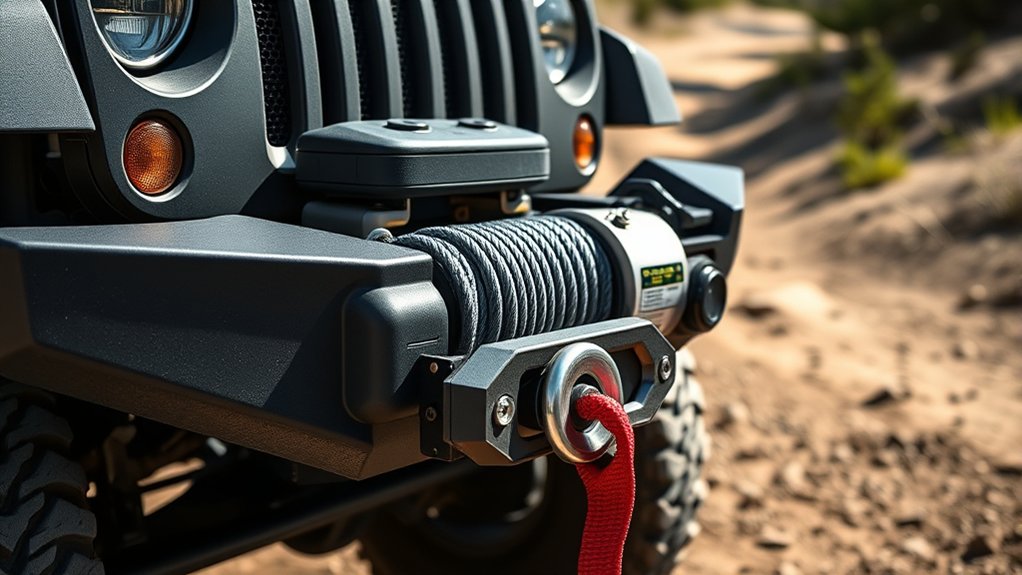
When choosing a winch for your Jeep Wrangler, you need to take into account its weight and the type of terrain you’ll tackle. Your Wrangler’s curb weight typically ranges between 3,800 to 4,400 pounds, so picking a winch with at least a 9,000-pound capacity gives you a safe margin.
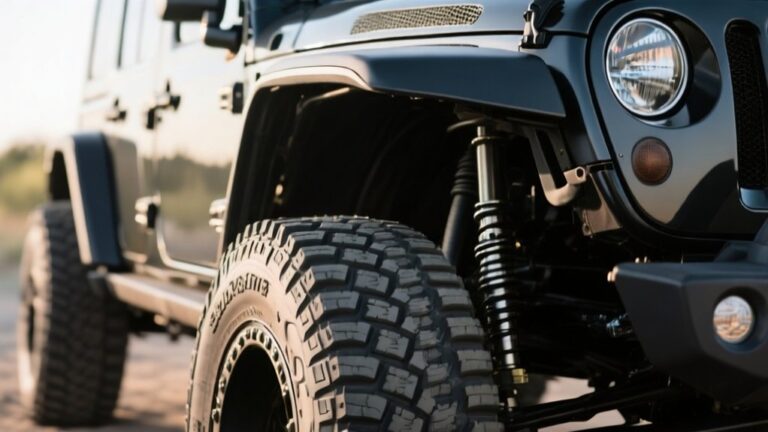
If you plan on off-roading in rocky or muddy areas, a higher capacity winch helps you pull yourself out of tricky spots without strain. Don’t forget to contemplate any modifications or added gear that increase your vehicle’s weight, like bumpers or armor.
Choosing a winch that matches your Jeep’s actual weight and the challenges of your environment ensures reliable performance without unnecessary bulk or expense. This balance keeps your Wrangler ready for any adventure.
Why Winch Capacity Is More Important Than You Realize
You might think winch capacity is just a number, but it directly affects your safety and the winch’s performance. If you underestimate the load, you risk equipment failure or getting stuck deeper.
Understanding the right capacity guarantees you’re prepared for any recovery challenge your Jeep Wrangler faces.
Winch Capacity Basics
Choosing the right winch capacity can make or break your Jeep Wrangler recovery efforts. You need a winch that’s strong enough to handle your vehicle’s weight plus extra force for tough spots. Here’s what you should know about winch capacity basics:
- Rated Capacity: This is the maximum load the winch can pull under ideal conditions.
- Vehicle Weight: Always pick a winch with at least 1.5 times your Jeep’s gross weight.
- Load Variations: Mud, steep angles, and obstacles increase the force needed—factor this in.
- Winch Line Pull: Capacity decreases as you pull more line off the drum, so consider usable capacity.
Understanding these basics ensures you choose a winch that performs reliably when you need it most.
Safety and Performance Impact
How much does winch capacity truly affect your Jeep Wrangler’s safety and performance? A winch with insufficient capacity can fail when you need it most, putting you and your vehicle at risk.
When your winch is properly rated—typically at least 1.5 times your Jeep’s gross weight—it handles tough recovery situations without strain. This means smoother pulls, less wear on your winch components, and reduced chances of cable snapping or motor burnout.
Using a winch with the right capacity guarantees reliable performance, so you can confidently tackle off-road obstacles and emergencies. Don’t underestimate this—choosing the correct winch size protects your investment and keeps you safe during recovery operations, making it a critical factor for every Jeep Wrangler owner.
How to Calculate Your Jeep Wrangler’s Weight for Winch Sizing
Since the winch must handle your Jeep Wrangler’s full weight plus any added gear, calculating the vehicle’s weight accurately is essential. Here’s how to do it:
- Check the Manufacturer’s Specs: Start with your Jeep’s curb weight found in the owner’s manual or online.
- Add Cargo Weight: Include any gear, tools, or modifications like bumpers that increase overall weight.
- Consider Passengers: Add the average weight of people regularly riding with you.
- Use a Reliable Scale: For the most precise measurement, weigh your Jeep at a vehicle scale.
How to Use a 1.5x to 2x Weight Multiplier for Winch Size
When you select a winch for your Jeep Wrangler, multiplying your vehicle’s total weight by 1.5 to 2 guarantees the winch can handle tough recovery situations without strain.
Start by finding your Jeep’s curb weight, then multiply that figure by 1.5 for light to moderate recovery needs or by 2 for more demanding tasks.
Begin with your Jeep’s curb weight, then multiply by 1.5 or 2 based on recovery difficulty.
For example, if your Jeep weighs 4,000 pounds, a winch rated between 6,000 and 8,000 pounds will provide a safe margin.
This multiplier accounts for added forces during recovery, like resistance from mud or inclines.
Using this method assures your winch won’t be underpowered or risk damage, giving you confidence and reliability when you need it most on the trail.
Recovery Situations That Affect Jeep Wrangler Winch Strength
Because recovery situations vary widely, choosing the right winch strength for your Jeep Wrangler requires understanding the specific challenges you might face. Different recovery scenarios demand different pulling power, so knowing what you’re up against helps you pick a winch that won’t leave you stranded.
Consider these common factors that affect winch strength needs:
- Mud and Sand – Soft surfaces increase resistance, requiring more pulling power.
- Inclines and Slopes – Pulling uphill adds extra strain on your winch.
- Vehicle Weight – A heavier or modified Jeep demands a stronger winch.
- Obstacle Type – Trees, rocks, or deep ruts can complicate recovery and need higher winch capacity.
Matching your winch strength to these conditions guarantees you’ll recover your Jeep safely and efficiently.
How to Match Winch Size With Your Jeep Wrangler Model
Understanding the recovery challenges your Jeep Wrangler may face helps you figure out the right winch strength. Start by checking your Wrangler’s curb weight—older models like the TJ and YJ typically weigh less than newer JK or JL models.
A winch rated at 1.5 times your Jeep’s weight usually provides enough pulling power. For example, if your Wrangler weighs 4,000 pounds, a 6,000-pound winch suits you well.
Consider any modifications, such as larger tires or added armor, since these increase your Jeep’s weight and demand a stronger winch. Also, think about the terrain you tackle most often; heavier winches offer extra reliability on tough trails.
Matching your winch size carefully ascertains you’re prepared without overloading your Jeep’s electrical system or wasting money on excess capacity.
Which Winch Types Work Best for Jeep Wranglers?
Choosing the right winch type for your Jeep Wrangler means balancing power, reliability, and ease of use. You want a winch that handles tough situations without weighing you down or complicating recovery efforts.
Here are the four winch types that work best for Jeep Wranglers:
- Electric Winches – Popular for their simplicity and quick installation; perfect for most Jeep owners.
- Hydraulic Winches – Offer continuous power without overheating, ideal if you have a hydraulic system.
- Manual Winches – Lightweight and reliable but require physical effort; good for emergency backup.
- Pneumatic Winches – Less common but useful in specific setups where compressed air is available.
Choosing the right one depends on your Jeep’s setup and how often you plan to use the winch.
How Do Electric and Hydraulic Winches Compare for Jeep Wranglers?
Electric and hydraulic winches each bring unique strengths to your Jeep Wrangler setup, and deciding between them depends on how you plan to use your vehicle.
Electric winches are popular because they’re easy to install and run off your Jeep’s 12V battery. They’re perfect for occasional recovery since they’re quieter and more affordable. However, they can drain your battery if used extensively.
Hydraulic winches, on the other hand, connect to your Jeep’s power steering pump. They’re more durable and deliver continuous power without draining the battery, making them ideal if you frequently tackle tough off-road conditions. But they require more complex installation and maintenance.
Ultimately, choose electric for convenience and budget, or hydraulic if you want reliable, heavy-duty performance during extended recoveries.
Common Winch Sizes for Jeep Wranglers
What size winch do you really need for your Jeep Wrangler? It depends on your vehicle’s weight and the type of recovery you expect.
Here are the common winch sizes for Jeep Wranglers to take into account:
- 8,000 lbs – Ideal for light to moderate recovery tasks and stock Wranglers.
- 9,500 lbs – Offers a bit more power, perfect if you’ve added some aftermarket parts or slight modifications.
- 12,000 lbs – Great for heavy-duty recovery, especially if your Jeep is heavily modified or loaded with gear.
- 15,000 lbs – Typically for extreme off-roaders or those who tow heavy trailers.
Choose a winch size that matches your Jeep’s weight plus extra for safety and efficiency. This guarantees reliable performance when you need it most.
How Terrain and Trail Difficulty Affect Winch Size Choice
Since the terrain and trail difficulty can vary widely, you’ll want to factor these conditions into your winch size decision. If you often tackle rocky, steep, or muddy trails, you’ll need a winch with higher pulling power to handle tougher recoveries.
Consider terrain challenges carefully when choosing your winch; tougher trails demand greater pulling power for safe recoveries.
On gentler, flatter paths, a smaller winch might suffice. Remember, difficult terrain increases the chance of getting stuck, so opting for a winch rated at least 1.5 times your Jeep’s gross vehicle weight guarantees you won’t be caught unprepared.
Also, consider the frequency of challenging trails you explore—if it’s occasional, a moderate winch size could work, but regular off-roading in harsh conditions calls for more robust equipment.
Matching your winch size to trail difficulty improves your safety and recovery efficiency.
Rope vs Steel Cable: Which Is Best for Jeep Wrangler Winches?
When choosing between rope and steel cable for your Jeep Wrangler winch, you’ll want to weigh durability, weight, and how easy each is to handle.
Rope is lighter and simpler to manage, but steel cable offers greater toughness.
You’ll also need to take into account the maintenance each option requires to keep your winch performing well.
Durability Comparison
Although both rope and steel cable winches have their strengths, durability often plays an essential role in deciding which suits your Jeep Wrangler best. You want a winch that can handle tough conditions without frequent replacements or repairs. Here’s how durability stacks up:
- Steel cables resist abrasion and can endure sharp edges better than rope.
- Synthetic ropes are prone to fraying when exposed to rough surfaces but resist corrosion.
- Steel cables can rust over time if not maintained properly.
- Synthetic ropes absorb shock better, reducing the chance of sudden snapping.
Weight And Handling
Because you’ll often need to handle your winch in tight or tricky spots, weight and ease of handling become essential factors. Synthetic rope is markedly lighter than steel cable, making it easier for you to manage during installation or adjustments. This reduced weight also lessens strain on your Jeep’s bumper and mounting points.
On the other hand, steel cable adds noticeable weight, which can make handling and spooling more cumbersome, especially if you’re working alone. However, steel’s stiffness can sometimes prevent tangling, simplifying cable management.
Ultimately, if you want something lightweight and easy to maneuver, synthetic rope is your best bet. But if you prioritize straightforward handling over weight, steel cable might suit you better. Either way, consider how much effort you’re willing to put into managing your winch’s line.
Maintenance Requirements
Handling your winch’s line well goes hand in hand with keeping it in good shape. When choosing between rope and steel cable for your Jeep Wrangler winch, maintenance plays a big role. Rope is lighter and easier to handle but needs frequent cleaning and inspection for frays or dirt. Steel cable is tougher but requires lubrication and careful rust prevention.
To maintain your winch line effectively:
- Inspect the line regularly for damage or wear.
- Clean rope with mild soap and water; wipe steel cable dry after use.
- Lubricate steel cable to prevent rust and corrosion.
- Store the winch in a covered area to avoid exposure to harsh elements.
Proper maintenance extends your winch’s life and keeps it ready for tough jobs.
How Your Jeep’s Suspension and Bumper Affect Winch Choice
Your Jeep’s suspension and bumper play essential roles in determining the right winch size for your vehicle. A heavy-duty suspension lift increases weight, requiring a higher capacity winch. Similarly, your bumper’s design affects winch mounting and load distribution. Stock bumpers might limit winch size, while aftermarket steel bumpers support heavier winches. Consider these factors to confirm your winch matches your Jeep’s setup.
| Suspension Type | Bumper Type | Recommended Winch Capacity |
|---|---|---|
| Stock | Stock | 8,000 lbs |
| Mild Lift (2-3″) | Aftermarket Steel | 9,500 lbs |
| Moderate Lift (4-6″) | Aftermarket Steel | 12,000 lbs |
| Heavy Lift (6″+) | Reinforced Steel | 12,000+ lbs |
| Stock | Lightweight Bumper | 7,500 lbs |
When to Upgrade Your Winch for Heavier Jeep Modifications
If you start adding heavier modifications like larger tires, reinforced bumpers, or a stronger suspension, it’s time to reconsider your winch capacity. These upgrades increase your Jeep’s overall weight and can demand more pulling power than your current winch provides.
To know when to upgrade, watch for these signs:
To know when to upgrade, look for key signs indicating your winch needs more power and durability.
- You’ve installed tires over 35 inches in diameter, adding significant weight.
- Your bumper upgrade includes a winch mount designed for heavier-duty winches.
- You’ve added aftermarket parts that increase off-road recovery challenges.
- Your current winch struggles or overheats during pulls, showing it’s underpowered.
Upgrading ensures your winch handles the extra load safely and efficiently, keeping your Jeep ready for tougher terrain.
Best Budget-Friendly Winches for Jeep Wranglers
Several reliable budget-friendly winches can equip your Jeep Wrangler without breaking the bank. Look for models with at least 8,000 pounds of pulling power, which suits most stock Wranglers.
Brands like Smittybilt and WARN offer affordable options that balance performance and cost. The Smittybilt X2O is waterproof and durable, perfect for off-road adventures.
WARN’s VR EVO 8 provides solid reliability at a reasonable price.
When choosing, consider synthetic rope for easier handling and safety. Also, check for features like remote controls and thermal protection to enhance usability.
How to Maintain and Test Your Winch to Ensure It’s Ready for Action
Choosing a reliable winch is just the first step; keeping it in top condition guarantees it performs when you need it most. Regular maintenance and testing are key to preventing surprises during recovery situations.
A reliable winch is essential, but consistent upkeep ensures it delivers when every second counts.
Here’s how you can keep your winch ready:
- Inspect the cable or synthetic rope for frays, kinks, or damage before and after each use.
- Clean and lubricate moving parts, including the drum and fairlead, to reduce wear and prevent rust.
- Test the winch under load periodically, ensuring the motor runs smoothly and the brake holds securely.
- Check electrical connections for corrosion or loose wiring and ensure the battery is fully charged.
Frequently Asked Questions
Can I Install a Winch on My Jeep Wrangler Myself?
Yes, you can install a winch on your Jeep Wrangler yourself. Just follow the instructions carefully, use the right tools, and guarantee the mounting plate fits properly. Take your time, and don’t hesitate to ask for help if needed.
What Accessories Do I Need for Safe Winch Operation?
You’ll need gloves, a snatch block, tree saver strap, winch damper, and a remote control for safe winch operation. These accessories protect you, your Jeep, and guarantee smooth, controlled winching every time.
How Long Does It Typically Take to Winch Out a Stuck Jeep?
As you hook up your winch, it typically takes 5 to 15 minutes to pull your Jeep out, depending on terrain and obstacles. You’ll find patience and steady tension quickly get you moving again without stressing the gear.
Are Winch Remote Controls Compatible With All Jeep Wrangler Models?
Winch remote controls aren’t compatible with all Jeep Wrangler models by default. You’ll need to check your winch’s make and model, and sometimes install adapters or specific wiring to guarantee it works properly with your Jeep.
What Safety Precautions Should I Take When Using a Winch?
You should always wear gloves, keep bystanders clear, avoid standing near the cable under tension, use a winch dampener, and guarantee your winch and mounting are rated for your Jeep’s weight. Stay alert and cautious.
Conclusion
Choosing the right winch for your Jeep Wrangler isn’t just about numbers—it’s about readiness. Think of it like a trusty pocket watch in a digital age: classic, reliable, and essential when you need it most. By sizing your winch with 1.5x to 2x your Jeep’s weight and considering upgrades as your rig grows, you guarantee every recovery is smooth and safe. Keep your winch maintained, and you’ll be ready to conquer any trail, anytime.