What Kind of Gas Does a Jeep Wrangler Take?
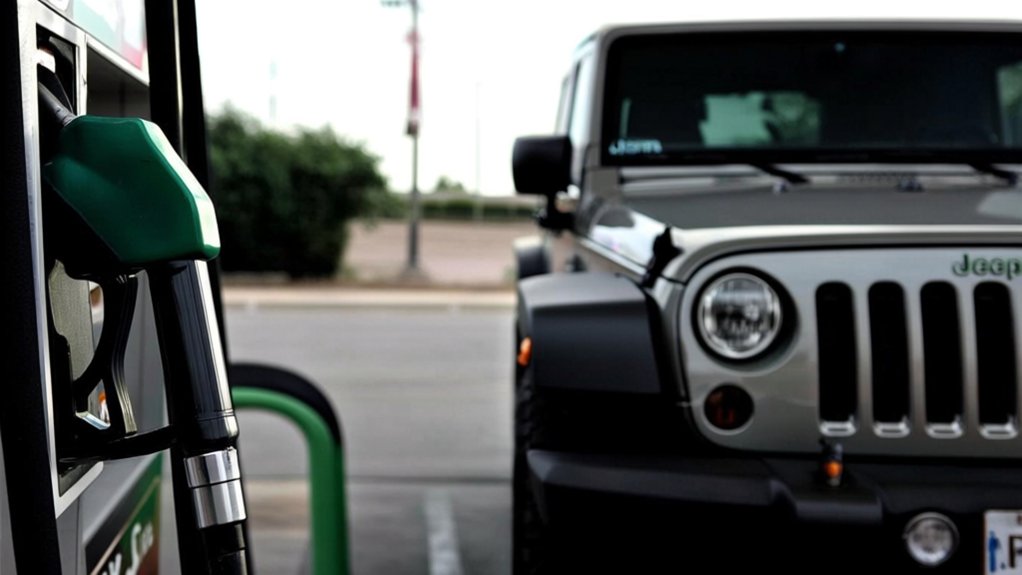
Your Jeep Wrangler generally runs best on regular unleaded gasoline with an 87-octane rating, which keeps your engine smooth and efficient. Some high-performance models, like the Rubicon with turbocharged engines, do require premium fuel to maximize power and prevent knocking. Using the wrong octane can reduce performance and risk engine damage. Stick to what the manual or fuel door suggests to keep your Jeep running well. You can find out more about how fuel type impacts your Wrangler’s performance and longevity.
Key Takeaways
- Most Jeep Wrangler models use regular unleaded gasoline with an 87 octane rating for optimal performance.
- High-performance models like Rubicon with turbocharged engines require premium fuel (91+ octane) to maximize power and efficiency.
- Using the manufacturer-recommended fuel type prevents engine knocking and maintains long-term engine health.
- Avoid fuels with excessive ethanol content to protect the engine and fuel system components.
- Always check the owner’s manual or fuel door label to confirm the correct fuel type and octane rating.
What Type of Gas Does a Jeep Wrangler Need?
Although it might depend on the specific Jeep Wrangler model and engine, most Wranglers run best on regular unleaded gasoline with an octane rating of 87. When you fill up, you can rely on standard gas without worrying about higher octane fuel unless your manual specifies otherwise. Using the recommended fuel helps your engine perform efficiently and keeps your vehicle running smoothly. If you have a turbocharged or high-performance engine, you might need to check the owner’s manual for any special requirements. Otherwise, sticking to regular unleaded gas saves you money and prevents potential engine knocking. Always follow the manufacturer’s guidelines to maintain your Jeep Wrangler’s health and get the best performance on and off the road.
Regular vs. Premium Gasoline for Jeep Wranglers
You might wonder whether to use regular or premium gasoline for your Jeep Wrangler. Understanding the fuel requirements and how each option affects performance can help you make the best choice. Let’s compare the two types to see what works best for your vehicle.
Fuel Requirements Comparison
How does choosing between regular and premium gasoline impact your Jeep Wrangler’s performance? The key lies in the fuel requirements set by your Wrangler’s engine. Most Jeep Wranglers are designed to run efficiently on regular unleaded gasoline with an octane rating of 87. Using regular gas meets the manufacturer’s minimum requirements and keeps your engine running smoothly without unnecessary expense. However, some Wrangler models with higher-performance engines recommend premium gas, usually with an octane rating of 91 or higher, to prevent knocking and optimize combustion. If your Wrangler’s manual specifies premium fuel, you should stick to that to avoid potential engine issues. Always check your owner’s manual to confirm the recommended fuel type, ensuring you provide the right gasoline for your Jeep’s engine design.
Performance Differences Explained
When you choose between regular and premium gasoline for your Jeep Wrangler, the differences in performance often come down to how the engine handles combustion. Premium gas has a higher octane rating, which means it resists knocking or pinging better during combustion. If your Wrangler’s engine is tuned for premium fuel, using it can improve throttle response, acceleration, and overall efficiency. On the other hand, if your model is designed for regular gas, you likely won’t notice much difference by using premium. In fact, premium won’t necessarily boost power or fuel economy if your engine doesn’t require it. To get the best performance, follow your owner’s manual recommendations—using the right fuel helps maintain engine health and ensures your Wrangler runs smoothly under various driving conditions.
Which Jeep Wrangler Models Require Premium Gas?
Which Jeep Wrangler models actually need premium gas? Generally, only the Wrangler variants equipped with the high-performance engines require premium fuel. For example, if you have the Wrangler Rubicon with the 2.0L turbocharged inline-4 or the powerful 3.6L V6 engine, those models benefit from premium gas. These engines are designed to maximize power and efficiency with higher octane fuel. On the other hand, Jeep Wranglers featuring the 3.0L EcoDiesel V6 or the standard 3.6L V6 usually run fine on regular unleaded gas. To be sure, always check your owner’s manual or the fuel door label. Using premium where recommended helps your Wrangler perform at its best and avoid potential engine knocking or damage.
How Fuel Octane Rating Affects Jeep Wrangler Performance
Although you might not notice it immediately, the fuel octane rating plays a crucial role in your Jeep Wrangler’s performance and engine health. Octane rating measures a fuel’s resistance to knocking or pinging during combustion. If your Wrangler’s engine requires a higher octane fuel but you use lower octane gas, it can cause knocking, reducing power and efficiency. On the other hand, using a higher octane than needed usually won’t boost performance but helps prevent knocking in engines designed for it. Your Wrangler’s engine management system adjusts timing based on octane, so the right rating ensures smooth acceleration and maximum fuel economy. Choosing the proper octane rating helps maintain your Jeep’s reliability while delivering the power you expect on and off-road.
Why You Should Always Follow Jeep’s Fuel Advice
Because Jeep engineers design your Wrangler’s engine to run effectively on specific fuel types and octane ratings, following their fuel recommendations guarantees you get the best performance and longevity. When you stick to the advised fuel, your engine operates smoothly, maintaining power and efficiency as intended. You’ll also help preserve your vehicle’s warranty since using the recommended gas ensures compliance with Jeep’s standards. Ignoring their advice might not show immediate effects, but over time, it can reduce fuel economy and overall drivability. By choosing the right fuel, you protect your investment and enjoy a reliable, responsive ride every time you hit the road or trail. Trusting Jeep’s fuel guidance is a simple step that pays off in consistent, worry-free driving.
How Using the Wrong Gas Can Damage Your Jeep’s Engine
Using the wrong gas can cause engine knocking, which harms your Jeep’s engine over time. You might also face fuel system damage that leads to costly repairs. Plus, your Jeep won’t run as efficiently, cutting into its performance and fuel economy.
Engine Knock Risks
If you put the wrong type of gas in your Jeep Wrangler, you risk causing engine knock, a damaging condition where fuel ignites prematurely in the cylinders. This early ignition creates pressure spikes that can harm your engine over time. You might notice a pinging or knocking sound, which signals that combustion isn’t happening as it should. Ignoring this can lead to reduced performance and costly repairs.
Here’s what engine knock can do to your Jeep:
- Damage pistons and cylinder walls
- Reduce fuel efficiency and power
- Increase engine wear and overheating risk
To avoid these issues, always use the recommended octane fuel for your Wrangler. It keeps your engine running smoothly and protects its longevity.
Fuel System Damage
How exactly does putting the wrong gas in your Jeep Wrangler cause fuel system damage? Using fuel with an octane rating lower than recommended can lead to incomplete combustion, leaving behind deposits that clog fuel injectors and valves. These deposits restrict fuel flow, forcing your engine to work harder and increasing wear on components. Over time, contaminants from unsuitable fuel can corrode fuel lines and damage the fuel pump, leading to costly repairs. Additionally, the wrong gas may not lubricate the fuel system properly, accelerating the deterioration of seals and gaskets. By consistently using the correct fuel, you prevent these issues, ensuring your Jeep’s fuel system stays clean and functions efficiently, protecting your engine’s longevity and reliability. Don’t risk damage—stick to the recommended gas type.
Reduced Performance Efficiency
Why does putting the wrong gas in your Jeep Wrangler hurt its engine performance? Using lower-octane fuel than recommended causes your engine to knock, reducing efficiency and power. Your Wrangler’s engine is designed to run on specific fuel grades, so using the wrong gas disrupts ideal combustion. This leads to decreased acceleration, sluggish response, and poor fuel economy.
Here’s how wrong gas affects your Jeep’s performance:
- Engine knocking: Causes uneven combustion and power loss
- Reduced horsepower: Limits your Jeep’s ability to perform tough tasks
- Lower fuel efficiency: Forces your engine to work harder, wasting gas
To keep your Jeep running smoothly and efficiently, always use the fuel grade specified in your owner’s manual.
What to Do If You Use the Wrong Gas
Although using the wrong gas in your Jeep Wrangler can be concerning, you don’t need to panic. First, avoid starting the engine if you realize the mistake immediately. This prevents the wrong fuel from circulating through the system. Next, contact a professional mechanic or roadside assistance to drain the incorrect fuel safely. Driving with the wrong gas can cause engine knocking, reduced performance, or damage to fuel system components. If you’ve already driven a short distance, have a mechanic inspect your vehicle for any issues. After the wrong fuel is removed, fill up with the correct gas to restore proper function. Acting quickly minimizes damage and repair costs, so don’t hesitate to seek expert help as soon as you notice the error.
Tips for Choosing the Right Gas for Your Jeep Wrangler
To keep your Jeep Wrangler running smoothly, you need to choose the right fuel based on the recommended types and octane ratings. Using the proper gas not only protects your engine but also improves fuel efficiency. Let’s look at how to pick the best gas for your Jeep.
Recommended Fuel Types
How do you know which fuel will keep your Jeep Wrangler running smoothly and efficiently? Choosing the right fuel guarantees ideal performance and longevity. Jeep Wranglers typically run best on regular unleaded gasoline, but it’s important to verify based on your engine type. Here are some fuel recommendations to think about:
- Use regular unleaded gasoline with an octane rating of 87 or higher for most models.
- If you drive a high-performance or turbocharged Wrangler, premium fuel might be suggested.
- Avoid using fuels with excessive ethanol content, as they can harm fuel system components over time.
Impact of Octane Ratings
Understanding octane ratings is key when choosing the right gas for your Jeep Wrangler. Octane measures a fuel’s ability to resist knocking or pinging during combustion, which can damage your engine over time. Your Jeep’s engine is designed to run efficiently on a specific octane level, usually regular unleaded (87 octane). Using fuel with a lower octane than recommended can cause performance issues and reduce engine longevity. Conversely, using a higher octane fuel than your Wrangler needs typically won’t improve performance or mileage—it just costs more. Always check your owner’s manual to find the recommended octane rating. Sticking to that guarantees your engine runs smoothly and avoids unnecessary expenses. So, don’t overthink it—choose the octane rating your Jeep requires.
Fuel Efficiency Tips
Although choosing the right gas is important, you can boost your Jeep Wrangler’s fuel efficiency by paying attention to a few key factors. Using the recommended octane level guarantees your engine runs smoothly, but combining that with smart driving habits and regular maintenance makes a bigger difference. Here are some tips to help you get the most out of every gallon:
- Drive steadily: Avoid rapid acceleration and hard braking to save fuel.
- Maintain tire pressure: Properly inflated tires reduce rolling resistance and improve mileage.
- Keep up with maintenance: Regular oil changes and air filter replacements help your engine perform efficiently.
How Fuel Type Affects Jeep Wrangler Efficiency
When you choose the right fuel type for your Jeep Wrangler, you directly influence its performance and fuel economy. Using the manufacturer-recommended fuel grade guarantees your engine runs smoothly, providing ideal power and efficiency. If you opt for a lower octane fuel than specified, your Wrangler might experience knocking, reducing both performance and miles per gallon. On the other hand, using a higher octane fuel than required doesn’t necessarily boost efficiency—it often just increases your fuel costs. Your Wrangler’s engine management system adjusts to fuel quality, but sticking to the recommended grade helps maintain consistent combustion and power output. So, by choosing the correct fuel, you not only protect your engine’s efficiency but also maximize your Jeep’s capability on and off the road.
How Good Fuel Helps Your Jeep Last Longer
Choosing good fuel plays an essential role in extending the life of your Jeep Wrangler’s engine. When you use high-quality fuel, you reduce engine deposits and minimize wear on critical components, keeping your vehicle running smoothly longer. Good fuel also ensures efficient combustion, which lowers the risk of knocking and prevents damage to pistons and valves.
Here’s how good fuel helps your Jeep last longer:
- Reduces engine buildup that can cause performance issues
- Improves combustion efficiency for smoother operation
- Protects internal parts from premature wear and tear
Frequently Asked Questions
Can I Use Diesel Fuel in a Jeep Wrangler?
No, you can’t use diesel fuel in a Jeep Wrangler unless it specifically has a diesel engine. Using diesel in a gasoline engine can cause serious damage, so always stick to the recommended fuel type for your model.
How Often Should I Check My Jeep Wrangler’s Fuel System?
You don’t need to check your Jeep Wrangler’s fuel system often—until it leaves you stranded. Seriously, check it at least once every six months or before long trips to keep your adventures running smoothly.
Does Altitude Affect the Gas Type for Jeep Wranglers?
No, altitude doesn’t change the gas type your Jeep Wrangler needs. You’ll still use the recommended fuel grade, but higher altitudes may affect engine performance, so consider adjustments like tuning rather than switching gas types.
Can I Add Fuel Additives to Improve My Jeep’s Performance?
Sure, you can add fuel additives to boost your Jeep’s performance—because who doesn’t want their engine to feel like it’s had a triple espresso? Just use quality additives and follow instructions to avoid turning your ride into a science experiment.
How Does Cold Weather Impact the Fuel Requirements of a Jeep Wrangler?
Cold weather makes your Jeep Wrangler need fuel that resists gelling and guarantees easy starts. You’ll want to use winter-blend gasoline or add anti-gel additives to keep your engine running smoothly in freezing temperatures.
Conclusion
Choosing the right gas for your Jeep Wrangler is key to keeping it running smoothly. For example, imagine you use regular gas in a model that requires premium—you might notice knocking and reduced performance. Following Jeep’s fuel recommendations helps avoid costly repairs and boosts efficiency. So, always check your owner’s manual and stick to the suggested fuel type. That simple step can save you money and keep your Wrangler going strong for years.